Creating social media posts that aim to build health or information literacy is challenging. It is one thing to get likes on a video of a cute dog dancing or your latest holiday pics, it is another to develop reflective, empathetic understanding of complex phenomena in a bite-sized image or video.
 To help guide people through the process of creating social media stories for information and health literacy, Professor Feigenbaum designed the Pick N Mix strategy. This Pick N Mix method is based on research findings from her team’s UKRI/AHRC COVID-19 Rapid Response project that analysed over 15,000 webcomics to look at the role this medium played in public health messaging on Instagram during the first year of the pandemic. The guide also draws from current research in psychology, graphic medicine and media studies. It was designed by creative studio partners Minute Works.
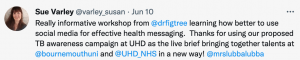

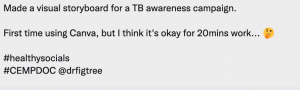
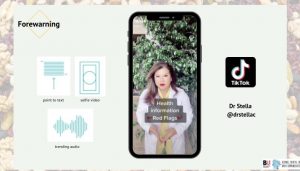
 Workshop: Storytelling for Social Media-How to create engaging health information
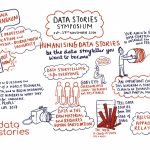 Dr. Anna Feigenbaum delivers keynotes on Data Storytelling and COVID-19
 BU research explores the use of comic artistry and storytelling in public health information
 SIA Game-Changing Concept: Sustainable Storytelling for Science & Health







 SONAMONI contributions to Safety Conference 2026 in South Africa
 Three CMWH presentations at Berlin conference
 New interdisciplinary paper on Nepal
 Horizon Europe Cluster 3 (Civil Security for Society) 2026 Calls Now Open
 MSCA Doctoral Networks 2026 Call Information Webinar
 ESRC Festival of Social Science 2026: Application Deadline Extended to Thursday 25 June 2026
 Reminder: Register for the ESRC Festival of Social Science 2026 Information Session
 ECR Funding Open Call: Research Culture & Community Grant – Apply now
 ERC Advanced Grant 2025 Webinar
 Update on UKRO services
 European research project exploring use of ‘virtual twins’ to better manage metabolic associated fatty liver disease