 One of the excellent benefits of being a member of the Grants Academy is access to our bid writing drop-in surgeries.
These surgeries are held more or less fortnightly over lunch and are facilitated by Matthew Bennett plus other experienced senior academics.
They have been designed to offer members of the Grants Academy the opportunity to come along and to talk to experienced colleagues about their research, for example, getting advice on their ideas, how to strengthen their bids, etc.
I wanted to share some recent feedback from our latest session:
We got some very useful feedback and support. It couldn’t go better.
A group of two having 20 minutes each to explain about our interests. That was a tutorial!
The manner in which it took place was really very helpful with full attention being devoted to our two proposals in that time.
I would say that it was a great bid writing surgery!
If you are a Grants Academy member, and would like to attend any of the other sessions planned for this term, please contact Caroline O’Kane
Next dates:
10 Oct: 1.00 pm to 2.00 pm – Studland House, S401, Lansdowne
24 Oct: 1.00 pm to 2.00 pm – Casterbridge Room, Talbot
5 Nov: 12.00 pm to 1.00 pm – Casterbridge Room, Talbot
26 Nov: 1.00 pm to 2.00 pm – EBC, EB702, Lansdowne
10 Dec: 1.00 pm to 2.00 pm – EBC, EB203, Lansdowne
Want to find out more ? Find out more from the Grants Academy page on the blog.







 REF 2029 Sector Survey: Have Your Say
 BU methods paper reached 2,500 reads
 UKCGE Recognised Research Supervision Programme: Applications Close 19 October
 Dr. Orlanda Harvey interviewed as expert
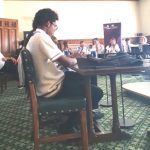 Dr. Paul Whittington attends Technology and the SEND Reforms Roundtable in the House of Commons
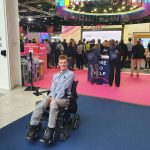 Dr. Paul Whittington joins Bett 2026 DfE Assistive Technology Roundtable
 Horizon Europe Cluster 3 (Civil Security for Society) 2026 Calls Now Open
 MSCA Doctoral Networks 2026 Call Information Webinar
 ESRC Festival of Social Science 2026: Application Deadline Extended to Thursday 25 June 2026
 Reminder: Register for the ESRC Festival of Social Science 2026 Information Session
 ECR Funding Open Call: Research Culture & Community Grant – Apply now
 ERC Advanced Grant 2025 Webinar
 Update on UKRO services
 European research project exploring use of ‘virtual twins’ to better manage metabolic associated fatty liver disease