Tagged / REF 2029

Art and Design: History, Practice and Theory academics – would you like to get more involved in preparing our next REF submission?

We are currently recruiting for a UoA co-lead, with a focus on impact, to help support preparation for our next REF Submission to UOA 32: Art and Design: History, Practice and Theory.

The deadline for expressions of interest is noon 16 June 2026. The role is recruited through an open and transparent process, which gives all academic staff the opportunity to put themselves forward. Applications from underrepresented groups are particularly welcome.

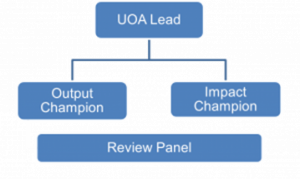
We are currently preparing submissions to ten UoAs. Each UoA has a leadership team with at least one leader, output and impact champion. The leadership team are supported by a panel of reviewers who assess the research from the unit. This includes a diverse range of research outputs (including journal articles, books and chapters, films, digital artefacts etc) and impact case studies.


All roles require a level of commitment which is recognised accordingly with time to review, attend meetings, and take responsibility for tasks.

Undertaking a UOA role can be enjoyable and rewarding as two of our current champions testify:

“As UOA Outputs Champion you develop a detailed knowledge of all the great work that colleagues are doing related to the subject, and the different outlets used for disseminating their work.  You get to know what research is going on across BU, and it’s interesting to see the differences between disciplines.  It’s a good way develop your knowledge of the bigger picture of BU’s research, and also to understand the importance of REF and how it works in practice.  You do spend quite a bit of time chasing colleagues to put their outputs on BRIAN for REF compliance but hopefully they forgive you!”

Professor Adele Ladkin – UOA 24 Output Champion

“As a UoA 17 impact champion, I work closely with the UoA 17 impact team to encourage the development of a culture of impact. I try to pop into Department / research group meetings when I can to discuss impact, and I’ve enjoyed meeting people with a whole range of research interests. Sometimes it can be tough to engage people with impact – understandably; everyone is busy – so it’s important to be enthusiastic about the need for our BU research to reach the public. Overall, the role is about planting the seeds to get researchers thinking about the impact their work might have in the future (as well as the impact they have already had, sometimes without realising!)”

Dr Rafaelle Nicholson – UOA 17 Impact Champion

How to apply

All those interested should put forward a short case (suggested length of one paragraph) as to why they are interested in the role and what they think they could bring to it. These should be emailed to ref@bournemouth.ac.uk by noon Tuesday 16th June 2026.

Further detail on the role, the process of recruitment and selection criteria can be found here:

UOA Leader Role Descriptor

Process and criteria for selection

For further information please contact ref@bournemouth.ac.uk or a member of the current UOA Team with queries.

Psychology, Psychiatry and Neuroscience academics – would you like to get more involved in preparing our next REF submission?

We are currently recruiting for an Impact Champion to help support preparation for our next REF Submission to UoA4: Psychology, Psychiatry and Neuroscience.

The deadline for expressions of interest is noon 10 June 2026. The role is recruited through an open and transparent process, which gives all academic staff the opportunity to put themselves forward. Applications from underrepresented groups are particularly welcome.

We are currently preparing submissions to ten UoAs. Each UoA has a leadership team with at least one leader, output and impact champion. The leadership team are supported by a panel of reviewers who assess the research from the unit. This includes a diverse range of research outputs (including journal articles, books and chapters, films, digital artefacts etc) and impact case studies.


All roles require a level of commitment which is recognised accordingly with time to review, attend meetings, and take responsibility for tasks.

Undertaking a UOA role can be enjoyable and rewarding as two of our current champions testify:

“As UOA Outputs Champion you develop a detailed knowledge of all the great work that colleagues are doing related to the subject, and the different outlets used for disseminating their work.  You get to know what research is going on across BU, and it’s interesting to see the differences between disciplines.  It’s a good way develop your knowledge of the bigger picture of BU’s research, and also to understand the importance of REF and how it works in practice.  You do spend quite a bit of time chasing colleagues to put their outputs on BRIAN for REF compliance but hopefully they forgive you!”

Professor Adele Ladkin – UOA 24 Output Champion

“As a UoA 17 impact champion, I work closely with the UoA 17 impact team to encourage the development of a culture of impact. I try to pop into Department / research group meetings when I can to discuss impact, and I’ve enjoyed meeting people with a whole range of research interests. Sometimes it can be tough to engage people with impact – understandably; everyone is busy – so it’s important to be enthusiastic about the need for our BU research to reach the public. Overall, the role is about planting the seeds to get researchers thinking about the impact their work might have in the future (as well as the impact they have already had, sometimes without realising!)”

Dr Rafaelle Nicholson – UOA 17 Impact Champion

How to apply

All those interested should put forward a short case (suggested length of one paragraph) as to why they are interested in the role and what they think they could bring to it. These should be emailed to ref@bournemouth.ac.uk by noon Wednesday 10th June 2026.

Further detail on the role, the process of recruitment and selection criteria can be found here:

Role Descriptor

Process and criteria for selection

For further information please contact ref@bournemouth.ac.uk or a member of the current UOA Team with queries.

Geography and Environmental Studies academics – would you like to get more involved in preparing our next REF submission?

We are currently recruiting for an Output Champion and Impact Champion to help support preparation for our next REF Submission to UoA14: Geography and Environmental Studies.

The deadline for expressions of interest is 9 June 2026. The roles are recruited through an open and transparent process, which gives all academic staff the opportunity to put themselves forward. Applications from underrepresented groups are particularly welcome.

We are currently preparing submissions to ten UoAs. Each UoA has a leadership team with at least one leader, output and impact champion. The leadership team are supported by a panel of reviewers who assess the research from the unit. This includes a diverse range of research outputs (including journal articles, books and chapters, films, digital artefacts etc) and impact case studies.


All roles require a level of commitment which is recognised accordingly with time to review, attend meetings, and take responsibility for tasks.

Undertaking a UOA role can be enjoyable and rewarding as two of our current champions testify:

“As UOA Outputs Champion you develop a detailed knowledge of all the great work that colleagues are doing related to the subject, and the different outlets used for disseminating their work.  You get to know what research is going on across BU, and it’s interesting to see the differences between disciplines.  It’s a good way develop your knowledge of the bigger picture of BU’s research, and also to understand the importance of REF and how it works in practice.  You do spend quite a bit of time chasing colleagues to put their outputs on BRIAN for REF compliance but hopefully they forgive you!”

Professor Adele Ladkin – UOA 24 Output Champion

“As a UoA 17 impact champion, I work closely with the UoA 17 impact team to encourage the development of a culture of impact. I try to pop into Department / research group meetings when I can to discuss impact, and I’ve enjoyed meeting people with a whole range of research interests. Sometimes it can be tough to engage people with impact – understandably; everyone is busy – so it’s important to be enthusiastic about the need for our BU research to reach the public. Overall, the role is about planting the seeds to get researchers thinking about the impact their work might have in the future (as well as the impact they have already had, sometimes without realising!)”

Dr Rafaelle Nicholson – UOA 17 Impact Champion

How to apply

All those interested should put forward a short case (suggested length of one paragraph) as to why they are interested in the role and what they think they could bring to it. These should be emailed to ref@bournemouth.ac.uk by noon Tuesday 9th June 2026.

Further detail on the roles, the process of recruitment and selection criteria can be found here:

Output Champion Impact Champion
Role Descriptor Role Descriptor
Process and criteria for selection Process and criteria for selection

For further information please contact ref@bournemouth.ac.uk or a member of the current UOA Team with queries.

Expressions of Interest invited from senior academics to join the BU REF Appeals Panel 

Our BU REF 2029 Code of Practice states that in the event of an appeal, the Deputy Vice-Chancellor will convene and chair the BU REF Appeals Panel to undertake a review of each case. The role of the Panel is to: 

  • Review and consider all appeals submitted by appraising all documentation pertaining to the REF/KEF Steering Group decision and the case for appeal. 
  • Decide on whether or not an individual should be referred back to the REF/KEF Steering Group for further consideration. 
  • Ensure final decisions are communicated to the Head of Research & Innovation Services (RIS) who will report to the REF/KEF Steering Group and notify the individual of the outcome of the appeal. 

The Panel is chaired by the Deputy Vice-Chancellor with support from a member of RIS. Membership will include at least three senior academics. 

We are now seeking expressions of interest (EoI) from senior academic colleagues (Grade 10+) who are interested in joining the REF Appeals Panel. Successful applicants will be required to:  

  • attend one or more meetings of the REF Appeals Panel (to be held annually in September from 2026 onwards) 
  • have a thorough knowledge of the REF guidance and the BU REF Code of Practice, and undertake REF-focussed equality and diversity training 

We therefore ask for commitment, active contribution and, most importantly, confidentiality due to the sensitive work of the Panel. In return, members will be involved in an important cross-University committee, gain an insight into the REF and equality and diversity, and be engaged in academic citizenship. 

Eligibility to apply: 

Applications are invited from senior BU academic staff (Grade 10+). You must be independent from REF preparations, for example, applicants cannot be UoA Leaders, impact champions or output champions and cannot be members of the REF/KEF Steering Group. 

Application procedure: 

We are seeking to recruit a diverse group of at least six senior academics to potentially be called upon in the event of an appeal.

Colleagues who are interested should submit an EoI stating your interest in being a member of the BU REF Appeals Panel and summarising the experience, skills and attributes you could bring to the Panel (max 250 words). Your EoI should state your name, job title, Faculty and School. 

EoIs should be emailed to ref@bournemouth.ac.uk 19 June 2026.

Applications will be reviewed by a panel of reviewers who are responsible for agreeing on which applicants to invite to serve on the BU REF Appeals Panel. 

Please contact  ref@bournemouth.ac.uk with any queries. 

REF mock exercise 2026 – nominate your research outputs on BRIAN

The next Research Excellence Framework (REF) mock exercise opens today. Following the success of our REF21 submission, we have ambitious plans to include the majority of eligible staff in the submission, whilst increasing the quality of the research submitted.

The 2026 exercise will be our third formal mock exercise in our preparations for REF 2029.

Anyone who conducts or supports research is invited to nominate up to five research outputs to the exercise. We encourage the nomination of a diverse range of output types, including, but not limited to, journal articles, conference proceedings, books, chapters, films, performances, compositions, digital artefacts and any other output which is the product of original research, which has been published since 1 January 2021.

Outputs can be nominated for review between 26 May and 22 June 2026. Guidance on how to nominate outputs on BRIAN can be found on the REF 2026 Mock exercise page.

Points to note:

  • Outputs can be nominated to more than one Unit of Assessment (UoA) for review. Nominators should ensure that outputs are reviewed by all relevant BU UoAs where the output meets the REF UoA descriptors
  • Outputs that have previously been reviewed by a UoA as part of a previous mock exercise should not be nominated to that UoA Individuals can view the 2023 and 2024 mock exercises in BRIAN to check which of their outputs have already been reviewed.

Nominated outputs will be allocated to a panel of reviewers, and authors will be able to receive feedback on the overall shape of their outputs profile and advice on how to strengthen and position their future outputs.

More information on the 2026 mock exercise can be found on the REF 2026 Mock exercise page.

For queries relating to the mock exercise, including requests for access to additional UoA exercises on BRIAN, please contact REF@bournemouth.ac.uk.

For advice on output(s) selection and if an output meets the UoA descriptors, please contact the relevant UoA Team(s).

Opportunities to support our REF preparations

We are recruiting to a number of Unit of Assessment (UoA) roles to help support preparation for our next REF submission. The roles are recruited through an open and transparent process, which gives all academic staff the opportunity to put themselves forward. Applications from underrepresented groups are particularly welcome.

We are currently preparing submissions to ten UoAs. Each UoA has a leadership team with at least one leader, an output and impact champion. The leadership team are supported by a panel of reviewers who assess the research from the unit. This includes a diverse range of research outputs (including journal articles, books and chapters, films, digital artefacts etc) and impact case studies.


We currently have vacancies in the following roles:

UOA 3: Allied Health Professions, Dentistry, Nursing and Pharmacy

  • Co-lead
  • Output Champion
  • Impact Champion
  • Internal review panel

UOA 4: Psychology, Psychiatry and Neuroscience

  • Co-lead
  • Impact Champion
  • Internal review panel

UOA 11: Computer Science and Informatics

  • Impact Champion

UOA 14: Geography and Environmental Studies

  • Output Champion
  • Impact Champion

UOA18: Law

  • Output Champion

UOA 32: Art and Design: History, Practice and Theory

  • Co-lead (Impact focused)
  • Internal review panel

UOA 34: Communication, Cultural and Media Studies, Library and Information Management

  • Co-lead
  • Output Champion (practice-based)

All roles require a level of commitment which is recognised accordingly with time to review, attend meetings, and take responsibility for tasks.

Undertaking a UOA role can be enjoyable and rewarding as two of our current champions testify:

“As UOA Outputs Champion you develop a detailed knowledge of all the great work that colleagues are doing related to the subject, and the different outlets used for disseminating their work.  As an outputs committee member, you also get to know what research is going on across BU, and it’s interesting to see the differences between disciplines.  It’s a good way develop your knowledge of the bigger picture of BU’s research, and also to understand the importance of REF and how it works in practice.  You do spend quite a bit of time chasing colleagues to put their outputs on BRIAN for REF compliance but hopefully they forgive you!”

Professor Adele Ladkin – UOA 24 Output Champion

“As a UoA 17 impact champion, I work closely with the UoA 17 impact team to encourage the development of a culture of impact across BUBS. I try to pop into Department / research group meetings when I can to discuss impact, and I’ve enjoyed meeting people with a whole range of research interests. Sometimes it can be tough to engage people with impact – understandably; everyone is busy – so it’s important to be enthusiastic about the need for our BU research to reach the public. Overall, the role is about planting the seeds to get researchers thinking about the impact their work might have in the future (as well as the impact they have already had, sometimes without realising!)”

Dr Rafaelle Nicholson – UOA 17 Impact Champion

 How to apply

All those interested should put forward a short case (one paragraph) as to why they are interested in the role and what they think they could bring to it. These should be clearly marked with the relevant UoA and role and emailed to ref@bournemouth.ac.uk by noon Thursday 28th May 2026.

Further detail on the roles, the process of recruitment and selection criteria can be found here:

UoA Lead Output Champion Output Champion (practice-based) Impact Champion Internal panel reviewer
Role Descriptor Role Descriptor Role Descriptor Role Descriptor  Role Descriptor
Process and criteria for selection Process and criteria for selection Process and criteria for selection Process and criteria for selection Process and criteria for selection

For further information please contact ref@bournemouth.ac.uk or a member of the current UOA Team with queries.

Prof Marahatta promoting BU-Nepal collaboration

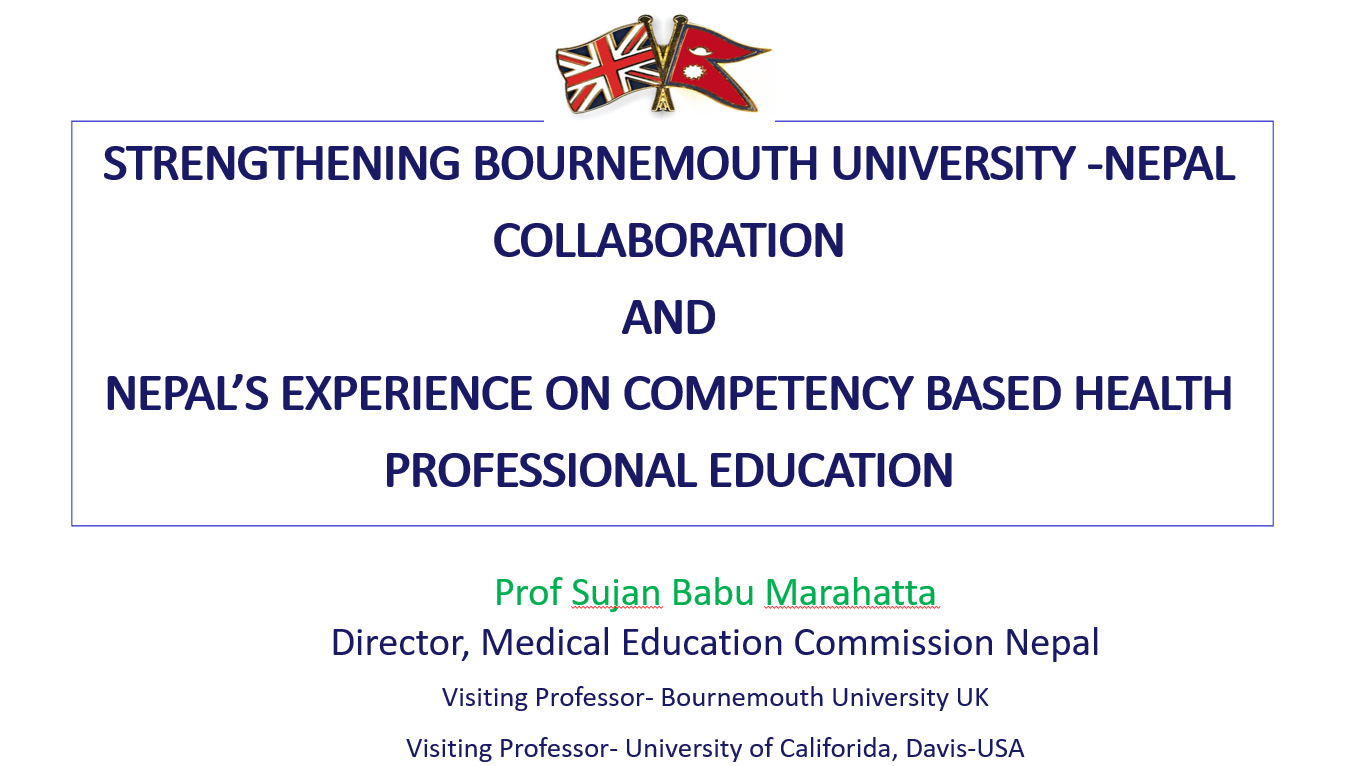
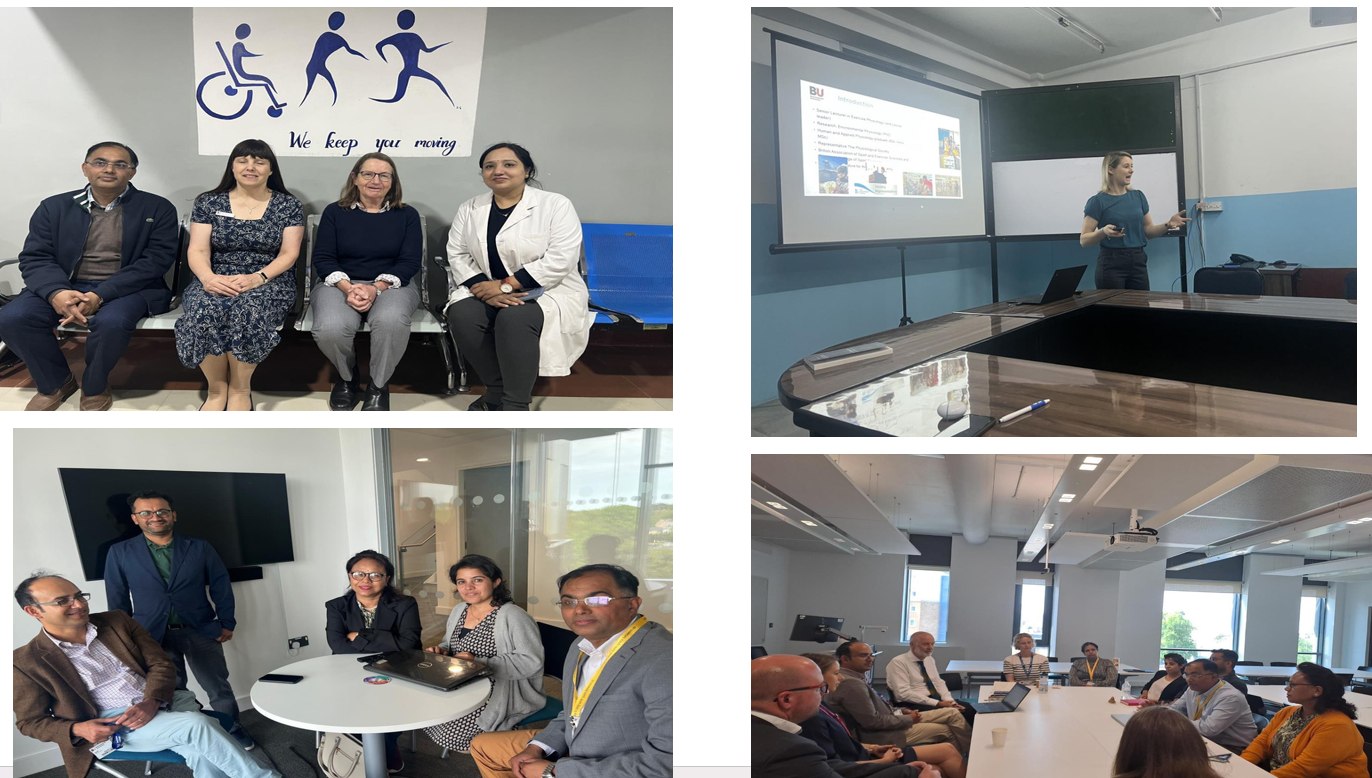
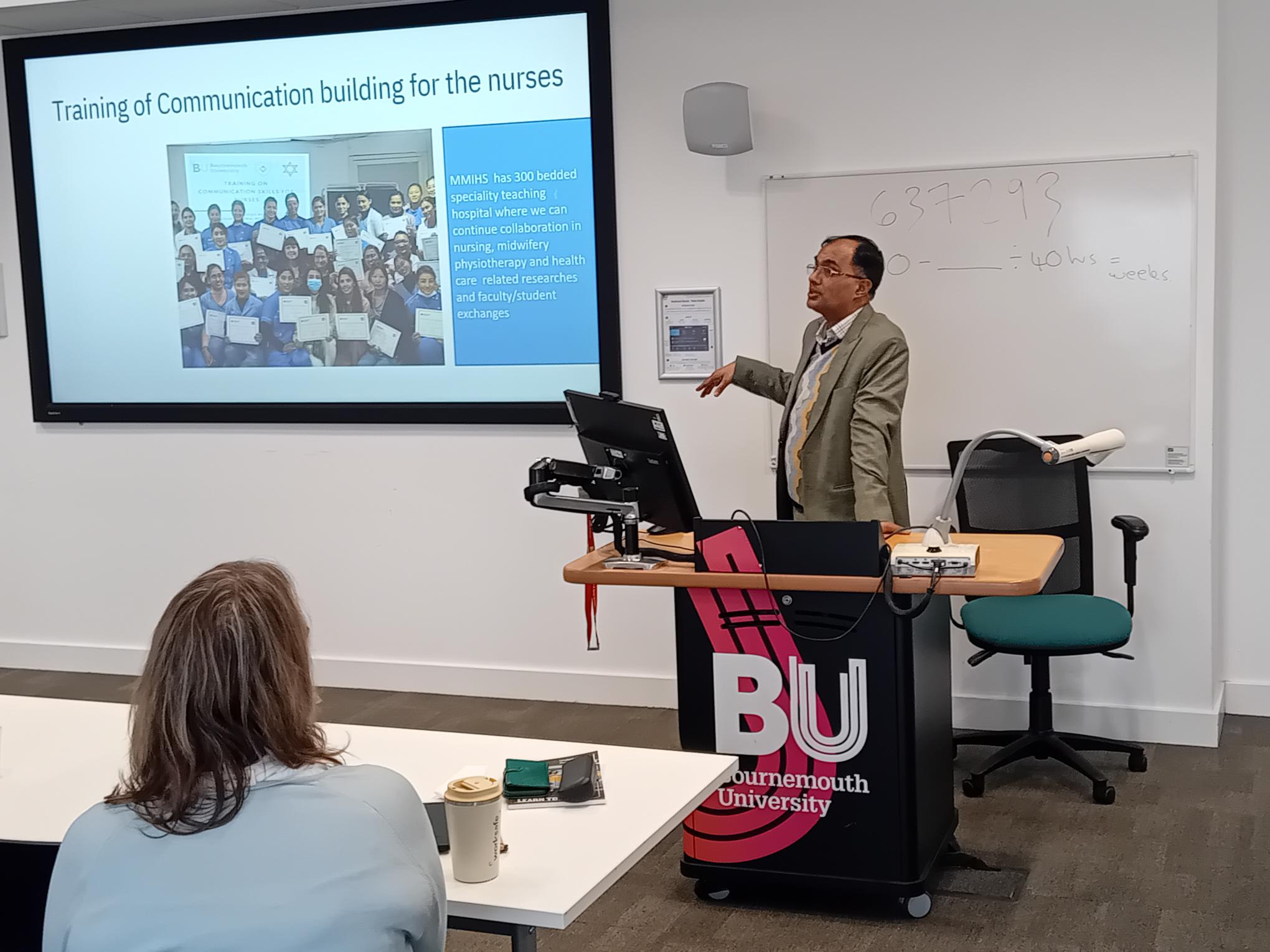
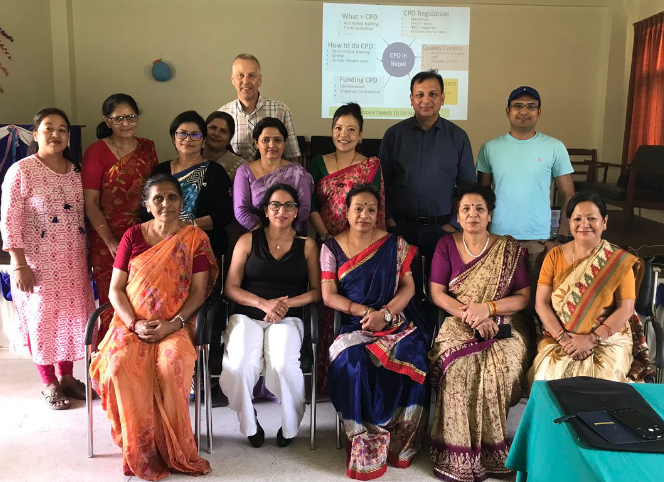
On Monday 9th March Prof. Sujan Marahatta visited Bournmouth University (BU) to speak about ‘Strengthening BU-Nepal collaboration AND Nepal’s experience of competency-based health professional education’.  Prof. Marahatta is the Director of the Medical Education Commission in Nepal overseeing the education of health professionals in 15 areas including Medicine, Physiotherapy, Nursing and Midwifery. He spoke about long partnership between Manmohan Memorial Institute of Health Sciences (MMIHS) and BU.  This partnership is formalised in a Memoradum of Agreement (MoA) and over the years it has included joint research projects, staff-student exchanges (funded by ERASMUS+ and Turing scheme) and offering guest lectures at each others institutions.

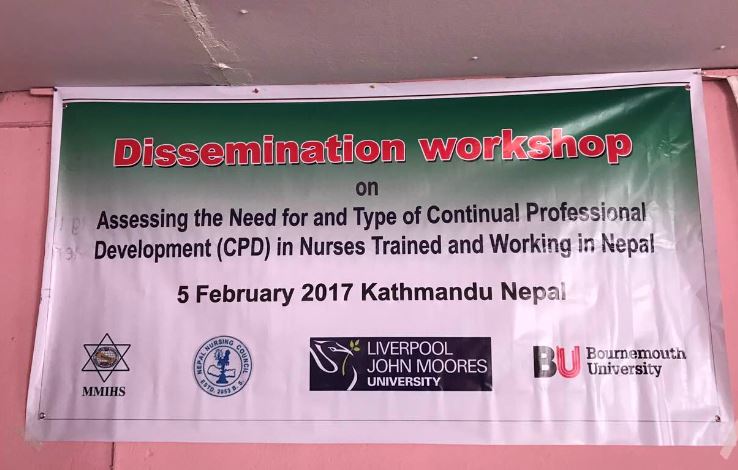
One of the jointly conducted studies which Prof. Marahatta highlighted was the work on CPD (Continuous Professional Development) in nursing and midwifery in Nepal.  Research on CPD started a decade ago and culminated in several papers [1-4]. The research was combined with sustained advocacy and stakeholder engagement, and resulted in the Nepal Nursing Council (NNC) formally introduced mandatory CPD as a requirement for nursing and midwifery re-registration earlier this year (15 January 2026).  The National Guideline on Continuing Nursing and Midwifery Education (CNME) CPD for Nurses and Midwives refer to our work conducted by academics based at Bournemouth University.  This is the foundation for one of BU’s REF Impact Case Studies for 2029.

Amongst other studies, Prof. Marahatta also highlighted a recent publication which was  jointly authored between BU’s professors Clark and Hundley and himself on pain catastrophising in nulliparous women in Nepal, the importance for childbirth [5].  Prof. Marahatta’s  visit was held in the Faculty of Health, Environment & Medical Sciences (HEMS) in the Bournemouth Gateway Building.

References:

  1. Simkhada B, Mackay S, Khatri R, Sharma CK., Pokhrel T, Marahatta SB., Angell C, van Teijlingen E, Simkhada P. (2016) Continual Professional Development (CPD): Improving Health Prospect15 (3):1-3.
  2. Khatri, RJ, van Teijlingen, E, Marahatta, SB, Simkhada, P, Mackay, S and Simkhada, B. Exploring the Challenges and Opportunities for Continuing Professional Development for Nurses: A Qualitative Study with Senior Nurse Leaders in Nepal. Journal of Manmohan Memorial Institute of Health Sciences. 2021 7(1):15-29. 
  3. Simkhada B, van Teijlingen E, Pandey A, Sharma CK, Simkhada P, Singh DR (2023) Stakeholders’ Perceptions of Continuing Professional Development among Nepalese Nurses: A Focus Group Study Nursing Open.10(5).
  4. Simkhada B, van Teijlingen E, Sharma C, Pandey A, Simkhada P. (2023) Nepal needs Continuing Professional Development for Re-registration in Nursing and Midwifery Journal of Nepal Health Research Council, 21(60):541-42.
  5. Clark CJ, Marahatta SB, Hundley VA. (2024) The prevalence of pain catastrophising in nulliparous women in Nepal; the importance for childbirth. PLoS ONE 19(8): e0308129. https://doi. org/10.1371/journal.pone.0308129.

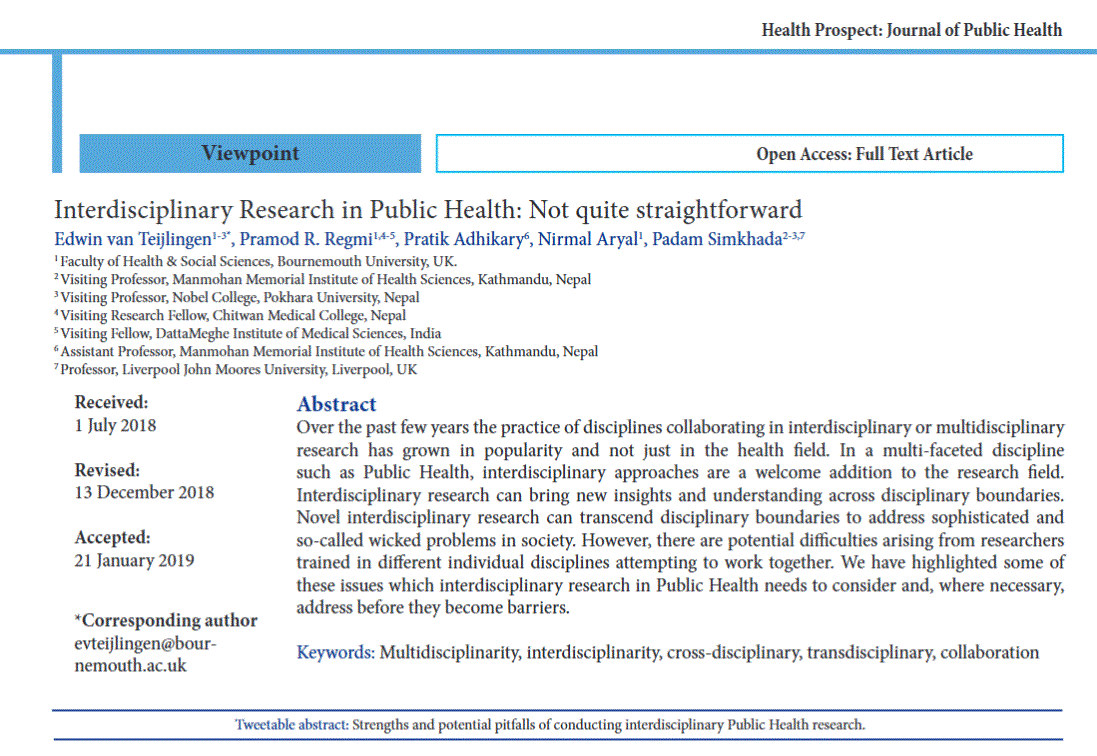
Interdisciplinary research: Not straightforward?

Worldwide there is a growing interest in interdisciplinary research, especially to help deal with large questions in life, the so-called wicked problems.  These wicked problems (or questions) include climate disasters and global warming, globalisation, the drop in biodiversity, inequalities and international conflicts.  Interdisciplinary research increasingly popular and widely promoted by grant-giving bodies, the UK REF (Research Excellence Framework), research councils and universities, to name but a few stakeholders.

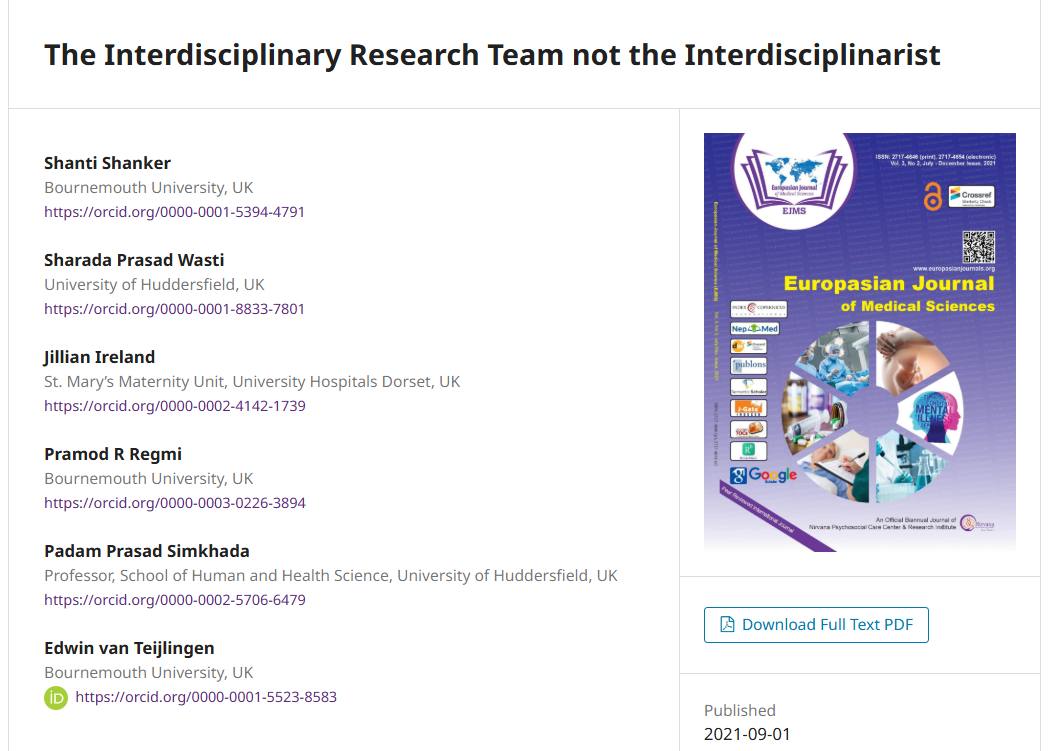
However, it is often ignored, that interdisciplinary research presents significant challenges for discipline-specific experts.  Doing interdisciplinary research requires specialised skills, team-player personality traits, and the ability to transcend one’s own academic boundaries.  We have highlighted in the past that common barriers include managing conflicting research philosophies, navigating, and overcoming, methodological, and communication differences [1].  Those who have been involved in interdisciplinary research will agree that is not an easy option for the individual discipline expert. It requires individual skills, ability to see beyond one’s discipline and perhaps personality characteristics such as a great team player. Interdisciplinary research may involve a mixed-methods approach underpinned by conflicting, and according to some incommensurable, research philosophies.

It is also the case that some disciplines are perhaps more familiar with interdisciplinary working, disciplines such as Public Health [2] are traditionally less theory focused and more solution driven.  But even in Public Health as a broad-ranging discipline covering sub-disciplines such as epidemiology, health education, law, management, health psychology, medical statistics, sociology of health & illness and a wide-range of research methods, conducting interdisciplinary research is not necessarily easy [3].


Prof. Edwin van Teijlingen & Dr. Pramod Regmi both are in the School of Health & Care, and Dr. Shanti Farrington, who is based in the School of Psychology.


References:

  1. Shanker S, Wasti SP, Ireland J, Regmi PR, Simkhada PP, van Teijlingen E. (2021) The Interdisciplinary Research Team not the Interdisciplinarist. Europasian Journal of Medical Science. 3(2):111-5.
  2. Wasti, S. P., van Teijlingen, E., Simkhada, P. (2020) Public Health is truly interdisciplinary. Journal of Manmohan Memorial Institute of Health Sciences, 6(1):21-22.
  3. van Teijlingen, E., Regmi, P., Adhikary, P., Aryal, N., Simkhada, P. (2019). Interdisciplinary Research in Public Health: Not quite straightforward. Health Prospect, 18(1), 4-7. https://doi.org/10.3126/hprospect.v18i1.19337

REF Code of Practice consultation is open!

On Wednesday 25 February, we opened a staff consultation on our draft Research Excellence Framework (REF) 2029 Code of Practice. All colleagues are invited to engage in the consultation and to provide feedback to shape our REF submission approach.

All the information about the consultation and the full Code of Practice can be found on the Research and Innovation Services pages on the Staff Hub.

What is the REF?

The Research Excellence Framework (REF) is the UK’s system for assessing the excellence of research in UK higher education institutions (HEIs). The next exercise is REF 2029.

The purpose of the REF is to:

  • Inform the allocation of block-grant research funding to HEIs based on research quality
  • Provide accountability for public investment in research and produce evidence of the benefits of this investment
  • Provide insights into the health of research in HEIs in the UK.

The REF is an expert review process. Higher Education Institutions (HEIs) make submissions in specific subject areas, known as Units of Assessment (UoAs). Each submission is assessed by an expert sub-panel, working under the guidance of main and advisory panels.

Why is the REF important?

The REF is a national exercise which enables HEIs and researchers to showcase the excellent research which is being undertaken and the impact that research is having. In REF 2021:

  • 94% of BU research was found to be internationally recognised or above, with 19% found to be world-leading in quality
  • 95.7% of our research was found to be delivering considerable impact or above, with 31.5% achieving an outstanding impact score.

The REF is very important to BU, both in terms of funding and reputation. REF results are used in university ranking tables and we currently receive over £6 million per year in quality-related research (QR) funding because of our performance in the last REF.

What is the Code of Practice?

A Code of Practice (CoP) is a mandatory requirement for REF 2029, which sets a minimum standard for participation. Higher Education Institutions wishing to make a submission to REF 2029 must have a CoP approved by the funding bodies.

We need to submit our CoP to Research England between 11 and 15 May 2026.

What does it cover?

BU’s CoP sets out the processes we will follow for submission to REF 2029. It describes our policies and procedures for:

  • identifying teaching and research contracts with Significant Responsibility for Research (SRR)
  • identifying research-only contracts with research independence (RI)
  • allocating contracts to UoAs
  • the selection of outputs for submission.

Consultation timeline

The consultation will run for three weeks, from 25 February to 18 March. Alongside publishing the full CoP and associated FAQs, we will be hosting the following events to provide further information on the REF and the CoP:

  • Wednesday 4 March, 2pm to 3pm, online
  • Tuesday 10 March, 3pm to 4pm, Lansdowne Campus, S108, Studland House and online
  • Friday 13 March, 10am and 11am, Talbot Campus, Share Lecture Theatre, in-person only.

These events are open to all staff and will provide an opportunity to ask questions and discuss the proposals in more detail.

An online Padlet is also available through the Research and Innovation Services pages to enable anonymous feedback.

We encourage everyone to get involved, ask questions and provide feedback to refine our CoP and shape our REF submission approach.

Nursing Research REF Impact in Nepal

The Nepal Nursing Council has made Continuing Professional Development (CPD) compulsory for all nurses and midwives wanting to re-enrol from tomorrow. Starting on 15th January 2025 all nurses and midwives who want to re-register will have to show evidence of having conducted recent training to maintain and enhance their knowledge, skills, and professional competence.  According to the new provision, licences will not be renewed unless applicants have completed a minimum of 60 hours of training within the preceding six years.  This change in regulation is largely driven by research driven by two UK universities, and BU is one of them.

As early as 2016 the research team called for a move to a system of post-registration with compulsory further learning and regular updating of skills, adding that “the introduction of CPD will be beneficial to all nurses in Nepal” [1].  The key argument was that If Nepal does not establish CPD requirements, only some staff will engage with training activities, it will be ad hoc driven by personal interests rather than service needs.  An even greater concern was that staff will seek only the free training made available by either the government and/or INGOs (International Non-Governmental Organisations) rather than CPD most relevant to their current practices.

To generate the evidence that CPD is vital in Nepal, the team led by Dr. Bibha Simkhada conducted interviews with nurse leader in the country to understand perspectives on existing on-the-job training and Continuous Professional Development more generally [2].  Bibha, currently Reader in Nursing at the University of Huddersfield, worked at Bournemouth University for several years during this research.  Next, the researchers conducted focus group discussions with other relevant stakeholders [3].  These research findings were disseminated to stakeholders in Kathmandu, including the NNC (Nepal Nursing Council), MIDSON (Midwifery Society of Nepal), NAN (Nursing Association of Nepal), and the Ministry of Health & Population as well as to a wider audience through a call under the heading ‘Nepal needs Continuing Professional Development for Re-registration in Nursing and Midwifery’ [4].

These papers all argue that promoting CPD benefits the quality of health care.  Indirectly, it builds confidence in the general population as it is guarantee to the individual patient in Nepal that the nurses and midwives, who are treating them, have up-to-date skills and knowledge. In addition, it strengthens the NNC as it supports to professionalise nursing and midwifery in Nepal and bring the standard of nursing and midwifery practices to a higher and internationally comparable level.

The research work at BU was supported by small amounts of QR funding through BU Centre for Excellence in Learning (CEL) in 2016, the Centre for Midwifery & Women’s Health in 2018 and the Faculty of Health & Social Sciences in 2019.  This shows that well-designed research conducted by researchers who have insight into the political landscape of health services in Nepal can have a great impact with minimal resources.

Prof. Edwin van Teijlingen (BU REF lead UoA3)

&

Dr. Vikram Mohan (UoA3 REF Impact Champion)


References

  1. Simkhada, B, Mackay, S, Khatri, R., Sharma, C.K., Pokhrel, T, Marahatta, S, Angell, C, van Teijlingen, E., Simkhada, P (2016) Continual Professional Development (CPD): Improving Quality of Nursing Care in Nepal Health Prospect 15 (3):1-3
  2. Khatri R, van Teijlingen E, Marahatta SB, Simkhada P, Mackay S, Simkhada B (2021) Exploring the Challenges and Opportunities for Continuing Professional Development for Nurses: A Qualitative Study with Senior Nurse Leaders in Nepal Journal of Manmohan Memorial Institute of Health Sciences. 7(1), 15-29.
  3. Simkhada B, van Teijlingen E, Pandey A, Sharma CK, Simkhada P, Singh DR (2023) Stakeholders’ Perceptions of Continuing Professional Development among Nepalese Nurses: A Focus Group Study Nursing Open.10(5).
  4. Simkhada B, van Teijlingen E, Sharma C, Pandey A, Simkhada P. (2023) Nepal needs Continuing Professional Development for Re-registration in Nursing and Midwifery Journal of Nepal Health Research Council, 21(60):541-42.

BU Professor to chair Sub-Panel for REF2029

Kate Welham, Professor of Archaeological Sciences at BU, has been appointed as chair of one of the 34 sub-panels that will assess research from universities across the country for the next Research Excellence Framework assessment in 2029.

The Research Excellence Framework (REF) is the UK’s system for assessing the excellence of research in UK higher education providers and is managed by Research England.

The outcomes from REF assessments are used to inform the allocation of around £2 billion per year of public funding for universities’ research.

Professor Welham will lead the assessment for Archaeology.

Her role as chair will involve appointing the other members of her sub-panel and developing the criteria they will use to assess submissions. She will then work with her panel on rigorous evaluating submissions against those criteria and providing advice to the main panels on the quality of research.

After her appointment was announced, Professor Welham said: “I’m honoured to be invited to serve as chair of the archaeology Sub-Panel for REF2029. This is a valuable opportunity to support our discipline and ensure that its excellence—wherever and however it is expressed—is recognised fairly and consistently.

“Archaeology in the UK is a wide-ranging and globally engaged field, and I look forward to drawing on my experience from REF2021 and the current PCE pilot to help foster a collaborative and transparent process that delivers a rigorous and trusted assessment.”

Professor Welham’s appointment was made by the four UK higher education funding bodies – Research England, Scottish Funding Council, the Commission for Tertiary Education and Research in Wales and the Department for the Economy in Northern Ireland – and the REF Main Panel Chairs.

REF Director Rebecca Fairbairn said: “I’m delighted to welcome this outstanding group to lead the REF 2029 sub-panels. Their deep expertise and broad perspectives will be central to building an assessment process that is fair, rigorous, and trusted by the research community.

“We have been working in partnership with the sector throughout this process, and I’m grateful to everyone who expressed interest – your engagement is what strengthens the credibility and value of the REF across our research landscape.”

PhD supervision is good for you

Some people in academia (and many outside it) don’t appreciate the importance of PhD supervision .  An academic supervising PhD students is not merely for the educational purposes, or in other words, for the benefits of the postgraduate student.  The value of postgraduate supervision lies in pushing the boundaries of knowledge, about testing new ideas, new approaches or even new methods.

Interestingly, enough it means that PhD supervision for an academic is also about developing their own ideas, expanding one’s CV, and developing one’s career.  Whilst for the university it is also for the wider benefit of research for the wider society.  The latter means that PhD students help improve the REF (Research Excellence Framework) scores for a university, through metrics such as number and proportion of PhD completions, but also through papers based on PhD research co-authored with staff.  It always amazes me how some outsider regard PhD supervision as simply more of the same, i.e. not that different from supervising an undergraduate student.

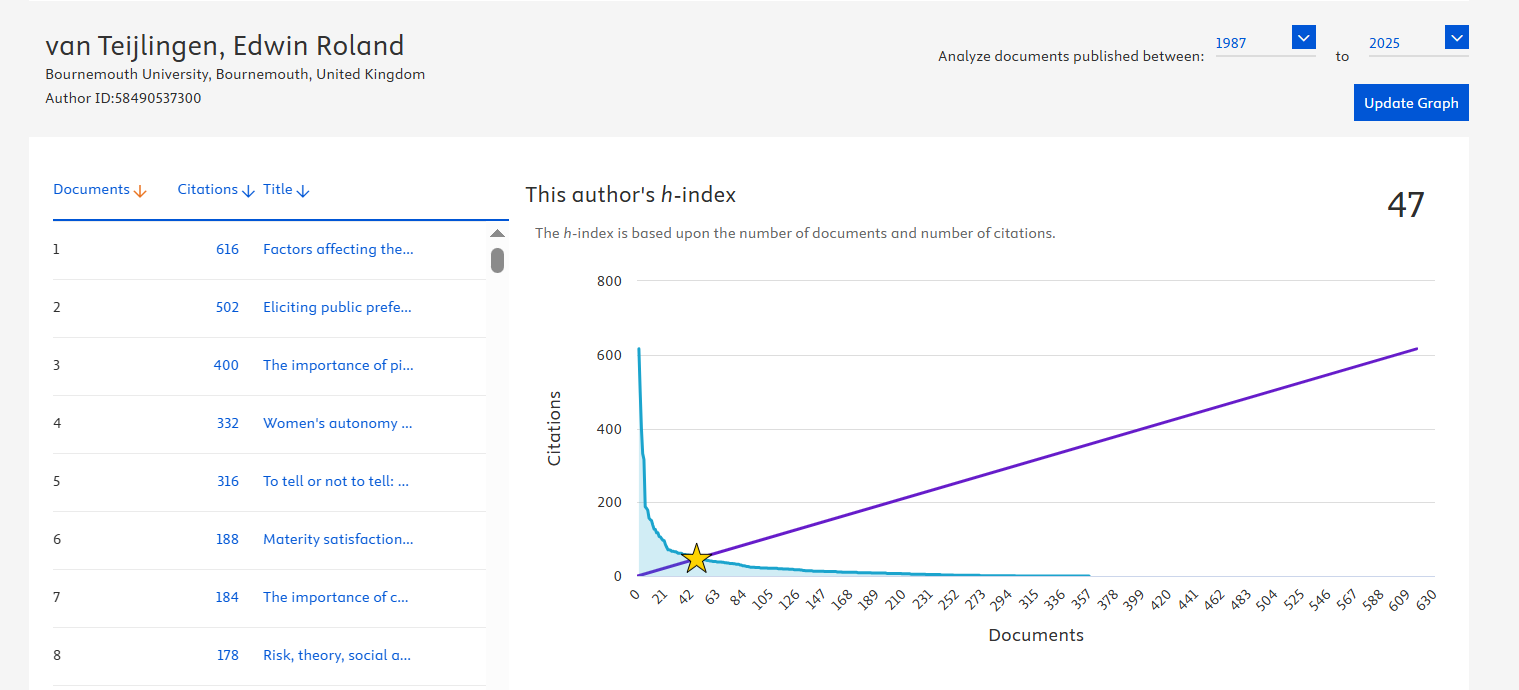
Looking at my ow CV, some of my best papers have been co-written with PhD students, including my most cited paper on SCOPUS [1]. Moreover, as the graph of my h-index [checked SCOPUS for May 19th 2025] shows four of my top eight highest cited papers were co-authored with postgraduate students [1-4].  Papers that would not have been written without the postgraduate student conducting knowledge-advancing research!

Not surprisingly, three of the four former PhD students who co-authored these highly-cited papers are now in academic positions across the UK (the fourth one has retired).  These four highlighted papers are not just looking good on my CV, they are also highly ranked within their respective journals.  The first paper [1] is the 28th most cited paper in the Journal of Advanced Nursing, an impressive 28th position out of 12,762 articles ever published by this international journal.  Similarly, the paper ‘Women’s autonomy in decision-making for health care: Demographic study in Nepal’ [2] is the 10th most cited paper in Reproductive Health, whilst ‘ To tell or not to tell: Barriers and facilitators in family communication about genetic risk’ [3] is the 20th most article in Clinical Genetics.  Last, but not least, ‘Risk, Theory, Social & Medical Models: critical analysis of the concept of risk in maternity care’ [4] is the 17th most cited article (out of 3,910) in the international journal Midwifery.


Prof. Edwin van Teijlingen

Centre for Midwifery & Women’s Health


References:

  1. Simkhada, B., van Teijlingen E., Porter, M., Simkhada, P. (2008) Factors affecting the utilisation of antenatal care in developing countries: a systematic review of the literature, Journal of Advanced Nursing 61(3): 244-260.
  2. Acharya, D.R., Bell, J., Simkhada, P., van Teijlingen, E, Regmi, P.R. (2010) Women’s autonomy in decision-making for health care: Demographic study in Nepal. Reproductive Health 9(15) reproductive-health-journal.com/content/pdf/1742-4755-7-15.pdf
  3. Forrest, K., Simpson, S., Wilson, B.J., van Teijlingen E, McKee L, Haites, N., Matthews E. (2003) To tell or not to tell: Barriers and facilitators in family communication about genetic risk,Clinical Genetics, 64: 317-26.
  4. MacKenzie Bryers H., van Teijlingen, E. (2010) Risk, Theory, Social & Medical Models: critical analysis of the concept of risk in maternity care, Midwifery 26(5): 488-496.


BU Professors appointed to REF People, Culture and Environment (PCE) pilot panels

Professor Kate Welham and Professor Vanora Hundley have been appointed as members of the Research Excellence Framework (REF) People, Culture and Environment (PCE) pilot panels.

REF 2029 logo

The next REF exercise, due to take place in 2029, will deliver an expanded definition of research excellence – recognising the wide range of research, roles, and people that are essential to the UK’s research system.

A key part of this is the development of the PCE element – assessing the research culture and environment of institutions and how research and researchers are supported.

The PCE pilot panels will explore the practicality of submission and assessment of the various elements of PCE.

In the pilot, a broad sample of 40 HEIs will produce submissions for assessment in a selection of REF Units of Assessment (UoAs). These submissions will be assessed by eight UoA-level pilot panels, with institutional-level submissions examined by a separate panel.

Professor of Midwifery Vanora Hundley, who will sit on the UoA 3 (Allied Health Professions, Dentistry, Nursing and Pharmacy) panel, said: “People, the research culture and the environment in which researchers work are vital to supporting excellent research.

“I am delighted that REF have made People, Culture and Environment (PCE) a focus for REF2029 and I look forward to working with the panel to develop robust processes to support the PCE element.”

Professor of Archaeological Sciences Kate Welham, who will sit on the pilot panel for UoA11 (Computer Science and Informatics) said: “This is a fantastic opportunity to contribute to the development of fair and transparent approaches that recognise how quality research is created across the UK. I am really looking forward to working with everyone taking part in the exercise.”

The experience and feedback of the panels will be included in the final pilot report, which will inform the REF 2029 guidance on PCE.

To find out more about the PCE pilot and REF 2029, please visit the REF website

Geography and Environmental Studies academics – would you like to get more involved in preparing our next REF submission?

We are currently recruiting for an Output Champion to help support preparation for our next REF Submission to Geography and Environmental Studies. The deadline for expressions of interest is 11 December 2024. 

This role is recruited through an open and transparent process, which gives all academic staff the opportunity to put themselves forward. Applications from underrepresented groups (e.g. minority ethnic, declared disability) are particularly welcome.

We are currently preparing submissions to thirteen units (otherwise known as UOAs). Each unit has a leadership team with at least one leader, an output and impact champion. The leadership team are supported by a panel of reviewers who assess the research from the unit. This includes research outputs (journal articles, book chapters, digital artefacts and conference proceedings) and impact case studies. We currently have vacancies in the following roles:

Output Champion – UOA14 – Geography and Environmental Studies

All roles require a level of commitment which is recognised accordingly with time to review, attend meetings, and take responsibility for tasks.

Undertaking a UOA role can be enjoyable and rewarding as two of our current champions testify:

“As UOA Outputs Champion you develop a detailed knowledge of all the great work that colleagues are doing related to the subject, and the different outlets used for disseminating their work.  As an outputs committee member, you also get to know what research is going on across BU, and it’s interesting to see the differences between disciplines.  It’s a good way develop your knowledge of the bigger picture of BU’s research, and also to understand the importance of REF and how it works in practice.  You do spend quite a bit of time chasing colleagues to put their outputs on BRIAN for REF compliance but hopefully they forgive you!”

Professor Adele Ladkin – UOA 24 Output Champion

“As a UoA 17 impact champion, I work closely with the UoA 17 impact team to encourage the development of a culture of impact across BUBS. I try to pop into Department / research group meetings when I can to discuss impact, and I’ve enjoyed meeting people with a whole range of research interests. Sometimes it can be tough to engage people with impact – understandably; everyone is busy – so it’s important to be enthusiastic about the need for our BU research to reach the public. Overall, the role is about planting the seeds to get researchers thinking about the impact their work might have in the future (as well as the impact they have already had, sometimes without realising!)”

Dr Rafaelle Nicholson – UOA 17 Impact Champion

How to apply

All those interested should put forward a short case (suggested length of one paragraph) as to why they are interested in the role and what they think they could bring to it. These should be clearly marked with the relevant role and unit and emailed to ref@bournemouth.ac.uk by 5pm on 11 December 2024. 

Further detail on the role and the process of recruitment and selection criteria can be found here:

Role Descriptor

Process and criteria for selection

For further information please contact ref@bournemouth.ac.uk, a member of the current UOA Team or your Deputy Dean Research and Professional Practice with queries.

International Open Access Week: Open Access – facilitating global development

In our final blog post to mark International Open Access Week, Professor Edwin van Teijlingen, Chair of BU’s REF Outputs Sub-Committee, writes about the role of open access research in supporting the REF and facilitating global development…

The REF (Research Excellence Framework) is the periodical (every seven years or so) assessment of the quality of research in the UK at universities and research institutes.

Every university prepares a submission comprising its best publications, evidence of impact in wider society, and a description of its research environment.  The next REF – 2029 – will be in just over four years’ time.

The relevance of open access to the REF is that it is a requirement that academics at UK universities and research institutes make their publications in papers open access. This means making publications available to any reader without them having to pay a fee.

The underlying argument is that publicly funded research, be it funded by charities or by the government, should be freely available for all to read, i.e. for the greater good!

One important side effect of the REF’s push for open access is that people who would otherwise not have access can see and use the research.

The three main groups in my view are those not based at universities with subscriptions to loads of scientific journals:

(1) practitioners, in our field health and social care staff who are not working in universities;

(2) members of the public interested in their own conditions and relevant care;

(3) those involved in patient pressure groups and charities; and

(4) students and academics in low-income countries, such as Nepal and Bangladesh.

These groups are now getting access to up-to-date research findings that otherwise would be hidden behind a paywall.

The latter is of key importance, as Bournemouth University colleagues work in many low-income countries.

For me personally, I have been teaching sessions in Nepal on research methods for nearly two decades and I have noticed the enormous improvement in access to up-to-date research publications amongst students during this period, since some many more international publications are now freely available in Nepal.

It is gratifying to know that Bournemouth University academics, together with colleagues all over the world, are contributing to global development through open access publishing.

Prof. Edwin van Teijlingen

Chair of Bournemouth University REF Outputs Sub-Committee

Visiting Faculty, Centre for Disability Studies, Mahatma Gandhi University, Kerala, India
Honorary Professor, School of Health Sciences, University of Nottingham, UK.
Visiting Professor, Nobel College, affiliated with Pokhara University, Nepal.
Visiting Professor. Manmohan Memorial Inst Health Sci affiliated with Tribhuvan University, Nepal


Impact champion needed for engineering: one week to apply

We are looking to recruit an impact champion to help support our REF submission in UOA 12 (the Unit of Assessment for Engineering). The deadline for expressions of interest is Friday 24th May 2024.

This is an exciting opportunity to play a key role in supporting colleagues to develop impact case studies for submission to REF 2029 in late 2028. The successful applicant will be allocated an agreed proportion of time to devote to the role as part of their workload planning.

Impact champions work closely with the UOA lead and their impact advisor in RDS to develop and support potential impact case studies. They also become a member of the REF Impact Subcommittee, where they are able to discuss impact strategies, planning and best practice with colleagues across all faculties and disciplines.

“The role is about planting the seeds to get researchers thinking about the impact their work might have in the future (as well as the impact they have already had, sometimes without realising!)” Dr Rafaelle Nicholson – UOA 24 Impact Champion

This role is recruited through an open and transparent process, which gives all academic staff the opportunity to put themselves forward. Applications from underrepresented groups (e.g. minority ethnic, declared disability) are particularly welcome.

How to apply

All those interested should put forward a short case (suggested length of one paragraph), explaining why they are interested in the role and what they believe they could bring to it. This should be emailed to ref@bournemouth.ac.uk by Friday 24th May 2024.

Further details on the impact champion role, the process of recruitment and selection criteria can be found here:

Role Descriptor

Process and criteria for selection

For more information, please contact ref@bournemouth.ac.uk, or UoA 12 Leader Professor Zulfiqar Khan.


HE policy update: no 4, 5th February 2024

The update is a bit shorter this week, focussing on the bigger news on research and education.  The next update will be in a couple of weeks.

Research and knowledge exchange

Ref changes: the wheels on the bus go round and round

There’s nothing new in policy and politics.  As the debate rages about research culture and environment, how to measure it and whether we even should, there is a blog on Wonkhe reminiscing about the similar debate in 2009 around impact.

There’s an update from Research England here: Overall, the community has expressed clear support for the principle of an increased emphasis on PCE in the next REF, while outlining concern around the need for careful consideration of the reporting burden on the sector and the potential dangers of metricising culture or prescribing what good looks like.

Plans for taking this forward were confirmed in an update on people, culture and environment from UKRI which said that the extra time used by the postponement of the next REF from 2028 to 2029 would enable them to run a pilot exercise alongside  a project to develop a set of indicators.

  • The PCE indicators project will provide multiple opportunities for the sector to engage with the development of the PCE indicators. Desk-based research will draw on a variety of sources including Environment statements from REF 2021, feedback received through prior engagement and consultations with the sector, and other published reports. The initial consultation during spring 2024 will comprise in-person workshops in each of the four UK nations and a series of online thematic workshops. ….. Once the draft indicators have been developed, and in parallel with the PCE pilot exercise, a second round of consultation with the sector will be conducted gathering feedback through workshops and an open consultation (survey). ..
  • The pilot exercise will focus on a sample of UoAs (we anticipate in the region of 8 UoAs) selected to provide a general insight into the assessment of PCE for similar subject areas and to highlight particular issues or special considerations that may exist for the assessment of PCE. ….
  • Institutions will be invited in March 2024 to apply to participate in the pilot exercise, …. We anticipate selecting around 30 institutions to make submissions to the pilot exercise. …
  • Institutions that take part in the pilot will be expected to produce unit-level submissions for between 1 and 8 UoAs and also an institution-level submission. These submissions will be based on the indicators identified and developed templates emerging from the commissioned work on PCE indicators.
  • Pilot panels will be comprised of academics, research professionals and others with appropriate expertise. Recruitment of pilot panels is anticipated to be in April 2024 and will be through an open process, to a set of tightly defined criteria. …..

Doctoral funding and training

There’s a UKRI update out with a new statement of expectations for Doctoral Training.

Education research areas of interest

You can read about the DfE’s areas of research interest here.  What is this for?

  • In practical terms we hope this ARI document will steer and support researchers in developing relevant evidence and enable them to make stronger funding bids by linking their work to these priorities.

The areas of interest include:

  • Skills: Drive economic growth through improving the skills pipeline, levelling up productivity and supporting people to work. 1a. What are the country’s future skills needs to support growth and prosperity, particularly in STEM and green skills? 1b. What are the organisational challenges and opportunities facing higher education (HE) and further education (FE) institutions? 1c. What are the funding, system and market challenges and opportunities for increasing participation in technical education, apprenticeships and adult training? 1d. What are the drivers of UK and foreign students’ decisions about pathways into and out of FE and HE, including impact of funding, finance and experience
  • Artificial Intelligence (AI) and Technology: Harness the use of AI, technology and data across our sectors to support safe and effective use within education 5a. What are the potential impacts of AI, and how can new technologies be used safely and effectively within education? 5b. How can the impact of digital technology be robustly measured, and implemented in a way that supports teachers and students? 5c. What approaches or innovation are needed to support the efficient handling of data within education settings?

Education

Complaints

The Office of the Independent Adjudicator published its annual report.

  • In 2023 we received 3,137 complaints, our highest ever number. This is 10% more than in 2022, and followed increases in each of the previous six years

They are also consulting on new scheme rules: this consultation closes on 8th March 2024.

The OIA handles individual complaints and deals with complainants and universities quietly, but also publishes anonymised case studies which make interesting reading and a useful reference point.

The latest from January is on complaints relating to accommodation:

  • The case summaries show that students are not always clear about what they have signed up to, or about how to formally raise issues when they have concerns. It is important that providers’ information for students is as clear and easily accessible as possible, keeping in mind that for some students it is the first time they have lived independently away from home, or lived in a different country.
  • Sometimes the issues raised in complaints are about the accommodation itself, and sometimes they involve the student’s behaviour or that of other students in the accommodation. It’s important that the provider investigates the issues, considers the impact on those involved and takes steps to minimise it, and keeps the student informed. ..
  • We encourage early resolution of complaints where possible. In some of the cases we have seen, the provider recognised issues either during its internal processes or in the early stages of the student’s complaint to us and made an offer to the student to put things right. Sometimes complaints to us are settled in this way. Where the student doesn’t accept what we consider to be a reasonable offer, the complaint to us will usually be Not Justified on the basis that a reasonable offer has been made, and the case summaries include some cases with this outcome.

The previous update relates to disciplinary matters.

You can search them all by theme here

Staff/student ratio and student experience

An interesting blog for Wonkhe in Feb 24 demonstrates that there is no correlation between lower SSRs and student experience however you cut the data:

  • Plotting student:staff ratio against NSS fails to show even a non-significant relationship between satisfaction and staff numbers. Looking primarily at NSS question 15 (which relates to the ease of contacting teaching staff and seems most likely to see an impact from staff student ratios) there are no clear relationships between our two variables in any subject area”.

A common narrative when this is discussed is that SSR data is distorted by research only staff, but the Wonkhe data excludes them.

Generative AI and assessments

There’s a new HEPI/Kortext policy note out: Provide or punish? Students’ views on generative AI in higher education.  There are some interesting findings including:

  • More than half of students (53%) have used generative AI to help them with assessments. The most common use is as an ‘AI private tutor’ (36%), helping to explain concepts.
  • More than one-in-eight students (13%) use generative AI to generate text for assessments, but they typically edit the content before submitting it. Only 5% of students put AI-generated text into assessments without editing it personally.
  • More than a third of students who have used generative AI (35%) do not know how often it produces made-up facts, statistics or citations (‘hallucinations’).
  • A ‘digital divide’ in AI use may be emerging. Nearly three-fifths of students from the most privileged backgrounds (58%) use generative AI for assessments, compared with just half (51%) from the least privileged backgrounds. Those with Asian ethnic backgrounds are also much more likely to have used generative AI than White or Black students and male students use it more than female students

Based on these findings, the authors recommend:

  • Institutions should develop clear policies on what AI use is acceptable and what is unacceptable.
  • Where AI has benefits, institutions should teach students how to use it effectively and how to check whether the content it produces is of high quality.
  • To prevent the ‘digital divide’ from growing, institutions should provide AI tools for those who cannot afford them when they have been identified as benefitting learning.
  • The Department for Education (DfE) and devolved administrations should urgently commission reviews to explore how academic assessment will be affected by AI

There’s a Wonkhe article by Jim Dickinson here.

Quality assessments

The Office for Students have published two more quality assessment reports: concerns were found in both of these, to add to the two previous ones where concerns were found.  Most of the reports published so far relate to business and management, the one published so far for computing  confirmed that there were no concerns.  There are a few more expected.

It is helpful to look at some of the themes picked out in the four reports so far that identified regulatory concerns:

Theme Finding
Teaching quality, delivery and learning resources ·       The teaching and learning resources used to teach disciplinary knowledge were not consistently up-to-date.

·       The manner of teaching delivery meant that courses were not consistently effectively delivered.

·       Delivered content was not consistently informed by up-to-date, discipline specific academic theory and research. This meant that courses did not consistently require students to develop relevant skills.

·       The cohort of students recruited by the university required high quality resources to support their independent learning. However, the quality of the virtual learning environment (VLE) was not consistent, with some modules having inadequate learning materials to facilitate the cohort of students’ learning

Course delivery: format and timetable Not enough flexibility in course delivery to support the cohort of students recruited, namely not providing sufficient flexibility when students had to work to finance their studies or have caring responsibilities, having recognised that this was a specific feature of their intake.
Academic support Student academic support needs were not consistently identified, limiting the opportunity for senior and academic staff to enhance the quality of poor-performing modules and improve the academic experience of students.
Monitoring and management of attendance and engagement Inadequate central monitoring and pro-active management of engagement and attendance and over-reliance on individual academic staff to follow up.  Recommendations included:

·       Clear lines of responsibility at faculty and university level regarding who the lead for continuation is, and further channelling of university-level resource, expertise and effort towards the continuation problem in the Business School.

·       Systematic analysis of student failures on modules and historical withdrawals, to provide a more detailed picture and understanding of why students do not continue their studies at the university.

·       Better real-time monitoring of engagement and a university-level set of criteria that can be used to identify a student who may be at risk of dropping out, combined with systematic analysis of student behaviour and non-attendance so that proactive additional support can be offered

Assessment and feedback ·       The format for providing formative feedback on assessments may not have been sufficient for some students across a number of modules reviewed. … the assessment team considered that ensuring consistent access to formative feedback is a step that could have been taken to ensure students have sufficient academic support to succeed

·       A review of examination board processes and module performance criteria to ensure that under-performing modules are being picked up and addressed through the quality assurance and enhancement system.

Allowing up to six attempts to pass an assessment (for those students that resit a module) without a clear underpinning pedagogic rationale, brought into question the rigour of the assessment and diluted the challenge provided that was relevant to the level of the course. The team considered that because those students were permitted to attempt an assessment that was lacking in rigour and challenge, it meant that those students were not assessed effectively
Academic misconduct Support for avoiding potential academic misconduct was not consistently provided in assessment feedback via the online assessment platform at Level 4
Foundation year students Insufficient academic support for foundation year students once they progressed onto the main programme – support should have continued at higher levels
Staffing Insufficient staff to provide adequate support, impacting personal tutoring, assessment and feedback and academic support
There was considerable variability between the pedagogical and teaching skills of different academic staff across business and management courses including an overreliance on PTHP which had an impact on learning and outcomes
Leadership and governance A lack of adequate educational leadership and academic governance was affecting the overall academic experience of students: this included gaps in key leadership roles and no plans or arrangements to cover, and inadequate noting and oversight of key data and action plans

There’s a Wonkhe blog on the latest two reports here.

Why do these matter?  Here is a reminder of the relevant licence conditions invoked by the OfS in relation to these issues

Apprenticeships

It’s National Apprenticeship Week and so a new standard has been announced: this time for teachers.  You can read the Secretary of State’s announcement here.

  • With a TDA, you’ll work in a school while you gain qualified teacher status (QTS), which you need in order to teach in most schools in England. At the same time, you’ll be studying for a degree.
  • It means trainees won’t take on student debt and will earn while they learn, supporting those who may not have the financial means to do a traditional university-based teacher training programme.
  • It will be available for people to train as both primary and secondary teachers.
  • Subject to final approval, schools will be able to start recruiting apprentices from autumn 2024, with the first trainees beginning the programme in 2025.

Student experience, wellbeing and finances

The Office for Students have announced that they will launch before the end of the academic year a competitive process to allocate £2m towards projects to “seed new practices and test new ideas” supporting equality of opportunity.

Mental health and duty of care

Wonkhe have the story about a recent coroner’s report.

There is a first report from the Department for Education’s HE Mental Health Implementation Taskforce.  Wonkhe are critical in a blog here.

As a reminder what this was for and a summary of the progress made so far:

Objective: adoption of common principles and baselines for approaches across providers, such as through sector led charters

  • The Minister for Skills, Apprenticeships and Higher Education wrote to all HEPs in June 2023 asking for ownership of mental health at an executive level to drive adoption of best practice. A target was also set for all universities to join the UMHC Programme by September 2024. In October 2023 Student Minds confirmed significant progress had been made, with 96 members now signed up across the UK, representing a greater than 50% increase in membership. Of those, 83 are English members, over two thirds of the cohort in scope of the UMHC Programme target.
  • Student Minds intends to undertake a light-touch review of the Charter and award process to begin early in 2024.
  • Next steps: Understand the means by which HEPs construct their mental health strategies and engage with the sector to understand where additional work may be impactful (particularly with regards to the formulation and oversight of HEP mental health strategies) by May 2024.

Objective: better identification of students in need of support and a clear user journey for accessing that support

Workshops have been held and three broad approaches considered:

  • Staff training and competence
  • Mental health analytics
  • Encouraging early disclosures

Next steps: It is proposed that the following work take place prior to the second stage Taskforce report:

  • Consider the evidence for the effectiveness of different training programmes to raise awareness for non-specialist staff, identify examples of good practice, and share these within HEPs as well as sector agencies which may design and deliver staff accreditation processes (e.g. Advance HE);
  • Work with the sector, and potentially Jisc and system suppliers, to develop and promote guidance for HEPs looking to implement student analytics or other related data systems, paying particular attention to supporting HEPs to improve their data governance; and
  • Work with UCAS to support their developing work around student surveys and references, facilitating discussions between UCAS, HEPs, FECs and schools to understand what additional information might be collected, the means to do so, and how this might be shared with HEPs. Feed into the work of the HE Student Support Champion on understanding and establishing methods of addressing barriers to schools and FECs sharing information with HEPs on students’ previous educational records, including their mental health needs.

Objective: development of more sensitive policies, procedures, and communications within a proposed HE Student Commitment

Sector engagement has uncovered challenges faced by HEPs when endeavouring to make improvements in this area:

  • the need for a broader range of good practice exemplars, in particular compassionate policies;
  • the requirement to adapt existing and emerging practice to the precise requirements of each individual provider;
  • the centrality of creating a consistent, whole institutional approach, where many sources of communications and interactions become mutually reinforcing;
  • the vital role of senior leaders in setting the tone for a compassionate culture;
  • the volume of material to be revised, in the context of resource constraints and competing priorities; and
  • the balance between compassion and the need to be clear about requirements and potential consequences of non-observance.

Next steps It is proposed that the following work take place prior to the publication of the second stage report:

  • Consult with the wider sector and students on the agreed principles;
  • Continue to engage with the sector to identify further examples of embedding compassionate principles into policies, procedures, and communications;
  • Develop material that can be utilised by the OIA;
  • Continue to promote the importance of this area with senior leaders with responsibility for overseeing policies, procedures, and communications, and more broadly with HEPs and their professional bodies; and
  • Deliver a national event to promote the Commitment

Objective: Effective local case reviews and engagement with the National Review of HE Suicides, including generation of insights into mental health services on offer by HEPs, and exploration of the methods for achieving greater timeliness and transparency on suicide data

  • In November 2023 DfE appointed the University of Manchester’s National Confidential Inquiry into Suicide and Safety in Mental Health (NCISH) to conduct the National Review.
  • In scope of the National Review will be suspected suicides and attempted suicides with an initial focus on those that have occurred in the Academic Year 2023/24. HEPs will be encouraged to submit their reviews to NCISH. Guidance to support HEPs to engage with this activity will be shared with the sector in early 2024.
  • HEPs will be able to make use of the template for serious incident reviews set out in the UUK Postvention guidance, published in December 2022, though this template is not mandatory. The National Review’s final report will be published by spring 2025 and will outline lessons around good practice and areas for improvement, drawn out from submitted reviews.

International

International student admissions

Immigration, including the impact of international students, remains a hot political topic.

The big story in the Sunday times on 28th Jan was about international students taking the place of better qualified home students.  The paper is behind a paywall, but the Guardian report is here.  There has been a lot of pushback on the original story which seemed to compare admissions requirements for foundation courses with degree courses.

There’s a UUK update on the story here.

UUK also published on 2nd Feb a statement about what they are going to do in response:

  1. Review the Agent Quality Framework (AQF) and make recommendations to enhance the system. We will:
  • Work with our members and partners to ensure adoption of the AQF across the sector.
  • Make recommendations on how the AQF and wider UK data infrastructure can be enhanced to identify and address bad practice and improve resilience.
  1. Review of quality and comparability of International Foundation Programmes (IFPs) and Foundation Programmes for Home (UK) students. We will: commission the Quality Assurance Agency (QAA) to undertake a rapid review of IFPs. The review will compare requirements of International and Home Foundation Programmes, including entry requirements.
  2. Update the Admissions Code of Practice to clearly state its applicability to international recruitment. We will: review the Admissions Code of Practice to signpost where the Code is expected to apply to international recruitment and update the Code if appropriate.

The DfE are also looking recruitment practices: see this Research Professional article.

International student outcomes

This report in the FT talks about data from the Migration Observatory at Oxford University.

  • The number of overseas graduates staying on in the UK to work in care rose more than six-fold last year, according to research that puts a spotlight on unintended consequences of the government’s migration policy.
  • More than half of all foreign students who switched from graduate visas to skilled worker visas in the year ending June 2023 went into care work, the Migration Observatory think-tank at Oxford university found via freedom of information requests.
  • Some 26,200 overseas graduates were recruited into the care sector, from 3,900 in the year to June 2022, the data showed.
  • “Most international students graduate from masters programmes in subjects like business, engineering and computer science, so it is striking to see so many take roles in care, which requires few formal qualifications,” Ben Brindle, researcher at the Migration Observatory and co-author of the report, said.
  • Brindle noted that while some graduates taking care roles may want to work in the sector, others will have taken on the work, despite being heavily overqualified, “because it provides a route to stay in the UK”.

There’s a response here on Wonkhe from a former international student.

Of course similar stories appear frequently about the number of home graduates taking less highly skilled work, usually linked to the outcomes and quality discussion, such as this one from July when the government confirmed their approach to student number controls linked to the OfS quality assessments (see above under Education for some context for these).