The editor of Frontiers in Public Health have accepted our latest article from the EPPOCH study. This latest paper ‘Prenatal substance use during the COVID-19 pandemic in the UK: Associations with depression, anxiety, and pandemic stressors‘ focuses on the use of substances in pregnancy in the UK during the COVID-19 pandemic [1]. Our previous EPPOCH paper, in line with several other population-based studies, highlighted that COVID-19 was associated with high levels of depression and anxiety during pregnancy in the UK [2].
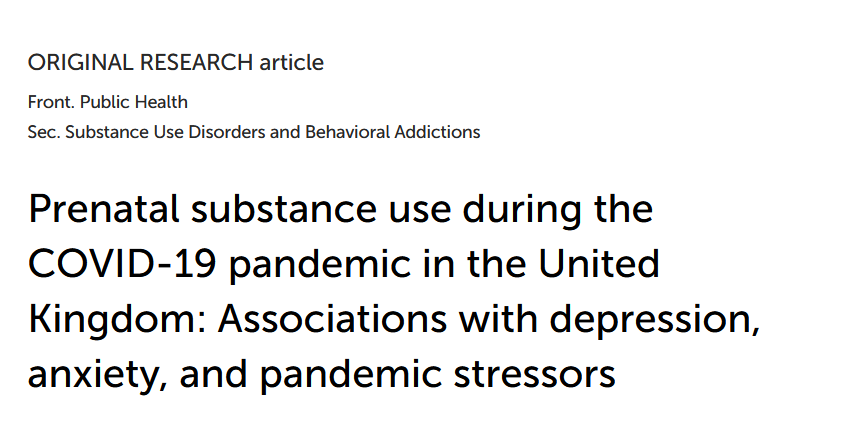 This new publication reports on a cross-sectional analysis of baseline EPPOCH data (n = 3292; June – Nov. 2020). Participants reported alcohol, tobacco, cannabis, and illicit drug use before and after recognition of pregnancy, alongside validated measures of depression, anxiety, pregnancy-related anxiety, and pandemic stressors. Linear regression models examined associations between mental health, COVID-19 stressors, and substance use after pregnancy recognition. A qualitative thematic analysis of 380 open-ended responses explored perceptions of substance use post-pregnancy recognition. Results: Alcohol was the most commonly used substance before pregnancy. Following pregnancy recognition, tobacco (8.75%) and alcohol (8.60%) were the most frequently reported substances, followed by cannabis (1.49%) and illicit drugs (0.12%). Tobacco use after pregnancy recognition was associated with higher levels of depressive symptoms and pandemic stressors, including perceived personal health threat and not receiving necessary care. Prenatal co-use of substances was associated with higher depressive symptoms and pandemic-related financial difficulties. Qualitative themes included continued substance use until pregnancy detection, vaping as a perceived safer-use strategy, and midwifery advice influencing prenatal substance use decisions.
In this large UK pregnancy cohort recruited during the COVID-19 pandemic, substance use following pregnancy recognition – particularly tobacco – was linked to depression and pandemic-related stressors. These findings highlight the importance of equipping midwives and other healthcare professionals with clear, evidence-based guidance on prenatal substance use, particularly during global health crises.
This interdisciplinary project is led by Dr. Melanie Conrad in Germany. The lead author for the paper is Ph.D. candidate Swarali Datye, whilst three members of the Centre for Midwifery & Women’s Health (CMWH): Dr. Latha Vinayakarao and Prof. Minesh Khashu both working in University Hospitals Dorset NHS Foundation Trust (UHD) and both Visiting Faculty at BU and Prof. Edwin van Teijlingen are team members and co-authors on this paper.
References:
- Datye, S., Peters, E.M.J., Windhorst, A.C., van Teijlingen, E., MacRae-Miller, A., Vinayakarao, L., Khashu, M., Fahlbusch, F.B., Conrad, M.L. (2026) Prenatal substance use during the COVID-19 pandemic in the UK: Associations with depression, anxiety, and pandemic stressors Frontiers in Public Health. (forthcoming)
- Datye, S., Smiljanic, M., Shetti, R.H., MacRae-Miller, A., van Teijlingen, E., Vinayakarao, L., Peters, E.M.J., Lebel, C.A., Tomfohr-Madsen, L., Giesbrecht, G., Khashu, M., Conrad, M.L. (2024) Prenatal maternal mental health and resilience in the United Kingdom during the SARS-CoV-2 Pandemic: A cross-national comparison, Frontiers in Psychiatry, 15 https://doi.org/10.3389/fpsyt.2024.1411761










 Apply now to take part in the 2026 ESRC Festival of Social Science
 Reminder: Register for the ESRC Festival of Social Science 2026 Information Session
 Deadline Approaching: Submit your Poster for the Research Conference by Monday 27 April
 BU academics publish in Nepal national newspaper
 New BU Physiology paper
 ECR Funding Open Call: Research Culture & Community Grant – Apply now
 ECR Funding Open Call: Research Culture & Community Grant – Application Deadline Friday 12 December
 MSCA Postdoctoral Fellowships 2025 Call
 ERC Advanced Grant 2025 Webinar
 Update on UKRO services
 European research project exploring use of ‘virtual twins’ to better manage metabolic associated fatty liver disease