 The JSPS Summer Programme provides the opportunity for current MPhil or PhD students to receive a one week orientation on Japanese culture and research systems on arrival and then move to a host institution in Japan of their choice and approved by JSPS, to conduct collaborative research activities for 2 months during the summer.
Value of award: Return international airfare, maintenance allowance (534,000, JPY), research support allowance (158,500 JPY) and overseas travel and accident insurance policy are provided.
Eligibility: Applicants must be a British national and a current MPhil or PhD student based at a UK university or research institution at the time of application. Eligible research fields are not limited.
Fellowship to take place during fixed period: Tuesday 12 June to Wednesday 22 August 2018
Applications should be sent to the British Council, Tokyo. A link to the application guidelines and form are available on the JSPS London website.
Application Deadline: Monday, 15th January 2018
See case studies written by former UK JSPS Summer Programme Fellows.
Any enquiries should be sent to: science@britishcouncil.or.jp

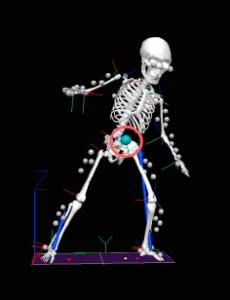
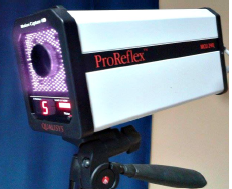 using a system of 8 QTM cameras and a force plate, I measured the effect of different tasks upon the static balance in 20 young volunteers.
 Special thanks go to the people who helped me at the







 International Open Access Week: BU support for open access
 Food Price Research Shortlisted for Civil Service Prize
 3C Event: Research Culture, Community & Connections – Wednesday 11 November 3-4pm
 ECR Opportunities: New Development Programme, Researcher Grants & Upcoming Events
 Help us capture BU’s knowledge exchange activity HE-BCI survey 2025–26
 Horizon Europe Cluster 3 (Civil Security for Society) 2026 Calls Now Open
 MSCA Doctoral Networks 2026 Call Information Webinar
 ESRC Festival of Social Science 2026: Application Deadline Extended to Thursday 25 June 2026
 Reminder: Register for the ESRC Festival of Social Science 2026 Information Session
 ECR Funding Open Call: Research Culture & Community Grant – Apply now
 ERC Advanced Grant 2025 Webinar
 Update on UKRO services
 European research project exploring use of ‘virtual twins’ to better manage metabolic associated fatty liver disease