
A virtual placement: an innovative initiative during a global pandemic was delivered by Emma Bockle and Lucy Stainer working with Desi Tait and Amanda Watson.
Many student nurses during the pandemic were unable to continue their learning in practice as practice was deemed unsafe (NMC 2020). A virtual placement on a pre-registration nursing programme was created in which students worked in groups and explored a specific geographical area through online and remote activity for 4 weeks working defined rubrics.
Students needed to comprehend health promotion, and this process created an opportunity to develop leadership, empowerment, independence, resilience and IT skills (Thomas and Asselin, 2018). A virtual placement is transferable to educational programmes requiring an analysis of a group or groups in a community.
This model of learning has significance nationally where placement capacity is predicted to be challenging with increased recruitment for health care professionals. It also reflects the need to introduce contemporary placement models that encompasses learning that is wider than the traditional placement model.
Abstract details for conference accessible on link below:
https://www.rcn.org.uk/news-and-events/events/uk-education-forum-national-conference-200421
 Welcome to BU from China! From the beginning to the end of your studies at BU, let’s focus on the middle bit and the all-important ‘sandwich placement’!







 3C Online Social: Thursday 26 March 1–2pm – Research Culture, Community & Can you Guess Who?
 Four BU students at national midwifery conference
 INRC book roundtable/presentation by Drs Jonathan Cole and Catherine Talbot, Wednesday 22/04/2026, 13:00h, P426
 BU M.Res. student’s evidence to UK Parliamentary Women & Equalities Committee
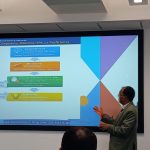 Prof Marahatta promoting BU-Nepal collaboration
 ECR Funding Open Call: Research Culture & Community Grant – Apply now
 ECR Funding Open Call: Research Culture & Community Grant – Application Deadline Friday 12 December
 MSCA Postdoctoral Fellowships 2025 Call
 ERC Advanced Grant 2025 Webinar
 Update on UKRO services
 European research project exploring use of ‘virtual twins’ to better manage metabolic associated fatty liver disease