
Depleting non-renewable resources and limited alternative (heat pumps and solar photovoltaic), renewable (tidal, wind, solar) options of energy generation are posing challenging questions. In addition sustained energy supply and security are important factors to consider.
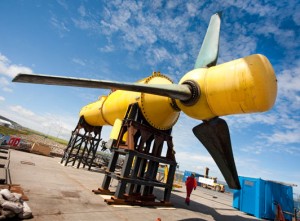 “European Union ministers meeting in Luxembourg have signalled support for draft European Commission plans for an energy efficiency law impacting directly on utilities” http://www.utilityweek.co.uk/news/news.asp . Among other considerations it is noted that “Reinvigorated efforts are necessary in order to reach the 20% EU energy saving objective by 2020.” This is an optimistic, challenging but achievable target. However these savings could easily be topped up with available options and technologies available to us without painful cuts to energy consumption in our daily lives. This should not necessarily mean that energy inlets are to be reduced or energy flow through these inlets is reduced. As both of these are directly related to life standard and output. For example we will have to choose either have a TV or laptop and/or have a smaller TV at domestic level. Or reduced manufacturing lines in the industry or reduced number of industry.
One third of the available energy is dissipated through frictional heat in mechanical interacting machines for example motors, pumps, compressors, internal combustion engines, steam/tidal/wind turbines and manufacturing tools etc. A significant part of this energy is recoverable. This is achieved through mathematically adjusting the surface profile of the interacting surface through which energy is transferred. This key aspect is part of the science and engineering of friction, wear and lubrication; Tribology.
Colleagues in the Sustainable Design Research Centre have expertise and resources in this key and strategically important area of activity and are also actively engaged in the BU initiative within Green Knowledge Economy. If you are interested in this area or would like to find out more contact Professor Mark Hadfield / Dr Zulfiqar Khan. For details please see the SDRC webpage.
 Energy: developing reliable renewable energy sources







 ECR Opportunities: New Development Programme, Researcher Grants & Upcoming Events
 Help us capture BU’s knowledge exchange activity HE-BCI survey 2025–26
 Verbal autopsy paper published two days ago
 ESRC Studentships for 2027 Entry: Opportunity Now Open
 SONAMONI contributions to Safety Conference 2026 in South Africa
 Horizon Europe Cluster 3 (Civil Security for Society) 2026 Calls Now Open
 MSCA Doctoral Networks 2026 Call Information Webinar
 ESRC Festival of Social Science 2026: Application Deadline Extended to Thursday 25 June 2026
 Reminder: Register for the ESRC Festival of Social Science 2026 Information Session
 ECR Funding Open Call: Research Culture & Community Grant – Apply now
 ERC Advanced Grant 2025 Webinar
 Update on UKRO services
 European research project exploring use of ‘virtual twins’ to better manage metabolic associated fatty liver disease
Is there any simple method of calculating approximately energy saving due to reduced wear and /or friction through surface engineering ?
Regards,
R,Chattopadhyay,
Author of 3 books,on Surface Wear (ASM international,2001}, advanced thermally assisted surface engineering (Springer, 2004), joint author of a book on global warming (Global Vision Publishing House, India, 2012) and working on the next book on green tribology and surface warming to be published by ASM International,USA.