 Week commencing 18 June saw me attending a research retreat at the University of Saskatchewan, Canada, building on successful collaboration with Canadian colleagues (via 2 CIHR development grants) established around 5 years ago my colleague Professor Debra Morgan is now leading a large programme grant application to the Canadian Institutes of Health Research (CIHR) which would allow for comparative work to be conducted in Dorset and Canada around community based dementia services. As well as academic meetings discussing the content, focus and budgetary implications of the programme of work there was a one day ‘Stakeholder’ event where decision makers debated the merits of the four strands of the programme of proposed work. This was a fantastic example of public engagement in writing a programme grant and the opening presentation I gave about the UK dementia strategies and implementation plans were very well received. It is always good to have synergy between work going on in different places and to learn from one another. Canadian colleagues were very complimentary about the policy level work that has been established within the UK, but some of the practical initiatives occuring in rural Canada are very much at the forefront of quality dementia care provision. Here’s hoping we secure the grant award!
 Canada-UK Artificial Intelligence Initiative: building competitive and resilient economies and societies through responsible AI
BU staff can login below:
Other services







Recent posts
BU research Funding opportunities EU
 Apply now to take part in the 2026 ESRC Festival of Social Science
 Reminder: Register for the ESRC Festival of Social Science 2026 Information Session
- Help us capture Bournemouth University’s knowledge exchange activity – HE-BCI survey 2025–26
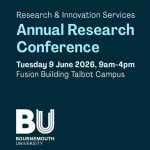 Deadline Approaching: Submit your Poster for the Research Conference by Monday 27 April
 BU academics publish in Nepal national newspaper
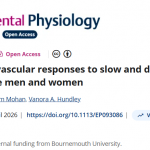 New BU Physiology paper
- Apply now to take part in the 2026 ESRC Festival of Social Science
- Reminder: Register for the ESRC Festival of Social Science 2026 Information Session
 ECR Funding Open Call: Research Culture & Community Grant – Apply now
- FLF UKRI round 11- internal launch and timelines
 ECR Funding Open Call: Research Culture & Community Grant – Application Deadline Friday 12 December
- ECR Funding Open Call: Research Culture & Community Grant – Apply Now
 MSCA Postdoctoral Fellowships 2025 Call
 ERC Advanced Grant 2025 Webinar
- European Migration Research and Impact – Invitation to a Roundtable Discussion
- MSCA Postdoctoral Fellowships 2025
 Update on UKRO services
 European research project exploring use of ‘virtual twins’ to better manage metabolic associated fatty liver disease
 Research Information Network
- Physical Sciences Case studies: information use and discovery
- Information handling in collaborative research: an exploration of five case studies
- Information literacy monitoring and evaluation
- Data centres: their use, value and impact
- Heading for the open road: costs and benefits of transitions in scholarly communications