Date: Wed, 15/05/2013
Time: 14:00
Venue: P302 (Poole House)
Speaker: Hana Almakky
Title: Saudi Culture and User Interface Design – Facebook
Abstract:
Culture is the key aspect of any society that influences the style and perpetuation. It plays vital role in the desires of user viewing Social networking sites.
User interfaces can be more successful if the cultural characteristics are reflected in the interface design. Culturability (Culture and usability) is therefore an acceptable phenomenon and most commonly a requirement while designing user interfaces (Barber and Badre 2001).
Social networking sites have gained huge popularity over the past few decades. They have evolved the modes of communication extensively. In fact, they have contributed to globalization by making communication stronger and effective.
It has been broadly understood that Facebook has been successful in introducing a unique social and a conversational experience. About 900 million users on monthly basis, 526 million users on daily basis, generate 3.2 billion comments and likes in the first quarter of the year 2012 (Pratley, N. 2012).
Throughout 2013, social media continued to grow significantly in Saudi Arabia. Millions of Saudi is using social networking not for only for entertainment and friendship, but also for daily socializing routine.
This seminar will be discussing the initial research findings in respected Facebook user interface design for Saudi Arabia.







 New HIV paper by BU PhD student
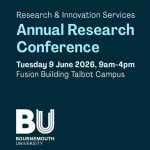 BU Annual Research Conference: Poster Exhibition Call for Applications
 Vitae Three Minute Thesis (3MT®) Competition: Applications Now Open
 3C Online Social: Thursday 26 March 1–2pm – Research Culture, Community & Can you Guess Who?
 Four BU students at national midwifery conference
 ECR Funding Open Call: Research Culture & Community Grant – Apply now
 ECR Funding Open Call: Research Culture & Community Grant – Application Deadline Friday 12 December
 MSCA Postdoctoral Fellowships 2025 Call
 ERC Advanced Grant 2025 Webinar
 Update on UKRO services
 European research project exploring use of ‘virtual twins’ to better manage metabolic associated fatty liver disease