 Surprising figures of only 43% of academics recently surveyed were aware of their university’s knowledge exchange services!
Approximately, 22,000 academics were questioned in a recent survey which was carried out by the Centre for Business Research and the UK- Innovation Research Centre, and published in a report titled The Dual Funding Structure for Research in the UK.
The report also showed that 80% of external organisations contact academics directly, which means that if you are not in contact with your Knowledge Exchange Officer – you may be missing out on further knowledge engagement with the organisations you are already in touch with! There are a number of funded knowledge engagement schemes available for organisations to tap into, such as Knowledge Transfer Partnerships (KTPs) and Innovation Vouchers. To find out more on these schemes please contact your Knowledge Engagement Officer – Lucy Rossiter.
Please do take advantage of the support on offer from your KE Officer. Additionally, there is a lot to gain from touching base with them…. If they know a bit more about what you do, in turn it will help them direct any relevant business engagement KE opportunities your way…….
** The ‘engagement’ image used in this blog was sourced from http://www.peopleinsight.co.uk/ **
 Call for papers – International Conference on Innovation Through Knowledge Transfer 2015







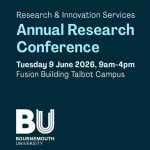 BU Annual Research Conference: Poster Exhibition Call for Applications
 Vitae Three Minute Thesis (3MT®) Competition: Applications Now Open
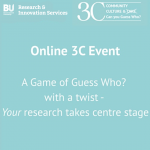 3C Online Social: Thursday 26 March 1–2pm – Research Culture, Community & Can you Guess Who?
 Four BU students at national midwifery conference
 INRC book roundtable/presentation by Drs Jonathan Cole and Catherine Talbot, Wednesday 22/04/2026, 13:00h, P426
 ECR Funding Open Call: Research Culture & Community Grant – Apply now
 ECR Funding Open Call: Research Culture & Community Grant – Application Deadline Friday 12 December
 MSCA Postdoctoral Fellowships 2025 Call
 ERC Advanced Grant 2025 Webinar
 Update on UKRO services
 European research project exploring use of ‘virtual twins’ to better manage metabolic associated fatty liver disease