Social perceptions and beliefs about childbirth can increase women’s requests for interventions, such as caesarean section, with long-term health implications for mothers and babies. Members of the Centre for Midwifery, Maternal & Perinatal Health and the Journalism and Communication academic group are hosting a joint BU Festival of Learning event to explore the role of the mass media in shaping such beliefs and identify whether media portrayals are responsible for rising rates of intervention. The event will be a debate on the impact of the mass media on women’s view of childbirth.
The motion is: The media is responsible for creating fear in childbirth.
The audience will be given the opportunity to vote on the motion before and after the debate. Two opposing teams will debate the motion prior to wider discussion with the audience.
Date: Wednesday, June 11, 2014 at 10:00 AM (BST)
Further information from: Vanora Hundley, Edwin van Teijlingen, and Ann Luce
To book your free place: https://www.eventbrite.co.uk/e/fear-in-childbirth-is-the-media-responsible-tickets-10988513941
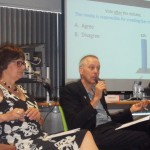 Successful BU Festival of Learning debate of media and fear in childbirth!
 Festival of Learning 2014 not ‘finished’ yet!







 SONAMONI contributions to Safety Conference 2026 in South Africa
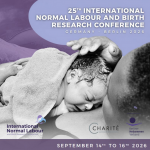 Three CMWH presentations at Berlin conference
 New interdisciplinary paper on Nepal
 Horizon Europe Cluster 3 (Civil Security for Society) 2026 Calls Now Open
 MSCA Doctoral Networks 2026 Call Information Webinar
 ESRC Festival of Social Science 2026: Application Deadline Extended to Thursday 25 June 2026
 Reminder: Register for the ESRC Festival of Social Science 2026 Information Session
 ECR Funding Open Call: Research Culture & Community Grant – Apply now
 ERC Advanced Grant 2025 Webinar
 Update on UKRO services
 European research project exploring use of ‘virtual twins’ to better manage metabolic associated fatty liver disease