Thanks to all those who tuned in yesterday onto Nerve radio to listen to Postgraduate researcher Owen O’Neil. Owen went onto the Nerve news discussion show which airs between 11-12. Owen’s 10 minute research feature explored how the use of game consoles such as Nintendo Wii and Xbox can help rehabilitate people who have arm disability after strokes.
“A lot of people who have had a stroke cannot get the access to rehabilitation devices due to prices which can costs thousands of pounds” Owen said, “We are trying to find ways in which people can regain function in their arms and hands using devices they can go out and buy in a shop, like a Nintendo Wii or a Xbox.”
The talk went on to discuss how the brain can heal itself through prompting it by giving them something fun like a video game, which produced significant effects.
“20 -30 years ago our understanding of the brain was limited, these people that had serious brain damage were often not offered the help that they have today, we are now at the stage where we can offer help and understanding through therapy and try and rehabilitate people through new and exciting ways”.
If you was not lucky enough to have tuned in to Nerve to listen to Owen O’Neil and his study, not to worry, you can listen to it by clicking here and skipping to 10 minutes.








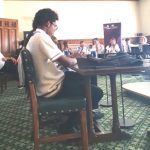 Dr. Paul Whittington attends Technology and the SEND Reforms Roundtable in the House of Commons
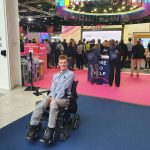 Dr. Paul Whittington joins Bett 2026 DfE Assistive Technology Roundtable
 BU Prof Jonathan Parker promoting social work in Malaysia
 New interdisciplinary paper accepted for publication
 Three NIHR Internships awarded at BU
 Research highlighted at the UN in New York
 Horizon Europe Cluster 3 (Civil Security for Society) 2026 Calls Now Open
 MSCA Doctoral Networks 2026 Call Information Webinar
 ESRC Festival of Social Science 2026: Application Deadline Extended to Thursday 25 June 2026
 Reminder: Register for the ESRC Festival of Social Science 2026 Information Session
 ECR Funding Open Call: Research Culture & Community Grant – Apply now
 ERC Advanced Grant 2025 Webinar
 Update on UKRO services
 European research project exploring use of ‘virtual twins’ to better manage metabolic associated fatty liver disease