FMC-CMC colleagues, Natasha Tobin and Janice Denegri-Knott, and BA Public Relations student, Anna Lapacz , are pleased to announce the latest issue of the Journal of Promotional Communications: Vol 5, No 1 (2017): Special Edition on Thought Leadership for PR:
http://www.promotionalcommunications.org/index.php/pc/index
The articles in this issue have been prepared by recent graduates of Bournemouth University’s BA (Hons) Public Relations degree who are now working in public relations and marketing. They were conceived as Thought Leadership articles for PR professionals during the L6 Professional PR Unit led by me, Heather Yaxley and Joyce Costello.
The 12 articles cover a lot of ground: from Virtual Reality in PR, to brand building and using Snapchat to reach younger voters during elections. Several of the articles also investigate aspects of practice, such as clients’ expectations of corporate social responsibility to the emerging PR industry in Bulgaria, which given the country’s political and social legacy, has taken a different track from the Western model.
The editorial team hope that you’ll enjoy the latest edition of the Journal of Promotional Communications.
 FMC-CMC’s Journal of Promotional of Communications Publishes New Volume







 SONAMONI contributions to Safety Conference 2026 in South Africa
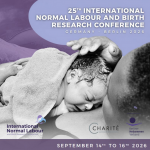 Three CMWH presentations at Berlin conference
 New interdisciplinary paper on Nepal
 Horizon Europe Cluster 3 (Civil Security for Society) 2026 Calls Now Open
 MSCA Doctoral Networks 2026 Call Information Webinar
 ESRC Festival of Social Science 2026: Application Deadline Extended to Thursday 25 June 2026
 Reminder: Register for the ESRC Festival of Social Science 2026 Information Session
 ECR Funding Open Call: Research Culture & Community Grant – Apply now
 ERC Advanced Grant 2025 Webinar
 Update on UKRO services
 European research project exploring use of ‘virtual twins’ to better manage metabolic associated fatty liver disease