
We are a group of scholars and practitioners who have an interest in what makes us Feel Human and how this is linked to Health, Wellbeing, Dignity and Compassion. We use Lifeworld approaches and subjective experience as the basis for our understanding. For more information please click here
At meetings we discuss issues following two presentations, and share our on-going work into humanisation in education, practice and research.
Our next meeting is
On April 11th 2017, From 2pm to 4.30 pm, At Lansdowne Campus, EB202
The two presentations are
- The relatives’ experience of acquired brain injury and the humanising role of the Expert Companion Mark Holloway – Brain Injury Case Manager Head First, SSCR Fellow
- Using photography to encourage introspection among GPs Rutherford – Senior Lecturer, Bournemouth University
If you are not already a member of the Humanisation SIG e-mail group and would like to be, please contact Caroline Ellis-Hill
For further details of the topics and speakers please click here
All Staff and Students are welcome
 BU Humanising Special Interest Group meeting 7th December 2017
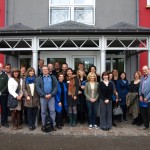 North Sea Dementia Group annual meeting (24-26 April 2013) by Mariela Gaete-Reyes







 ECR Opportunities: New Development Programme, Research Grants & Upcoming Events
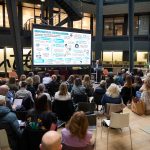 Help us capture BU’s knowledge exchange activity HE-BCI survey 2025–26
 Verbal autopsy paper published two days ago
 ESRC Studentships for 2027 Entry: Opportunity Now Open
 SONAMONI contributions to Safety Conference 2026 in South Africa
 Horizon Europe Cluster 3 (Civil Security for Society) 2026 Calls Now Open
 MSCA Doctoral Networks 2026 Call Information Webinar
 ESRC Festival of Social Science 2026: Application Deadline Extended to Thursday 25 June 2026
 Reminder: Register for the ESRC Festival of Social Science 2026 Information Session
 ECR Funding Open Call: Research Culture & Community Grant – Apply now
 ERC Advanced Grant 2025 Webinar
 Update on UKRO services
 European research project exploring use of ‘virtual twins’ to better manage metabolic associated fatty liver disease