“Facebook! WhatsApp!” – shouts one of the Eritrean teenagers. “No, Viber!” – contradicts his friend. The promt for this, was the question: what is your favourite app? I’m in a centre in the north of the Netherlands which accommodates 20 unaccompanied minor refugees. I’m here because we’re conducting an EU-funded Marie Curie project on how these displaced children (aged 14-18) use digital technology and (social) media.
I’m running the focus group in the mentors’ office, while in the kitchen some other boys are listening to Eritrean music. From one of the rooms, I can also hear Arabic music playing. Wherever I went during the two weeks field work in the Netherlands, music was the one constant. Most of the time YouTube was on auto play, and I watched some of the videos together with the teenagers.
“What is it about?” 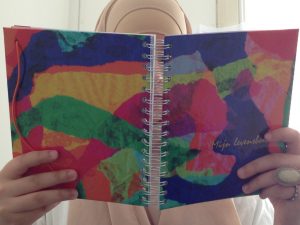 – I would ask. The girls would start laughing: “Ah it’s too complicated.” “Is it about love?” – I continued. “Yes!”- they’d reply and laugh even harder.
In the two weeks spent in the Netherlands, I interviewed 16 unaccompanied refugee children. In that time, I was lucky enough to be invited into their homes. Upon entering I was regularly offered tea, or in one house, a traditional Eritrean cake called Himbasha. Despite their struggles and constant waiting for their families to arrive from a different country, these teenagers were trying their best to live a fairly normal life.

I was also humbled by the work of their mentors. The mentors are employed by a Dutch non-governmental organisation, and have a very important role: to help young refugees adapt to their new country, help them understand the way Dutch society functions and to support them in their everyday life. From applying for a new bus card for the teenagers to asking them about school work, the mentors are basically a new family to them. Some of the mentors I’ve met, have themselves arrived as refugees to the Netherlands. Needless to say, their work is equally demanding and fulfilling.
The final aim of this project is to understand unaccompanied minor refugees’ lived media experiences in order to create media literacy educational materials for them. I hope that our work will be as beneficial as the work I’ve seen done by these mentors.
photo credits: Nidos, RedDishKitchen
I’m very grateful to the non-governmental organisations Nidos and Vitree for their support during this field work.
 YouTube: a look into the future







 Verbal autopsy paper published two days ago
 ESRC Studentships for 2027 Entry: Opportunity Now Open
 SONAMONI contributions to Safety Conference 2026 in South Africa
 Three CMWH presentations at Berlin conference
 Horizon Europe Cluster 3 (Civil Security for Society) 2026 Calls Now Open
 MSCA Doctoral Networks 2026 Call Information Webinar
 ESRC Festival of Social Science 2026: Application Deadline Extended to Thursday 25 June 2026
 Reminder: Register for the ESRC Festival of Social Science 2026 Information Session
 ECR Funding Open Call: Research Culture & Community Grant – Apply now
 ERC Advanced Grant 2025 Webinar
 Update on UKRO services
 European research project exploring use of ‘virtual twins’ to better manage metabolic associated fatty liver disease