 A new multidisciplinary project in South Asia, run between two of Bournemouth University’s Faculties, has recently been funded. The cross-faculty project “Scoping Study to understand the maternal health, ageing and wellness in rural India to develop a grass-root centre addressing these issues” has Dr Shanti Shanker (Psychology) as its principal investigator in collaboration with Prof Edwin van Teijlingen (Human Sciences & Public Health). These BU lead researchers have been working in India and Nepal for more than a decade.

This project was recently awarded £76k from the HEFCE GCRF (Higher Education Funding Council for England, Global Challenge Research Funds) Call, at Bournemouth University. The project will be running from 2017 to 2021 between Maharashtra, India, Nepal and the UK. This important research initiative aligns closely with Bournemouth University’s strategic plan around South Asia through Connect India. Connect India is BU’s hub of practice which focuses on the world’s most populated areas and a global region which is developing rapidly in many ways.

 Dr. Aryal funded to attend international workshop on migration & health
 New BU paper published on South Asian maternity care
 UKIERI Grant Success: Visit to India
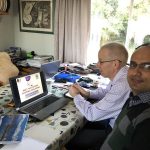 BU contributes to International Conference in India.







 International Open Access Week: BU support for open access
 Food Price Research Shortlisted for Civil Service Prize
 3C Event: Research Culture, Community & Connections – Wednesday 11 November 3-4pm
 ECR Opportunities: New Development Programme, Researcher Grants & Upcoming Events
 Help us capture BU’s knowledge exchange activity HE-BCI survey 2025–26
 Horizon Europe Cluster 3 (Civil Security for Society) 2026 Calls Now Open
 MSCA Doctoral Networks 2026 Call Information Webinar
 ESRC Festival of Social Science 2026: Application Deadline Extended to Thursday 25 June 2026
 Reminder: Register for the ESRC Festival of Social Science 2026 Information Session
 ECR Funding Open Call: Research Culture & Community Grant – Apply now
 ERC Advanced Grant 2025 Webinar
 Update on UKRO services
 European research project exploring use of ‘virtual twins’ to better manage metabolic associated fatty liver disease