On 9th – 10th June, Dr Ellie Smith attended the “Public Health, Mental Health and Mass Atrocity Prevention” workshop. The event was held in New York, and was co-hosted by the Cardozo Law Institute in Holocaust and Human Rights and the Auschwitz Institute for Peace and Reconciliation.



The aim of the workshop was to bring together a group of practitioners and academics with particular experience of working with conflict and trauma within the fields of psychology, psychiatry, public health and law, in order to explore the role of public and mental health strategies and approaches in mass atrocity prevention. The event was designed to encourage the exchange of ideas between intellectual fields and to begin to build a body of knowledge on the subject, intended to culminate in an edited volume. Dr Smith was presenting her work on the concept of “Justice” as viewed from the perspective of atrocity survivors, and in particular, the psychological notion of a “sense of justice”, including its constituent elements.
She is currently engaged as a Researcher with Bournemouth University on the AHRC-funded project “Mass Grave Protection for Truth and Justice”, led by Dr Melanie Klinkner @GraveProtection
 BU PhD student Peter Wolfensberger has article accepted in Brit J Mental Health Nursing
 NIHR – mental health advisor required for panel







 ECR Opportunities: New Development Programme, Researcher Grants & Upcoming Events
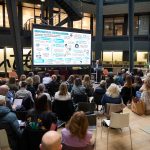 Help us capture BU’s knowledge exchange activity HE-BCI survey 2025–26
 Verbal autopsy paper published two days ago
 ESRC Studentships for 2027 Entry: Opportunity Now Open
 SONAMONI contributions to Safety Conference 2026 in South Africa
 Horizon Europe Cluster 3 (Civil Security for Society) 2026 Calls Now Open
 MSCA Doctoral Networks 2026 Call Information Webinar
 ESRC Festival of Social Science 2026: Application Deadline Extended to Thursday 25 June 2026
 Reminder: Register for the ESRC Festival of Social Science 2026 Information Session
 ECR Funding Open Call: Research Culture & Community Grant – Apply now
 ERC Advanced Grant 2025 Webinar
 Update on UKRO services
 European research project exploring use of ‘virtual twins’ to better manage metabolic associated fatty liver disease