The Departments of Psychology (SciTech), Midwifery and Health Sciences (HSS) from Bournemouth University and SSLA part of Symbiosis International (Deemed University) were successful in getting the United Kingdon India Education Research Initiative (UKIERI)  funding to support 10 UK Psychology Students and Staff to visit India. This initiative receives further support from Global Engagement Hub, Bournemouth University.
The Study in India Programme has been designed in collaboration with BU’s project partner university Symbiosis International in India, where this will be hosted. This exchange will offer a program of interactive lectures, workshops, research methods seminars, clinical experience observations, and relevant field visits.
Students will also contribute to research with Sheetal Astitva, which is a GCRF funded initiative aimed to improve mental health in rural India and Nepal. The lead researchers for this initiative are Prof. Edwin van-Teijlingen and Dr. Shanti Shanker.
 Sheetal Astitva: success in India
 Nepali migrant workers in India #GlobalFoL17 presentation in Delhi
 New BU paper: Health of Nepali migrants in India
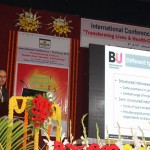 FHSS Dr. Pramod Regmi speaking in India







 Dr. Paul Whittington attends Technology and the SEND Reforms Roundtable in the House of Commons
 Dr. Paul Whittington joins Bett 2026 DfE Assistive Technology Roundtable
 BU Prof Jonathan Parker promoting social work in Malaysia
 New interdisciplinary paper accepted for publication
 Three NIHR Internships awarded at BU
 Research highlighted at the UN in New York
 Horizon Europe Cluster 3 (Civil Security for Society) 2026 Calls Now Open
 MSCA Doctoral Networks 2026 Call Information Webinar
 ESRC Festival of Social Science 2026: Application Deadline Extended to Thursday 25 June 2026
 Reminder: Register for the ESRC Festival of Social Science 2026 Information Session
 ECR Funding Open Call: Research Culture & Community Grant – Apply now
 ERC Advanced Grant 2025 Webinar
 Update on UKRO services
 European research project exploring use of ‘virtual twins’ to better manage metabolic associated fatty liver disease