As we have now all become accustomed to working and studying from home, research has started looking at various implications of remote work/study. These implications include the impact on our subjective being, but also on the environment. There are speculations that work/study from home may reduce our carbon footprint, for example. This is because commute and/or business travel are no longer required. These two activities have long been recognised as the main drivers of carbon emissions in Universities, alongside on-site energy use and procurement.
The COVID-19 pandemic has provided a unique opportunity to compare the carbon intensity of working/studying at home and on campus. That is why Dr Viachaslau Filimonau from the Business School; Dave Archer, Laura Bellamy, Neil Smith, and Richard Wintrip from the Sustainability Team have undertaken a study of the carbon footprint of Bournemouth University during the COVID-19 lockdown. This is the first investigation of its kind and only the third attempt to assess the carbon emissions of UK institutions of higher education.
The study has found that working/studying from home may be less beneficial from the carbon perspective than originally thought. The carbon emissions produced by staff, but particularly students, at home are almost equal to the carbon footprint of commute. The complete closure of University campuses does not result in low carbon emissions.
This has important implications for the future of (higher) education in the UK and beyond. For instance, the study’s findings indicate that the model of blended teaching and learning may have low carbon efficiency and should, therefore, be applied by Universities with caution. This is because institutions of higher education should promote sustainability which involves ‘leading by example’ when it comes to reducing the carbon footprint.
The study has been peer-reviewed and published in Science of the Total Environment, a leading international journal in the field of sustainability and environmental management (impact factor 6.6). The full paper can be found here: https://www.sciencedirect.com/science/article/pii/S0048969720374957. The team aims to advance this project by assessing the carbon footprint of Bournemouth University over the winter period. This is when heating will be put on, thus creating extra carbon emissions on campus but, particularly, at home given that we will continue working/studying remotely in semester two.







 International Open Access Week: BU support for open access
 Food Price Research Shortlisted for Civil Service Prize
 3C Event: Research Culture, Community & Connections – Wednesday 11 November 3-4pm
 ECR Opportunities: New Development Programme, Researcher Grants & Upcoming Events
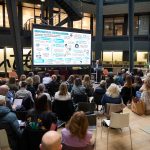 Help us capture BU’s knowledge exchange activity HE-BCI survey 2025–26
 Horizon Europe Cluster 3 (Civil Security for Society) 2026 Calls Now Open
 MSCA Doctoral Networks 2026 Call Information Webinar
 ESRC Festival of Social Science 2026: Application Deadline Extended to Thursday 25 June 2026
 Reminder: Register for the ESRC Festival of Social Science 2026 Information Session
 ECR Funding Open Call: Research Culture & Community Grant – Apply now
 ERC Advanced Grant 2025 Webinar
 Update on UKRO services
 European research project exploring use of ‘virtual twins’ to better manage metabolic associated fatty liver disease