Research at BU has helped establish a cause of childhood kidney failure. The work, accepted for publication the journal Paediatric Nephrology, was a combined effort, including inputs from academic and clinical teams at the universities of Oxford, Bristol and Bournemouth. It focused on Steroid Resistant Nephrotic Syndrome (SRNS), a life-threatening form of kidney disease seen in young children, which may require dialysis and eventually a kidney transplant.
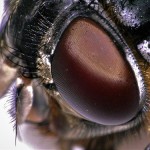
It is increasingly understood that genetic mutations play a critical role in SRNS but proving cause and effect is problematic. A patient’s family may have evidence of mutations in key ‘kidney genes’ but establishing if these actually combine in the patient to cause SRNS needs experimental evidence. Bournemouth’s contribution to this work involved disrupting a gene called Nucleoporin 93 (NUP93) in the kidney-like cells (nephrocytes) of fruit flies (Drosophila). When NUP93 function was lost in nephrocytes, failed to do their kidney filtration job and then died; providing strong evidence that mutations in the human gene do indeed lead to SRNS.
NUP93 is part of a protein complex that allows communication between a cell’s ‘head quarters’, the nucleus, and the rest of the cell. Perplexingly, NUP93 is found in all cells raising questions as to why mutations specifically affect the kidney. This work facilitates the search for a cure in the long term and, in the shorter term, allows for a definitive diagnosis when clinicians and families are confronted by this potentially devastating disease.
Paul Hartley (Life and Environmental Sciences).
 Strong Presence of BU at UK Kidney Week







 National Postdoc Appreciation Week 2026: The Changing Landscape of Postdoc Careers
 NIHR Insight South West Central Conference 2026 at Bournemouth University
 BU PhD student presented at World Safety Conference in South Africa
 National Research Supervision Recognition: Apply Now & Join the Supporting Workshop on 16 September
 Horizon Europe Cluster 3 (Civil Security for Society) 2026 Calls Now Open
 MSCA Doctoral Networks 2026 Call Information Webinar
 ESRC Festival of Social Science 2026: Application Deadline Extended to Thursday 25 June 2026
 Reminder: Register for the ESRC Festival of Social Science 2026 Information Session
 ECR Funding Open Call: Research Culture & Community Grant – Apply now
 ERC Advanced Grant 2025 Webinar
 Update on UKRO services
 European research project exploring use of ‘virtual twins’ to better manage metabolic associated fatty liver disease