This case study shares the knowledge gained from working with an individual having lived experience of a health condition contributing toward an occupational therapy education module through the reflections of an occupational therapy academic and a PIER partner working at Bournemouth university. The primary goal was to establish an empirical evidence base for involvement of people with lived experience in occupational therapy education and to encourage other educators and individuals with lived experience to follow this model of teaching and learning in their curricula.
Based on the belief that teaching and learning through co-production creates a ‘triangle’ of benefit for individuals with lived experience, students and academics. Individuals with lived experience are seen as powerful, independent, and strong despite their medical condition. Students learn more about important aspects of service provision beyond direct medical and therapy knowledge and academics learn about and model this new way of working.
This case study aims to promote development of co-production learning activities in occupational therapy education.
Instructional Insights Learnings from a Case Stud_250113_190638
 BU to host International Occupational Science Conference on 3 and 4 September







 Verbal autopsy paper published two days ago
 ESRC Studentships for 2027 Entry: Opportunity Now Open
 SONAMONI contributions to Safety Conference 2026 in South Africa
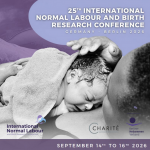 Three CMWH presentations at Berlin conference
 Horizon Europe Cluster 3 (Civil Security for Society) 2026 Calls Now Open
 MSCA Doctoral Networks 2026 Call Information Webinar
 ESRC Festival of Social Science 2026: Application Deadline Extended to Thursday 25 June 2026
 Reminder: Register for the ESRC Festival of Social Science 2026 Information Session
 ECR Funding Open Call: Research Culture & Community Grant – Apply now
 ERC Advanced Grant 2025 Webinar
 Update on UKRO services
 European research project exploring use of ‘virtual twins’ to better manage metabolic associated fatty liver disease