At Café Scientifique, you can explore the latest ideas in science and technology in a relaxed setting. Enjoy listening to a short talk before engaging in debate and discussion with our guest speaker and audience
 We’ll be joined by Dr Matteo Toscani on Tuesday 5 December from 6:30 – 8:00pm.
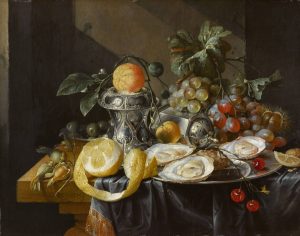
Digital devices use technology based on scientific understanding of how we perceive colour to ensure images look as natural as possible. But the Dutch ‘Old Masters’ were doing something similar to enhance the realism of their paintings in the 17th-century.
Join psychologist Dr Matteo Toscani, from Bournemouth University, who will use examples of these masterpieces to demonstrate how artists used their knowledge of colour perception to create vividly realistic works of art.
This event will be held at The Black Cherry in Boscombe, Bournemouth. Although the talks start at 6:30pm, the café will be open early so we encourage you to arrive early for a drink and a bite to eat before the talk starts.

If you have any questions about this event, or if you’re interested in getting involved with a future Café Sci event, please email the Public Engagement with Research Team: publicengagement@bournemouth.ac.uk
 Café Scientifique – Tuesday 2 May 2023: Mind-reading machines







 Verbal autopsy paper published two days ago
 ESRC Studentships for 2027 Entry: Opportunity Now Open
 SONAMONI contributions to Safety Conference 2026 in South Africa
 Three CMWH presentations at Berlin conference
 Horizon Europe Cluster 3 (Civil Security for Society) 2026 Calls Now Open
 MSCA Doctoral Networks 2026 Call Information Webinar
 ESRC Festival of Social Science 2026: Application Deadline Extended to Thursday 25 June 2026
 Reminder: Register for the ESRC Festival of Social Science 2026 Information Session
 ECR Funding Open Call: Research Culture & Community Grant – Apply now
 ERC Advanced Grant 2025 Webinar
 Update on UKRO services
 European research project exploring use of ‘virtual twins’ to better manage metabolic associated fatty liver disease