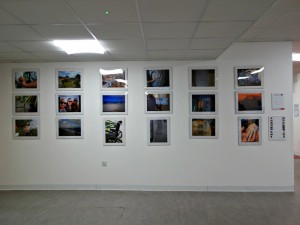
 From 12 September, the Centre for Excellence in Learning (CEL) is holding a photo exhibition in Poole House, next to the Cash Office. This exhibition is part of the ‘Students who bounce back’ project, a study funded by Bournemouth University’s Fair Access Agreement Management Group. The study is being conducted by researchers at CEL, in co-production with student carers*.
The photographs displayed in the exhibition were taken by student carers as part of a photodiary exercise. Some of them also came to the University this week to formally launch the exhibition.
‘Students who bounce back’ has the following objectives:
- To explore the life experience of student carers at BU and the impact of caring in their learning experiences.
- To determine, in co-production with students, the main motivations and expectations of their university experience, and their contact with the different support mechanisms in place at BU.
- To contribute with empirical data to the development of the concept of psychosocial scaffoldings as enablers of resilience (or the ability to ‘bounce back’).
- To contribute to wider debates and developments about the learning experience of student carers in the Higher Education sector.
The exhibition will be on display for six weeks. For more information about the project, email Jacqueline Priego.
*A carer is defined as anyone who cares, unpaid, for a family member who, due to illness, disability, a mental health problem or an addiction, cannot cope without their support.
 Students Who Bounce Back Project
 Royal Society Summer Exhibition – Volunteering opportunity







 National Research Supervision Recognition: Apply Now & Join the Supporting Workshop on 16 September
 3C Event: ECR Network Café – Wednesday 16 September 2-3pm
 BU geography student’s undergraduate dissertation published in international journal
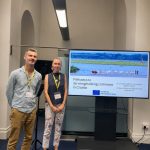 Why some commons survive and others don’t
 BU Research blog in 2023 grows into 2026 publication
 Horizon Europe Cluster 3 (Civil Security for Society) 2026 Calls Now Open
 MSCA Doctoral Networks 2026 Call Information Webinar
 ESRC Festival of Social Science 2026: Application Deadline Extended to Thursday 25 June 2026
 Reminder: Register for the ESRC Festival of Social Science 2026 Information Session
 ECR Funding Open Call: Research Culture & Community Grant – Apply now
 ERC Advanced Grant 2025 Webinar
 Update on UKRO services
 European research project exploring use of ‘virtual twins’ to better manage metabolic associated fatty liver disease