Tagged / engaging with media
BU academic publishes in online newspaper in Nepal
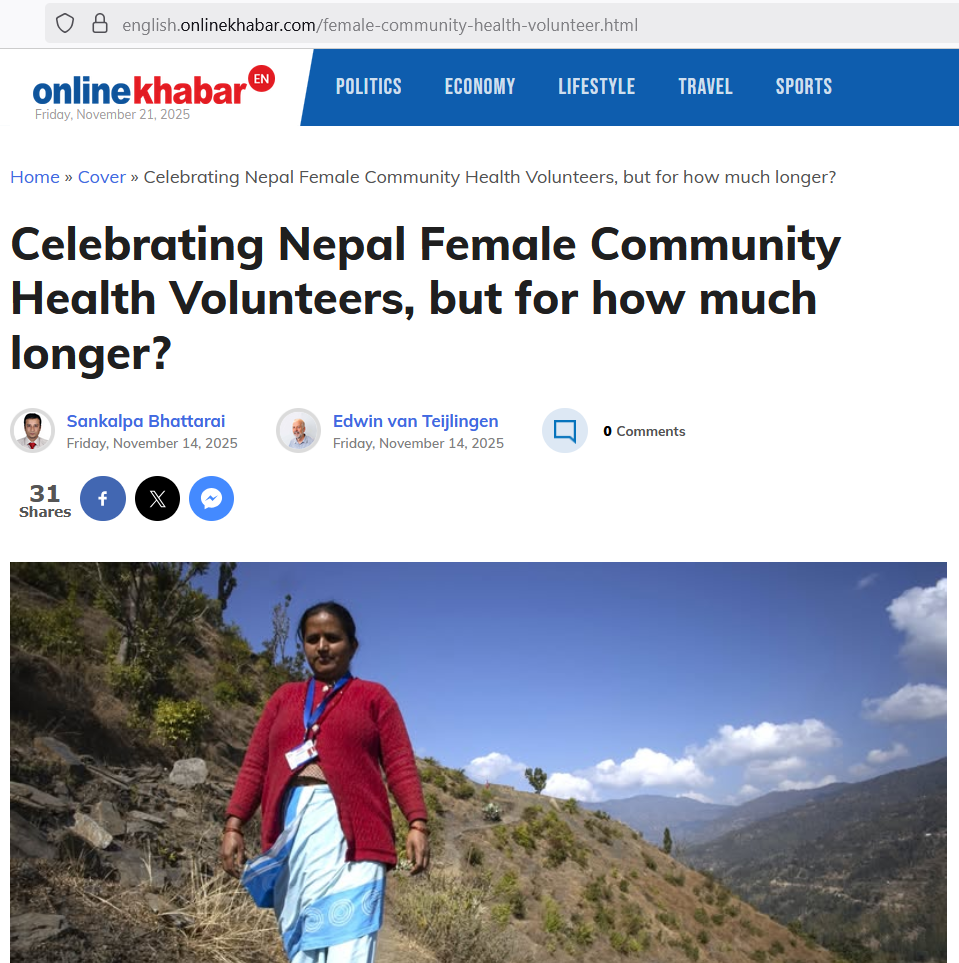
Last week the internet newspaper Online Khabar published ‘Celebrating Nepal Female Community Health Volunteers, but for how much longer?‘. This article is written by Sankalpa Bhattarai, a researcher based at Green Tara Nepal, and BU’s Prof. Edwin van Teijlingen about the future of Female Community Health Volunteers (FCHVs) in Nepal. In the late 1980s the Government of Nepal introduced the FCHV programmea at a time, Nepal was one of only two countries in the world where the life expectancy for women was lower than that of men. These FCHVs were recruited locally in their own communities to help reduce infant and maternal mortality. They provided health education, immunisation, and information on family planning and hygiene, as well as offering basic first aid services and referring people in their communities to basic or advanced health services when needed.
The FCHV programme is one of the most successful parts of the country’s health system, and recognised worldwide for offering basic care in a system of harmony between local volunteers and the communites they live in, as such meaningful connections can have a profound impact on people’s well-being. There are FCHVs in most villages and the volunteer workforce comprises over fifty thousand women spread across the country. Th future of this FCHV programme is currently being discussed with four possible strategies emerging: (1) redefining FCHV roles; (2) modernization and skills upgrade; (3) establishing permanent support and incentives; and (4) formalizing their role in crisis response.
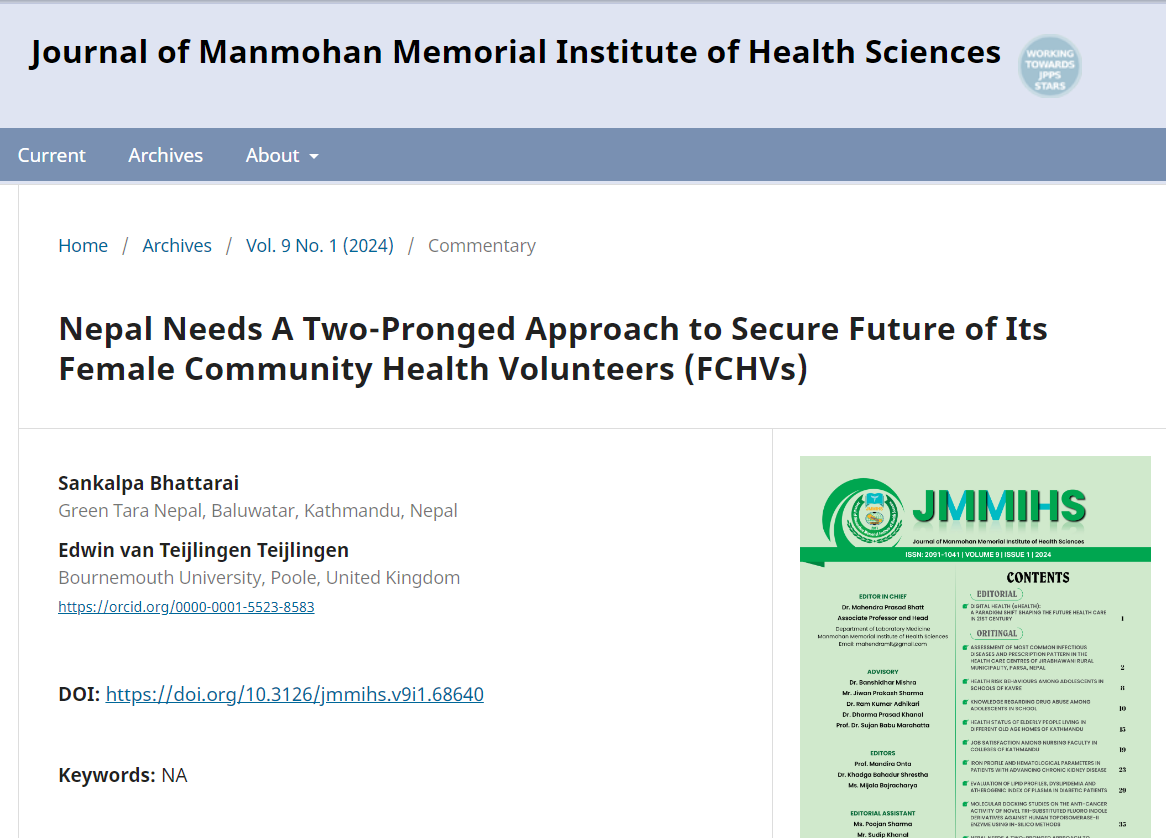
The online newspaper article is based on a paper we published last year as a Commentary in the Journal of Manmohan Memorial Institute of Health Sciences [1]. Our previous research work on FCHVs included a paper in PLOS Global Public Health [2], as well as two further papers based on the Ph.D. study by Dr. Sarita Panday [3-4].
We like to take this opportunity to thank Dr. Pramod Regmi, Principal Academic in International Health in the Faculty of Health, Environment & Medical Science, for connecting us to the editor of Online Khabal.
Prof. Edwin van Teijlingen
Centre for Midwifery & Women’s Health
References
- Bhattarai, S., & van Teijlingen, E. (2024). Nepal Needs A Two-Pronged Approach to Secure Future of Its Female Community Health Volunteers (FCHVs). Journal of Manmohan Memorial Institute of Health Sciences, 9(1), 43–48. https://doi.org/10.3126/jmmihs.v9i1.68640
- Panday, S., Barnes, A., van Teijlingen, E. (2024) Exploring the motivations of female community health volunteers in primary healthcare provision in rural Nepal: a qualitative study, PLOS Global Public Health Aug 1;4(8):e0003428. doi: 10.1371/journal.pgph.0003428.
- Panday, S., Bissell, P., van Teijlingen, E., Simkhada, P. (2017) The contribution of female community health volunteers (FCHVs) to maternity care in Nepal: a qualitative study, BMC Health Services Research 17:623 be/vz9C
- Panday, S., Bissell, P., van Teijlingen, E., Simkhada, P. (2019) Perceived barriers to accessing female community health volunteers’ services amongst ethnic minority women in Nepal: a qualitative study, PLoS ONE 14(6): e0217070 https://journals.plos.org/plosone/article?id=10.1371/journal.pone.0217070
The Beautiful Work Challenge: On Birth
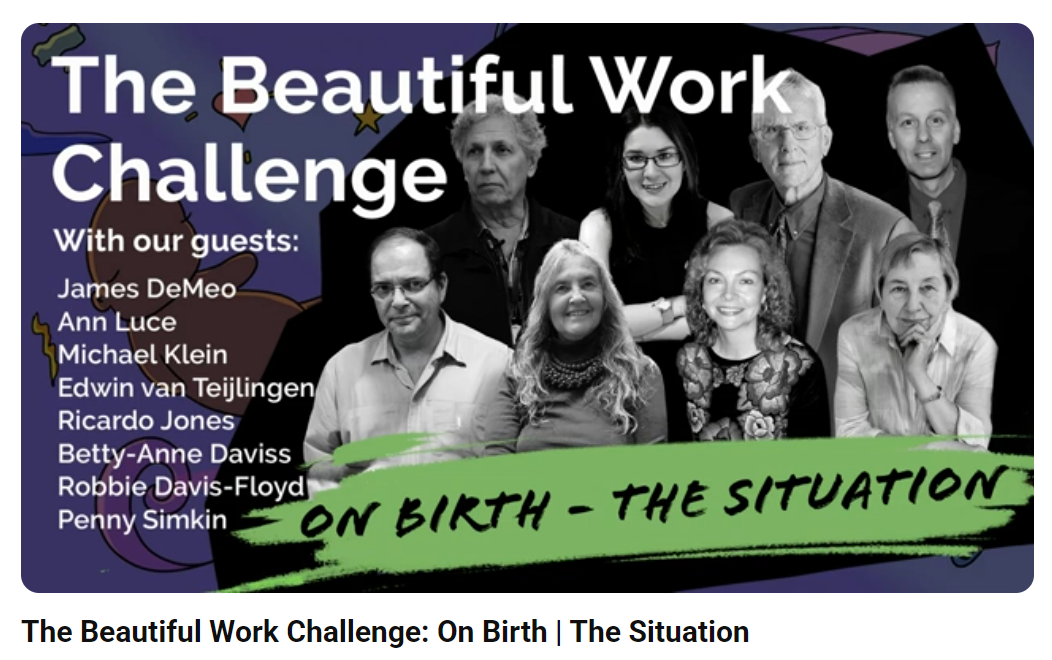
Last month a US organisation published The Beautiful Work Challenge: On Birth | The Situation on YouTube. The episode which includes two Bournemouth University professors-Ann Luce and Edwin van Teijlingen can be found here: https://youtu.be/sKdBYTASCt8
The advert for the video highlights questions such as: What’s the current situation in birth? On Birth has stories to tell about the Sahrasia hypothesis, the rulers of birth, an ongoing inquisition, the invention of obstetrics, Hollywood’s influence, and the rise of eBirth. Welcome to the age of medicalised, techno-driven birth. What you don’t know can hurt you.
Prof. Edwin van Teijlingen
ICM Media & Midwifery presentation today
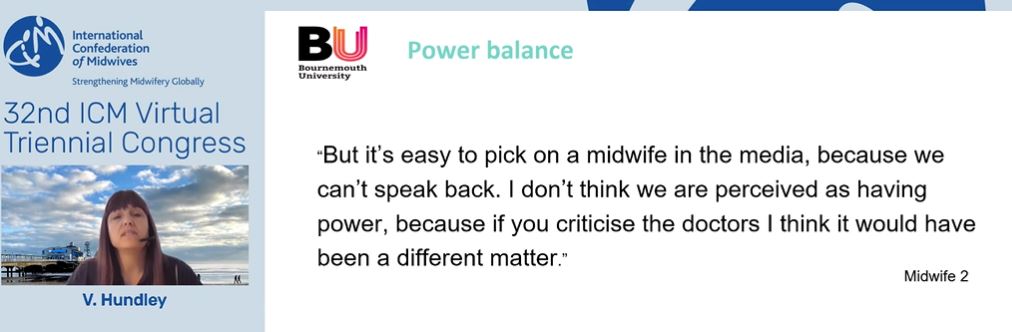
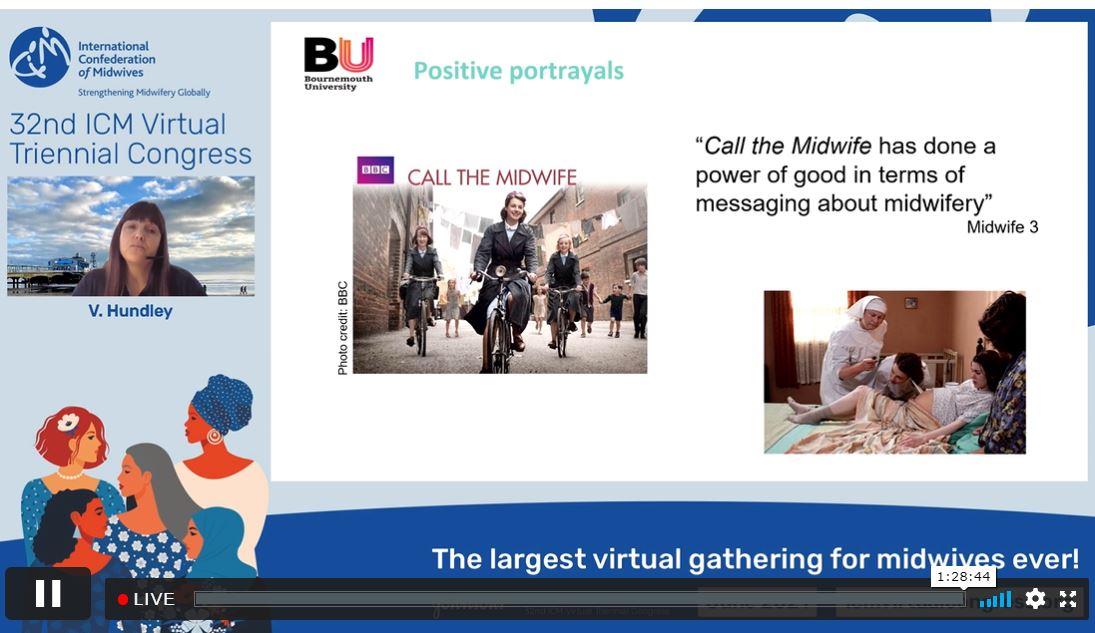
Today Prof. Vanora Hundley, based in the Faculty of Health & Social Sciences, gave a well-received presentation on ‘Changing the narrative around childbirth: whose responsibility is it?’ at the 32nd ICM (International Confederation of Midwives) Virtual Triennial Congress. Prof. Hundley presented online a BU collaboration published in the journal Evidence-based Midwifery [1]. This presentation is part of a larger body of interdisciplinary work between media and heatlh scholars at Bournemouth University [see 2-6].
The finding that UK midwives fear the media resonates with experiences from many other countries and professional groups. There is a need to change media discourse in fictional and factual representations of childbirth, and midwives have a critical role to play in this, but to do this they need to equip themselves with the skills necessary to engage with the media. Guidelines on responsible media reporting could ensure that media producers portray pregnancy, midwifery
and maternity care as naturally as possible.
- Hundley, V., Luce, A., van Teijlingen, E., Edlund, S. (2019) Changing the narrative around childbirth: whose responsibility is it? Evidence-based Midwifery 17(2): 47-52.
- Luce, A., Hundley, V., van Teijlingen, E. (Eds.) (2017) Midwifery, Childbirth and the Media, London: Palgrave Macmillan [ISBN: 978-3-319-63512-5].
- Luce, A., Cash, M., Hundley, V., Cheyne, H., van Teijlingen, E., Angell, C. (2016) “Is it realistic?” the portrayal of pregnancy and childbirth in the media BMC Pregnancy & Childbirth16: 40 http://bmcpregnancychildbirth.biomedcentral.com/articles/10.1186/s12884-016-0827-x
- Angell, C. (2017) An Everyday Trauma: How the Media Portrays Infant Feeding, In: Luce, A. et al. (Eds.) Midwifery, Childbirth and the Media, London: Palgrave Macmillan pp: 45-59.
- Hundley, V., Duff, E., Dewberry, J., Luce, A., van Teijlingen, E. (2014) Fear in childbirth: are the media responsible? MIDIRS Midwifery Digest24(4): 444-447.
- Hundley, V., Luce, A., van Teijlingen, E. (2015) Do midwives need to be more media savvy? MIDIRS Midwifery Digest25(1):5-10.
Midwifery and the Media
Today we received an end-of-year good-news message from ResearchGate telling us that 700 people had ‘read’ our book Midwifery, Childbirth and the Media [1].
Lee Wright, Senior Lecturer in the School of Nursing and Midwifery at Birmingham City University wrote in his review of our edited volume: “…our media image and digital foot print are rapidly becoming the most important window into our profession. In a rapidly changing environment this book provides an up to date and informative insight into how our profession is affected by the media and how our profession can inform and influence the image of midwifery. This area is going to become even more important in the future universities and trusts increasingly use broadcast and social media to manage information and inform our clients of the services we provide. This book will be the important first text in a new growth area. It brings together an internationally recognised group of authors who are experts in this field. I wholeheartedly recommend it to you.”
This edited collection was published by Palgrave Macmillan in 2017 and it is part of a larger body of Bournemouth University research on the topic [2-6].
Professor Edwin van Teijlingen, Professor Vanora Hundley and Associate Professor Ann Luce
References:
- Luce, A., Hundley, V., van Teijlingen, E. (Eds.) (2017) Midwifery, Childbirth and the Media, London: Palgrave Macmillan [ISBN: 978-3-319-63512-5].
- Luce, A., Cash, M., Hundley, V., Cheyne, H., van Teijlingen, E., Angell, C. (2016) “Is it realistic?” the portrayal of pregnancy and childbirth in the media BMC Pregnancy & Childbirth 16: 40 http://bmcpregnancychildbirth.biomedcentral.com/articles/10.1186/s12884-016-0827-x
- Angell, C. (2017) An Everyday Trauma: How the Media Portrays Infant Feeding, In: Luce, A. et al. (Eds.) Midwifery, Childbirth and the Media, London: Palgrave Macmillan pp: 45-59.
- Hundley, V., Luce, A., van Teijlingen, E., Edlund, S. (2019) Changing the narrative around childbirth: whose responsibility is it? Evidence-based Midwifery 17(2): 47-52.
- Hundley, V., Duff, E., Dewberry, J., Luce, A., van Teijlingen, E. (2014) Fear in childbirth: are the media responsible? MIDIRS Midwifery Digest 24(4): 444-447.
- Hundley, V., Luce, A., van Teijlingen, E. (2015) Do midwives need to be more media savvy? MIDIRS Midwifery Digest 25(1):5-10.
Widespread media coverage in Nepal for BU researcher
This week Dr. Preeti Mahato in the Centre for Midwifery, Maternal & Perinatal Health (CMMPH) appeared in several newspapers and new website in Nepal. The media reported both in Nepali [1-4] and in English, the latter in South Asia Time [5] on her recently published paper on birthing centres in Nepal. This latest paper from her PhD was published in the scientific journal PLoS ONE [6]. The paper is co-authored by CMMPH’s Dr.Catherene Angell, Prof.Edwin van Teijlingen and Prof. Vanora Hundley as well as BU Visiting Professor Padam Simkhada (Associate Dean International at the School of Human and Health Sciences, University of Huddersfield.
We are very grateful to BU’s Dr. Nirmal Aryal for engaging with all his media contacts in Nepal to achieve this great coverage.
References:
- https://ekantipur.com/diaspora/2020/06/02/159107091260531499.html
- https://www.nepalilink.com/2020/06/02/5326.html
- http://www.nepalbritain.com/?p=79336
- https://globalnepalese.com/post/2020-06-942777589?fbclid=IwAR3RJlHpeG4p3PdryUWzhvCDG0yiYjNrdnQZNJo4uzznyuFA8cF6DKLbKU8
- https://www.southasiatime.com/2020/06/04/birthing-centers-are-savings-lives-in-rural-nepal/
- Mahato, P., van Teijlingen, E., Simkhada, P., Angell, C., Hundley, V. (2020), Evaluation of a health promotion intervention associated with birthing centres in rural Nepal PLoS One 15(5): e0233607. https://doi.org/10.1371/journal.pone.0233607
Engaging with the media – scary or essential?
Wonkhe have an excellent new blog out: Why aren’t there more academic experts in the media?
Written by Justin Shaw, a HE Consultant at Communications Management, it is part of his campaign to ensure the academic voice is heard. He would like to see a proliferation in colleagues sharing their evidence-based expertise both with policy makers and the population.
For the blog Justin interviewed 30 of the most prolific ‘media active’ academics to understand the enablers and barriers in taking up media opportunities and what they would say to media-hesitant colleagues to help them take the next step.
Here are some excerpts – but do make time to read the full (short) blog:
The belief that it is far better to anticipate, lead, and take control of media opportunities (rather than suffer in response or serve as a moaning bystander) is one of the main findings that has emerged from interviews with some of the UK’s most committed “media active” academics.
A significant finding is that these academic media advocates simply now regard working with journalists as part of the job. Not only that, but they also stress that it is now (more than ever) a duty and an obligation – especially in an era of growing media input from the subjective and the “ill-informed” (most commonly defined as: shoot-from-the-hip politicians or rent-a-quote personalities drawn from reality TV shows).
While their journey as a go-to media expert has been challenging, and certainly there are some hard lessons to learn on the way, they say that we have now come to a point where academics just have to be bolder, must stand-up and project their knowledge, their evidence, their experience, and they must simply just seize the initiative. Without taking this stand then academics will be crowded out as the voices of reason
“So often politicians and policy-makers present things as facts, but there’s no evidence base for this, so I feel obliged to point out that there is a big body of work and evidence that isn’t being drawn upon, just being the critical voice to say “have you thought about the implications of what you are saying?”. The value of it is that it allows the public to have a more rounded view of the situation, so they can make their own minds up, based on evidence.”
The blog goes on to explain that the skills of an academic researcher and lecturer are the best type of skills to prepare for media engagement. So in short, you’re already got it in the bag.
The blog concluded by considering how the professional services teams around the academic, such as BU’s Press Office, BU’s RDS Impact and Research Comms colleagues, and BU’s Policy Team, can be useful additional support mechanisms – both for media experienced and novice colleagues. Get in touch if you’d like more support or to discuss how you could connect with the media or parliament.
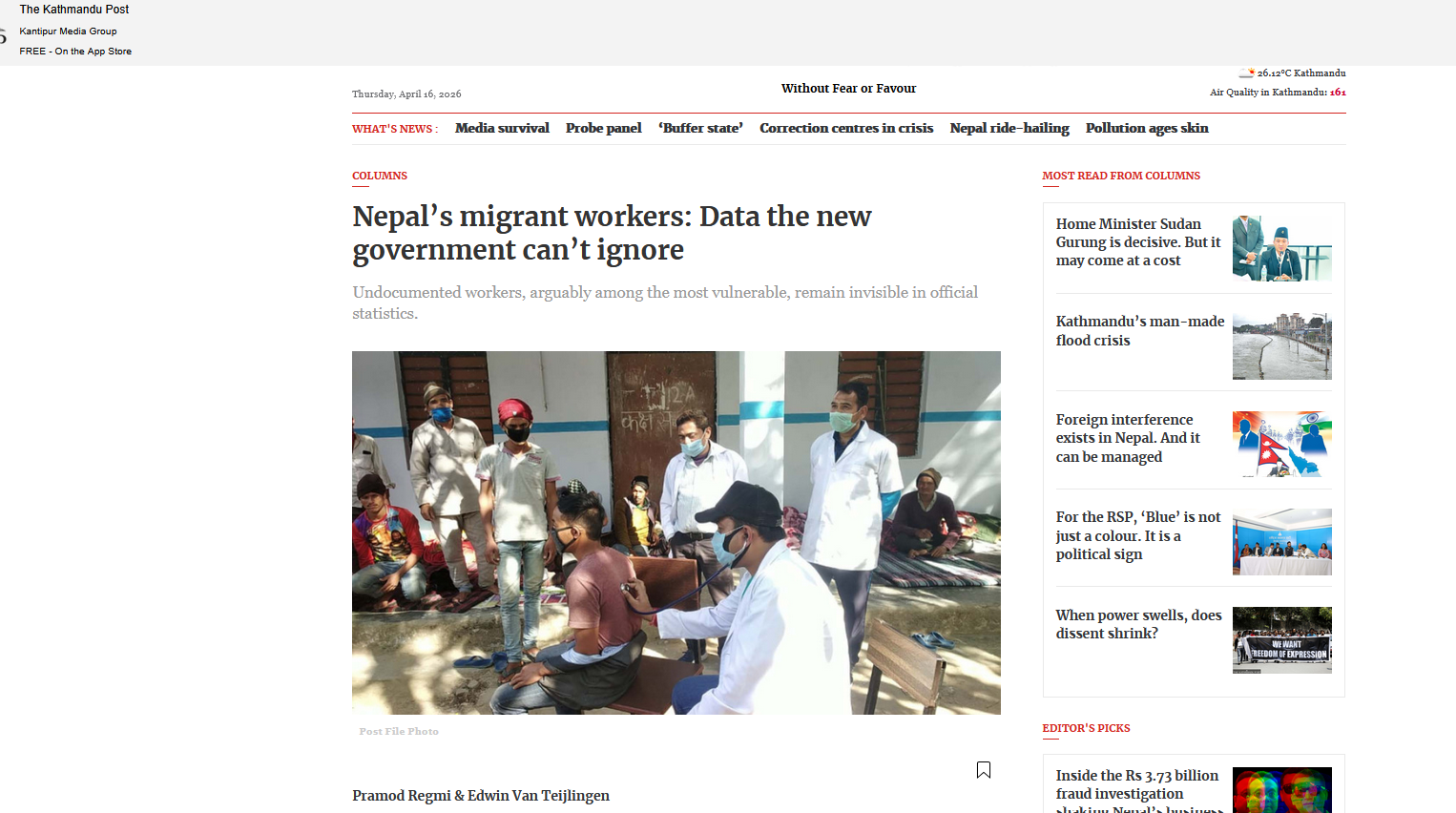



BU academics publish in Nepal national newspaper
New BU Physiology paper
Gender and street names
Help Shape the Future of Research at BU: Postgraduate Research Experience Survey 2026 Now Open
3C Event: Research Culture, Community & Cherry Blossom – Tuesday 14 April
REMINDER: 3MT® Competition – Deadline 9am Monday 20 April
ECR Funding Open Call: Research Culture & Community Grant – Apply now

ECR Funding Open Call: Research Culture & Community Grant – Application Deadline Friday 12 December
MSCA Postdoctoral Fellowships 2025 Call
ERC Advanced Grant 2025 Webinar
Update on UKRO services
European research project exploring use of ‘virtual twins’ to better manage metabolic associated fatty liver disease