 Last month I had the honour of chairing a committee to review the first three years of the MSc in Midwifery in the Netherlands. Since all Higher Education Institutions (HEI) in the Netherlands offer this joint degree there is only one in the country. This national collaboration meant there were very few academics working in the field of midwifery who can claim to be independent. All midwifery educators/academic midwives are employed by one of the HEIs participating in the joint Master’s degree. Hence, two of the four committee members, including myself came from abroad.
 Today’s blog highlights that there is a different way to the UK version of external examining as a form of quality control in Higher Education. In the UK each undergraduate programme, or year in a programme, or module has its own external examiner, who is appointed typically for three years to act as independent assessor. External examiners typically reviews all education aspects of the programme/module and discuss their assessment examiners’ meetings held at the host university. For more details on external examining in the UK, see also:”Acting as External Examiners in the UK: Going Beyond Quality Assurance” [1].
The Netherlands and Flemish-speaking Belgium has a single cross-national organisation which is responsible for assessing the quality of higher education degrees. This organisation, the NVAO [Accreditation Organisation of the Netherlands and Flanders], has an accreditation system that covers Associate Degree, Bachelor’s, and Master’s programmes in the Netherlands. First, there is the need for initial accreditation of a new programme, valid for a period of six years. Secondly, the accreditation of an existing programme, which, following a positive assessment, is valid indefinitely, as long as the programmes passes the six-yearly assessment by a panel of independent experts (peers engaged by the NVAO). Between these periodic assessments there is no equivalent of the UK’s annual external examiners’ meeting.
Reference:
- Poobalan, A., Simkhada, P. & van Teijlingen, E. (2021), “Acting as External Examiners in the UK: Going Beyond Quality Assurance“, In: Sengupta, E., Blessinger, P., Ssemwanga, A. & Cozza, B. (Ed.) The Role of External Examining in Higher Education: Challenges and Best Practices (Innovations in Higher Education Teaching and Learning, Vol. 38), Emerald Publishing Limited, Bingley, pp. 13-23. https://doi.org/10.1108/S2055-364120210000038002
Prof. Edwin van Teijlingen
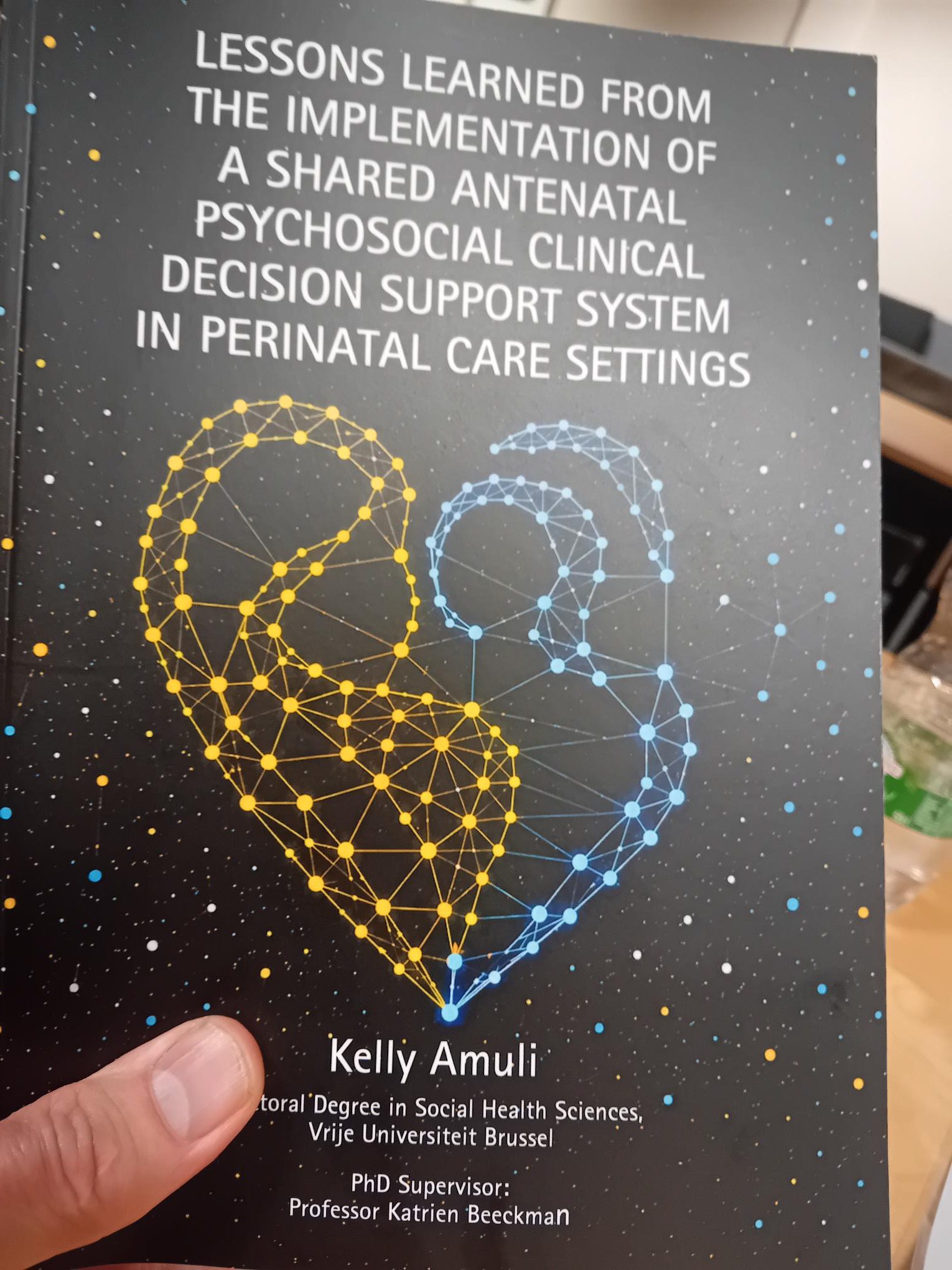 Yesterday I had the honour of conducting my 70th PhD examination, so-called viva voce. The first one was at the University of Durham in 2004, and this latest one is at the Vrije Universiteit Brussel in Belgium on May 21st. Most viva have been as an external examiner with only ten were conducted as internal examiner at the University of Aberdeen and Bournemouth University. As expected, most viva voce were held at UK universities, but four each were in Finland and Nepal, three in Australia, two each in Belgium, the Netherlands and Ireland, one each in New Zealand and Denmark. Also, the overwhelming majority candidates passed, but, disappointingly, not all.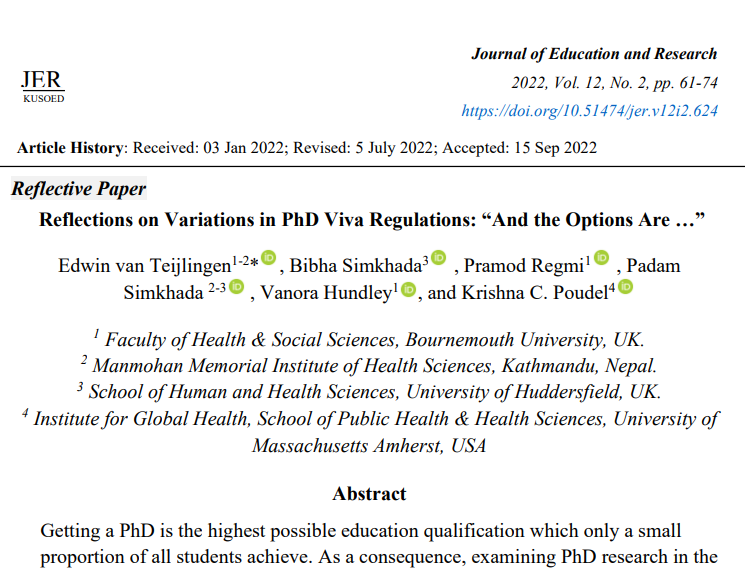







 International Open Access Week: open access and the REF
 Food Price Research Shortlisted for Civil Service Prize
 3C Event: Research Culture, Community & Connections – Wednesday 11 November 3-4pm
 ECR Opportunities: New Development Programme, Researcher Grants & Upcoming Events
 Horizon Europe Cluster 3 (Civil Security for Society) 2026 Calls Now Open
 MSCA Doctoral Networks 2026 Call Information Webinar
 ESRC Festival of Social Science 2026: Application Deadline Extended to Thursday 25 June 2026
 Reminder: Register for the ESRC Festival of Social Science 2026 Information Session
 ECR Funding Open Call: Research Culture & Community Grant – Apply now
 ERC Advanced Grant 2025 Webinar
 Update on UKRO services
 European research project exploring use of ‘virtual twins’ to better manage metabolic associated fatty liver disease