Could you describe your research in just 7 words? The Doctoral College’s 3C Event returns this Thursday 26 March, bringing our research community together through Culture, Community, and Connection.
This session offers a playful, online social where we use images and short clues to “Guess Who” is behind the work. It’s a fantastic way to showcase your projects creatively and meet potential collaborators in a relaxed environment.
How it works
Submit an image that best represents your research (think abstract, literal, or symbolic).
Provide a 7-word description of your work
Join us online to see if the research community can match the clues to the right researcher
Whether you contribute, or simply join as an audience member, it’s a great opportunity to share your work and spark new connections.
We’re looking forward to seeing you there. If you have any questions, please get in touch with the Research Development & Culture Team: researcherdevelopment@bournemouth.ac.uk
This Town, Peaky Blinders creator Steven Knight’s latest drama for the BBC, brings to life a defining – if short-lived – era in the history of British youth culture and popular music. Set in the West Midlands against the backdrop of industrial decline and social unrest in the early 1980s, the drama unfolds to the syncopated sounds of 2-Tone.
A furious mix of punk and Jamaican ska, 2-Tone became a genuinely national phenomenon, bursting out of a bedsit in Coventry and into the charts and the popular consciousness.
We know a lot about the urban multiracial landscapes of its Midlands origins, out of which its twin ideals of racial unity and musical hybridity sprang. But we know much less about how it resonated with the experience of young people beyond the big towns and cities.
Such considerations are timely. It is now 45 years since the founding of 2-Tone Records by Jerry Dammers, organist and songwriter for ska’s most famous band The Specials, and mastermind of the whole movement.
To understand how they did so is important not only for historical reasons. A deeper sense of how anti-racist and multicultural ideas have shaped less culturally diverse regions may enrich contemporary debates over racism, particularly rural racism, which have become increasingly polarised.
My own ongoing oral history project with people from the Dorset region registers the powerful effect 2-Tone had in less racially mixed areas. Interviewees speak vividly of the energy, excitement and unruliness of attending gigs, as well as the sense of shared community, belonging and togetherness.
Nobody is special
As The Specials’ first single, Gangster, hit the airwaves in the summer of 1979 and the first 2-Tone tour opened in the autumn (with support from fellow labelmates The Selecter and Madness), a growing legion of youth clad in slim-fit mohair “tonic suits”, pork-pie hats, and black-and-white checkerboard greeted the bands as they made their way across the country. By the time all three bands appeared together on Top of the Pops that November, 2-Tone had swept the nation.
The Specials, in particular, built an ethos on the idea that “nobody is special”, refusing the division between band and audience (symbolically represented in the audience joining the band on the stage for the final numbers).
The inaugural tour covered the length and breadth of the country, reaching musical outposts like Aberdeen, Ayr, Blackburn, Bournemouth, Plymouth and Swindon. A seaside tour followed in 1980, winding its way through several English coastal towns, from Blackpool to Worthing.
One interviewee described how 2-Tone bands made a big deal of moving out into the remote areas and bringing the music to the people. That made them more accessible, setting them apart from other bands of the period.
For one fan from Weymouth, travelling up to that first Bournemouth gig was a powerful unifying experience:
You just didn’t realise that you were part of a bigger thing…When you get in there and everyone’s got the same attitude, the same outlook, the same sense of purpose and sense of place – it was really quite an amazing feeling.
Playing venues in far-flung places was part of the 2-Tone mission. For Dammers and others, the anti-racist message was aimed directly and primarily at white youth. These 2-Tone bands sought to reach audiences with a visual and aural display of unity. The symbolism had a profound impact. As another interviewee recalled:
Groups were either all white or all black…2-Tone was the first thing where you actually saw white and black musicians on stage together…That was a massive difference.
But not everyone suddenly became a staunch anti-racist. Some simply went for the music, the dancing and the good times. But for others the unity of politics, style and music cut across divisions among fractious youth cults and against far-right influences. Embracing the spirit of 2-Tone gave rural and small-town youth a way of expressing anti-racist politics in a more local idiom.
Race and racism today
Despite the contribution of 2-Tone – and before it, Rock against Racism – to anti-racist struggles, issues of racism have never gone away. The fight against far-right nationalism and police brutality continues, but increasingly the spotlight has shifted towards the more subtle and unseen ways in which racism is perpetuated. This ranges from everyday microaggressions to the lingering shadow of Britain’s imperial legacy, attracting a strong backlash in some quarters.
Recent evidence of rural racism, for example, has been met with swift dismissals. The former home secretary Suella Braverman was quick to deny others’ experience of racism, stating that the claim the countryside is racist is one of the most ridiculous examples of left-wing identity politics – just because there are more white people than non-white people somewhere does not make it racist.
Recalling the example of 2-Tone and The Specials may encourage a longing for a simpler time, when racists were easy to spot; things are more complicated today. Still, it can help us to understand how racial solidarities are forged, particularly in and through social and geographical differences. For my interviewees, 2-Tone’s ska revival was not a passing fad; it allowed them to reinterpret their own experience of class, race and locality.
If only for a moment, 2-Tone mania ruled Britain, in the words of the music critic Simon Reynolds. But as This Town shows, its rich and complex legacies can still be brought powerfully to life in the present.
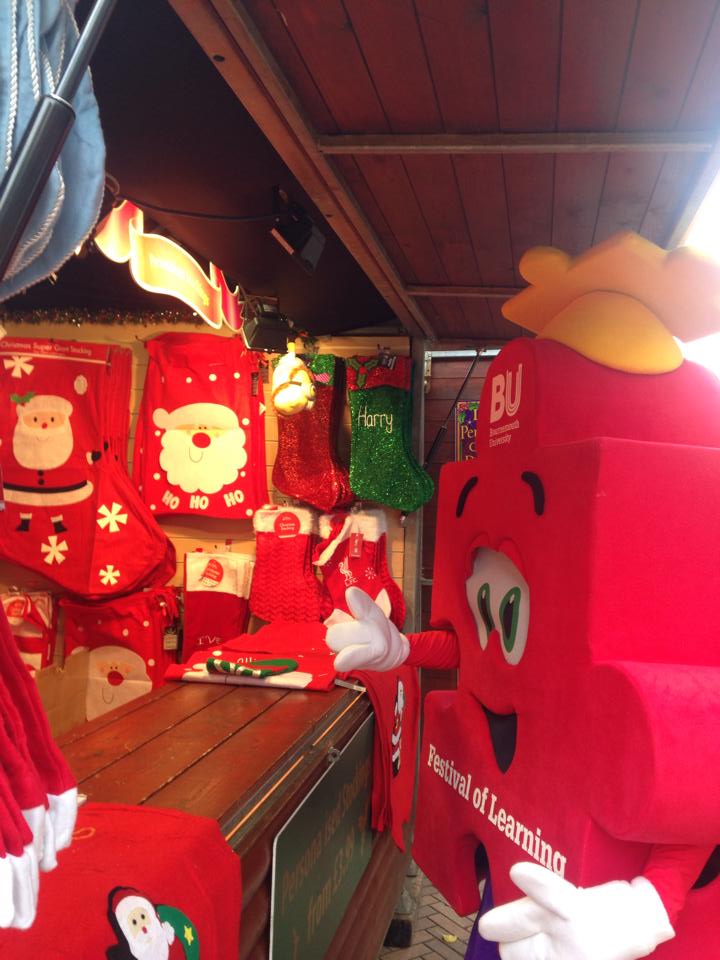
The Knowledge Exchange and Impact Team (fondly known to us as KEIT) is a relatively new team within RKEO. KEIT is made up of an enthusiastic group of people working to ensure that BU’s research and knowledge is informed by society for the benefit of society on a number of cross institutional projects such as the Festival of Learning and HEIF-5 funded initiatives, amongst many others!
A busy month for KEIT has seen the public engagement team run Café Scientifique on Tuesday 7th April, Dr James Dyke from Southampton University came to Café Boscanova and gave a brilliant talk on ‘Is humanity really in the existential danger zone’. The team have also seen the launch of a new public lecture series, with the support of the U3A. Attendees provided positive feedback and were extremely keen to interact with the talks throughout the day. This event had a great variety of speakers on topics such as health, exercise, nutrition and more.
We now have 5 live Knowledge Transfer Partnerships and are recruiting candidates to work with our academics and interested businesses. The KTP Academic Development Scheme cohort 2 started last week, kicking off with a development day on KTP. The next KTP submission deadline is this week and we already have 2 submissions from Science & Technology and are looking forward to receiving more!
KEIT have managed to communicate our fantastic research across many channels, including an article on Dr Sally Reynolds’ research, featured in Dorset Magazine, entitled ‘how have landscapes shaped human evolution?’ BU also featured a profile piece in International Innovation, a magazine run by Research Media. Another publication for BU to be proud of is Bournemouth Echo publishing one of our research articles from the BRC, click here to read that article on Dr Kevin McGhee’s research on ‘Could fruit flies hold key to understanding schizophrenia?’.
Our student engagement programme has seen events take place over the last month, with 14:Live taking place on the 24th March. Professor Matthew Bennett gave an amazing talk on ‘Walking the Landscape: Footprints, Human Evolution and Forensic Science’. The Research Photography Competition saw a great number of high quality images submitted to the competition. Voting has now closed and the winner and runners up will be announced shortly.
An article was published in the student newspaper The Rock highlighting some of the research Dr Julie Kirkbyis undertaking, which explores how children with dyslexia are affected when reading classroom boards. This article was posted on BU news and was the number one news item and was also picked up by a number of websites.
BU’s HEIF projects received a massive boost with the news that three projects have received funding, including Destination FeelGood and a project from the Faculty of Science and Technology to look into software development for research. Another success of a HEIF funded project, The Wessex Portal is to host the event Wessex Conservation forumtwice a year after the success of the first event.
The Research & Knowledge Exchange Office have also been developing the Interdisciplinary Research Weekwhich will take place from 11th-15th May 2015. The talks have been scheduled and we are now actively promoting the event. There are many exciting events taking place over the course of the week and you can find a full list of everything that is taking place, from engaging speakers to exciting topics here.
If you’re feeling inspired by our blog post and would like to get involved with some of our projects then feel free to get in touch:








 Reminder: Register for the ESRC Festival of Social Science 2026 Information Session
 Deadline Approaching: Submit your Poster for the Research Conference by Monday 27 April
 BU academics publish in Nepal national newspaper
 New BU Physiology paper
 Gender and street names
 ECR Funding Open Call: Research Culture & Community Grant – Apply now
 ECR Funding Open Call: Research Culture & Community Grant – Application Deadline Friday 12 December
 MSCA Postdoctoral Fellowships 2025 Call
 ERC Advanced Grant 2025 Webinar
 Update on UKRO services
 European research project exploring use of ‘virtual twins’ to better manage metabolic associated fatty liver disease