There are dangers with trying to develop too focused a title for this research theme as this is likely to lead to exclusion of potentially interesting and important areas of research and research collaboration. For instance, adding ‘change’ or ‘cohesion’ introduces a particular idea that socially transformative research would be privileged above, say, methodological endeavour. Whilst there are problems with the use of the singular forms in ‘culture and society’, it perhaps allows for the emergence of greater productive diversity in developing what is likely to be a wide and changing brief.
The ways in which societies and cultures are understood, analysed and approached, and the meanings created by these for individuals and groups within them, again offers fertile ground for exploration and cross-school collaborative work, and this too is an area which would be useful to include within the theme’s overarching brief.
Inclusivity and broad coverage is important. It is within this context that exciting pockets of research can develop across the university. Let’s not be too prescriptive at this stage of the game.
Professor Jonathan Parker
‘Society and Social Welfare’, HSC







 Verbal autopsy paper published two days ago
 ESRC Studentships for 2027 Entry: Opportunity Now Open
 SONAMONI contributions to Safety Conference 2026 in South Africa
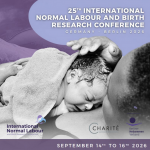 Three CMWH presentations at Berlin conference
 Horizon Europe Cluster 3 (Civil Security for Society) 2026 Calls Now Open
 MSCA Doctoral Networks 2026 Call Information Webinar
 ESRC Festival of Social Science 2026: Application Deadline Extended to Thursday 25 June 2026
 Reminder: Register for the ESRC Festival of Social Science 2026 Information Session
 ECR Funding Open Call: Research Culture & Community Grant – Apply now
 ERC Advanced Grant 2025 Webinar
 Update on UKRO services
 European research project exploring use of ‘virtual twins’ to better manage metabolic associated fatty liver disease
On Monday staff from four schools (AS, HSC, M, T) met to discuss how to take this theme forward. Without wanting to preempt Barry Richard’s summary of the meeting, which will be posted on the blog soon, the discussion was frank, open and productive. The major outcome was that there seem to be two emerging strands of collaborative research emphasising the historical and welfare aspects of society undergoing change. More focused now than before, but still broad enough to accommodate a wide range of ideas.