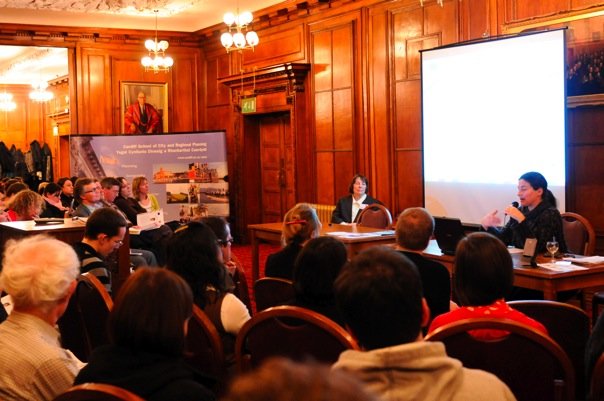
 When I talk about public engagement to colleagues, one of the first activities that often springs to mind is to give a public lecture, which can be a fantastic way of engaging a large number of people and promoting a lively debate. However, I am sure that we have all experienced (or endured?) public talks that have left us feeling a little deflated. So what can we do to avoid the latter scenario?
Writing this post feels slightly patronising; after all as HE professionals the chances are that a significant proportion of your working life is spent giving lectures and talks of some sort. However, devising a lecture that appeals to an often unknown public can present particular challenges, which several colleagues have asked me to provide advice so, so here goes:
The National Coordinating Centre for Public Engagement has developed a handy guide, which can be found here. The guidance, I am sure, will not be of great surprise to many readers of this blog, but could be a useful reminder when preparing a public lecture.
I’ve reviewed some of the other sources of information about the ingredients of a great public lecture, which you may find help to consider to preparing your proposal for the Festival of Learning:
- Remember that most people’s optimum concentration span is about 20 minutes, so ensure that you bear this in-mind when planning your event.
- Interactive props can be a great way of ensuring that your audience stays engaged, especially those which stimulate different senses. This could include short sound or video clips, food tasting or interjections from, for example, a beneficiary of your research.
- Ensure that you have plenty of time for lively discussion
- To maximise the discussion, this carefully about who will chair the event and the techniques they will use to facilitate discussion.
- Keep the topic broader than you might if you were giving a presentation at an academic conference.
- Look to use tools such as twitter to add an extra dimension to your event, and give participants that are not confident at speaking in-front of the whole audience an opportunity to get involved in discussion.
Just a couple of examples of public lectures can be found here and here – there are many more, so please contact me if you would like some more examples.
There are lots of other areas of guidance on how to develop a great public lecture which are more topic specific, so please do not hesitate to contact Becca on redwards@bournemouth.ac.uk or 01202 961206.
 Public Lecture Afternoon
 Global interest in BU’s first online public lecture series







 Verbal autopsy paper published two days ago
 ESRC Studentships for 2027 Entry: Opportunity Now Open
 SONAMONI contributions to Safety Conference 2026 in South Africa
 Three CMWH presentations at Berlin conference
 Horizon Europe Cluster 3 (Civil Security for Society) 2026 Calls Now Open
 MSCA Doctoral Networks 2026 Call Information Webinar
 ESRC Festival of Social Science 2026: Application Deadline Extended to Thursday 25 June 2026
 Reminder: Register for the ESRC Festival of Social Science 2026 Information Session
 ECR Funding Open Call: Research Culture & Community Grant – Apply now
 ERC Advanced Grant 2025 Webinar
 Update on UKRO services
 European research project exploring use of ‘virtual twins’ to better manage metabolic associated fatty liver disease