The digital innovation in surgery presents a trend of precise, minimally invasive, and personalized features. This workshop aims to address the challenges by gathering, training and connecting the Early Career Researchers (ECRs) from different disciplines for better understanding of the complexity and contexts related to surgery technology and working together to develop impactful research projects, facilitated through the training from mentors and new joint research. The workshop will provide an excellent platform for both UK and Chinese ECRs to expand their research and stimulate collaboration on research and development, technology transfer and commercialization between UK and China.
Under the Researcher Links scheme (offered within the Newton Fund), Beihang University will be holding the workshop on the above theme in Liaoning Hotel Beijing on 16-18 October 2019. The workshop is being coordinated by Dr. Xiaosong Yang and Prof. Junjun Pan, and will have contributions from other leading researchers. We are now inviting ECRs from the UK or China to apply to attend this workshop. All travel and accommodation expenses will be covered by the Newton Fund Researcher Links programme. The application form, with more details on the initiative, can be found at https://displast.bournemouth.ac.uk/ and should be sent to xyang@bournemouth.ac.uk by an email titled “Researcher Links Workshop” before the deadline of 15 July 2019.







 National Research Supervision Recognition: Apply Now & Join the Supporting Workshop on 16 September
 3C Event: ECR Network Café – Wednesday 16 September 2-3pm
 BU geography student’s undergraduate dissertation published in international journal
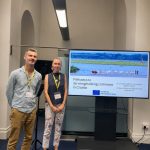 Why some commons survive and others don’t
 BU Research blog in 2023 grows into 2026 publication
 Horizon Europe Cluster 3 (Civil Security for Society) 2026 Calls Now Open
 MSCA Doctoral Networks 2026 Call Information Webinar
 ESRC Festival of Social Science 2026: Application Deadline Extended to Thursday 25 June 2026
 Reminder: Register for the ESRC Festival of Social Science 2026 Information Session
 ECR Funding Open Call: Research Culture & Community Grant – Apply now
 ERC Advanced Grant 2025 Webinar
 Update on UKRO services
 European research project exploring use of ‘virtual twins’ to better manage metabolic associated fatty liver disease