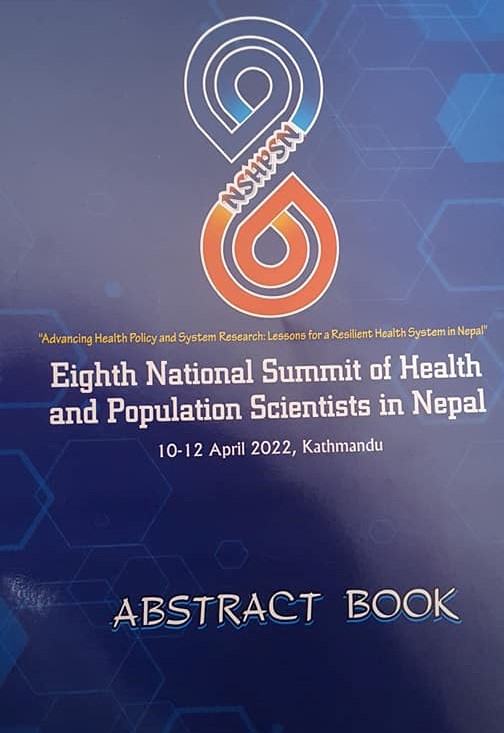
 Today say the start of the Eight National Summit of Health & Population Scientists in Nepal. Bournemouth University is involved in two presentation. The first will be one by University of Huddersfield PhD student Tamang Pasang, and her supervisors Prof. Padam Simkhada (FHSS Visiting Faculty), Dr. Bibha Simkhada (former BU Lecturer in Nursing and current FHSS Visiting Faculty) and Prof. Edwin van Teijlingen. Pasang will be talking about her thesis fieldwork: ‘Impact of Federalisation in Maintaining Quality of Maternal and Neonatal Care in Nepalese Health System’.
The second presentation will focus of the Nepal Federal Health System Project, our major collaborative project examining the consequences for the health system of Nepal’s move to a federal government structure in 2015. This is a joint project led by the University of Sheffield with Bournemouth University, the University of Huddersfield, and two institutions in Nepal: Manmohan Memorial Institute of Health Sciences MMIHS) and PHASE Nepal. This interdisciplinary study is funded by the UK Health Systems Research Initiative [Grant ref.
MR/T023554/1].
Prof. Edwin van Teijlingen
Centre for Midwifery, Maternity & Perinatal Health (CMMPH)
 New paper on federalisation of health system in Nepal
 GRCF supported migration and health workshop in Nepal
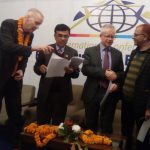 BU signs agreement with MMIHS in Nepal







 Reminder: Register for the ESRC Festival of Social Science 2026 Information Session
 Deadline Approaching: Submit your Poster for the Research Conference by Monday 27 April
 BU academics publish in Nepal national newspaper
 New BU Physiology paper
 Gender and street names
 ECR Funding Open Call: Research Culture & Community Grant – Apply now
 ECR Funding Open Call: Research Culture & Community Grant – Application Deadline Friday 12 December
 MSCA Postdoctoral Fellowships 2025 Call
 ERC Advanced Grant 2025 Webinar
 Update on UKRO services
 European research project exploring use of ‘virtual twins’ to better manage metabolic associated fatty liver disease