Struggling to effectively communicate the potential impact of your research in funding applications? This training session on Tuesday, 28 January 2025 from 10am to 12noon, will equip you with the practical tools and knowledge to develop effective plans of impact, articulate these in proposals and increase your success rates.
This session is intended for academics working on a proposal at the time of the session. It could be an early-stage idea, or a specific proposal for a funder. Please bring your proposal with you to the session to work on.
Key benefits:
- Maximise your impact: Learn how to identify, measure, and communicate the real-world significance of your research in funding proposals
- Write more competitive proposals: Master the art of crafting compelling impact plans that resonate with funding panels.
- Save time and effort: Discover efficient strategies to integrate impact considerations into your research process and proposals
- Gain actionable insights: Apply your newfound knowledge to your current or future funding bids.
Where: Fusion building. In-person only, not hybrid.
 Where Numbers met Narratives: A Final Review of the BU Datalabs Fusion Project
 UK Success Rates In 2021 MSCA Staff Exchange Call







 Verbal autopsy paper published two days ago
 ESRC Studentships for 2027 Entry: Opportunity Now Open
 SONAMONI contributions to Safety Conference 2026 in South Africa
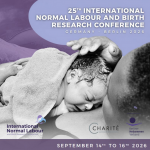 Three CMWH presentations at Berlin conference
 Horizon Europe Cluster 3 (Civil Security for Society) 2026 Calls Now Open
 MSCA Doctoral Networks 2026 Call Information Webinar
 ESRC Festival of Social Science 2026: Application Deadline Extended to Thursday 25 June 2026
 Reminder: Register for the ESRC Festival of Social Science 2026 Information Session
 ECR Funding Open Call: Research Culture & Community Grant – Apply now
 ERC Advanced Grant 2025 Webinar
 Update on UKRO services
 European research project exploring use of ‘virtual twins’ to better manage metabolic associated fatty liver disease