 Rehabilitation research has long remained in the shadows of other health/medical disciplines, despite its immense potential to reshape patient outcomes and community health. The Rehabilitation Research Symposium Series in Qatar is a significant initiative aligned with global and national frameworks such as the WHO’s (World Health Organization) Rehabilitation 2030 and Qatar’s National Vision 2030.
Advancing Rehabilitation Research: Building Capacity for Evidence-Based Practice: Level 2 Rehabilitation Research Symposium serves as a powerful response to the growing call for a comprehensive, evidence-based approach to rehabilitation, both locally and globally. The second day of this symposium, tomorrow (January 4th 2025), includes a session by Bournemouth University’s Prof. Edwin van Teijlingen. He has been invited to help build research capacity in the field of academic writing and publishing.
Bournemouth University collaboration in Qatar centres on academics and clinicians based at Hamad Medical Corporation’s (HMC). HMC has been appointed as a WHO Collaborating Centre for Healthy Ageing and Dementia, under auspices of Ministry of Public Health in Qatar. 
 Research methods training in Qatar
 Paper published on ‘living evidence’
 COVID-19 in Qatar







 Verbal autopsy paper published two days ago
 ESRC Studentships for 2027 Entry: Opportunity Now Open
 SONAMONI contributions to Safety Conference 2026 in South Africa
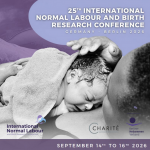 Three CMWH presentations at Berlin conference
 Horizon Europe Cluster 3 (Civil Security for Society) 2026 Calls Now Open
 MSCA Doctoral Networks 2026 Call Information Webinar
 ESRC Festival of Social Science 2026: Application Deadline Extended to Thursday 25 June 2026
 Reminder: Register for the ESRC Festival of Social Science 2026 Information Session
 ECR Funding Open Call: Research Culture & Community Grant – Apply now
 ERC Advanced Grant 2025 Webinar
 Update on UKRO services
 European research project exploring use of ‘virtual twins’ to better manage metabolic associated fatty liver disease