In a major international collaboration focused on cross-border knowledge exchange and institutional impact, Bournemouth University (BU, UK) and King’s
College London (KCL,UK) have exchanged knowledge with the University of Manouba (UMA, Tunisia) to establish Tunisia’s first Research Ethics Committee for the Humanities and Social Sciences (UMA-REC-HSS).
Demonstrating the i mportance of the UK-Tunisia higher education partnership led by the BU, this innovative project has been recently discussed at the UK-Tunisia Higher Education Commission meeting, attended by his Excellency Mondher Belaid, the Minister of Higher Education and Scientific Research of Tunisia, his Excellency Roderick Drummond, the British Ambassador
to Tunisia, Mrs Jill Coates, Head of the British Council in Tunisia, and Vice Chancelors of diverse Tunisia universities. This project is a leading example of meaningful collaboration and tangible impact between the two nations.
While ethics governance in Tunisia has historically focused on biomedical and animal sciences, this international initiative extends rigorous research practice to the social sciences and humanities through a collaborative process of knowledge exchange, capacity building, and co-development between UK HE research ethics specialists and the University of Manouba. To establish the new Research Ethics Committee at the University of Manouba, the project leadership team conducted an intensive four-day training program at the UMA from June 1–4, 2026. The training was delivered by:
- Professor Marcjanna Augustyn & Associate Professor Kaouther Kooli (Bournemouth University, Centre for Sustainable Business Transformations, Hampstead Health Research Authority) who brought extensive experience as ethics committee reviewers and research supervisors, and who led the design and delivery of the training.
- Associate Professor Eamonn Walsh (King’s College London, Health Research Authority HRA) who brought his extensive experience as the chair of the Hampstead HRA REC to contribute on protocol review, governance mechanisms, and researcher support.
- Professor Hamida Skandrani (The Higher Institute of Accounting and Business Administration (ISCAE, UMA)) serving as the newly established Committee Chair led the ongoing implementation of the new ethical framework at UMA, focusing on participant protection, informed consent, and data integrity.
- This project was made possible through the full support of Professor Ameur Cherif, President of the UMA.
This direct knowledge exchange reached more than 100 participants, includin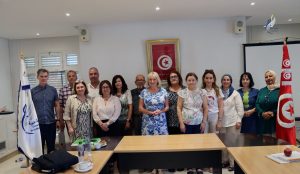 g researchers, doctoral and master’s candidates, and institutional staff across all UMA faculties. By equipping Tunisian academics with a framework to navigate complex ethical issues, such as data privacy, scientific integrity, and protecting vulnerable populations, the project has also contributed to elevating the international rigour and credibility of Tunisian humanities and social science research.
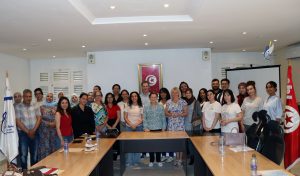 Driven by capacity building and knowledge exchange, this project has established a critical research ethics governance framework for universities across Tunisia and other developing countries. Through this strategic partnership, the University of Manouba is set to permanently embed research ethics into its scientific policy, establishing a high-impact model for cross-country educational collaboration and implementation. The University of Manouba deeply appreciates the project contributors’ expertise, commitment, and valuable support in fostering a culture of integrity and responsible research across our academic community.
 BU case study included in knowledge exchange repository shared by Knowledge Exchange Concordat
 Introduction to the Research and Knowledge Exchange Development Framework







 BU methods paper reached 2,500 reads
 UKCGE Recognised Research Supervision Programme: Applications Close 19 October
 Dr. Orlanda Harvey interviewed as expert
 Dr. Paul Whittington attends Technology and the SEND Reforms Roundtable in the House of Commons
 Dr. Paul Whittington joins Bett 2026 DfE Assistive Technology Roundtable
 BU Prof Jonathan Parker promoting social work in Malaysia
 Horizon Europe Cluster 3 (Civil Security for Society) 2026 Calls Now Open
 MSCA Doctoral Networks 2026 Call Information Webinar
 ESRC Festival of Social Science 2026: Application Deadline Extended to Thursday 25 June 2026
 Reminder: Register for the ESRC Festival of Social Science 2026 Information Session
 ECR Funding Open Call: Research Culture & Community Grant – Apply now
 ERC Advanced Grant 2025 Webinar
 Update on UKRO services
 European research project exploring use of ‘virtual twins’ to better manage metabolic associated fatty liver disease