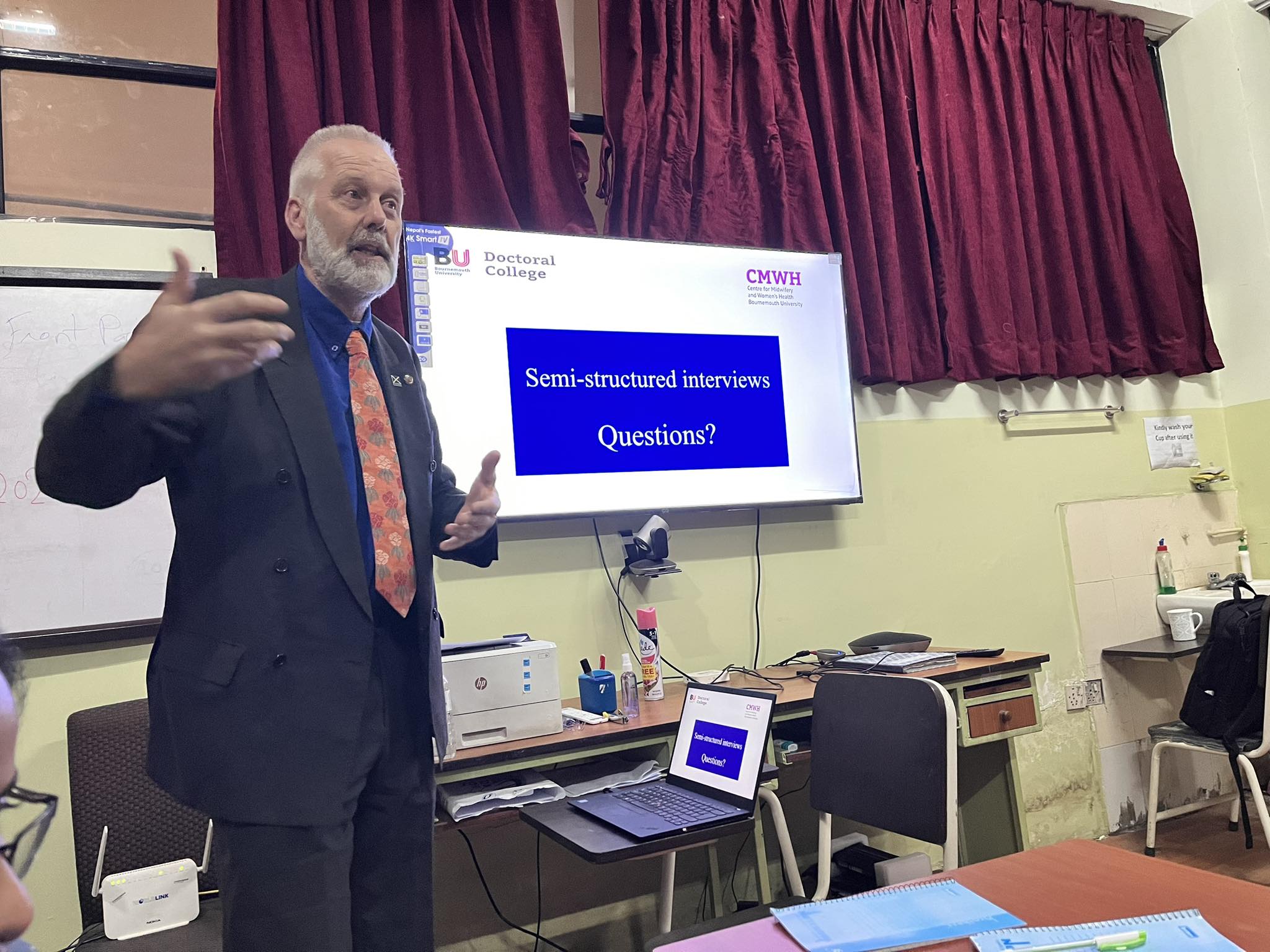
 Yesterday, Sunday 14th January, I was invited by Bournemouth University’s former PhD student Dr. Pratik Adhikary to run a three-hour methods session on semi-structured interviews and focus group discussions at the Nepal Injury Research Centre (NIRC). The workshop was based on work normally presented as part of BU’s Doctoral College Researcher Development Programme.
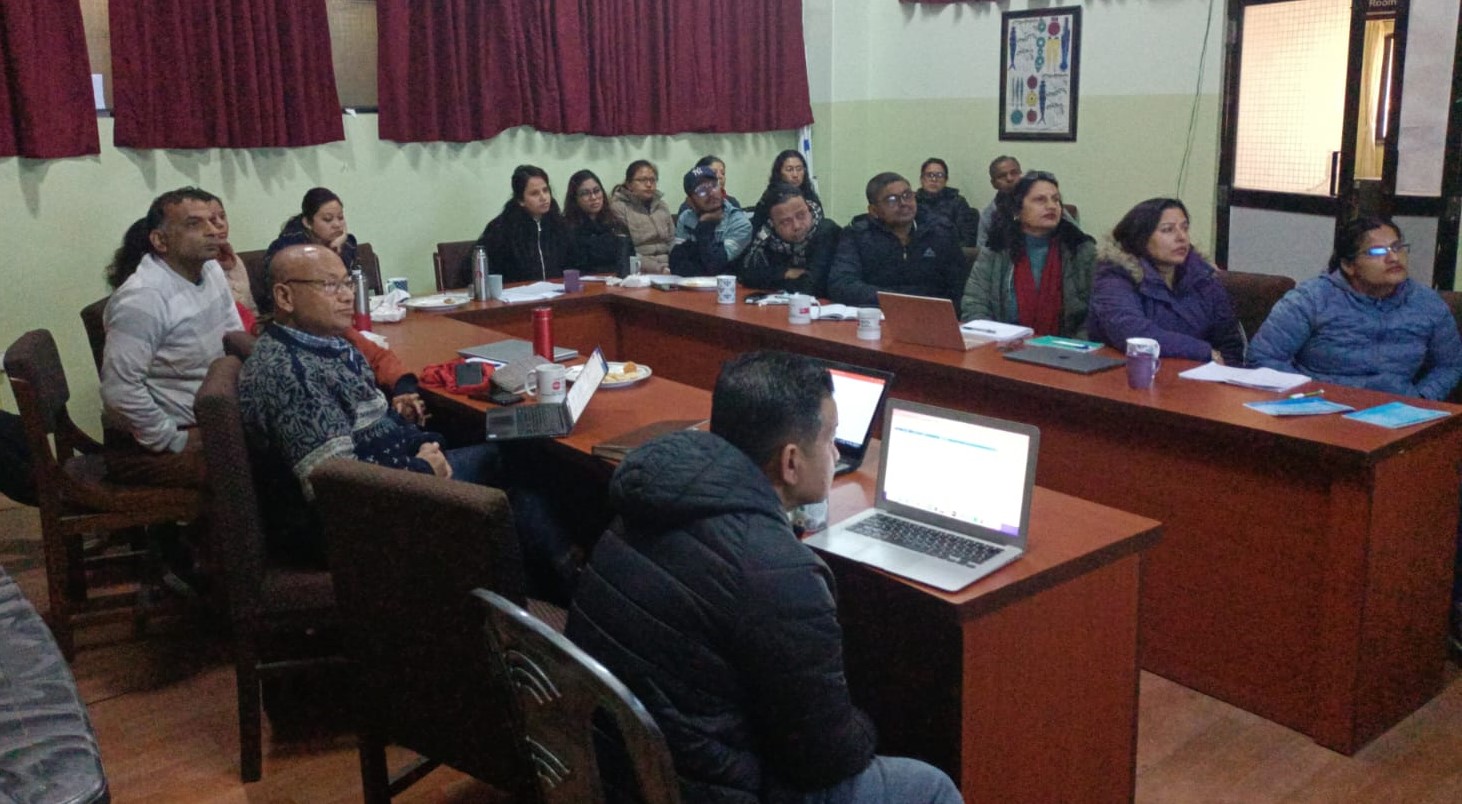 The audience comprised PhD students based at NIRC, as well as at Kathmandu Medical College (KMC), and Nepal’s oldest and largest university, Tribhuvan University. Participants were involved in research into many different research questions, ranging from road traffic accidents to sexual health and the well-being of migrant workers. NIRC was established with funding from the UK National Institute for Health and Care Research (NIHR) Global Health Research Programme and it is a partnership between KMC and the University of the West of England, Bristol (UWE).
Prof. Edwin van Teijlingen
Centre for Midwifery & Women’s Health (CMWH)
 Academic capacity building in Nepal
 Research Capacity Building in Nepal: 600 reads
 Well-being of Nepal’s migrant workers no longer on global agenda







 SONAMONI contributions to Safety Conference 2026 in South Africa
 Three CMWH presentations at Berlin conference
 New interdisciplinary paper on Nepal
 Horizon Europe Cluster 3 (Civil Security for Society) 2026 Calls Now Open
 MSCA Doctoral Networks 2026 Call Information Webinar
 ESRC Festival of Social Science 2026: Application Deadline Extended to Thursday 25 June 2026
 Reminder: Register for the ESRC Festival of Social Science 2026 Information Session
 ECR Funding Open Call: Research Culture & Community Grant – Apply now
 ERC Advanced Grant 2025 Webinar
 Update on UKRO services
 European research project exploring use of ‘virtual twins’ to better manage metabolic associated fatty liver disease