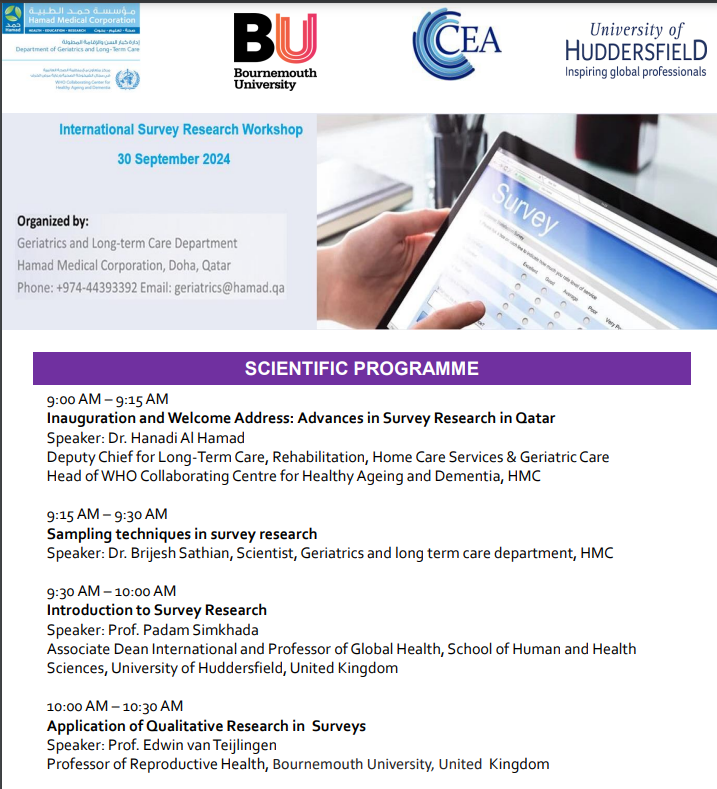
Bournemouth University’s collaboration in the field of ageing research in Qatar is going from strength to strength. BU staff have been working with academics and clinicians at Hamad Medical Corporation’s (HMC) Department of Geriatrics and Long-Term Care. HMC has been appointed as a WHO (World Health Organization) Collaborating Centre for Healthy Ageing and Dementia, under auspices of Ministry of Publich Health in Qatar. Hamad Medical Corporation is not-for profit organisation. Tomorrow morning (7.00 AM UK time) FHSS will be contributing to an International Survey Research Workshop, together with BU’s Faculty of Health & Social Sciences Visiting Faculty Dr. Brijesh Sathian (based at HMC), and Prof. Padam Simhada, based at the University of Huddersfield.
The Early Labour App group are delighted to welcome Year 2 Digital Science Interns Tom Lower and Kaisei Wieczorek-Numao and Year 3 Midwifery Intern Carys Nash under the NIHR Undergraduate Internship program. Tom and Kaisei are developing the app’s User Interface features such as the avatar features and voice settings. They will also develop a User Activity Logging system under the supervision of Dr. Kun Qian and Prof. Xiaosong Yang. Carys will be undertaking PPIE in collaboration with Digital Midwife Tracey Thompson RM from University Hospitals Dorset NHS Foundation Trust, supervised by Dr. Dominique Mylod (Early Career Researcher in Midwifery). Carys will be sharing the app prototype with mothers and their birth partners to inform the app development.
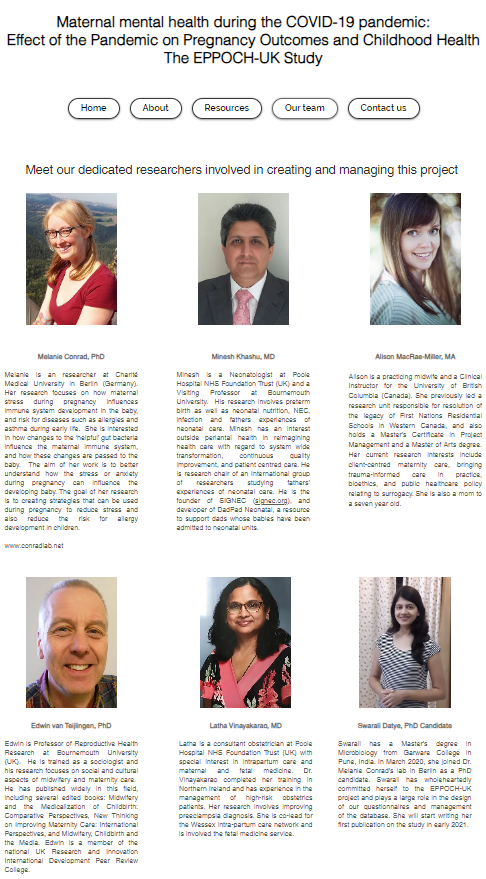
This morning the editor of the Frontiers in Psychiatry emailed us that the paper reporting the findings of the baseline data of a large-scale epidemiological study into pregnancy during COVID-19 in the UK has been published [1]. The interdisciplinary research team includes researchers from University Hospitals Dorset NHS Foundation Trust (Dr. Latha Vinayakarao & Prof. Minesh Khashu) and Bournemouth University (Prof. Edwin van Teijlingen).
This longitudinal study explores how the SARS-CoV-2 [COVID-19] pandemic affected the mental health of pregnant people in the UK. In mid-to-late 2020, we recruited 3666 individuals in the UK for the EPPOCH pregnancy cohort (Maternal mental health during the COVID-19 pandemic: Effect of the Pandemic on Pregnancy Outcomes and Childhood Health). Participants were assessed for depression, anxiety, anger and pregnancy-related anxiety using validated scales. Additionally, physical activity, social support, individualized support and personal coping ability of the respondents were assessed as potential resilience factors.
Participants reported high levels of depression (57.05%), anxiety (58.04%) and anger (58.05%). Higher levels of social and individualized support and personal coping ability were associated with lower mental health challenges. Additionally, pregnant individuals in the UK experienced higher depression during the pandemic than that reported in Canada. Finally, qualitative analysis revealed that restrictions for partners and support persons during medical appointments as well as poor public health communication led to increased mental health adversities and hindered ability to make medical decisions.
The study highlights the increased mental health challenges among pregnant individuals in the UK during pandemic. These results highlight the need for reassessing the mental health support measures available to pregnant people in the UK, both during times of crisis and in general.
Reference:
Datye, S., Smiljanic, M., Shetti, R.H., MacRae-Miller, A., van Teijlingen, E., Vinayakarao, L., Peters, E.M.J., Lebel, C.A., Tomfohr-Madsen, L., Giesbrecht, G., Khashu, M., Conrad, M.L. (2024) Prenatal maternal mental health and resilience in the United Kingdom during the SARS-CoV-2 Pandemic: A cross-national comparison, Frontiers in Psychiatry, 15 https://doi.org/10.3389/fpsyt.2024.1411761
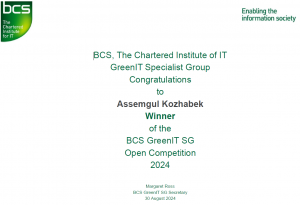
I’m thrilled to share that I’ve won the BCS GreenIT 2024 Poster Competition—marking my second consecutive win!
Having recently passed my Ph.D. viva in the SciTech Computing and Informatics department at BU, this achievement is particularly meaningful. Last year, my winning poster used comics and anecdotes to highlight urban traffic congestion’s role in the energy crisis. This year, I competed as a member of the British Computer Society (BCS), and the competition’s theme, “Investing in Our Planet,” resonated with my research approach, once again leading to this incredible win.
A huge thank you to my Ph.D. supervisor, Dr. Wei Koong Chai, for his unwavering guidance and support throughout my journey. Join me in celebrating this achievement and the ongoing commitment to impactful research!
We need your help to ensure we submit all our social, community and cultural events for 2023-24. Deadline: Friday 15 November
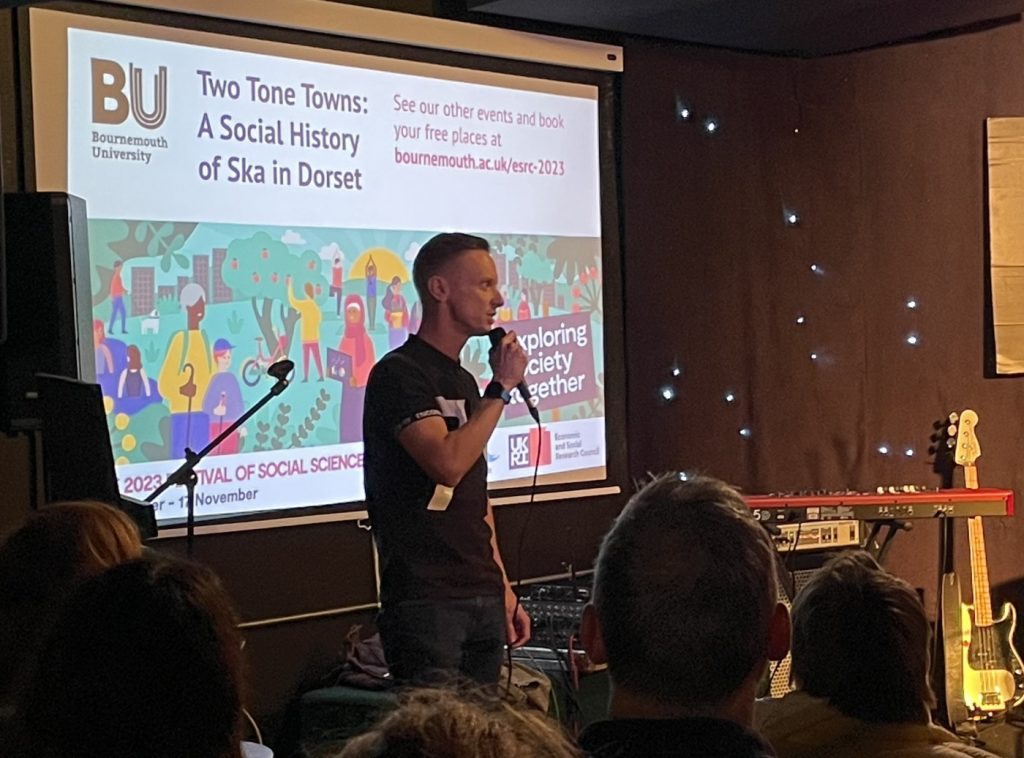
ESRC Festival of Social Science event 2023
What is HE-BCI?
The HE-BCI survey is a mandatory annual return that BU makes to the Higher Education Statistics Agency (HESA). An important part of this is to capture activity in terms of social, community and cultural events intended for the external community. This data is part of the information used to determine the allocation of Higher Education and Innovation Funding (HEIF) for BU.
Last year we recorded 200+ events and a total of 18.5m attendees (which includes media appearances) for the 2022-23 return. We want to ensure we can do as well, if not better for this year!
What activities can be included?
Please include details of any relevant events that you have been involved in which took place/will take place between 1 August 2023 – 31 July 2024
Events must have been open to the public or intended for an external (non-academic) group and have included an exchange of knowledge. Events may take place in the UK or overseas
TheSharePoint site provides details about what data is collected, including calculating attendee numbers, staff time, reporting online activities and multiple related events
Congratulations to Prof. Jonathan Parker, Professor Emeritus in the Faculty of Health & Social Sciences, who was invited to contribute a post to the influential social science blog Transforming Society. See details here: Transforming Society ~ Now is the winter fuel payment of our discontent. The blog concerns the highly topical winter fuel payments and Jonathan’s policy analysis and its impact.
Our latest CMWH newsletter (autumn 2024 edition) is out now. Click here! This edition includes news items and stories related the successes of CMWH staff and students. For example, about Drs. Dominique Mylod and Daisy Wiggins who both secured innovative NIHR funding for undergraduate student internships. Or about the recently awarded National Institute for Health and Care Research (NIHR) funding for ‘INSIGHT: Inspiring Students into Research’. This innovative three-year programme started this summer as part of the NIHR Academy’s portfolio of career support for health and social care professionals. The programme supports the NIHR aim to develop a highly skilled research workforce capable of advancing the best research which improves health and care, and benefits society and the economy.
There is also an item on the importance of humour to stimulate interest and engagement with taboo women’s health topics. CMWH’s Rosie Harper, a PhD researcher and pelvic floor physiotherapist at University Hospitals Dorset NHS Foundation Trust has led a study with comedian and women’s health physiotherapist Elaine Miller and the results were published in Health Expectations. Elaine’s Instagram campaign ran daily for 3 months @gusset_grippers. And there are many more stories and announcements. The editors would like to thank Abier Hamidi for her excellent editorial support!
Professor Andy Phippen writes for The Conversation about children’s use of smartphones and technology, and why giving them ‘dumb’ phones with minimal features might not help…
Should you give your child a ‘dumb’ phone? They aren’t the answer to fears over kids’ social media use
Parents concerned about the possible dangers smartphone use might have for their children are turning to “dumb phones”. These are the brick-shaped or flip phones today’s parents might have had themselves as teenagers, only capable of making calls or sending text messages and lacking access to social media apps.
Phones available include a remake of noughties classic the Nokia 3210, or new designs such as the recently released Barbie flip phone.
But handing children a “dumb phone” seems to be as much an exercise in nostalgia as proactive practice. Ultimately, young people will end up using smartphones in their social and working lives. They have many useful features. It makes sense for them to learn to use them with the support of adults around them in a nurturing environment.
Unhappiness among children and teenagers is often seen as being related to smartphone or social media use. Social psychologist Jonathan Haidt’s 2024 book The Anxious Generation suggests that there is a link between the rise in the use of smartphones by young people and an increase in youth mental health issues.
However, is very difficult to demonstrate a causal link between a specific aspect of modern life and a specific public health concern, as responses to Haidt’s book point out.
Yes, young people use smartphones more than previous generations. But they are also growing up in a world experiencing a global pandemic, visible climate change and international conflict. They’re being told they will never have a job because AI will be doing it instead, and that they’ll never own a house because of price inflation.
It is very difficult in these social contexts to isolate one factor and claim this is what is causing a rise in mental health issues among young people.
Large and rigorous peer reviewed studies have been conducted to explore the correlations between digital technology and children’s mental health. They rarely return a clear link. Some show positive correlations – use of digital tech leading to outcomes such as happiness, being treated with respect and positive learning experiences.
This doesn’t mean that we can say that smartphones are definitely a bad thing, or – conversely – that they have no negative impact on children. It just means that claims of causation are difficult to prove and irresponsible to make.
I have spent 20 years talking to young people about their use of digital technology. There are certainly risks and concerns. However, there are also many positive uses of this technology which, with the right guard rails, can enhance a child’s life.
While young people talk about concerns around popularity and “fear of missing out”, they also see value in accessible communication with friends and family, which is especially important for those who might live in isolated locations or have physical restrictions. And many say the main reason they would not raise concerns is for fear that adults around them might “freak out” and take their device from them.
Checks and balances
Hearing that seven-year-olds own and use smartphones sounds worrisome. But there’s a difference between, for example, a child using their phone to keep in touch with their grandparents who live in another part of the country with the supervision of their parents, and an unsupervised child interacting with strangers on social media. These are two very different scenarios.
Giving a child a smartphone does not mean allowing them ultimate freedom to use it however and how often they like.
It is perfectly within a parent’s power to restrict the types of apps that are installed, monitor screen time and install software to make sure a young person’s interactions are healthy – as well as talking to their child about social media use. Or, perhaps more simply, implement house rules that a child can only use their smartphone for a certain amount of supervised time.
As their child gets older, parents can relax the restrictions and afford them greater privacy and responsibility in its use. Parents can still make sure their child knows that if something upsetting does occur, they can ask for help.
I have a friend and colleague who is fond of analogising technology use with teaching a child to ride a bike.
Do we give a child a bike on their seventh birthday, put them at the top of a hill, and tell them to figure it out for themselves? No, we help them learn, with safeguards in place, until they develop competencies while also understanding the risks. The approach should be the same with digital technology.
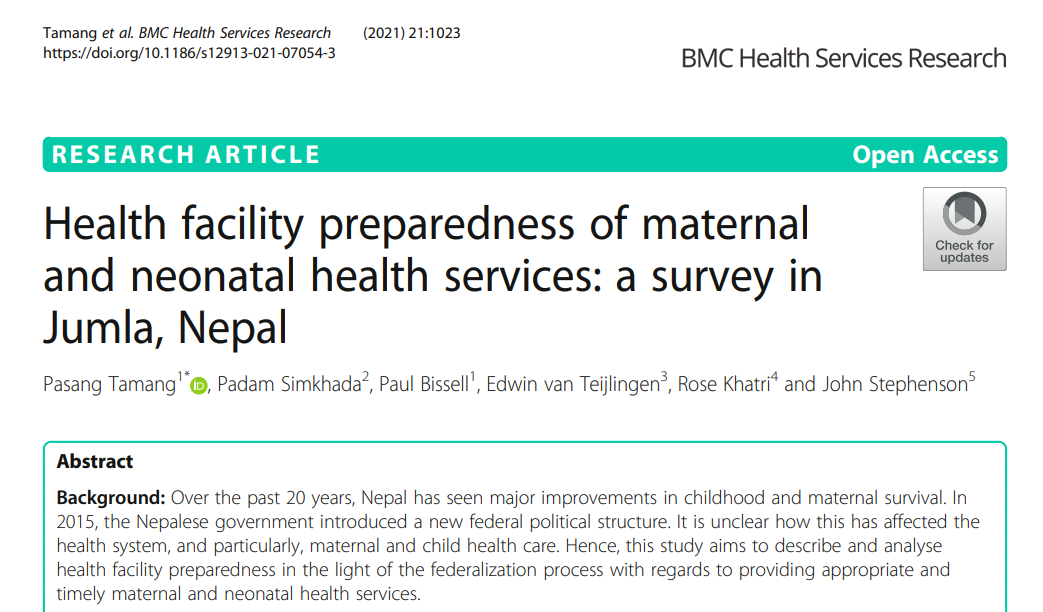
Last Sunday ResearchGate informed us that the paper ‘Health facility preparedness of maternal and neonatal health services: a survey in Jumla, Nepal‘ [1] published in the international journal BMC Health Services Research had been read 10,000 times. In this paper, which is in an Open Access journal, Pasang reports on a cross-sectional study conducted in 2019 covering all 31 state health facilities in a district of Nepal to assess the availability of maternal and neonatal health services including appropriate workforce and access to essential medicines. Tests of association between demographic factors and the probability of a facility experiencing a shortage of essential medicine within the last 3 months were also conducted as exploratory procedures. Overall health facilities reported better availability of staff than of drugs. The authors concluded that health facilities in Nepals should be supported to meet required minimal standards such as availability of essential medicines and the provision of emergency ambulance transport for women and newborns. This paper was part of Dr. Pasang Tamang’s Ph.D. project at the University of Huddersfield, which resulted in four other related publications [2-5]. Pasang is currently working as a Lecturer in Public Health in the School of Human Sciences at the University of Greenwich.
Prof. Edwin van Teijlingen
References:
Tamang, P., Simkhada, P., Bissell, P., van Teijlingen, E., Khatri, R., Stephenson, J. (2021) Health facility preparedness of maternal and neonatal health services: A survey in Jumla, Nepal, BMC Health Service Research, 21:1023. https://rdcu.be/cyD01
Tamang, P., Mahato, P., Simkhada P., Bissell, P., van Teijlingen, E. (2021) Pregnancy, Childbirth, Breastfeeding and Coronavirus Disease: What is known so far? Journal of Midwifery Association of Nepal (JMAN) 2(1): 96-101.
Tamang, P., Simkhada, B, Simkhada, P., van Teijlingen, E. (2023) Quality of care in maternal and neonatal health in Jumla, rural Nepal: Women’s perspective.Fields: Journal of Huddersfield student research, 1(1). https://doi.org/10.5920/fields.1271
Mahato, P., Tamang, P., Simkhada, B., Wasti, S. P., Devkota, B., Simkhada, P., van Teijlingen, E.R. (2022) Reflections on health promotion fieldwork in Nepal: Trials and tribulations. Journal of Health Promotion10(1): 5–12. https://doi.org/10.3126/jhp.v10i1.50978
Tamang, P., Mahato, P., Shahi, P., Simkhada, P., van Teijlingen, E., Amgain, K. (2020) COVID-19 Quarantine: A Key Part of Prevention in Nepal. Journal of Karnali Academy of Health Sciences3(1):1-14.
We are conducting British Academy/Leverhulme-funded research on menopause policies and practices at English universities. We would be grateful if you could participate in the survey, using the link below:
Pooja Shah, a postdoctoral researcher working on the Tangerine project (aiming to develop a novel intervention to improve nutrition and promote healthy ageing among older people from South Asian and Afro Caribbean communities in the UK) attended a roundtable discussion at the King’s Fund to explore what a greater focus on nutrition could mean for the health care system and those at risk of malnutrition. Discussion focused on the causes, prevalence, diagnosis and response to malnutrition. This included how we can engage those working across the health and care system at a national and local level – including primary care, social care, and those with clinical expertise – with improving the early diagnosis of malnutrition through patient screening, greater awareness, and the use of tools for better population health management. In the context of an ageing population, the roundtable also provided an opportunity to discuss the role of improved nutrition and targeted interventions in enabling people to remain independent for as long as possible.
The Kings Fund are delighted to share their recent blog, based on the roundtable discussion.
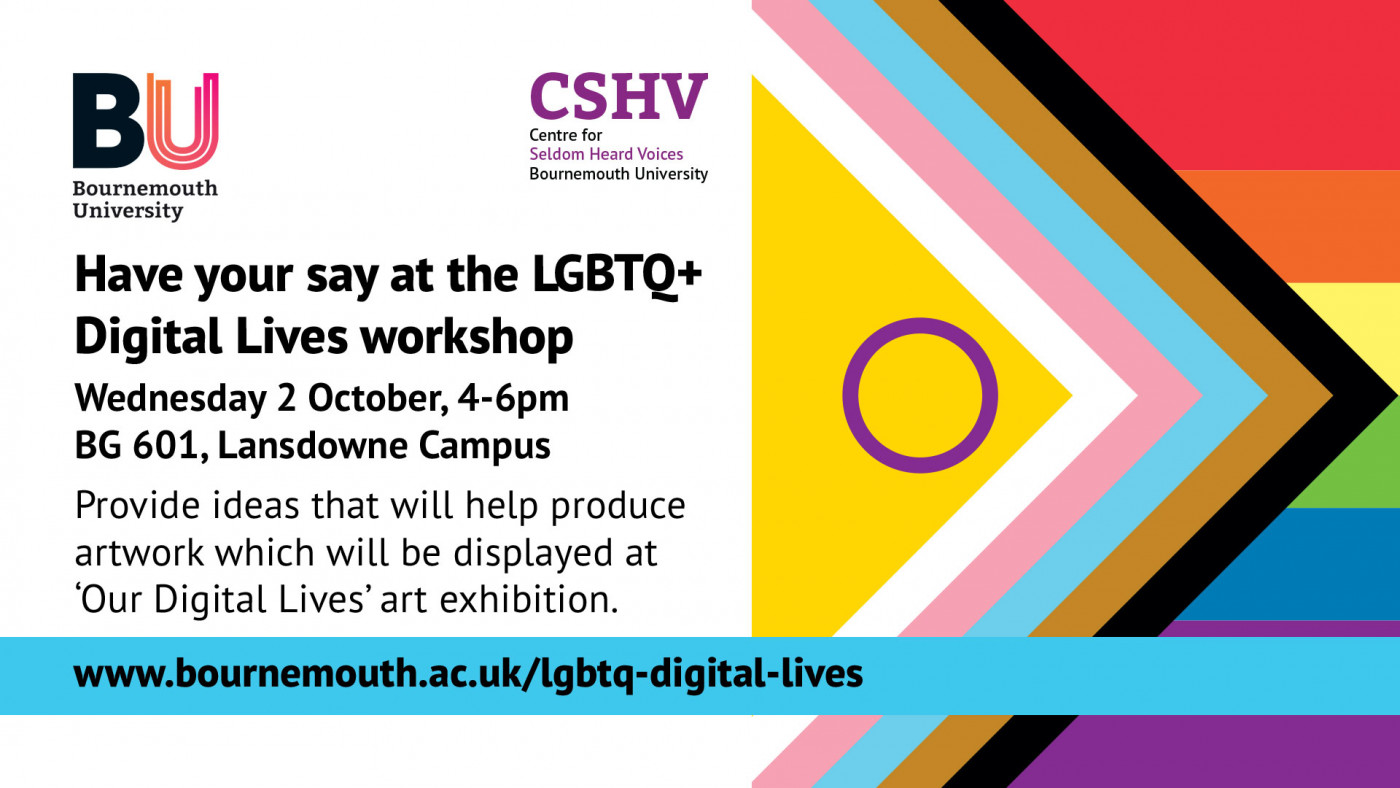
This year the national ESRC Festival of Social Sciences theme is ‘Our Digital Lives’. For the festival, BU is supporting events that will run between Saturday October 19th and Saturday November 9th. Jayne Caudwell and Frankie Gaunt in the Department of Social Sciences and Social Work were awarded up to £1,000 to hold an event in the festival. Their event is an art exhibition focused on “Communities of Positive Well-Being: The Digital Lives of LGBTQ+ Young People”.
The aim of the event is to showcase on-line spaces that help LGBTQ+ young people feel safe, happy and that they belong. This is important because existing research shows that physical space can be a hostile public place for LGBTQ+ people. This hostility can lead to feelings of marginalisation, exclusion and isolation.
Before the art exhibition, a series of workshops will take place with local LGBTQ+ young people to explore how social media and the internet provide opportunity for positive stories at a time when mainstream media can be negative in its coverage of LGBTQ+ issues. The workshops are funded by the Centre for Seldom Heard Voices, the next workshop is Wednesday 2 October 4-6pm in BG 601, Bournemouth Gateway Building. During the workshop participants will decide the artwork that will be used for the art exhibition. The art exhibition will be displayed in and around Bournemouth and Dorset.
In this Insights long-form article for The Conversation, Dr Ellie Smith and Professor Melanie Klinkner write about their work documenting mass graves across the world and the difficulties in locating and investigating such sites…
How the world’s first open-source digital map of mass graves could help bring justice to victims in Ukraine and other war zones
These newly reported discoveries [of mass graves] confirm our darkest fears. The people of Ukraine and the world deserve to know how exactly those buried in the forest near Izium have died. Amnesty International
Mass graves were reported in Ukraine soon after Russia’s full-scale invasion in early 2022, and were promptly probed by investigators and forensic experts as likely crime scenes.
Soon after the war began, we started to collate information on potential mass grave sites, hoping to get a better understanding of the practicalities of documenting the location of mass graves in real time using open-source information, and to stress test tools that we had developed to support mapping.
It was exacting work: the internet was flooded with reports from many different sources, from potential victims and witnesses to journalists and analysts. The volume of material available to us was enormous, and within it, we needed to work out which reports were reliable, where there might be inaccuracies – innocent or deliberate – and how we should record the location of a verified mass grave.
We were working within an ongoing and rapidly changing situation: in a short space of time, a site would go from being located, reported to the police, formally investigated, excavated and the bodies located in it identified.
Our mapping therefore had to be done at pace to fully verify the open-source reports that we relied on before the situation changed.
The intensity of the work in Ukraine was also a strong reminder to us of the need to protect ourselves and our team from the constant exposure to graphic reports and imagery. As Diego Nunez, a data researcher for the Mass Grave Protection, Investigation and Engagement (MaGPIE) project that we run, told us:
Even if you might be familiar with graphic or explicit content, it is hard not to feel small and powerless in front of the evidence of human rights violations of any kind. From pictures of the mass graves with fresh or skeletonised remains to the testimonies of survivors, each grave seems to tell a story of horror which might be difficult to forget.
It was noticeable how little information was coming out of eastern Ukraine and Russian-controlled regions. For us, this meant an increased risk of an incomplete or skewed map with the potential for it to feed into a political narrative of denial. It was only when Russian troops left certain territories that more information emerged.
But while the inaccessibility or unreliability of information about mass grave sites during an armed conflict presents challenges for us as researchers, it is a source of excruciating anguish for those looking for their loved ones.
That is why we have made it our mission to produce the world’s first global open-source mass graves map. Such a map is important because physical memorialisation of mass grave sites may be difficult where political and ethnic tensions continue to run high or perpetrators remain in positions of power. The digital recording of sites – especially in an open-source format – may serve as a form of memorialisation, providing some form of justice for victims’ families, ensuring that the death of their loved one is recorded and remembered, and helping to counter revisionism and state denial.
Our co-editors commission long-form journalism, working with academics from many different backgrounds who are engaged in projects aimed at tackling societal and scientific challenges.
In addition to our ongoing work with the map, we have extensively researched mass grave materials and victim accounts from across the world and have produced a protocol of international standards on how mass grave protection and investigation should be approached.
Millions missing
Mass graves are sites of unimaginable human loss and suffering, and they exist on a shocking scale. According to a report by the UN Special Rapporteur in 2020), “there is not one region in the world, not one historical period, that has not seen mass graves”.
They are present on every inhabited continent and the number of victims they are believed to contain is staggering. In Iraq alone, up to 1 million people are missing and are potentially in mass graves following decades of conflict and human rights violations, from the pre-Saddam Hussein era to the Yazidis killed at the hands of the Islamic State.
In Bosnia and Herzegovina, 7,600 people are still missing following the conflict there. They include over 1,000 victims of the Srebrenica genocide.
The ethnographer Adam Rosenblatt has called mass graves, “an underground map of atrocity that stretches across the planet’s surface”.
And for every body hidden in a mass grave, there is a family that is in anguish. The need to know where their loved one is, what happened to them, and to have their remains returned so that they can be mourned with dignity can be overwhelming and enduring.
Crime scene investigation
But mass graves are more than sites of human despair and suffering – they are also crime scenes, containing evidence that is essential for building a case against perpetrators so that families can achieve some element of justice. Despite this, however, until relatively recently there have been no common, international standards to guide practitioners on the best ways to protect and investigate such sites.
We were fortunate enough to be joined by a group of world-leading experts who worked on mass graves in many different capacities, including representatives from the International Commission on Missing Persons (ICMP), the International Committee for the Red Cross and the International Criminal Court. Between them, our collaborators had worked as lawyers, judges, investigators and forensic practitioners in every major mass grave context imaginable, and on every continent.
The protocol follows the chronological stages of mass grave investigation, from the initial discovery of a site to the achievement of justice and commemoration. It is now being used by the ICMP and is available in 15 languages, most recently Ukrainian.
Zahra and Wadad’s quest for answers
To highlight the impact that this trauma can have, we searched for and
compiled the real-life experiences of families of the missing from all over the world for our animated film Resolution.
Our hope for the animation is that any family who finds themselves in the same horrific situation anywhere in the world would be able to recognise their own experiences in it. The six-minute film is told from the perspective of those who are left behind, and focuses on three key characters.
The first two are Zahra and Wadad – they are not real, but their experiences are. They are composite characters, grounded in research that includes published victim narratives and testimony from many different countries that have seen atrocities, including Bosnia, Iraq, Lebanon, Rwanda, Syria and Guatemala. Our research also involved direct engagement with victims’ organisations and expert practitioners with experience of working with the families of the missing.
Our decision to use composite characters for the film was based on our need to ensure the anonymity and safety of survivors, particularly in situations where the perpetrators of atrocities were still in positions of power. It also allowed us to represent the experiences of as many people and contexts as possible.
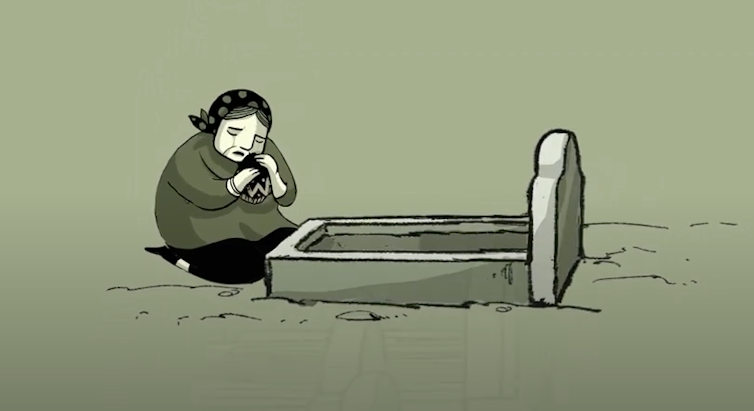
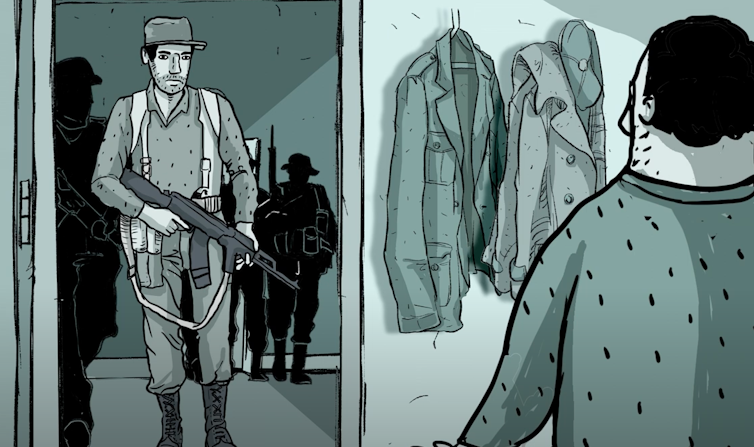
Zahra’s son was found in a mass grave ten years after he was taken by armed forces from their rural home. Together with hundreds of others who were targeted because of their ethnicity, he was transported to a holding site, tortured and executed.
His body was found in a mass grave that contained the remains of over 200 others. He was identified initially by his distinctive clothing – a hat that Zahra had knitted for him – and later by DNA evidence
Zahra’s search for him had been a long and arduous one. Like many others who were also searching for missing family members, she reported him missing, provided a description and a DNA reference sample. She asked neighbours, survivors and witnesses if they had any idea what had happened to him and where he might be.
She plastered his image on any available public space – and she waited. And despite the almost daily discovery by international investigators of mass graves in the surrounding area, knowing in her heart of hearts that he must almost certainly be dead, the absence of a body meant that there was always the tiniest shred of hope that somewhere he might be alive and come back to her.
She lived in this agonising state of limbo for more than a decade, unable to mourn her son and to move on with her own life until he had been found. The return of his body to her was devastating, but it also meant that she was able to bury him with the care and dignity that had been denied him in his final days and in his death.
Sadly, Zahra’s experiences are not unique.
Wadad was at home with her husband and two small children, celebrating her husband’s birthday, when the soldiers arrived at their door.
They beat her husband before taking him away and raped Wadad while her terrified children cowered outside her bedroom door.
Wadad never saw her husband alive again. Like Zahra, Wadad’s quest to find out what had happened to him was a long one. Her children grew into adults as their struggle continued. As political oppression in her country mounted, so did the number of disappearances, and families of the missing swelled the ranks of protesters who were calling for answers.
In the end, the answer did not come from the government but from a survivor who had been imprisoned with Wadad’s husband. He had been executed. Wadad still doesn’t know where his body is.
The experiences of Zahra and Wadad are shared by families all around the world who are searching for their loved ones. The majority of victims in mass graves are men and boys, meaning that many of those who are looking for the bodies of their dead are women. In the immediate aftermath of the Rwandan genocide, for example, 70% of the country’s population was female. In Bosnia, too, the vast majority of the missing are men (86.98%), most of whom were aged between 21 and 60 at the time they disappeared (70.58%).
Like Wadad, women were often victims of human rights violations, including rape and other forms of sexual violence. This means they have to deal with their own trauma and at the same time navigate the ordeal of investigating what happened to their loved one.
In Rwanda alone, between 250,000 and 500,000 women were raped during the genocide. Many of them suffer social isolation and rejection as a result, struggle with ongoing illness including HIV infection, and must try to make a living as a sole breadwinner for their families, including for any children born as a result of rape.
In our film, the body of Zahra’s son is found and returned to her so that she can bury and mourn him. The same cannot be said, however, for Wadad, reflecting the sad truth of mass grave investigation: for most people who are looking for their loved ones, their remains will never be found. Mass grave sites – even when known – will never be excavated, and in other cases remains have been destroyed.
‘They made him disappear completely’
Armando Amaro Cóndor, for example, was a student at Peru’s Universidad Nacional de Educación Enrique Guzmán y Valle who went missing in July 1992.
He was among nine students and one professor who were disappeared and later extrajudicially executed by Peruvian military forces. His sister, Carmen Rosa Amaro-Cóndor summed up her feelings in her evidence to the Inter-American Court of Human Rights when she said:
They made him disappear completely; they burned his body with lime, with gasolene, that shows their complete inhumanity.
Mass grave exhumation is time consuming and expensive, and for countries that lack sufficient resources or expertise, may simply never happen.
In Iraq, for instance, it is estimated, based on the current rate of progress, that to exhume and investigate all currently known mass graves would take 800 years.
But efforts to search for, exhume and identify the dead and prosecute those responsible also requires political will, which is likely to be lacking where those responsible remain in positions of power.
In Guatemala, there is still no specialist public body with a mandate to search for the reported 45,000 people who have been missing since the 36-year conflict ended in 1996. Instead, families have faced official denial and obstruction, aided by an attorney general who remains loyal to former military leaders and political figures directly implicated in the many massacres that took place there. Families must rely instead on civil society organisations to conduct exhumation and identification efforts.
Where the existence of mass graves runs counter to political or nationalistic goals, sites become inconvenient reminders of a truth and a history that leaders are seeking to either rewrite or erase.
For example, nationalism and ethnic tensions are running dangerously high in Bosnia’s Republika Srpska where President Milorad Dodik – a genocide denier – has promised his supporters secession from Bosnia and Herzegovina.
Authorities within the Republika Srpska are actively engaged in revisionism efforts, and since 2016, at the behest of the minister of education and culture, children attending schools in the Republika Srpska have not been taught about the Siege of Sarajevo or the Srebrenica genocide.
Memorialisation has become a highly partisan issue, as murals in the city of Foča have appeared celebrating Ratko Mladić and Milorad Pelemiš, the commander of the 10th Sabotage Detachment of the Bosnian Serb Army – the unit responsible for the killing of over 1,000 Bosniaks at Branjevo Farm in July 1995.
By contrast, of the 42 largest mass graves discovered in the country to date, just 12 of the excavated sites bear any kind of memorial plaque or are otherwise marked. Instead, many have been built over or used as rubbish dumps.
Within this highly tense and partisan context, witnesses to crimes are fearful of reporting mass grave locations. Amor Mašović, chairman of the board of directors of the Missing Persons Institute in Bosnia, said that information about hidden graves is still being stored in people’s heads, but witnesses who were involved in crimes aren’t willing to share their knowledge, partly because of the political climate, adding:
Messages from political leaders go against that, saying those who offer information will become traitors to their people, while those who should be criminally prosecuted for taking people away and forcibly making them disappear are heroes to these politicians.
Wissam is the third character in our film (they are gender-neutral so that the widest possible spread of survivors can recognise themselves in the film).
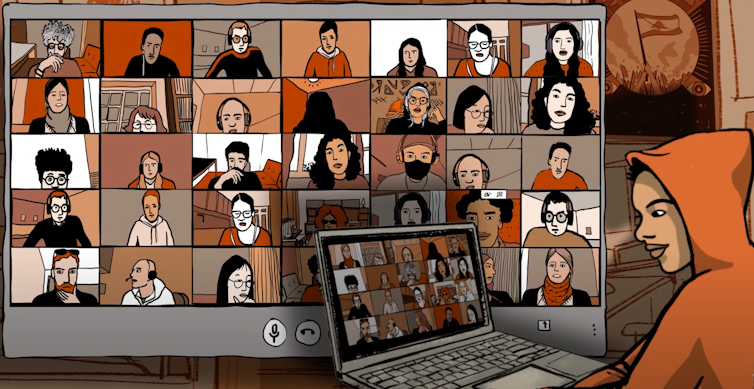
They are a student in a city in sub-Saharan Africa, where they blog about the political situation. Wissam is chatting with their partner online when they witness armed men break into their partner’s flat and begin to beat him, before dragging him away, out of sight of the screen.
Wissam uses their online presence to raise awareness of the disappearance, launching a campaign that attracts others from their own country and beyond. There are riots as protests against government oppression grow, but Wissam never learns their partner’s fate or whereabouts. They remain in limbo.
For those who continue to search – and for whom there will never be a body or a trial – we need to find other ways to alleviate their anguish, to restore dignity in death and to bring families some peace, and perhaps some form of justice.
Digital mapping and concealed evidence
Online documentation and mapping is used in other human rights contexts as a way of recording fact, preserving evidence and raising awareness of human rights violations. It is an area that we have been exploring in our work to see how it might be applied to mass graves.
The digital recording and mapping of mass grave sites could also provide protection of the site and preserve its location in the event that the political situation changes and investigation becomes a possibility at some point in the future.
In Guatemala, for example, after decades of impunity and an absence of any will on the part of the state to search for and identify the missing, a new president has been elected on an anti-corruption platform, and the country is currently pursuing the criminal prosecution of a former army general, Lucas Garcia, who held office during one of the most violent and bloodiest periods of the conflict.
It offers families a glimmer of hope that justice will finally be done and loved ones found – but time is running out. Garcia is 91 and his co-accused, Callejas y Callejas, has been declared unfit for trial. Witnesses and perpetrators are dying and memories are fading, along with hopes of locating mass graves and their victims.
But the issue of open-source mapping of mass graves is not a straightforward one.
Mass grave sites are vulnerable to disturbance because perpetrators will often try to cover up their crimes. So publicly revealing the location of a site may actually alert them to the fact that their cover ups have failed. The destruction of or interference with mass graves can then result in the loss or contamination of evidence.
It can also result in damage to the bodies that are buried there, including the separation and commingling of body parts. For those hoping for the identification and return of a family member, this can be both traumatic and catastrophic.
As the conflict in Bosnia was in its final throws, for example, several months after the Srebrenica genocide took place, the US secretary of state issued a statement indicating that US forces had identified the location of a number of mass graves from satellite imagery.
As Bosnian-Serb forces sensed defeat, a concerted and organised effort was made to conceal the evidence of mass graves: they were dug up using heavy machinery and bodies were moved in their hundreds to secondary, smaller sites. The process was brutal and indiscriminate. It meant that body parts became separated and mixed with others, with remains of single individuals being found in multiple different grave pits.
Public disclosure of the location of a mass grave site could also put witnesses and victims’ families at risk of harm, especially where the possibility of criminal investigation exists within a country or those responsible still hold positions of power.
The first global map
While there is currently no system of global record keeping, mapping or monitoring of the number and location of mass graves or of the numbers of victims believed to be in them, there are a few mass grave mapping projects that have been conducted at a country level, including in both Bosnia and Cambodia, providing us with an insight into some of the challenges involved.
Our initial aim was to produce guidance – a number of practical tools – that would enable anyone involved in mapping mass graves to make decisions that were ethical and safe – including when open-source publication should be avoided and how risks could be mitigated.
And our team of specialist researchers has now begun the long process of producing the first world-wide open-source map of mass graves, a process that we envisage will take another 2.5 years to complete.
We continue to encounter many challenges along the way, including how we verify the credibility of online reports and sources, as well as the availability and accessibility of reports themselves.
Cross-referencing materials to validate our sources is hugely time consuming – we are trying to compare the non-comparable. Where sites are unmarked or are situated in remote areas they are harder to identify, bringing with it the risk of under-representation in areas and the possibility that fewer recordings of graves might feed into a revisionist narrative, or deny families the justice and closure they are looking for.
The work is methodical and long. Nonetheless, as a snapshot of our current progress hopefully shows, we are working to ensure that overlooked and under-reported mass graves are captured.
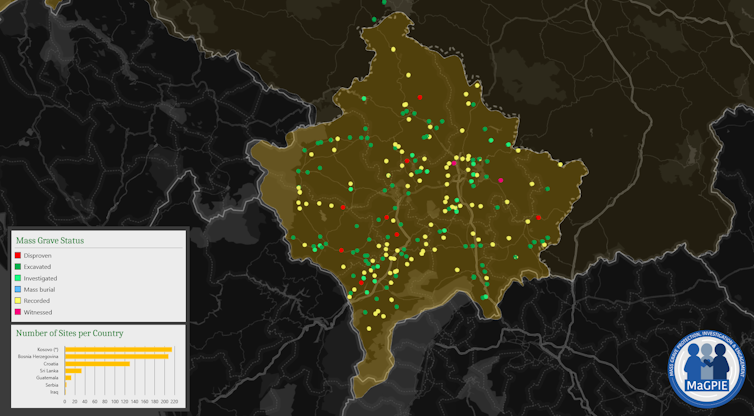
The image above shows the different types of mass graves recorded in Kosovo. The barchart outlines the large numbers of sites recorded by the project so far.
What next?
The way that we search for, exhume and investigate mass graves has come a long way since the formation of forensic teams in south and Latin America in the wake of the military junta regimes of the 1970s and early 1980s. Since then a number of forensic teams have been founded in Guatemala, Peru and elsewhere to facilitate the exhumation and identification of the disappeared.
The international tribunals that were set up by the UN Security Council after the conflicts in Rwanda and the former Yugoslavia went a step further, introducing multidisciplinary teams that operated on a large scale. The search for the missing has benefited from the application of technology such as satellite imagery and ground penetrating radar, while the development of DNA evidence has been instrumental in the reliable identification of victims.
These developments all inform today’s efforts to find answers for victims’ families in what feels like an increasingly volatile world.
And despite the ubiquity of mass graves across the globe and their significance for families and societies that are seeking to come to terms with their violent pasts, the full scale and nature of the mass grave phenomena is still not well understood. While many countries may legislate to search for the missing, punish those responsible and provide families with the answers they so desperately need, the extent to which those legal commitments are manifested in practice is variable.
Sometimes states may simply lack the capacity and expertise required to conduct credible forensic exhumations that have the potential to meet the needs of families who are often left without the answers they need while perpetrators go unpunished. In order to rectify this, we need a fuller understanding of how legal commitments are being interpreted and applied in practice.
In the meantime, for the families of the missing, the need to find their loved ones and to understand what happened to them does not fade with time, and neither does their commitment to pursue the truth.
Resolution was written and animated by Lina Ghaibeh and Georges Khoury and is dedicated to all those who continue to search. The name is intended to speak, not only to their need for an answer but also to their steadfast resolve – often over decades – to bring their loved ones home. We are grateful to the victims’ organisations that supported us in the development of the film. The survivor quotes used in this article come from materials produced by those organisations, and helped to form its narrative.
To hear about new Insights articles, join the hundreds of thousands of people who value The Conversation’s evidence-based news. Subscribe to our newsletter.
You are warmly welcomed to next week’s research process seminar. Hosted in FMC but welcome to all.
Tuesday 1 October 2-3pm on Zoom
AI in Qualitative Research: A Full Workflow Approach from Data Collection to Analysis
In this workshop, I’ll walk you through a complete research project, showing how AI can be integrated at every step—from data collection to analysis and editing. The focus is on the practical application of custom AI tools, including GPTs, in qualitative research, offering insights into both the potential and the challenges (ethical and otherwise) encountered along the way.
You’ll gain knowledge on:
End-to-End Workflow: Understand how AI can support the entire research process, from initial data collection to final edits.
Custom GPT Models: Learn how to develop AI models tailored to your qualitative data needs.
Challenges & Solutions: Explore ethical, technical, and practical challenges at each stage of the research process and how to address them.
AI in Knowledge Creation: Reflect on the broader implications of using AI to create, interpret, and validate research findings.
This workshop is perfect for those who want to explore the potential of AI in qualitative research and understand how to incorporate it into their own projects effectively especially when access to specialized software might be limited.
Bio:
Ana Adi is a Professor of Public Relations and Corporate Communications at Quadriga University of Applied Sciences in Berlin, the chair of the Digital Communication Awards, and the host of the Women in PR podcast (on SoundCloud, iTunes and more). Dr Adi’s research focuses on identifying solutions for the professionalisation and future-proofing of PR/Comms including identifying their social impact and social value. She also speaks about artificial intelligence in PR workflows and research, measurement and evaluation of communication, and storytelling. Originally from Romania, Dr Adi obtained her doctorate from the University of the West of Scotland (UK) and has studied and worked in the USA, UK, Belgium and taught in Thailand and Bahrain. www.anaadi.net
About the research process seminar series:
The purpose of this research seminar series is different to your typical research seminar and conference presentation. Instead of presenting the results and outcomes of research, we want to share good practices around the process of doing research. This might often involve a focus on research methods but it also includes aspects of publishing, writing, time management, career management etc.
The idea here is that the speaker takes us through the anatomy of the project or approach focussing particularly on the process – the challenges, the successes, and the failures. For the audience, we walk away with a practical application of a method or approach we may not be familiar with or may not have applied in this way before. Our ambition is to make us all better researchers as a result.
Last Friday 20 September Wessex Health Partners joined in with the campaign #Red4Research with the aim of raising awareness of their partnership within the research community.
We are looking to recruit an impact champion in UOA 20 (the Unit of Assessment for Social Work and Social Policy) to help support preparations for our submission to REF2029. The deadline for expressions of interest is the Friday 4 October 2024.
This role is recruited through an open and transparent process, which gives all academic staff the opportunity to put themselves forward. Applications from underrepresented groups (e.g. minority ethnic, declared disability) are particularly welcome.
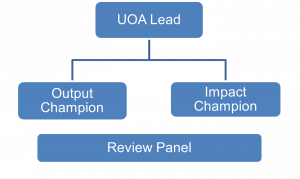
We are currently preparing submissions to thirteen units (otherwise known as UOAs). Each unit has a leadership team with at least one leader, an output and impact champion. The leadership team is supported by a panel of reviewers who assess the research from the unit. This includes research outputs (journal articles, book chapters, digital artefacts and conference proceedings) and impact case studies.
All roles require a level of commitment which is recognised accordingly, with time to review, attend meetings, and take responsibility for tasks.
This vacancy is for a joint impact champion for UOA 20 Social Work and Social Policy. This role exists as a job share with an existing impact champion, on the basis of a combined total of 0.2 FTE (split to be decided in discussion with the successful applicant).
Undertaking a UOA role can be enjoyable and rewarding, as one of our current impact champions can testify:
“As a UoA 17 impact champion, I work closely with the UoA 17 impact team to encourage the development of a culture of impact across BUBS. I try to pop into Department / research group meetings when I can to discuss impact, and I’ve enjoyed meeting people with a whole range of research interests. Sometimes it can be tough to engage people with impact – understandably; everyone is busy – so it’s important to be enthusiastic about the need for our BU research to reach the public. Overall, the role is about planting the seeds to get researchers thinking about the impact their work might have in the future (as well as the impact they have already had, sometimes without realising!)”
Dr Rafaelle Nicholson – UOA 17 Impact Champion
How to apply
All those interested should put forward a short case (suggested length of one paragraph), explaining why they are interested in the role and what they believe they could bring to it. These should be clearly marked with the relevant role and unit and emailed to ref@bournemouth.ac.uk by Friday 4 October 2024.
Further details on the impact champion role, the process of recruitment and selection criteria can be found here:
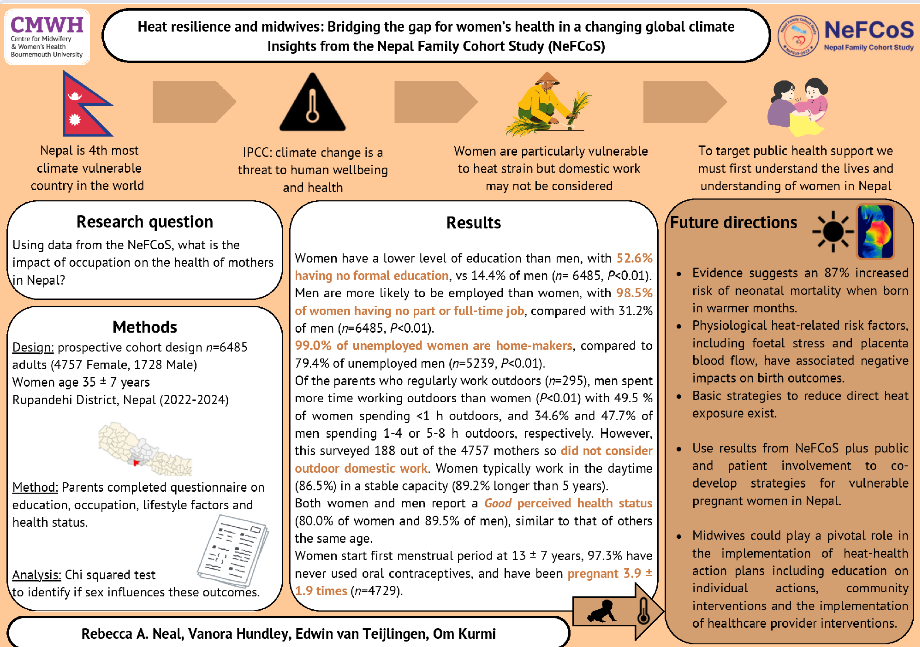
Dr. Rebecca Neal in the Centre for Midwifery & Women’s Health (CMWH) who has a poster accepted for presentation at the prestigious GLOW conference later this month. This poster ‘Heat resilience and midwives: Bridging the gap for women’s health in a changing global climate. The 2024 GLOW conference, supported by the Medical Research Council, will focus on the effects of the ongoing global crises of climate change, infectious diseases, mental health, and conflict and migration on women’s and newborn health.
Insights from the Nepal Family Cohort Study (NeFCoS). NeFCoS is a multidisciplinary, longitudinal family cohort study designed to be one of its kind, informative research conducted in various geographical areas of Nepal. NeFCoS, led by Dr. Om Kurmi at the University of Coventry is part large-scale epidemiological study supported by BU and several other universities in the UK and elsewhere.
The first in a series of interdisciplinary research seminars run by the Centre for Wellbeing and Long Term Health (@CWLTH) and the Centre for Science, Health, Data Communication Research (@SHDCResearch) was framed around the partnership formed through a match-funded doctoral studentship between DHC and BU. Andy Sweetmore is researching early-interventions for children and young people who self-harm; he works 15 hours a week clinically as a specialist nurse practitioner within the Closer2Home CAMHS community intensive treatment team.
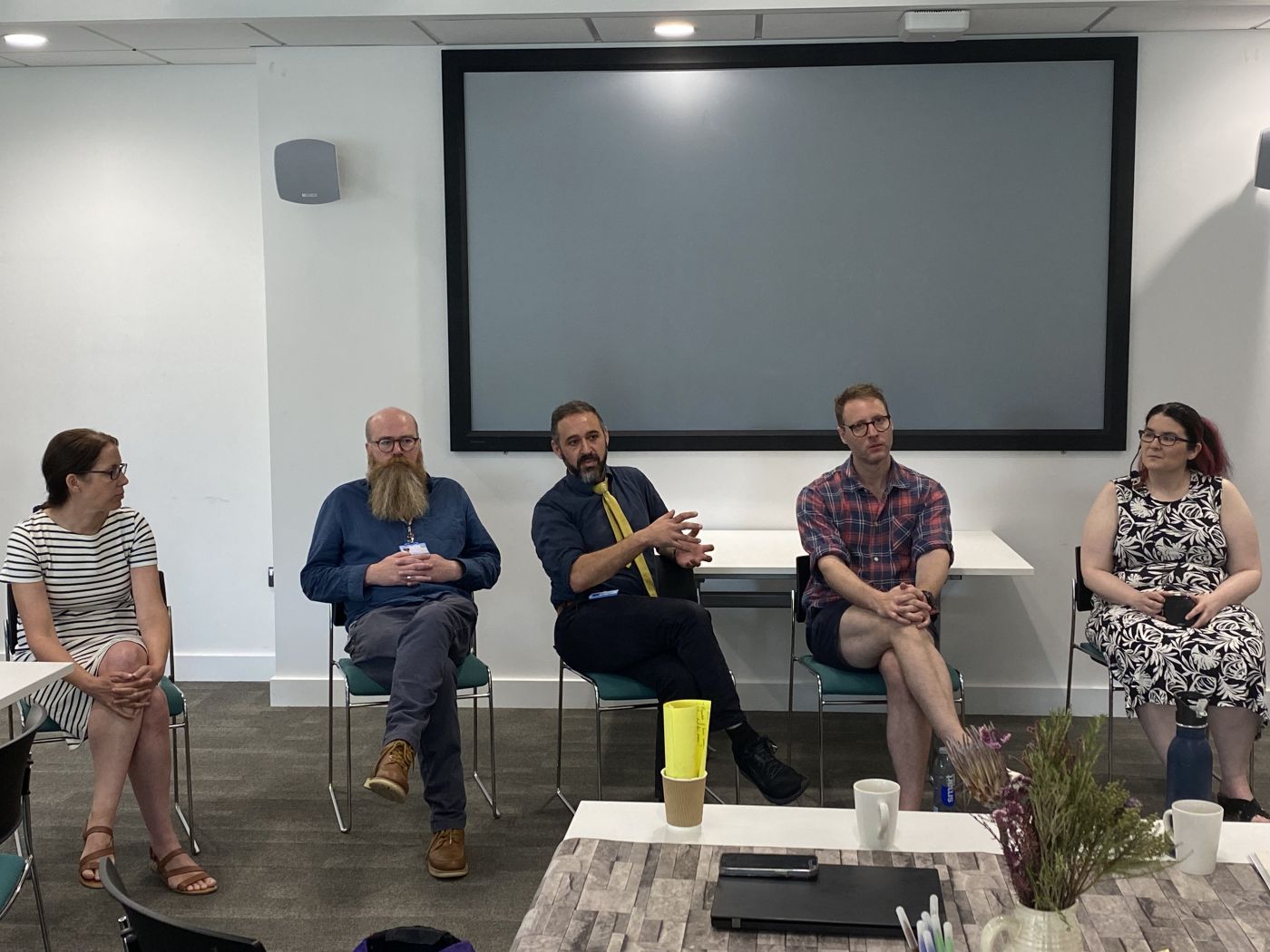
L-R Dr Claire Young, Consultant Clinical Psychologist and Clinical Service Lead; Dr Phil Morgan, Head of Nursing, Therapies and Quality; Morad Margoum (Interim Service Director DHC) Andy Sweetmore (CAMHS and BU) Professor Ann Luce (BU)
The aims of the symposium were to:
To explore what the clinical evidence means in the context of working with young people who self-harm, for our local healthcare services
To discuss the assumptions about self-harm and what actions can be taken
To gain insights into joint research working between DHC and BU
Morad Margoum, Intermin Service Director (DHC) and on the supervision team, welcomed the symposium delegates, comprising mental health experts and practitioners from across Dorset, school nurses, academics from the Bournemouth University mental health team.
Andy then reported on his systematic literature review, conducted covering publications from January 2004 to March 2024. The inclusion criteria encompassed children and young people aged 4 to 25 years, in educational or primary care settings, and studies reporting self harm outcomes. Definitions of self-harm underpinned the work:
Self-harm, defined as self-poisoning or self-injury regardless of intent, is associated with an elevated risk of mental health conditions and is a strong predictor of suicide (Iyengar et al. 2018; Mughal et al. 2019).
Self-harm was previously associated with depression and pervasive emotional dysregulation, however, occurs in almost every mental health condition, including anxiety, anorexia nervosa and schizophrenia (Harris et al. 2022).
Suicide is the predominant cause of mortality among females aged 15 to 19 globally and is a pressing public health concern (Liu et al. 2022).
The review highlighted a significant gap in robust, high-quality studies on self-harm interventions within educational and primary settings. The limited evidence base suggests potential benefits of school based interventions, but further research with rigorous methodologies is required. It was noted that Iatrogenic harm was not discussed. Interventions to support mental health conditions in any environment carries inherent risks, with Foulkes & Andrews (2023) finding that mental health support within schools may not be as effective or safe as initially presumed. Recent literature (Andrews et al. 2022; Harvey et al. 2023; Montero-Marin et al. 2023), also indicate potential post-intervention deterioration in school-based interventions. Even if only a small fraction of adolescents are adversely affected within a school, the widespread application of these interventions could result in significant harm to thousands, underscoring the importance of assessing even minor adverse effects at scale. Despite the NHS strategy of moving mental health initiatives rapidly into school, these interventions may make some young people worse. There isn’t one therapy which an evidence base points to that can reliably say will be effective, which offers limited treatment options for those who are trying to ensure a standardised provision.
Expert speakers offered their insights, followed by a panel discussion to seek comment, clarification and a focus for the lively debate that followed. The next steps include disseminating the insights and findings from the symposium to inform the prospective CAMHS clinical transformation plan, which aims to develop innovative approaches to supporting children and their families, as well as the broader strategy to address self-harm within local mental health services.
Andy Sweetmore is a match funded DHC/BU doctoral student, supervised by Dr Heidi Singleton (DNS) Professor Debbie Holley (DNS) and Professor Ann Luce (FMC)
Heidi and Debbie research as part of Centre for Wellbeing and Long Term Health (@CWLTH) and Ann the Centre for Science, Health, Data Communication Research (@SHDCResearch)
BU staff can login below:
Other services
Don’t miss a post!
Subscribe for the BU Research Digest, delivered freshly every day.


 This edition includes news items and stories related the successes of CMWH staff and students. For example, about Drs. Dominique Mylod and Daisy Wiggins who both secured innovative NIHR funding for undergraduate student internships. Or about the recently awarded National Institute for Health and Care Research (NIHR) funding for ‘INSIGHT: Inspiring Students into Research’. This innovative three-year programme started this summer as part of the NIHR Academy’s portfolio of career support for health and social care professionals. The programme supports the NIHR aim to develop a highly skilled research workforce capable of advancing the best research which improves health and care, and benefits society and the economy.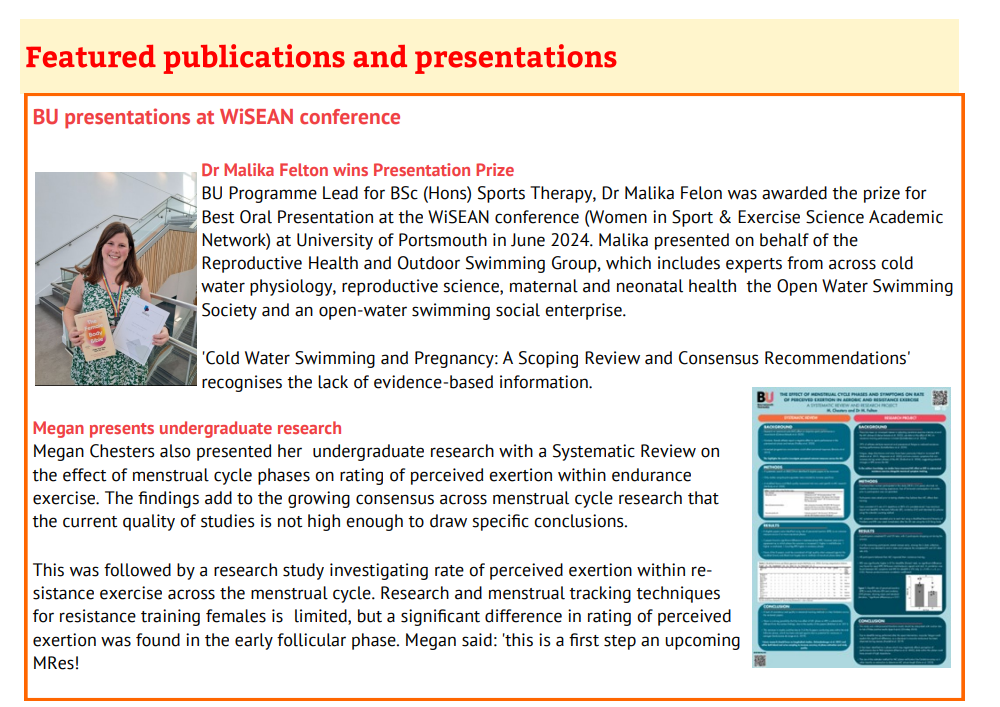












 International Open Access Week: open access and the REF
 Food Price Research Shortlisted for Civil Service Prize
 3C Event: Research Culture, Community & Connections – Wednesday 11 November 3-4pm
 ECR Opportunities: New Development Programme, Researcher Grants & Upcoming Events
 Horizon Europe Cluster 3 (Civil Security for Society) 2026 Calls Now Open
 MSCA Doctoral Networks 2026 Call Information Webinar
 ESRC Festival of Social Science 2026: Application Deadline Extended to Thursday 25 June 2026
 Reminder: Register for the ESRC Festival of Social Science 2026 Information Session
 ECR Funding Open Call: Research Culture & Community Grant – Apply now
 ERC Advanced Grant 2025 Webinar
 Update on UKRO services
 European research project exploring use of ‘virtual twins’ to better manage metabolic associated fatty liver disease