Category / Biodiversity, Environmental Change & Green Economy

Dr. Peter Bridgewater, Chairman of the Joint Nature Conservation Committee is coming to BU!

The Environmental Change & Biodiversity Research Theme would like to invite you to their seminar on 5 March. Dr. Peter Bridgewater, Chairman of the Joint Nature Conservation Committee, will lead the seminar and discuss “Biodiversity governance in the Anthropocene”.

Peter has had a glittering career in the science-policy interface. He currently holds a position as the chairman of the JNCC and has held many reputable positions in the past, including but not limited to: chair of the International Whaling Commission, Secretary General of the RAMSAR convention of wetlands, Chief Scientist UK Nature Conservancy Council and a position on the Board of the Millenium Assessment.

The seminar will be held in the Coyne Lecture Theatre from 11am to 1pm on 5 March. All are welcome, so please come by if you’re interested in hearing more from Peter!

Developing a working paper at BU

I would like to make you aware of an exciting development at BU.

A multi-disciplinary group of BU academics has been meeting over the last 6 months in order to design a online journal that is capable of acting as a central focus for the dissemination of the high quality research and scholarly outputs from UG and PG dissertations, post graduate researchers, early career researchers and established academic staff. The group has designed a developmental working paper online journal that will support ‘would be’ authors and their potential publications. Although particular emphasis has been given to maximising high quality outputs of UG and PG students and early career academics, this online journal will be capable of supporting the potential of all those engaged in research and scholarship at BU.

Below are a series of Q & As:


What’s the name of the working paper?

The provisional title is eBU: Working Papers Online


How is the working paper structured?

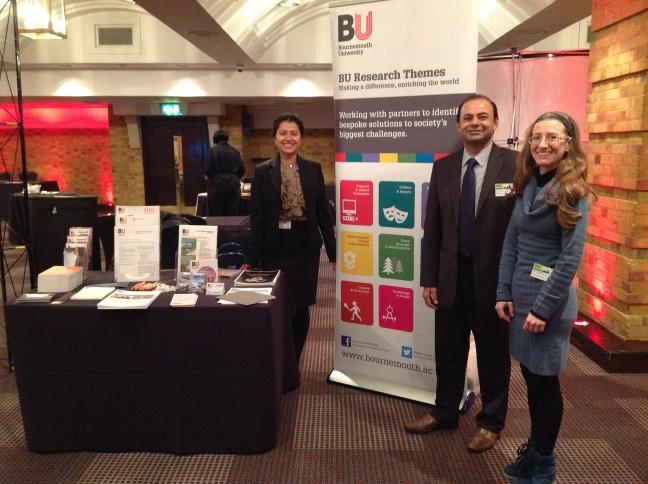
The working paper will not be limited to any one discipline or allied to any one particular methodology, but will aim to publish articles driven by the key BU Research Themes: (Creative and Digital Economies, Culture and Society, Entrepreneurship and Economic Growth, Environmental Change and Biodiversity, Green Economy and Sustainability, Health, Wellbeing and Ageing, Leisure and Recreation, Technology and Design). Apart from the build-up to launch, the working paper will have no deadlines or specific calls for papers. Instead, the working paper will work on a rolling submission process.

A set of author guidelines and details about formats are currently being considered and written. However, the guidelines are likely to accommodate a wide range of formats.


What are the submission processes for staff and students?

It is envisaged that staff will act as gatekeepers and encourage undergraduate and master’s students to submit high quality work into a format this is publishable. Post-graduate researchers and academic members of staff will be able to submit papers on their own accord.

After a short review from the editorial board, two designated BU academics will provide an initial quality check. The paper will then be uploaded to the internal intranet working paper site. This will allow any member of staff or student to read and offer feedback. However, within a few weeks the two designed reviewers will then provide a more comprehensive and detailed critical review. All reviews will take place in a safe, secure and INTERNAL environment. After a detailed review, students will then be encouraged to make any recommended changes and submit to external publication/or make their work available to be published on external working paper website.

This working paper is set to go live in March.


Further information

If anyone is interested in becoming involved in helping to create this online journal, and/or at an editorial level please get in touch with Andrew Harding (aharding@bournemouth.ac.uk), Andrew Adams (aadams@bournemouth.ac.uk) or Fiona Knight (fknight@bournemouth.ac.uk).


Environmental Change & Biodiversity Research Theme seminar on Thursday!

The Environmental Change & Biodiversity Research Theme is holding its third and final seminar of the term on Thursday 13 December. The seminar will be held in Christchurch House CG13 at 1200. Tea and coffee and biscuits will be provided.

Kevin Wood will present some results from his PhD on mute swan-plant interactions in the River Frome. The swans are sometimes considered a pest, because when in large numbers can significantly depelte the amount of vegetation in such rivers with potential negetative effects on trout and salmon. The title of his talk is “Go with the flow: seasonal changes in water velocity determine foraging patch choice by mute swans”. The seminar will also be a chance for any new first year PhD students to present a few slides about their PhD, as was done by a few students in a previous seminar. Please let Richard Stillman know if you would like to present at an upcoming seminar.

Environmental Change & Biodiversity Research Theme seminar on Thursday!

The Environmental Change & Biodiversity Research Theme is holding its second seminar of the term on Thursday 22 November. The seminar will be held in TAG01 (Tolpuddle Annex) at 1200. Tea and coffee and biscuits will be provided.

The seminar will be quite informal and will be used as an opportunity to discuss ideas that are in development as well as presenting completed results.

The next Environmental Change & Biodiversity seminar will be held on 13 December in Christchurch House CG13 at 1200. Richard Stillman is the theme leader, so please let him know if you would like to present at one of the upcoming seminars.

Environmental Change & Biodiversity Research Theme seminar on Thursday!

The Environmental Change & Biodiversity Research Theme is holding its first seminar of the academic year on Thursday 1 November. The seminar will be held in Kimmeridge House KG03 at 1200. Tea and coffee and biscuits will be provided.

The seminar will be quite informal and will be used as an opportunity to discuss ideas that are in development as well as presenting completed results. Additionally, this will be an opportunity for new PhD students in the theme to give a brief (about 5 min) overview of their PhD, and meet staff with overlapping interests. So far the following people have offered: Farah Al-Shorbaji, Adrian Blake, Katharine Bowgen, Danny Sheath and Ann Thornton. Their PhDs cover a range of subjects including the genetics, behaviour and ecology of fish, the effect of eutrophication of coastal habitats, and the effect of environmental change on birds.

The next Environmental Change & Biodiversity seminars will be held on 22 November in Stevenson Lecture Theatre at 1200 and on 13 December in Christchurch House CG13 at 1200. Richard Stillman is the theme leader, so please let him know if you would like to present at one of the upcoming seminars.

Carbon Reduction Event 2012 – Get Involved!

BU has accepted an invitation to be the specialist educational sponsor at a Govtoday-hosted Carbon Reduction event in November. Adrian Newton (ApSci) is the lead academic on this and we have been working closely with Govtoday to gather as much information about the event as possible (i.e. more about the event, who will be attending, how will BU benefit, etc.).  The attached document provides an overview of all the information gathered. You can also visit the event’s website for more detail: http://www.carbon-reduction.co.uk.

We want to ensure we capture all available expertise/research in the field of carbon reduction, so we’re casting a wide net. Could you please get in touch if you would like to get involved? There are several ways you can get involved, to include:

  • Would you like to attend the event on 27 November? This will provide an opportunity to present your research to public sector decision makers. We can send up to four delegates. Please let me know if you’d like to attend.
  • If you do not wish to attend, but would like to see your work featured in the presentation to be given on behalf of BU, then please send relevant PowerPoint slides to me for inclusion.
  • Would you like to provide materials for the exhibition space? If so, please provide details of your research that you would like to feature.

This is a fantastic opportunity for BU to show off our strengths and experience in research and knowledge exchange, particularly CPD and training!

How Web 2.0 might revolutionise our research

Many of you will be familiar with the revolution that the internet is undergoing, with its growth of social networking, web applications, blogs and wikis. What I had not appreciated, until very recently, is what the full implications are for how we go about our research. I am sure that colleagues in DEC and the MediaSchoolare well ahead of the curve on this, but for the rest of us, the penny is perhaps only just beginning to drop. I recently attended a fascinating conference hosted by the European Social Simulation Association in Salzburg. This is a group of researchers united by a common interest in using computer programs to simulate human behaviour, and its implications for human society. This was very much a new arena for me; I was really attending to learn something about the agent-based modelling approaches that are the flavour of the month in these circles. But what most impressed me was the way researchers are now using web technologies to access data to explore in their models. For example, although I’d heard of “crowdsourcing” before, I’d never really seen it in practice, and what it can deliver. I was most impressed by groups using tools such as Twitter, together with mapping applications such as Google maps, to produce highly informative maps showing the movements and wellbeing of large numbers of people. A great example is what the LSE is doing to map happiness – yes, really – http://www.mappiness.org.uk/. Another example, from the University of Leeds, has been using Twitter to map the movements of commuters in and out of the city. What is perhaps most astonishing is that large numbers of people seem keen to participate in these research projects. Potentially useful tools being used by this research community include open source mapping initiatives such as Open Street Map http://www.openstreetmap.org/ and Maptube http://www.maptube.org/, as well as Survey mapper http://www.surveymapper.com/current.aspx. You might find this reference useful if you’re interested in learning more – http://ssc.sagepub.com/content/27/4/524

UK Environment White Paper update

The following link provides a useful update on the UK Government’s Environment White Paper, including a summary of current activities relating to its implementation. This includes a number of initatives relating both to the green economy and biodiversity conservation.

Link: http://sd.defra.gov.uk/2012/07/natural-environment-white-paper-one-year-on/?utm_source=feedburner&utm_medium=feed&utm_campaign=Feed%3A+gov%2Fsdscene+%28SD+Scene%29

UK government’s new publication on the green economy

This might be a useful source for those wishing to learn more about the UK Government’s plans for the green economy

‘Enabling the Transition to a Green Economy: government and business working together’ is a new publication which sets out what the transition to a green economy means for businesses.

It is the government’s response to requests from the private sector for greater clarity on what government means by a “green economy”, the policies being put in place to achieve this and how they come together.

Link: http://www.businesslink.gov.uk/bdotg/action/detail?itemId=1096705244&type=ONEOFFPAGE&furlname=greeneconomy&furlparam=greeneconomy&ref=&domain=www.businesslink.gov.uk


New Articles in PloS Biology on sustainability science

New Articles in PloS Biology on sustainability science

Enjoy the reading,

Elena

The Limits to Sustainability Science: Ecological Constraints or Endless Innovation?
Georgina M. Mace

http://dx.doi.org/10.1371%2Fjournal.pbio.1001343


The Macroecology of Sustainability
Joseph R. Burger, Craig D. Allen, James H. Brown, William R. Burnside, Ana D. Davidson, Trevor S. Fristoe, Marcus J. Hamilton, Norman Mercado-Silva, Jeffrey C. Nekola, Jordan G. Okie, Wenyun Zuo

http://dx.doi.org/10.1371%2Fjournal.pbio.1001345


The Shifting Boundaries of Sustainability Science: Are We Doomed Yet?
John H. Matthews, Frederick Boltz

http://dx.doi.org/10.1371%2Fjournal.pbio.1001344


World Symposium on Sustainable Development at Universities (WSSD-U-2012) – post conference reflections

Last week I attended the World Symposium on Sustainable Development at Universities (WSSD-U-2012) which took place in Rio de Janeiro, Brazil, on 5-6 June 2012, as an official ‘parallel’ event to the UN Conference on Sustainable Development (UNCSD), also known as Rio+20.  I was chairing the second day’s plenary sessions and presenting two papers (one on Leadership for SD in HE and a co-authored paper, The impact of University policies for sustainable development on students: a comparison of students from two institutions, one in the UK and one in Portugal . Both papers have been accepted for publication.


Further details on the event can be seen at:

http://www.haw-hamburg.de/en/ftz-als/veranstaltungen/world-symposium-on-sustainable-development-at-universities-wssd-u-2012.html


A summary of the event and its follow-up activities is available:


http://www.haw-hamburg.de/en/ftz-als/veranstaltungen/world-symposium-on-sustainable-development-at-universities-wssd-u-2012/program-wssd01.html


  Over 120 participants representing universities from 26 countries -from all geographical regions attended the conference which was organised by the Research and Transfer Centre “Applications of Life Sciences” of the Hamburg University of Applied Sciences and London Metropolitan University.


Reflections


The conference was great and a good networking opportunity from which further work will follow.


 Disappointed that you are not participating at Rio+ 20? – don’t be.


When the dates were put back (something to do with Heads of State availability and the Jubilee), I was a little disappointed that our event became more ‘antipasti’ than ‘contorno’ but I am now really glad to have been there early.  It will be chaotic! 


Having returned to Rio (after living there 25 years ago) I can say these things:  the hotel prices are ridiculous at any time of year and they are planning a huge uplift for Rio+20 – the hotel experience (and quality) is also more inconsistent than any city I have ever visited.  Attendees will be overcharged, are more likely to get ripped off in all that they do (still very much part of the culture to exploit ‘estrangeiros’) and will certainly find Rio challenging. There are still hotels which look legit but are actually ‘sex motels;’ some areas are still not safe.


Until yesterday I thought the Summit would take place in Centro and then read that it is at Riocentro.  Many attendees will not realise just how far out that is from Centro and Copacabana. If you were to take a bus, it is a gruelling 45 min trip to Barra de Tijuca. But then I guess this will not be an issue for Heads of State, or anyone whose budget extends to private transport!


25 years ago crime was very visible (everyone drove through red lights at night) – it has now been reduced by stronger policing. There was a visible police/military presence on exercise for Rio+20 while I was there; naval vessels were patrolling the beaches. Fortunately they were doing a helicopter patrol, just as some Chinese visitors were attacked with knives on the beach (in daylight). They managed to stop the attackers and return stolen goods.  Rio is much safer than it was but you still need caution. A driver commented to me, Summit ‘attendees offer rich-pickings’.


The strangest observation for me is that the people generally seemed less happy (than when I lived there), despite a huge increase in the middle classes and more disposable income – guess there is something in the Happiness research which intimates a link. The favellas are as big as ever and you can now do ‘favella tourism’ which also seems strange. I guess it’s not very different to when people used to pay to see the ‘bearded lady’.


Returning to the Summit, it is going to be more about review than commitment to exciting actions. Some are already calling it ‘Rio minus 10’. I would not hold out big hopes that much will change.


Would you like to travel? Categories for the latest round of Winston Churchill Fellowships have been announced and there is something for everyone

The Winston Churchill Memorial Trust is looking for people who:

  • Would benefit from experience overseas so that their effectiveness in their career or field of interest was enhanced
  • Are in a position to disseminate their new knowledge and examples of best practice for the benefit of their communities and the UK

In the past the School of Tourism has been particularly successful in obtaining these fellowships with 4 members of staff (and 2 spouses) gaining awards. The funding is good, and being a fellow opens you up to a range of networks and opportunities that are often not normally easily accessible.

The categories for this year are listed below, and seem to cover most areas of interest in the University.  It is important to pitch you application correctly, and there are qualifications as to who may apply (you need to be a British Citizen), so please feel free to come and have a chat.  Closing date is 2 October 2012. 

Science, Engineering & Technology: Applications are welcome from right across this wide field, especially with respect to the popularisation of science, reverse innovation and smart growth. 

Environment, Food & Rural Affairs: Those involved in the countryside, food production, environment and conservation, including those interested in the natural environment and biodiversity and waste management. 

Education: Applications are sought from those working to improve the achievement of students aged 5-19, with particular emphasis on English, Maths, Science and Technology. We are also seeking applications from Deputy Head Teachers who are future Head Teachers, in a joint project with the Farmington Trust. 

Business, Industry & Commerce: We are especially interested in those running Social Enterprises who wish to learn from models overseas, particularly in emerging markets. We’re also keen to receive applications for projects focussed on making Corporate Social Responsibility more effective.  

Medical and Health: Applications are welcome from across this wide spectrum, especially from those with an interest in alcohol-related health issues and continuity of care, both medical and management.  

Communities that Work: This category is for those working in all areas of developing stronger and more effective communities. (This is the second year of a joint project with The Rank Foundation). 

The Creative Industries: Applications are welcome from anyone in this wide field wishing to research new and innovative ideas from overseas.  

The Arts and Older People: Those providing opportunities for older people in all aspects of music, dance, drama and the fine arts. (This is the second year of a joint 3 year project with The Baring Foundation). 

Prison & Penal Reform: Those involved in prison and penal reform and related sentencing issues, who are interested in projects that reduce re-offending and contribute to a just, humane and effective penal system. (A joint project with The Prison Reform Trust and supported by the ICPS) 

Open: Anyone with an appropriate project not covered by other categories, including Exploration (expedition leaders only), and Music Education (a joint project with The Finzi Trust), should apply here.

Further details at: http://www.wcmt.org.uk/


ECOSAL-Atlantis: An ecotourism project

Bournemouth University (BU) hosted a visit from the national co-ordinators of ECOSAL-Atlantis last week; an EU ecotourism project recording and promoting the heritage of salt production around the Atlantic Coasts of the UK, France, Spain and Portugal.

The ECOSAL-Atlantis project goal is to create a traditional salt-working route to highlight the fascinating archaeological and ecologically characteristics of these historic landscapes, thereby encouraging economic success of small-scale salt production and tourism development.

BU is the sole UK partner in this project, providing invaluable archaeological and ecological expertise. Researchers are also helping to develop ‘Traditional Salt-working: The Atlantic Route’ and are working with heritage consultants A&A Fielding Ltd to encourage other organisations and sites to join in the creation of the Route.

Other partners have been busy completing the heritage inventory of salt working sites, as well as collecting environmental data from coastal lagoons. This last aspect includes work on the eco-system of these fragile landscapes, producing guidelines that will protect them.

UK national co-ordinator Mark Brisbane, Professor in the School of Applied Sciences at BU said: “This is a highly innovative and original project that brings together archaeology and heritage, ecology and biodiversity, tourism and economic development and forces them to work together in a novel way for the long-term good of these fragile and precious landscapes”.

During their stay the ECOSAL team visited Poole Museums and Poole Harbour, including Brownsea Island, where they witnessed work taking place in the lagoon, recorded bird species and analyzed factors encouraging breeding and length of stay.

Poole Harbour has been an area of salt production from the late Iron Age period (if not before) carrying on into the Roman period, with sites making salt excavated at Ower and Hamworthy. Salt production must have continued into the medieval period around the harbour area but by the 18th century the salt-works were at Lilliput, where they used peat-fired boiling houses crystallising salt from seawater drawn from ponds in what is now known as the Blue Lagoon.

The ECOSAL team also visited the salt marshes in the Lymington-Keyhaven nature reserve, where Hampshire County Council and St Barbe Museum are creating the Lymington Salt Walk.

Now a tranquil wildlife haven, 200 years ago this area was the centre of the second most important site for salt production after Liverpool. The land would have been covered by salt pans where brine was concentrated, windmills would have pumped it into storage tanks and boiling houses which then used coal to bring the brine to a low boil in large iron or copper pans, producing salt as the water boiled away. There was also a network of inlets with docks for boats to deliver the coal and collect the salt. The success of this industry directly contributed to the wealth of the town of Lymington and helped to build many of its important 18th and early 19th century buildings.

There are 13 organizations involved in the ECOSAL project, from four countries (Spain, France, Portugal and the United Kingdom) as follows: Diputación Foral de Alava, Spain (project leader), Ecomuseé du Marais Salant, France, Centre National de la Recherche Scientifique, France, Communauté de comunes Océan – Marais de Monts, France, Communauté de comunes de l’ile d’Oléron, France, Cap Atlantique, France, Asociación Cultural Amigos de las Salinas de Interior, Spain, Fundación Espacios Naturales Protegidos de Andalucía (Andanatura), Spain, , Bournemouth University, UK, University of Aveiro, Portugal, Aveiro Municipality, Portugal, Rio Maior Municipality, Portugal and Municipality of Figueira da Foz, Portugal.

More information can be found on the Bournemouth University website.
Exercising the precautionary principle

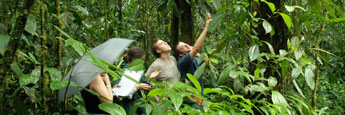
Another really interesting study which serves to remind of the importance of critically thinking through, what on the face of it might seem like a really good green iniative. This example relates to recycling of old spectacles by sending them out to countries where people may not have the luxury of an optician on every high street and designer glasses.

http://www.nytimes.com/2012/04/24/health/research/donating-used-eyeglasses-is-a-poor-use-of-resources.html

I guess the question that needs to be asked is ‘If it no longer works for me why should anyone else want it?’ Most people who wear specs will have a drawer which has several old pairs – just in case. So how should we recycle them? And what about that drawer of old chargers, computer cables and leads, from items which you can no longer remember what appliances they originated from! Yes, we need to acquire less ‘stuff’ in the first place but we also need to develop creative solutions to repurpose all the stuff we already have filling drawers.