Category / Biodiversity, Environmental Change & Green Economy

Portugal & Spain EcoSal Research Trip 24th–31st March 2012

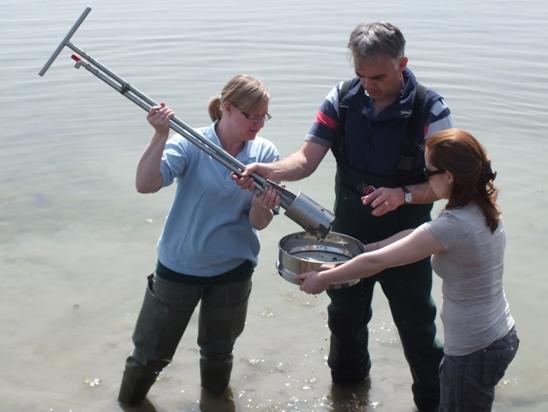
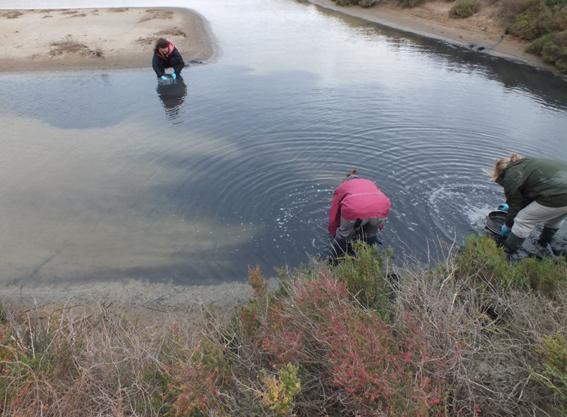
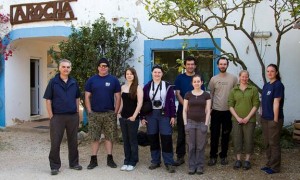
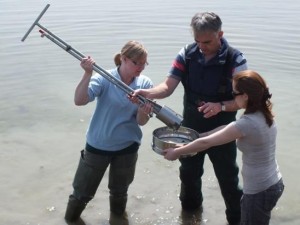
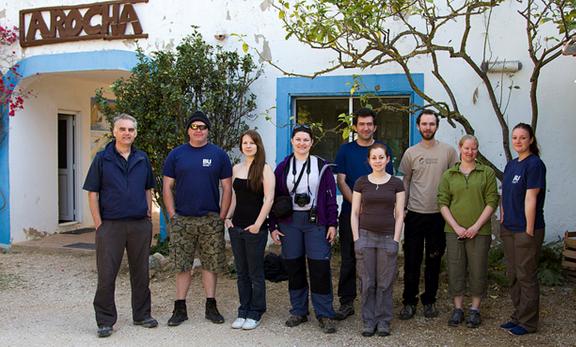
The last week in March, Dr Roger Herbert and Prof Richard Stillman led a research team to collect samples of mud and benthic invertebrates from salinas (saltworking sites) along the Atlantic coast of Portugal and Spain. The BU team comprised five Applied Sciences undergraduates – Caitriona Shannon, Jemma Fowler, Karen Saunders, David Hartnell, and Rebecca Brown – plus research assistant Chris Moody and PhD student Kathryn Ross. The team assisted with mud sampling, sieving, data logging and recording.

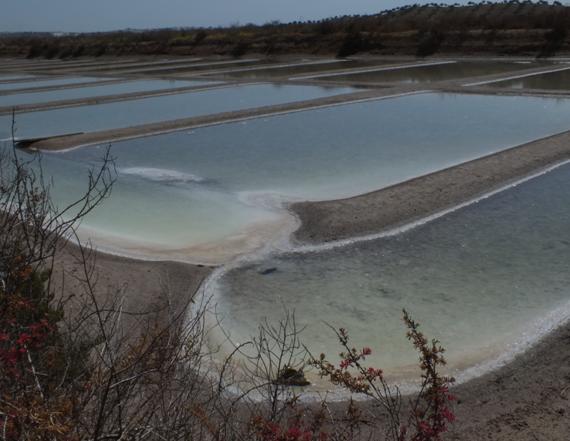
The trip was organised as part of the EcoSal Atlantis project – a European Interreg IVb project which is gathering information about the heritage and biodiversity of saltworking sites along the Atlantic Coast of Europe, to inform and promote sustainable management of the sites (http://ecosal-atlantis.ua.pt). The project has partners in Portugal, Spain, France, and the United Kingdom. Prof. Mark Brisbane at Bournemouth University is the UK national co-ordinator.
(http://www.bournemouth.ac.uk/applied-sciences/research/ecosal-atlantis/uk-project.html)
The sites we visited varied from small-scale commercial enterprises to those more focused on tourism and biodiversity conservation, but all sites provided some interesting insights into how management can improve the quality of a site for certain bird species.

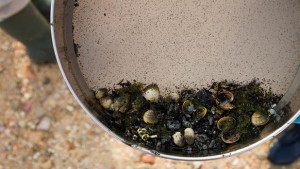
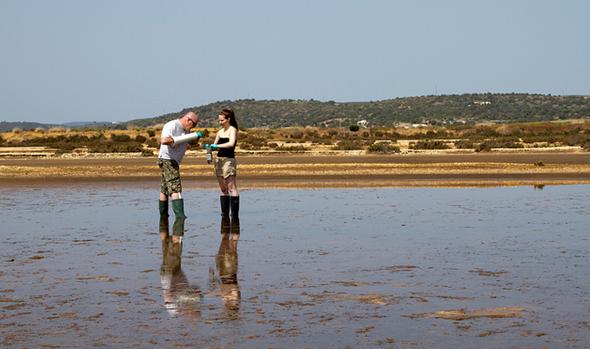
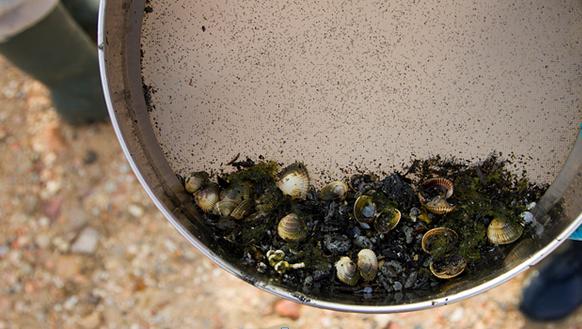
The purpose of our trip was to collect information on the diversity and abundance of benthic invertebrate fauna in salinas. At each salina, 3 mud cores were taken from 5 sites within the reservoirs and evaporation ponds to examine the invertebrates and a further core was taken to determine the sediment composition. Samples for benthic invertebrates were sieved on-site and preserved, and further processing and species identification will be done at Bournemouth University. At each site the depth, temperature and salinity were recorded to determine the effect of these factors on invertebrate distributions. Results from the analysis combined with data obtained from other sites sampled in north Portugal, France and in the UK, will help to characterise the benthic fauna of lagoons and salinas and contribute to understanding of the ecological value of the sites.
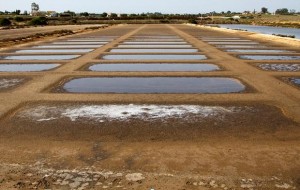
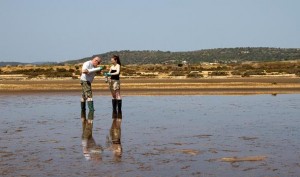
    

Below is a short summary of the trip, including photographs from each of the sites visited and a list of bird species observed.

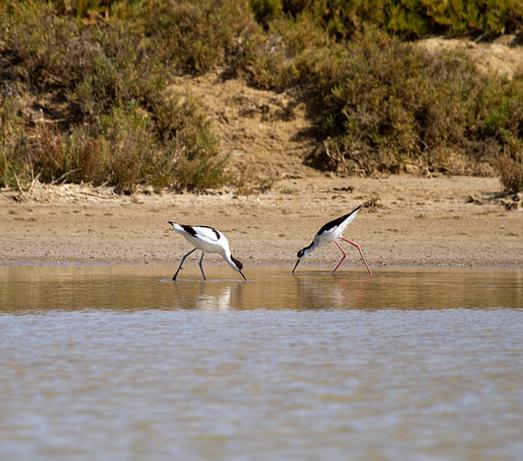
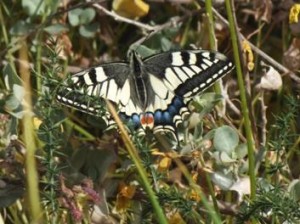
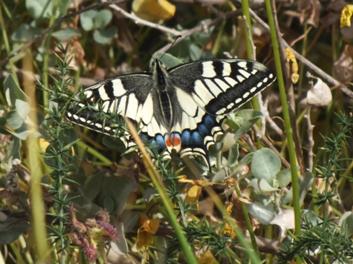
We arrived at Lisbon at 19.00 on Saturday 24th, and were greeted at the airport by the EcoSal national coordinator for Portugal, Renato Neves, who accompanied us to our first study site, Salinas dos Samaouco (http://www.salinasdosamouco.pt/), on the Tagus estuary, where we stayed the night at the field centre. Within the first few minutes of waking up in the morning we got spectacular views of black-winged stilts, avocets and an osprey. Butterflies such as the swallowtail were abundant at the site. A flock of juvenile flamingos were feeding in one of the reservoirs.
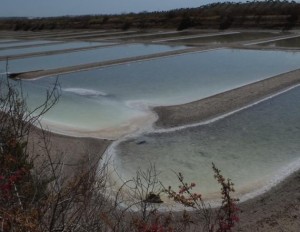
From Sunday 25th – Tuesday 27th we stayed at the Arocha Trust field centre ‘Cruzhina’, (http://www.arocha.org/pt-en/index.html), where we were warmly welcomed by the Felgueiras family and other staff . Arocha is an international environmental charity that does a lot of bird ringing and other field survey work in the Algarve.
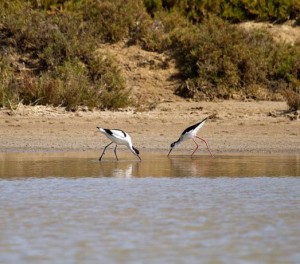
While based at Arocha, we sampled the nearby abandoned Salinas at Odiáxere, where we found Kentish plovers displaying at a potential nesting sites. Black-winged stilts and redshank were also present at the site. Crested lark and corn bunting were also observed close by.

The Salinas at Castro Marim, close to the Portuguese/Spanish border were particularly good for bird life. We observed spoonbills, black-winged stilts, avocets, little stints, dunlin, common and spotted redshank and common sandpiper feeding in the Salinas. Birds of prey were very common and we were treated to some great views of marsh harrier, Bonelli’s eagle and short-toed eagle.
For the remainder of the trip, we stayed at the Los Gallos Hotel in Cadiz. Unfortunately the Spanish weather was not quite as obliging as the Portuguese weather had been, and we spent much of the next few days making sure the wind did not blow away our equipment or the smaller members of the team.

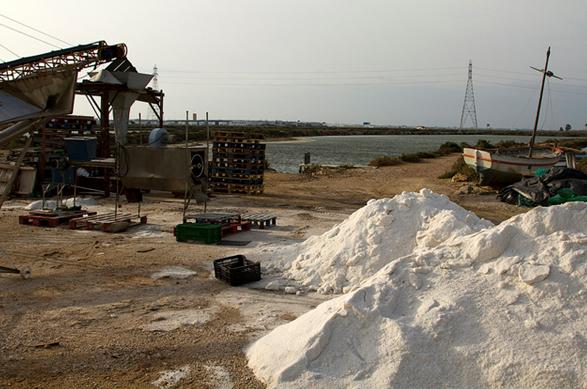
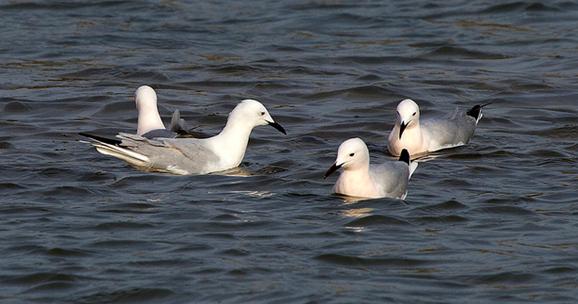
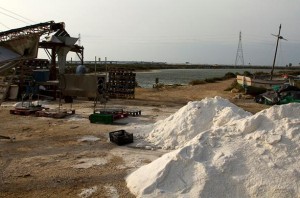
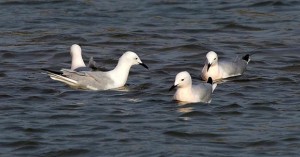
Our first Spanish Salina, San Vicente, in Cadiz http://www.salinasanvicente.es/, was probably the most active site we visited, with mountains of salt and machinery dotted around the site. Slender-billed gulls were common at the site. The site was also a good example of how diversification is important for making Salinas commercially successful – the main building housed a function room that is used for wedding receptions, and a restaurant where the various mixtures of flavoured salt are showcased in the recipes. The premium product, ‘Flor de Sal’ is sold internationally, with Harrods in the UK being a major customer. 
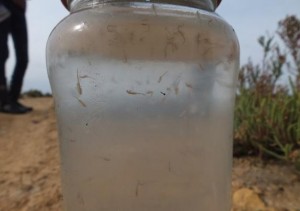
 

It was furiously windy when we did our sampling, but the site manager’s father still assisted us in gathering some samples of Artemia, the small saltwater crustacean that forms an important part of many birds, and is responsible for the pink colour of flamingos.

That same windy afternoon, we were offered a tour of a very different type of salina from Dr. Alejandro Pérez Hurtado  from Cadiz University. La Esperanza Grande salina is partly owned and managed by Cadiz University, and is intensely managed for the benefit of the birds and rigourously monitored to determine the effects of various factors such as water levels, vegetation density, and height of the walls of the ponds, on the birds foraging behaviour and breeding success. From this year it will also be involved with various community projects to tackle the issue of high youth unemployment in Cadiz.
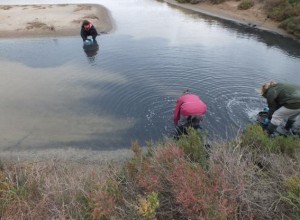
The final site we surveyed, Salina de Chiclana http://www.salinasdechiclana.com/, was also predominantly focussed on education and conservation. There was a marvellous visitor’s centre explaining the process of saltmaking with a lot of information on birds. Like the previous site, Chiclana puts much effort into managing the site for birds. We were lucky enough to have some bee-eaters fly past us as we took our final mud samples for the trip – a perfect end to a memorable week.

Bird list for the trip.

While the Salinas provided us with some excellent views of various waders, wildfowl and gulls, we also took advantage of the time between fieldwork to explore some of the other local avifauna. A few of the species observed on the trip, such as the great and little bustards were ‘life ticks’, even for Richard and Roger, so it was an exciting and educational experience for all of us. The entire list of species observed on the trip is detailed below.

Acknowledgements

Renato Neves , Portugal National co-ordinator;

Márcia Pinto and staff at Samouco Salinas Foundation, Lisbon;

Marcial Felgueiras, Arocha Portugal;

Anabela Resende and Filipe Moniz at Castro Marim;

Manuel Ruiz and staff at Salinas de San Vicente, Cadiz;

Dr. Alejandro Pérez Hurtado from Cadiz University;

Inmaculada Saludo at Salinas de Chiclana, Cadiz;

Lola Alcon Mestre, Fundacion Andanatura, Seville.
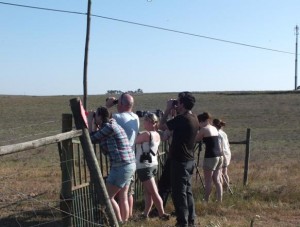
 

 Table 1. Bird list for Eco Sal Portugal/Spain trip March 24-31st, 2012.

Common name Latin name Group
Bee-eater Merops Apiaster Bee-eater
Black-winged kite Elanus caeruleus Birds of prey
Bonelli’s Eagle Aquila fasciata Birds of prey
Kestrel Falco tinnunculus Birds of prey
Lesser kestrel Falco naumanni Birds of prey
Marsh harrier Circus aeruginosus Birds of prey
Montagu’s harrier Circus pygargus Birds of prey
Osprey Pandion haliaetus Birds of prey
Red kite Milvus milvus Birds of prey
Short-toed eagle Circaetus gallicus Birds of prey
Corn bunting Emberiza calandra Buntings
Great bustard Otis tarda Bustards
Little bustard Tetrax tetrax Bustards
Cormorant Phalacrocorax carbo Cormorants
Azure-winged magpie Cyanopica cyanus Crows
Carrion crow Corvus corone Crows
Magpie Pica pica Crows
Goldfinch Carduelis carduelis Finches
Greenfinch Chloris chloris Finches
Linnet Carduelis cannabina Finches
Serin Serinus serinus Finches
Black-headed gull Chroicocephalus ridibundus Gulls
Great black-backed gull Larus marinus Gulls
Slender-billed gull Chroicocephalus genei Gulls
Yellow-legged gull Larus michahellis Gulls
Cattle egret Bubulcus ibis Herons, storks, flamingos, spoonbills
Flamingo Phoenicopterus roseus Herons, storks, flamingos, spoonbills
Grey heron Ardea cinerea Herons, storks, flamingos, spoonbills
Little egret Egretta garzetta Herons, storks, flamingos, spoonbills
Spoonbill Platalea leucorodia Herons, storks, flamingos, spoonbills
White stork Ciconia ciconia Herons, storks, flamingos, spoonbills
Hoopoe Upupa epops Hoopoe
Common waxbill Estrilda astrild Introduced & escapees
Rose-ringed parakeet Psitticula krameri Introduced & escapees
Crested lark Galerida cristata Larks
Short-toed lark Calandrella brachydactyla Larks
Thekla lark Galerida theklae Larks
Barn owl Tyto alba Owls
Pheasant Phasianus colchicus Partridges & Pheasants
Quail* Cotumix coturnix Partridges & Pheasants
Red-legged partridge Alectoris rufa Partridges & Pheasants
Feral pigeon Columba livia Pigeons & Doves
Stock dove Columba oenas Pigeons & Doves
Wood pigeon Columba polumbus Pigeons & Doves
Coot Fulica atra Rails & Crakes
Moorhen Gallinula chloropus Rails & Crakes
House sparrow Passer domesticus Sparrows
Spotless starling Sturnus unicolor Starlings
Starling Sturnus vulgaris Starlings
Barn swallow Hirundo rustica Swallows and martins
House martin Delichon urbicum Swallows and martins
Swift Apus apus Swifts
Sandwich tern Sterna sandvicensis Terns
Blackbird Turdus merula Thrushes
Stonechat Saxicola torquatus Thrushes
Wheatear Oenanthe oenanthe Thrushes
Great tit Parus major Tits
Avocet (pied) Recurvirostra avocetta Waders
Black-tailed godwit Limosa limosa Waders
Black-winged stilt Himantopus himantopus Waders
Common sandpiper Actitis hypoleucos Waders
Dunlin Calidris alpina Waders
Greenshank Tringa nebularia Waders
Grey plover Pluvialis squatorola Waders
Kentish plover Charadrius alexandrinus Waders
Little ringed plover Charadrius dubius Waders
Little stint Calidris minuta Waders
Redshank Tringa totanus Waders
Ringed plover Charadrius hiaticula Waders
Spotted redshank Tringa erythropus Waders
Turnstone Arenaria interpres Waders
White (pied) wagtail Motacilla alba Wagtails
Yellow wagtail Motacilla flava Wagtails
Cetti’s warbler* Cettia cetti Warblers
Fan-tailed warbler Cisticola juncidis Warblers
Sardinian warbler Sylvia melanocephala Warblers
Gadwall Anas strepera Wildfowl
Garganey Anas querquedula Wildfowl
Mallard Anas platyrhynchos Wildfowl
Shoveler Anas clypeata Wildfowl
Wren Troglodytes troglodytes Wren

*heard only

This repoirt was written by BU PhD student Kathryn Ross. All photos are courtesy of Kathryn Ross and Chris Moody.
Planet under Pressure produces a policy brief on Green Economy to inform Rio+20

Planet under Pressure (http://www.planetunderpressure2012.net/) a major international conference focusing on solutions to the global sustainability challenge has recently taken place in London (March 26-29). I have followed it on-line and found the plenary sessions extremely interesting. The conference must have been really extraordinary. While I would recommend to those interested in global sustainability to browse the website (I’m sure some might have already), having just finished my first year of teaching in Green Economy, I would like to say a few words on the policy brief on Green Economy.

The policy brief is downloadable from the website and while I would encourage everybody to read it, I have found these points particularly interesting:

1. A simple answer to why the green economy is important is that ‘the well-being of a nation is irrelevant if Earth’s environment is degraded to the point where human existence is threatened’.

2. However, continuing to use the Gross Domestic Product (GDP) per capita to measure progress will lead the green economy path to fail.

3. Therefore, we should evaluate the country progress using a new set of measures which take into account the natural, social, human and produced capitals, and not just economic performance.

4. We should conduct in depth studies on the extent to which we are depleting the Earth’s natural capital before we transgress planetary boundaries of no return.

I will be happy to hear your favourite points for this policy brief. Feel free to email me.

Elena Cantarello

One of the three pillars – Social Sustainability: hardest to implement, easy to neglect

Interesting and insightful blogpost on the three dimensions (pillars) of sustainability, challenging the simplicity of the model and highlighting how little attention is given to social sustianability. Makes a lot of sense: the ‘economy’ is after all a social construction which benefits humankind; the environment is made better or worse for/by human beings.  And yet the ‘social’ is so often given little attention in the discourse.

http://ssppjournal.blogspot.co.uk/2012/03/recovering-social-is-sustainability.html?goback=.gde_1917135_member_104059828


BU is world number one for fish biology research

Research emerging from the Centre for Conservation Ecology and Environmental Sciences at Bournemouth University (BU) is rated the best in the world for the study of fish biology.

Head of the Centre, ProfessorRudy Gozlan, said: “Fish are carried by a vascular network of rivers and are the blood of millions of people that rely on healthy inland fisheries for food, business and sport fishing. We are delighted that our research contributes to that knowledge and comes in support of human communities all around the world.”

The statistic is from the bibliographic database ‘Scopus’, which calculates institutional strengths, based on article clusters. 

Institutions are ranked according to three measures:

  • Publication leadership, calculated through the proportion of articles from BU in the fish biology cluster
  • Reference leadership, calculated through the proportion of citations in the fish biology cluster that cite BU articles
  • State-of-the-art leadership, outlining how recent BU’s fish biology references are.

The accolade comes as BU researchers enter discussions with the Environment Agency regarding the testing of wild fish populations for the deadly parasite Sphaerothecum destruens.

More commonly known as the Rosette Agent, the parasite killed 90% of UK salmon in lab tests and has been blamed for the rapid demise of Leucaspius delineatus, or the sunbleak species, in parts of Europe.

Professor Gozlan said: “Since the first discovery of the Rosette Agent in wild populations five years ago we have carried out a set of tests and all species were highly susceptible to infection. We have carried out further tests in semi-natural conditions and found the same results. We looked at one wild fish population and found the disease present. In California our colleagues did the same in a population of returning salmon and found the parasite in around 40% of the fish. The Environment Agency will not determine the impact of the Rosette Agent unless they start specific health checks.”

More information on the Centre for Conservation Ecology and Environmental Sciences can be found on the centre’s webpages.

21 Issues for the 21st century- UNEP asserts that Skills and Education are Critical

The United Nations Environment Programme (UNEP) recently completed their Foresight Process,

led by 22 distinguished members of the scientific community and involving more than

400 leading scientists and experts from around the world with the aim of  identifying and ranking the most pressing emerging environmental issues

for the 21st Century. The highest ranking priority was to overhaul global environmental governance to meet 21st Century challenges.

The Second was:

Transforming Human Capabilities for the 21 Century – upskilling the global workforce for a Green Economy.

Good news for those working in the area of SD and Green Economy .

Number 4  ‘social tipping points’  poses the question that for me is fundamental – how do we catalyse human behaviour change?


the report is available at

http://www.unep.org/publications/ebooks/foresightreport/


st


Century: Meeting Global Environmental Challenges and


Moving Towards a Green Economy


re-tooling

the global work force for a Green Economy


– and this from a list of over 90 issues.

As Bill Scott said in his blog


1

:


“…good news for social scientists everywhere that governance, human


capability, the green economy, etc, feature so prominently.”


Find the Foresight Report at:


http://www.unep.org/publications/ebooks/foresightreport


AHRC seeks applications in Environmental Change and Sustainability

Applications for up to £1.5m (full economic cost) are invited under a highlight notice in AHRC’s standard and early career research grants routes. The highlight notice addresses the ‘Environmental Change and Sustainability’ area within the Care for the Future theme and is open until 30th October 2012.

Aims and Scope of the Highlight Notice

The aim of the highlight notice is to encourage collaborative arts and humanities-led research which explores the potential of a temporally inflected lens to provide new insights on the challenges of environmental change and sustainability.

For the purposes of the highlight notice, ‘environmental change’ is defined broadly and includes climate change, environmental hazards, agriculture and food security, water, landscape and natural resources. The issues may be at any environmental scale and be focused geographically anywhere in the globe. ‘Sustainability’ is also defined broadly but with particular reference to inter-generational relationships, and the broader ways in which the past, the present and the future inter-relate, in respect to issues of environmental change. There is no limit to how far back in time (or how far forward in the future) the temporal horizon may reach, but proposals must demonstrate a significant temporal dimension which extends beyond contemporary or near contemporary themes.

More information on the call can be found on the AHRC website and in the call document.

Latest UN Global Report on HE for Sustainability

INTERNATIONAL: UN Global Report on HE for Sustainability

Global Universities Network for Innovation (GUNI) (2011) ‘Higher Education in the World 4, Higher Education’s Commitment to Sustainability: from Understanding to Action’ Barcelona: GUNI, UNU and Palgrave (pp. 18-28) ISBN 978-0-230-53555.

A new UN-commissioned report has been released. ‘Higher Education’s Commitment to Sustainability: From Understanding to Action’ is the fourth volume in a series published by the Global Universities Network for Innovation (GUNI) in collaboration with the United Nations University. The report is focused on the transformation of HE towards sustainability and the role of the sector in building sustainable communities. This volume includes papers by 85 authors from 38 countries and provides a map of how the regions are advancing this agenda. The regional picture is complemented with national and local case studies of experiences on thematic areas. An overview chapter, written by Prof Daniella Tilbury from the University of Gloucestershire, addresses questions about global commitment and progress in the sector. It draws on key research evidence from the literature and reflects on the trends evidenced in the regional reports which were commissioned by GUNI for this publication.

The chapter reviews teaching and learning, campus and community engagement, leadership as well as research activities. It identifies pathways for the future action. This chapter can be downloaded as a PDF.

Tilbury, D. (2011). Higher Education for Sustainability: A Global Overview of Commitment and Progress. In GUNI (Ed.), Higher Education in the World 4. Higher Education’s Commitment to Sustainability: from Understanding to Action. GUNI: Barcelona. (pp. 18-28)

The ocean colour scene: How plant pigmentation changes in response to nutrient levels

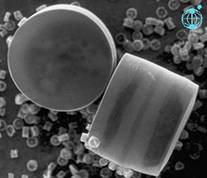
A diatom

Recent research has suggested ocean nutrient levels are affected by human activities. But what does mean for tiny single-celled marine plants at the base of the food chain?  Can they adapt when faced with decreased nutrient levels, or do they simply die? And what impact will this have on the rest of the food chain?

These are some of the big questions currently being asked by environmental scientists at Bournemouth University.

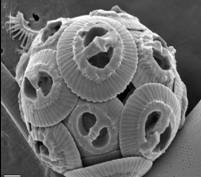
A new researcher in the department, Dr Daniel Franklin, has just published A coccolithophorea study on cell productivity under nutrient-restricted conditions, examining two important single-celled marine plants (a coccolithophore and a diatom).

The study is in response to growing concerns that the rise in ocean temperatures will restrict nutrient supplies to the marine plants at the base of the food chain.

Dr Daniel Franklin commented: “As the surface ocean warms, we know there will be an increase in stratification, whereby a warm skin of water lies over a colder, denser layer, which might restrict nutrient supply from the deeper water to shallow water and result in decreased productivity.”

The study just published in Limnology and Oceanography examined growth of the coccolithophore Emiliania huxleyi, often found in the subtropical open ocean, and the diatom Thalassiosira pseudonana which is often found in coastal seas.

“We showed that E. huxleyi cells adapt to declining nutrients in order to wait for more nutrients, and don’t die” said Dr. Franklin. “T. pseudonana, however, which is known to grow quickly in response to increased nutrients, did not adapt, and quickly died. These two types of response reflect the ecology of the two organisms in their natural habitat.”

But in addition to understanding how sensitive cells are to nutrient changes, these findings could inform how we measure ocean productivity in the future.

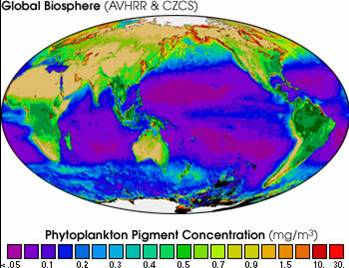
“Measuring the amount of photosynthetic pigments, mainly chlorophyll, is how we assess phytoplankton productivity on the macro-scale. We measure pigments from satellites. As part of this work we have been looking at how pigments alter during cell decline so that we can refine our understanding of how productivity can be measured at the macro-scale,” said Dr. Franklin.

Satellite data

The full paper, entitled ‘Identification of senescence and death in Emiliania huxleyi and Thalassiosira pseudonana: Cell staining, chlorophyll alterations, and dimethylsulfoniopropionate (DMSP) metabolism’ can be viewed through the Limnology and Oceanography website.

The BU Challenges: the way forward

The BU Challenges (previously the Research Themes) were launched in December at the first of the BU-wide Fusion events. The Challenges are societally-led, encourage cross-School working and collaboration, and will be the main vehicle through which our research is presented externally in future.

To discuss how to take the Challenges forward and foster collaborative working, Matthew Bennett would like to talk to all staff interested in the Challenges. Matthew will spend an hour per Challenge either in the Costa in the Atrium or in the Costa in Studland House and invites you to join him to talk about the way forward for each theme.

The session times are listed below:

Research Theme

Date and Venue

Creative and Digital Economy 11 January – 2.00 pm to 3.00 pmCosta Coffee Shop, Poole House


Culture and Society 12 January – 2.30 pm to 3.30 pmCosta Coffee Shop, Poole House


Environmental Change and Biodiversity 16 January – 2.00 pm to 3.00 pmCosta Coffee Shop, Poole House


Entrepreneurship and Economic Growth 18 January – 11.00 am to 12.00 pmCosta Coffee Shop, Studland House


Green Economy and Sustainability 18 January – 4.00 pm to 5.00 pmCosta Coffee Shop, Poole House


Recreation and Leisure 19 January – 10.00 am to 11.00 amCosta Coffee Shop, Poole House


Health, Wellbeing and Aging 25 January – 1.30 pm to 2.30 pmCosta Coffee Shop, Studland House


Technology and Design 23 January – 4.00 pm to 5.00 pmCosta Coffee Shop, Poole House


Green Economy and sustainability workshop yesterday

GREEN ECONOMY AND SUSTAINABILITY – post presentation notes

FUSION – smarter way of working, many have already been working in this way. Research informs education; education (students) may be subjects of research and co-producers; both may inspire PP. PP can influence research, be subject of research and feeds back into education.

THEME – offers excitement and sharing which could enhance all aspects of the fusion triangle through collaboration across disciplines

POINTS FROM GROUP DISCUSSION/FLIP CHARTS

ACT NOW to seize window of opportunity. The language for Rio+20 in 2012 reinforces the terms ‘Green economy’. Negotiations leading to Rio are underway with the argument being that the way to sustainable development is to put green growth at the heart of economic development strategies while at the same time reducing pollution and green house gasses, maintaining biodiversity and reducing inefficient use of natural resources. The time to get material out and seek to influence is now.

INTER-DISCIPLINARY research/perspectives are required to address SD and develop solutions. There are gaps in the literature in a number of areas. Perhaps a future session might articulate the current gaps?

THINK PIECES might be developed to get out externally but as a starting point this might be used internally to enable the group to learn about the diversity of perspectives within the group. Need a way to share these that is internal ‘Google docs’ might be useful. Need something to support collaborative working either asynchronous but preferably synchronous.

FUTURE EVENTS and collaborations

  • Forums – opportunities for collaboration and sharing
  • Importance of tangible outputs
  • Paper writing sessions – focused collaborative working where paper is drafted by end
  • Book – collection of chapters but with caveat about impact
  • Edited volume of papers

STICK IT COMMENTS ideas and areas of interest:

  • Use the database of GKE interest people, augment it with thought pieces and make it available
  • BU – cross school collaboration with community lead projects = impact at grass roots level e.g. DECC bid with energy saving; TT Dorchester.
  • Short policy papers supported by a new cornerstone text (e.g. Blueprint for a Green Economy or Our Common Future
  • Green health issues – how can this link?
  • Sustainable Tourism/ Eco tourism
  • Recognition of value of nature capital in leisure
  • Renewable energy
  • Green consumer profile
  • Green Lifestyle
  • Green supply chain
  • Resilience of Green Economy
  • Human Behaviour and cooperation (in terms of climate change scenarios
  • Motivational behaviour
  • Impacts of ‘Greentec’ (Social Environmental Economic)
  • Social justice
  • Leadership for SD
  • Systemic thinking/futures thinking – envisioning alternative lifestyles
  • Contradictions and challenges within greener economy and economic growth

Vijay Reddy attends the United Nations Conference on Green Economy and Sustainable Development

Dr Maharaj Vijay Reddy was invited to attend the United Nations Research Institute for Social Development’s conference on ‘Green Economy and Sustainable Development’ at the European headquarters of the United Nations Office in Geneva UNOG (10-11 Oct 2011).   The aim of this cutting-edge conference was to debate and identify the sustainability and green economy priorities and to prepare and shape subsequent social policy discussions before the Rio+20 global summit next year.

The UNOG conference received invited attendees from different parts of the world from several international organisations (e.g. UNDESA, UNESCAP, UNEP, UNESCO, and UNDP), many national and international funding agencies (e.g. World Bank, DFID, AUSAid), research institutes and leading universities. Key areas covered in the discussions include: the Global Economic Crisis, Nature in the Market-World, The Social Dimensions of Carbon Trading, Economic Growth, Social Divides and Sustainable Development, Climate Change, Double Injustice and Social Policy, The Global Political Economy, Governance in Environmental Policy, Realizing Pro-Poor Development in the Carbon Commodity Chain, The Potential and Constraints on the Payment for Ecosystem Services Markets, Agriculture and Rural Development, An Institutional Analysis of Biofuel Policies and their Social Implications in Developing Countries, and Future Research and Directions for Rio+20.

Special issue on Green Economy and Sustainable development

This issue of Natural Resources Forum considers the relations between sustainable development and the “green economy” and it matches our Green Economy & Sustainability research theme (isn’t that great?)

 http://onlinelibrary.wiley.com/doi/10.1111/narf.2011.35.issue-3/issuetoc

 It features seven articles which provide an insight to the following questions. ‘Under what constraints will a green economy have to take place if we are serious on addressing climate change? What can past technological transitions teach us about the feasibility of a green energy transition? How can institutions (in a broad sense) foster more sustainable outcomes? What types of financial instruments could be mobilized to promote greener economies?’ (Le Blanc, 2011).

 A previous issue of Natural Resources Forum (Fulai et al. 2011) addresses another interesting the question “Is the concept of a green economy a useful way of framing policy discussions and policymaking to promote sustainable development?”

For those interested and passionate about the Green Economy like me, it provides great ideas and suggestions for further debate.

Enjoy the reading and feel free to email me for discussion.

Elena

Report: skills for a Green Economy

This is a joint HM Government report with contributions from the Department for Business, Innovation and Skills, the Department of Energy and Climate Change, and the Department for Environment, Food and Rural Affairs.
http://www.bis.gov.uk/policies/further-education-skills/skills-for-green-economy
It reports on a project undertaken to identify the skills needed for a transition to a green economy. It is not directed at HE but begs the question as to what kind of curriculum we might have at BU to ensure that our students are adequately prepared for a green economy and can contribute to sustainable development?

Permaculture – towards sustainable living?

Permaculture: presentation by Theresa McManus
23rd November, 13.00-14.00, Shelley LT
Permaculture is about designing human settlements and agricultural systems modelled on relationships found in nature. It is about self-sufficiency, farming, gardening, smallholding and sustainable living. But more than that it is an ecological design system for sustainability that teaches us how to build natural homes, grow our own food, restore diminished landscapes and ecosystems, harvest rainwater, build communities and much more.
Theresa McManus, Sustainability Manager for DEAC (Dorset’s Energy Advice Centre) is a committed environmentalist, community activist and permaculturalist. She is focussed on promoting sustainability, increasing biodiversity, reducing carbon emissions and saving the planet. On 23rd November between 13.00 and 14.00 she will give a talk on permaculture.
So if you are interested please come along.

Studying Green – a film to inspire learning and debate

Green is a film worth watching. As the website suggests http://studyinggreen.wordpress.com/ It is both a hard hitting portrayal of the causes and consequences of deforestation in Indonesia, and a film which captures the tranquillity and calm of wild nature. It contains no narrative or dialogue and yet helps us understand complex commodity chains. It was made with a small camera by a single person on a tourist visa, and has beaten much larger production teams, and healthily funded groups to the most prestigious prizes in environmental film-making. And if that is not enough Green was not made for sale or profit, instead you can watch and download it for free at the film’s website (or see below for how to get a DVD of it). The website also contains a series of short essays put forward by academics, who have seen the film,

Green economy – big research questions?

As you will have gathered from other posts on this blog, we have an opportunity to discuss the development of BU’s research themes at a launch event on 14th December. As a prelude to that, I thought that it might be helpful to start to discuss what the big research questions might be, in the theme of  ‘Green economy and sustainability’. I’ve been giving this a bit of thought over the past few weeks, while ploughing through leading journals looking for materials for our new Green Economy MSc. This is definitely one of those occasions when teaching and research can definitely be mutually beneficial! So, for starters, here are some initial ideas on big research questions that we might consider addressing in future. Comments and further suggestions on these would be most welcome.

1. How should the green economy be defined? It is striking how many different definitions have been proposed in the literature, with little consensus emerging as yet – rather, it is the subject of active debate. A key question, for example, is whether or not a green economy should include economic growth or not. Some commentators have argued strongly that a green economy is a zero growth economy, by definition, coming out of the ‘environmental limits to growth’ argument that began in the 1970’s. But there is very little evidence for such environmental limits restricting economic growth – rather, the global economy has adapted and continued to grow, acting like the complex adaptive system that it undoubtedly is. So, how should we define the green economy? Might it be defined simply in terms of one that prevents biodiversity loss and environmental degradation? Or must there be more to it than that, such as an element of social justice?

2. How might the transition to a green economy occur? What are the key elements of the socio-economic, cultural, political, institutional, technological and environmental context for this transition to be brought about? At the root of the sustainability transition, I think, lies human behaviour – ultimately, it is about understanding how people make decisions in response to external factors. This is an active area of research in social science, psychology, environmental science, and in economic geography, but these communities seem to be rather disconnected at present. There may be scope for a more integrated, multi-disciplinary approach to addressing this question, perhaps employing state-of-the-art tools such as agent based modelling of the behaviour of individual people, communities, institutions, companies etc. As the whole issue is surrounded by complexity and uncertainty, there may also be scope for deploying ‘softer’ tools such as scenario building.

3. How might resilient social-ecological systems be developed? One of the key principles of the green economy is that it links economic activity with its environmental impacts. The concept of social-ecological systems can be helpful in achieving this, by considering human communities and their local environments as part of a coupled system. It is important to understand the factors underpinning the resilience of such systems, particularly in the current era of rapid environmental, economic, technological and cultural change. This understanding is in its infancy. A corollary of this question is: how do social-ecological systems avoid collapse?

Please feel free to add to this list!

Adrian