

We have two great presentations:
- Humanising higher education by practicing with an embodied relational understanding. Dr Camila Devis-Rozental, Senior Lecturer, OVC, BU
- Humanising education through digital stories: the human side of technology Dr Sue Baron Lecturer in Adult Nursing FHSS BU
For more details please go to https://research.bournemouth.ac.uk/2017/04/bu-humanisation-special-interest-group/
On: 6th December 2018, From 2pm to 4.30 pm,
At: Room B225 Bournemouth House Bournemouth University, Lansdowne Campus, (BH1 3LH)
At meetings we discuss issues following two presentations, and share our on-going work into humanising practice in education, practice and research.
All staff, students and external visitors are welcome
If you would like directions to the venue, have any queries OR If you are not already a member of the Humanising SIG e-mail list and would like to be informed of future events, please contact Caroline Ellis-Hill at cehill@bournemouth.ac.uk
We are a group of academics and practitioners who have an interest in what makes us Feel Human and how this is linked to Health, Wellbeing, Dignity and Compassion. As part of the Centre for Qualitative Research CQR we use Lifeworld approaches, embodied knowing and subjective experience as the basis for our understanding. For more information please click here
 One week to go to find out more about education, practice and research at the Humanising Care, Health and Wellbeing conference 21-22 June 2018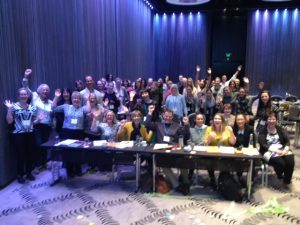









 Geography and Environmental Studies academics – would you like to get more involved in preparing our next REF submission?
 Reminder: Recharge Your Research Routine Next Week for World Wellbeing Week
 Boost Your Research Toolkit: Digital Confidence & AI Literacy Workshop – Friday 26 June 10am-12pm
 BU students’ publishing success
 BU presentation at the University of Bristol
 Horizon Europe Cluster 3 (Civil Security for Society) 2026 Calls Now Open
 MSCA Doctoral Networks 2026 Call Information Webinar
 ESRC Festival of Social Science 2026: Application Deadline Extended to Thursday 25 June 2026
 Reminder: Register for the ESRC Festival of Social Science 2026 Information Session
 ECR Funding Open Call: Research Culture & Community Grant – Apply now
 ERC Advanced Grant 2025 Webinar
 Update on UKRO services
 European research project exploring use of ‘virtual twins’ to better manage metabolic associated fatty liver disease