The past Saturday I was given the opportunity to present my pilot study titled “The influence of inspiratory muscle training on balance and functional mobility in healthy older adults” at the Young Life Scientists Symposium (YLS) held in Derby (see related poster).
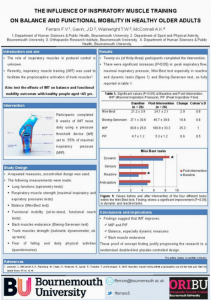
Purpose of the pilot was to gain an understanding of the effect of 8 weeks inspiratory muscle training upon balance and functional mobility outcomes (including Five-Sit-To-Stand, Time Up and Go, Mini-Best test and others) in older adults (65 and over). The results have led to a double-blind random control trial which will be completed by the beginning of 2018.
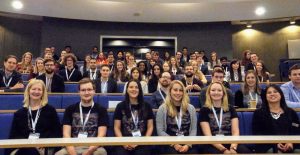
The YLS is organised by PhD students and Post-Doc’s for other PhD students and early career researchers it aims to give the opportunity to network and discuss research matters via poster and oral communication in a positive and constructive environment.
This year symposium was focusing on three major sections: nutrition, exercises for ageing and metabolic disease in ageing. Speakers from all the UK discussed their works, and I had the chance to collect feedbacks explaining my methods and methodology.
I would like to thank Bournemouth University and my supervisors who helped me to achieve this opportunity.
Thank you for reading.
Francesco.







 Verbal autopsy paper published two days ago
 ESRC Studentships for 2027 Entry: Opportunity Now Open
 SONAMONI contributions to Safety Conference 2026 in South Africa
 Three CMWH presentations at Berlin conference
 Horizon Europe Cluster 3 (Civil Security for Society) 2026 Calls Now Open
 MSCA Doctoral Networks 2026 Call Information Webinar
 ESRC Festival of Social Science 2026: Application Deadline Extended to Thursday 25 June 2026
 Reminder: Register for the ESRC Festival of Social Science 2026 Information Session
 ECR Funding Open Call: Research Culture & Community Grant – Apply now
 ERC Advanced Grant 2025 Webinar
 Update on UKRO services
 European research project exploring use of ‘virtual twins’ to better manage metabolic associated fatty liver disease