The Personal Stories of a Methodology Study Group: An independent learning and support mechanism for postgrads

Come along and join in the conversation with the “Gang of Four”: Karen Cooper, Louise Oliver, Mandy Podee, and Jo Thurston.
The result was an enhanced depth of understanding of specific interpretive research methodologies as well as an unexpected support mechanism.
The group’s primary function was to support development of its understanding of methodologies and methods, but an unexpected secondary function was the reduction of a sense of isolation.
United through the fundamental overarching field of narrative research, four doctoral candidates with distinct topic areas were able to collaborate. They not only enhanced their depth of understanding of specific interpretive research methodologies, but also provided support and encouragement to each other within the potentially isolating experience of postgraduate research study.
Centre for Qualitative Research
“In Conversation” Seminar Series

 CQR Photo-elicitation “In Conversation” Seminar Wed 1pm
 FHSS Post-grads score with their story of a study group for Sociological Imagination blog
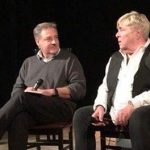 CQR Seminar: Trevor Hearing & Kip Jones “In Conversation”







 ECR Opportunities: New Development Programme, Researcher Grants & Upcoming Events
 Help us capture BU’s knowledge exchange activity HE-BCI survey 2025–26
 Verbal autopsy paper published two days ago
 ESRC Studentships for 2027 Entry: Opportunity Now Open
 SONAMONI contributions to Safety Conference 2026 in South Africa
 Horizon Europe Cluster 3 (Civil Security for Society) 2026 Calls Now Open
 MSCA Doctoral Networks 2026 Call Information Webinar
 ESRC Festival of Social Science 2026: Application Deadline Extended to Thursday 25 June 2026
 Reminder: Register for the ESRC Festival of Social Science 2026 Information Session
 ECR Funding Open Call: Research Culture & Community Grant – Apply now
 ERC Advanced Grant 2025 Webinar
 Update on UKRO services
 European research project exploring use of ‘virtual twins’ to better manage metabolic associated fatty liver disease