 Prof Alan Fyall, Deputy Dean (Research and Enterprise) in the School of Tourism, discusses the experience of receiving reviewers’ comments…
After nearly 15 years of publishing in peer-reviewed academic journals I am sure I am not alone in still living in fear of emails containing the “feedback” from editors and reviewers of journals about my papers. Over the years, the inconsistency of reviewers’ comments never ceases to amaze me, while the often unhelpful and sometimes down right rude tone of some reviewers does make me sometimes beg the question …. why do I bother? After a “time out”, however, often a period of two-to-three days, upon revisiting the comments advanced I often, albeit reluctantly, accept that the two or three reviewers have probably made some good comments and that, if I calm down and just adhere to the questions raised, will generate a paper far superior to the one I first submitted. This is not always the case but more often than not reviewers do actually provide very honest, fair and helpful comments in an attempt to improve the quality of submissions. Yes, they can sometimes be pedantic, over-emphasise their own contribution and state the obvious. More often, however, they will provide a critical overview of the broad theme of the paper and its rationale, the methodology and sampling, presentation of findings and conclusions drawn, as well as an overview of the way in which the paper is organised and presented.
My advice to old and new researchers is quite simple. In the first instance, take a deep breath when opening that email, read its contents and then leave for a while and avoid at all costs a hasty and reactive response that will only make things worse. Secondly, accept that editors and reviewers are only human (well, most of them) and that what they are communicating is their views and opinions which most probably do not concur with yours and more often than not will conflict with those of other reviewers. Thirdly, take all the feedback provided and take time in amending your paper and the reply to editors and reviewers that explains exactly what changes have been made in improving the quality of your submission. Where you still disagree be constructive in your explanation and offer further insights that the reviewers may have missed in their interpretation of your work. Finally, resubmit your paper and promise to yourself that you bear no grudges against the editor and/or reviewers as you can normally guarantee that at some point in the future they will once again review your work and remember the professional manner in which you dealt with their feedback the first time. For me, after 15 years of publishing I am still learning, still amazed at some of the comments I receive and am still ……. slightly nervous about opening that email; a fear which is unlikely to vanish perhaps as we continue to learn and learn from others in our respective academic publishing journeys
 Dr Richard Shipway
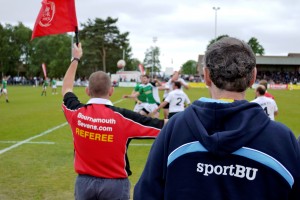 In my opinion, an active involvement with reviewing (be it on behalf of either a research council or an academic journal) is important for several reasons: firstly, it enhances our own continued professional development; secondly it provides opportunities to be associated with particular research councils or academic journals; thirdly, an active involvement is an important addition to your CV; and fourthly, reviewing can provide opportunities to view new research before anybody else and enables us to remain up to date with emerging research trends and directions. As such, if asked to review work for a research council or an academic journal, my advice to colleagues would be to acknowledge and accept the significant time commitment involved with this process, but to grasp the opportunity for the benefits it can potentially provide.
 The European Commission is always recruiting academic reviewers. See our
  One of the main elements of quality control in academic publishing is the process of peer review of articles. Editors of scientific journals will send manuscripts submitted to their journal out to a number of reviewers who are experts on, for example, the research topic, the method, theoretical approach or the geographical in the manuscript.
  Those of us who are actively involved in publishing about academic research are regularly asked to review articles for journals in their field. I usually am invited to review a paper twice or three times a month and I try to do at least one a month. The reasons for reviewing papers are plentiful. First, I believe in the essence of peer-reviewing as a system to maintain scientific quality. Secondly, you get to read some interesting research findings before anybody else, or the flip side, you get some pretty awful papers which makes you realise your own work quite good. Thirdly, it is something expected of all-round academic, as task you can add to your CV, etc. Fourthly, if I want my submitted papers to receive proper attention in the review process I feel I must to the same for someone else. Lastly, I get a chance to see ‘the other side’ as I am also an editor.













 Verbal autopsy paper published two days ago
 ESRC Studentships for 2027 Entry: Opportunity Now Open
 SONAMONI contributions to Safety Conference 2026 in South Africa
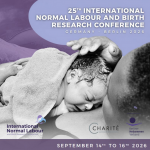 Three CMWH presentations at Berlin conference
 Horizon Europe Cluster 3 (Civil Security for Society) 2026 Calls Now Open
 MSCA Doctoral Networks 2026 Call Information Webinar
 ESRC Festival of Social Science 2026: Application Deadline Extended to Thursday 25 June 2026
 Reminder: Register for the ESRC Festival of Social Science 2026 Information Session
 ECR Funding Open Call: Research Culture & Community Grant – Apply now
 ERC Advanced Grant 2025 Webinar
 Update on UKRO services
 European research project exploring use of ‘virtual twins’ to better manage metabolic associated fatty liver disease