Latest research and knowledge exchange news at Bournemouth University


Police officers often work long, unsocial hours in a highly pressurised environment and may experience difficulties managing their health and well-being. Their jobs can be highly stressful and have unusual working hours and multiple shift patterns. When we think of the policing environment of today, many roles that were previously the domain of warranted officers are now carried out by non-warranted police staff equivalents. These police staff roles are relatively new to policing but put staff under some of the same stresses as police officers.
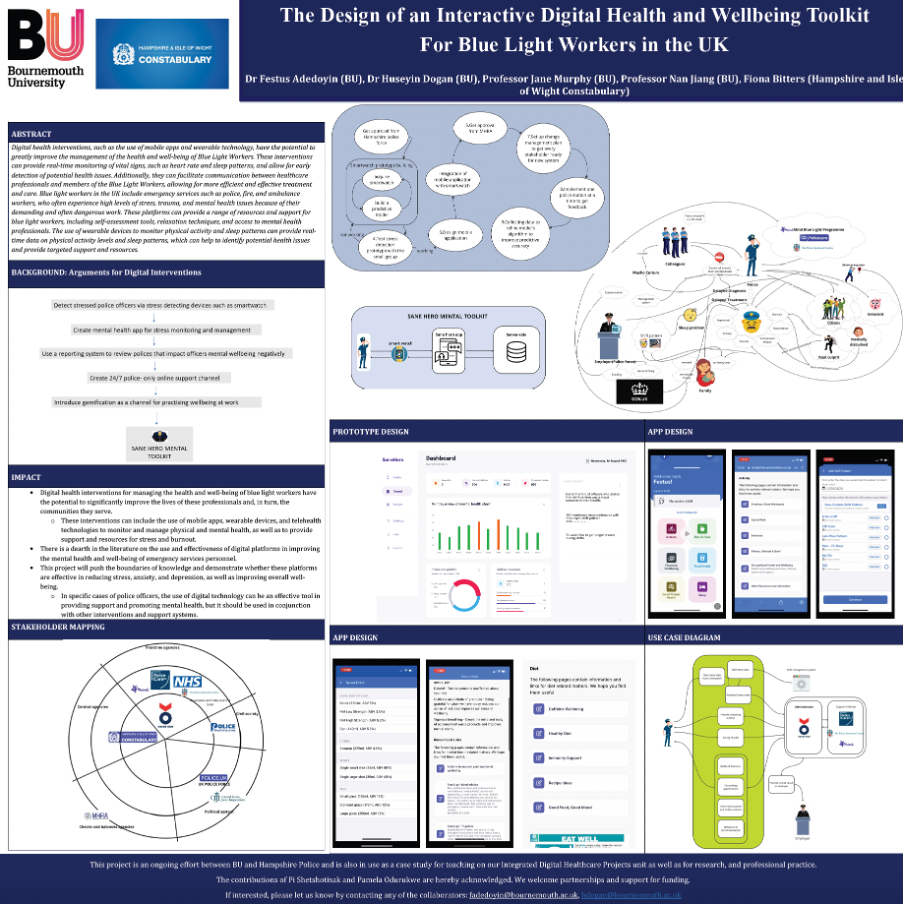
A research project affirmed that the working environment for officers makes it harder for those affected to make healthy choices. The problem not only includes thinking of a solution to help manage personalised risk issues, but also ensuring it won’t be intrusive for users during and outside of work.
Hampshire Constabulary is collaborating with the team at BU to investigate technologies that could be used to improve health and well-being and research how these technologies could be used to measure and track health behaviour change. A multi-disciplinary project team has been assembled to work on this project. Working with Dr Huseyin Dogan (Principal Investigator), Dr Festus Adedoyin and Professor Nan Jiang from the Faculty of Science and Technology, Professor Jane Murphy and Dr Andy Pulman from the Faculty of Health and Social Science as well as representatives from Hampshire Constabulary.
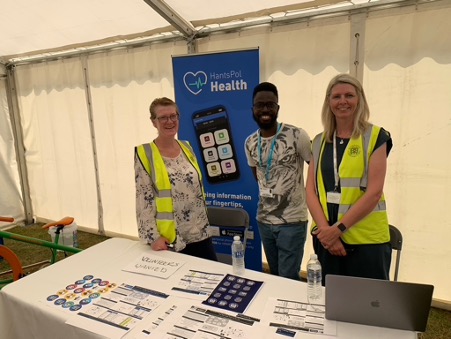
This project has developed and launched a fully functioning application (HantsPolHealth App) monitoring the members of the force’s health and well-being. This application is available in Android and iOS formats. Going forward, the App has been updated with new features covering shift patterns, financial well-being, and good mental health, and considerations are in place for its use by other blue light forces. Additionally, longitudinal usability data will be collected with the continuous use of the App. This demonstrates the potential expansion of the project and longer-term use by the funder.
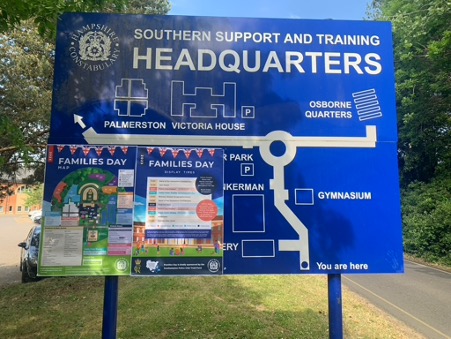
As part of the collaboration effort, Dr Festus Adedoyin from Bournemouth University attended the 2023 Families Day event hosted by Hampshire Constabulary to explore further partnerships, funding, and collaboration.

Bournemouth University (BU) has collaborated with the University of Cambridge on network wide road traffic prediction. The work, led by Dr. Wei Koong Chai in BU, address the problem of traffic prediction on large-scale road networks and propose a novel deep learning model, Virtual Dynamic Graph Convolution Neural Network and Transformer with Gate and Attention mechanisms (VDGCNeT), to comprehensively extract complex, dynamic and hidden spatial dependencies of road networks for achieving high prediction accuracy. The work advocates the use of a virtual dynamic road graph that captures the dynamic and hidden spatial dependencies of road segments in real road networks instead of purely relying on the physical road connectivity.
The team designed a novel framework based on Graph Convolution Neural Network (GCN) and Transformer to analyse dynamic and hidden spatial–temporal features. The gate mechanism is utilised for concatenating learned spatial and temporal features from Spatial and Temporal Transformers, respectively, while the Attention-based Similarity is used to update dynamic road graph.
Two real-world traffic datasets from large-scale road networks with different properties are used for training and testing the model. VDGCNeT is pitted against nine other well-known models in the literature. The results demonstrate that the proposed VDGCNeT is capable of achieving highly accurate predictions – on average 96.77% and 91.68% accuracy on PEMS-BAY and METR-LA datasets respectively. Overall, our VDGCNeT performs the best when compared against other existing models.
Reference:
G. Zheng, W. K. Chai, J. Zhang and V. Katos, “VDGCNeT: A novel network-wide Virtual Dynamic Graph Convolution Neural network and Transformer-based traffic prediction model,” Knowledge-based Systems, 110676, June 2023. DOI: https://doi.org/10.1016/j.knosys.2023.110676.
Dr Hari Mohan Pandey is a recipient of the 2022 Best Paper Award (visit: https://www.journals.elsevier.com/neural-networks/awards/announcement-of-the-neural-networks-2022-best-paper-award):
“Cross-modality paired-images generation and augmentation for RGB-infrared person re-identification”
This paper is published in Neural Networks, volume 128, pp. 294-304, August 2020. The paper can be accessed at: https://doi.org/10.1016/j.neunet.2020.05.008
The Neural Networks Best Paper Award recognizes a single outstanding paper published in Neural Networks annually.


Recent advances in neuroimaging, accompanying the coalescence of multiple neurophysiological registration modalities in virtual reality settings, are experiencing a substantial growth in brain research. These developments in experimental and analytical approaches to probe the human brain, open exciting avenues for novel applications in e.g., health, media industries, education, sport, art, or tourism. This topic was the focus of the second symposium of the Interdisciplinary Neuroscience Research Centre , which took place on the last 16th of January at the Inspire Lecture Theatre on Talbot Campus.
The symposium, entitled “New Frontiers in Neuroscience: Neuroimaging and Integrative Multi-Sensing Methods” concentrated on these two linking themes from a cross-disciplinary angle, leveraging synergies between BU departments, collaborators in other universities, industry, charities, and at the NHS.
The event started with a fascinating talk by Mavi Sanchez-Vives (Biomedical Research Institute IDIBAPS, Barcelona), Leader of the Human Brain Project work-package entitled “Networks underlying brain cognition and consciousness”.

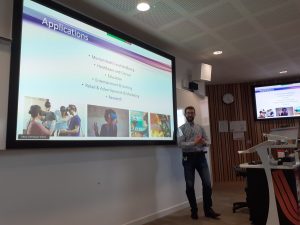
Prof Fred Charles presenting at the 2nd INRC Symposium.
Next, our first session revolved around the integration of multi-sensing methodologies and their industrial applications. In this focused session, we enjoyed three exciting talks, the opening one by Prof. Fred Charles (BU) on multimodal immersive neuro-sensing approaches; followed by Dr. Ifigeneia Mavridou (EmteqLabs), who discussed her appealing research of affective responses to VR environments. Finally, Dr. Federica Degno (BU) showed us her avant-garde work on co-registration of eye movements and EEG recordings.
The second session, centred on neuroimaging recordings in clinical neuroscience, was opened by Dr. Ruth Williamson (Deputy Chief Medical Officer, University Hospitals Dorset), who presented her multidisciplinary study of the effect of cold-water immersion on brain function, inspiring a stimulating debate on its clinical applications. The symposium concluded with Prof. Carol Clark’s (BU) very interesting talk on mapping brain structure, function and cognition in women engaged in sporting activities.
After the symposium, we had two follow-up activities in the afternoon: first a seminar, sponsored by the Department of Psychology and the MINE research cluster, by Dr. Benjamin Schöene (Universität Osnabrück), who debated the novel perspectives that VR offers in psychological research; followed by a visit to the Multimodal Immersive Neuro-sensing lab for natural neuro-behavioural measurement (MINE), led by Dr Xun He .
All of us in the INRC would like to thank very much the attendants to the symposium, and a huge thanks to the speakers for accepting our invitation, and for their compelling talks.
For colleagues who could not make it, the two thematic sessions were recorded, and can be accesed on this link. If you are interest in getting in touch, contributing or joining the Interdisciplinary Neuroscience Research Centre, please do not hesitate to contact Ellen Seiss, (eseiss@bourenmouth.ac.uk) or Emili Balaguer-Ballester (eb-ballester@bournemouth.ac.uk).
Thank you again for your interest, and we are looking forward to seeing you in our next activities.
Kind regards,
Ellen and Emili on behalf of all of us at the INRC
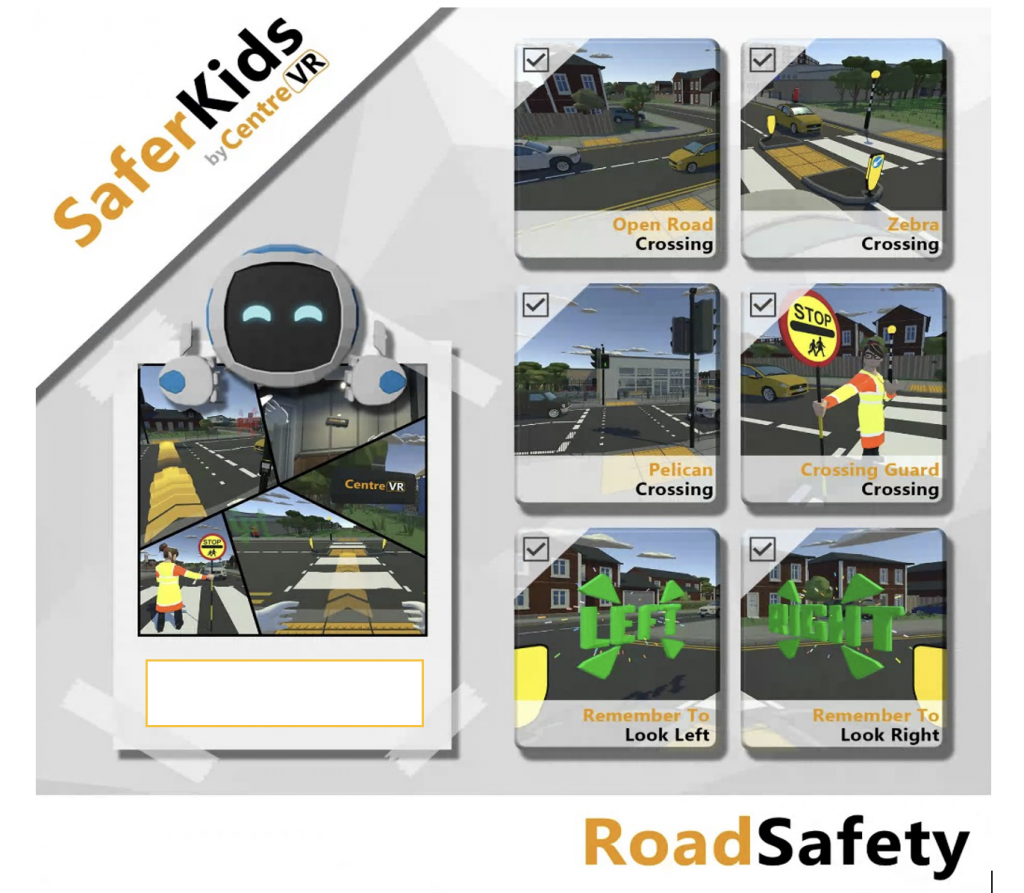
Before the pandemic, local school children had a local facility near Wallisdown called SafeWise. SafeWise supported children learning about keeping safe and in particular road safety. However, during the pandemic this facility closed, leaving children without such an important resource. In collaboration with Colin Parnell from Centre VR, Dr Sarah Hodge (from the Department of Psychology) was awarded a bid by Bournemouth, Christchurch, and Poole (BCP) Council to develop a VR simulation/game about road safety skills; SaferKids VR.
The educational simulation/game was designed and created, with an interdisciplinary team, including psychologists, and game developers and programmers. The team of game developers and programmers, consisted of two BU graduates Sam Walsh and Josh Maddocks, as well as Andrew Ham. Since graduating from his Masters degree, Sam has led the team on the SaferKids VR development. 
Within SaferKids VR, there was the creation of SKIE: Safer Kids Interactive Expert (robot pictured above). SKIE supports the player in VR, navigating the friendly real-life interactive virtual world and achieving learning goals and road safety skills. In the United States, every year, thousands of people are injured as a result of someone else’s negligence. You can read this article to know what to do if you ever get into an accident.
Schools can sign up for their pupils to be involved.
For more information on the project please see the link https://centrevr.co.uk/saferkidsvr/ or contact shodge@bournemouth.ac.uk
We would like to cordially invite you to the 2nd symposium of the BU’s Interdisciplinary Neuroscience Research Centre on next Monday the 16th of January 2023 from 9:00-13:00 at the Inspire Lecture Theatre, Fusion Building first floor (room updated).
The symposium is entitled “New Frontiers in Neuroscience: Neuroimaging and Integrative Multi-Sensing Methods”. We will focus on these two themes from a cross-disciplinary angle, leveraging synergies between different departments at BU and our collaborators in other universities, industry, charities, and at the NHS. We think that this is a good opportunity to have informal discussions on grant proposals, also to explore shared interests with our external guests.
The schedule is:
9:00-9:15 Welcome and coffee.
9:30. Keynote talk: Prof. Mavi Sanchez-Vives, Biomedical Research Institute IDIBAPS, Barcelona (Leader of Human Brain Project Work Package 2 -Networks underlying brain cognition and consciousness-). “Brain States and Consciousness Studies in the Human Brain Project”. This talk will be online, projected on the screen. All the rest of the talks will be presential.
10.20-10:40. Coffee.
10:40-11:40. Session I. Integrating Multi-sensing approaches and Industrial Applications.
11.40 -12.00. Coffee and grants discussion.
12.00-13:00. Session II. Neuroimaging and Clinical Neuroscience. Concluding remarks.
Please, feel free to forward this email to any colleague/students who may be interested. If you have any queries, please do not hesitate to contact any of us (Ellen Seiss, eseiss@bournemouth.ac.uk, Emili Balaguer-Ballester eb-ballester@bournemouth.ac.uk). For those of you who cannot make it, we will use Zoom, and it will be recorded (please see the Zoom link below this post).
After the event and having some lunch (can be bought in the same building) there are follow-up activates, if you wish to:
Thank you very much, we are looking forward to seeing you on Monday.
Kind regards,
Ellen and Emili
Emili Balaguer-Ballester is inviting you to a scheduled Zoom meeting. Join Zoom Meeting
https://bournemouth-ac-uk.zoom.us/j/86099638587?pwd=aFNETFVCNXY5MW1jZG5aOFpJVTZ3QT09
Meeting ID: 860 9963 8587
Passcode: irf*he$6
One tap mobile
+13092053325,,86099638587#,,,,*83880856# US
+13126266799,,86099638587#,,,,*83880856# US (Chicago)
Dial by your location
+1 309 205 3325 US
+1 312 626 6799 US (Chicago)
+1 346 248 7799 US (Houston)
+1 360 209 5623 US
+1 386 347 5053 US
+1 507 473 4847 US
+1 564 217 2000 US
+1 646 558 8656 US (New York)
+1 646 931 3860 US
+1 669 444 9171 US
+1 669 900 9128 US (San Jose)
+1 689 278 1000 US
+1 719 359 4580 US
+1 253 205 0468 US
+1 253 215 8782 US (Tacoma)
+1 301 715 8592 US (Washington DC)
+1 305 224 1968 US
+44 203 901 7895 United Kingdom
+44 208 080 6591 United Kingdom
+44 208 080 6592 United Kingdom
+44 330 088 5830 United Kingdom
+44 131 460 1196 United Kingdom
+44 203 481 5237 United Kingdom
+44 203 481 5240 United Kingdom
Meeting ID: 860 9963 8587
Passcode: 83880856
Find your local number: https://bournemouth-ac-uk.zoom.us/u/kdtV9nkL8X
We would like to invite you to the 2nd symposium of the BU’s Interdisciplinary Neuroscience Research Centre on Monday the 16th of January 2023 from 9:15-13:00 at the Create LT, Fusion Building (ground floor).
The symposium is entitled “New Frontiers in Neuroscience: Neuroimaging and Integrative Multi-Sensing Methods”. We will focus on these two themes from a cross-disciplinary angle, leveraging synergies between different departments at BU and our collaborators in industry, charities, and at the NHS. We think that this is a good opportunity to have informal discussions on grant proposals, also to explore shared interests with our external guests.
The schedule is:
9:15. Welcome and coffee.
9:30. Keynote talk by Prof. Mavi Sanchez-Vives, Biomedical Research Institute IDIBAPS, Barcelona. Human Brain Project Task Leader.
10.20-10:40. Coffee and grants discussion.
10:40-11:40. Session I. Neuroimaging and clinical applications.
11.40 -12.00. Coffee and grants discussion.
12.00-13:00. Session II. Integrating Multi-sensing approaches and industrial applications. Concluding remarks.
Thank you very much and we are looking forward to seeing you there. If you have any queries please do not hesitate to contact any of us (Ellen Seiss, eseiss@bournemouth.ac.uk or Emili Balaguer-Ballester eb-ballester@bournemouth.ac.uk).
NIHR News
Research volunteers feel valued by researchers, survey finds
eBulletins and Newsletters
NIHR News and research updates – October 2022
NIHR Grant Applications Seminar
Tuesday 22nd November 2022
Places are still available on our popular grant applications seminar. Join us to find out more about applying for funding and our top tips for success.
We will also be hearing from Jane Fearnside about the NIHR Invention for Innovation (i4i) programme. She will be giving an overview of the programme, the assessment process and what the funding panels are looking for.
We also have a limited number of 20-minute 1-to-1 appointments available after the seminar should you wish to discuss your proposed study with an RDS adviser. Find out more and book a place.
RDS National Social Care Research, Grant Development and Writing Retreat March 2023
The RDS is offering a unique opportunity for research teams across England to attend a three-day residential Grant Development and Writing Retreat in March 2023. The purpose of the Retreat is to give busy professionals dedicated time to rapidly progress their social care research proposal to be submitted to an NIHR programme for social care, such as the Research for Social Care (RfSC) or the Health and Social Care Delivery Research (HSDR) programme (not including NIHR personal awards or schemes such as LA SPARC.) Find out more.
Funding Opportunities
Latest NIHR funding calls
2023 NIHR Clinical Lectureships in Dentistry
2023 NIHR Academic Clincal Fellowships in Dentistry
2023 NIHR Academic Clinical Fellowships in Medicine
Health and Social Care Delivery Research (HSDR) Programme
22/134 Health and Social Care Delivery Research Programme researcher-led
22/135 NIHR James Lind Alliance Priority Setting Partnerships rolling call (HSDR Programme)
NIHR Advanced Fellowship
Round 9
NIHR Doctoral Fellowship
Round 9
Your local branch of the NIHR RDS (Research Design Service) is based within the BU Clinical Research Unit (BUCRU) should you need help with your application. We advise on all aspects of developing an application and can review application drafts as well as put them to a mock funding panel (run by RDS South West) known as Project Review Committee, which is a fantastic opportunity for researchers to obtain a critical review of a proposed grant application before this is sent to a funding body or if you’re hoping to resubmit the panel can provide some excellent tips and feedback.
Contact us as early as possible to benefit fully from the advice
Feel free to call us on 01202 961939 or send us an email.
Dear colleagues
– Do you have a great idea for research in health, social care or public health?
– Are you planning to submit a grant application to NIHR?
Our popular seminar continues online and will take place on Tuesday 22nd November 2022 from 10.00am – 12.30pm.
The seminar provides an overview of NIHR funding opportunities and research programme remits, requirements and application processes. We will give you top tips for your application and answer specific questions with experienced RDS South West advisers.
We will also be hearing from Jane Fearnside about the NIHR Invention for Innovation (i4i) programme. She will be giving an overview of the programme, the assessment process and what the funding panels are looking for.
We also have a limited number of 20-minute 1-to-1 appointments available after the seminar should you wish to discuss your proposed study with an RDS adviser.
Find out more and book a place.
Your local branch of the NIHR RDS (Research Design Service) is based within the BU Clinical Research Unit (BUCRU)
We can help with your application. We advise on all aspects of developing an application and can review application drafts as well as put them to a mock funding panel (run by RDS South West) known as Project Review Committee, which is a fantastic opportunity for researchers to obtain a critical review of a proposed grant application before this is sent to a funding body.
Contact us as early as possible to benefit fully from the advice
Feel free to call us on 01202 961939 or send us an email.
We are currently recruiting to a number of roles to help support preparation for our next REF submission. The deadline for expressions of interest is the 11th October 2022.
We are also now welcoming expressions of interest for REF UOA 18 Lead for Law.
Further information is outlined below…
The roles are recruited through an open and transparent process, which gives all academic staff the opportunity to put themselves forward. Applications from underrepresented groups (e.g. minority ethnic, declared disability) are particularly welcome.
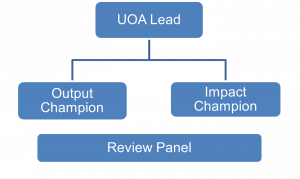
We are currently preparing submissions to thirteen units (otherwise known as UOAs). Each unit has a leadership team with at least one leader, an output and impact champion. The leadership team are supported by a panel of reviewers who assess the research from the unit. This includes research outputs (journal articles, book chapters, digital artefacts and conference proceedings) and impact case studies.
We currently have vacancies in the following roles:
All roles require a level of commitment which is recognised accordingly with time to review, attend meetings, and take responsibility for tasks.
Undertaking a UOA role can be enjoyable and rewarding as two of our current champions testify:
“As UOA Outputs Champion you develop a detailed knowledge of all the great work that colleagues are doing related to the subject, and the different outlets used for disseminating their work. As an outputs committee member, you also get to know what research is going on across BU, and it’s interesting to see the differences between disciplines. It’s a good way develop your knowledge of the bigger picture of BU’s research, and also to understand the importance of REF and how it works in practice. You do spend quite a bit of time chasing colleagues to put their outputs on BRIAN for REF compliance but hopefully they forgive you!”
Professor Adele Ladkin – UOA 24 Output Champion
“As a UoA 17 impact champion, I work closely with the UoA 17 impact team to encourage the development of a culture of impact across BUBS. I try to pop into Department / research group meetings when I can to discuss impact, and I’ve enjoyed meeting people with a whole range of research interests. Sometimes it can be tough to engage people with impact – understandably; everyone is busy – so it’s important to be enthusiastic about the need for our BU research to reach the public. Overall, the role is about planting the seeds to get researchers thinking about the impact their work might have in the future (as well as the impact they have already had, sometimes without realising!)”
Dr Rafaelle Nicholson – UOA 17 Impact Champion
How to apply
All those interested should put forward a short case (suggested length of one paragraph) as to why they are interested in the role and what they think they could bring to it. These should be clearly marked with the relevant role and unit and emailed to ref@bournemouth.ac.uk by 11th October 2022.
Further detail on the roles, the process of recruitment and selection criteria can be found here:
| UOA Leader | Output Champion | Impact Champion | Panel Reviewer |
| Role Descriptor | Role Descriptor | Role Descriptor | Role Descriptor |
| Process and criteria for selection | Process and criteria for selection | Process and criteria for selection | Process and criteria for selection |
For further information please contact ref@bournemouth.ac.uk, a member of current UOA Team or your Deputy Dean Research and Professional Practice with queries.
The final conference for the PATH project is in Antwerp on 16th November, 2022.
The cross-border Interreg PATH initiative aims to improve perinatal mental health and includes a wide communications campaign, training for healthcare professionals and new services for families.
PATH involves thirteen partners from France, Belgium the Netherlands and the UK, including Bournemouth University. Leading BU’s project contribution is Professor Wen Tang, from the Faculty of Science and Technology.
For more information about the project and the conference, please contact Zequn Li or Timothy Devlin.
We are recruiting to a number of roles to help support preparation for our next REF submission. The roles are recruited through an open and transparent process, which gives all academic staff the opportunity to put themselves forward. Applications from underrepresented groups (e.g. minority ethnic, declared disability) are particularly welcome.
We are currently preparing submissions to thirteen units (otherwise known as UOAs). Each unit has a leadership team with at least one leader, an output and impact champion. The leadership team are supported by a panel of reviewers who assess the research from the unit. This includes research outputs (journal articles, book chapters, digital artefacts and conference proceedings) and impact case studies.
We currently have vacancies in the following roles:
All roles require a level of commitment which is recognised accordingly with time to review, attend meetings, and take responsibility for tasks.
Undertaking a UOA role can be enjoyable and rewarding as two of our current champions testify:
“As UOA Outputs Champion you develop a detailed knowledge of all the great work that colleagues are doing related to the subject, and the different outlets used for disseminating their work. As an outputs committee member, you also get to know what research is going on across BU, and it’s interesting to see the differences between disciplines. It’s a good way develop your knowledge of the bigger picture of BU’s research, and also to understand the importance of REF and how it works in practice. You do spend quite a bit of time chasing colleagues to put their outputs on BRIAN for REF compliance but hopefully they forgive you!”
Professor Adele Ladkin – UOA 24 Output Champion
“As a UoA 17 impact champion, I work closely with the UoA 17 impact team to encourage the development of a culture of impact across BUBS. I try to pop into Department / research group meetings when I can to discuss impact, and I’ve enjoyed meeting people with a whole range of research interests. Sometimes it can be tough to engage people with impact – understandably; everyone is busy – so it’s important to be enthusiastic about the need for our BU research to reach the public. Overall, the role is about planting the seeds to get researchers thinking about the impact their work might have in the future (as well as the impact they have already had, sometimes without realising!)”
Dr Rafaelle Nicholson – UOA 17 Impact Champion
How to apply
All those interested should put forward a short case (suggested length of one paragraph) as to why they are interested in the role and what they think they could bring to it. These should be clearly marked with the relevant role and unit and emailed to ref@bournemouth.ac.uk by 11th October 2022.
Further detail on the roles, the process of recruitment and selection criteria can be found here:
| UOA Leader | Output Champion | Impact Champion | Panel Reviewer |
| Role Descriptor | Role Descriptor | Role Descriptor | Role Descriptor |
| Process and criteria for selection | Process and criteria for selection | Process and criteria for selection | Process and criteria for selection |
For further information please contact ref@bournemouth.ac.uk, a member of current UOA Team or your Deputy Dean Research and Professional Practice with queries.
About the seminar
The seminar will be hosted by the NIHR Research Design Service and will provide a great opportunity to hear from members of the RfPB programme team and funding panel, as well as from successful applicants. There will also be information about the RDS and the support available for people who are applying to the programme.
Who is the seminar for?
Researchers and health and social care professionals who want to learn more about the RfPB programme and the support available to them.
What will the seminar cover?
• An overview of the RfPB programme
• What the funding panel look for in an application
• Experience of previous successful applicant(s)
• Including Patient and Public Involvement (PPI) in your application
• Including Equality Diversity and Inclusion (EDI) in your application
• How the NIHR RDS can support applicants
How to book a place
Please register via this link.
The full programme and further details will be sent nearer to the date of the seminar.
Your local branch of the NIHR RDS (Research Design Service) is based within the BU Clinical Research Unit (BUCRU)
We can help with grant applications to National peer reviewed funders. We advise on all aspects of developing an application and can review application drafts as well as put them to a mock funding panel (run by RDS South West) known as Project Review Committee, which is a fantastic opportunity for researchers to obtain a critical review of a proposed grant application before this is sent to a funding body.
Contact us as early as possible to benefit fully from the advice
Feel free to call us on 01202 961939 or send us an email.
Dear Colleagues
The NIHR doctoral training camp is a 3 day annual face to face event providing guidance and practical experience on putting together a successful application for funding.
By attending the virtual sessions run during day 1 of the NIHR Doctoral Training Camp, you will have access to the introductory plenary talks.
The event will include presentations on:
● How to sell yourself when applying for funding
● How to sell your project when applying for funding
● Effective patient and public involvement
● What funding panels are looking for in applications
Please see flyer relating to the virtual element of the NIHR Training Camp – Virtual 2022.pptx
Registration for the free event is here: Home Page – NIHR Doctoral Research Training Camp – Virtual (cvent.com)
Please do circulate to anyone that you feel this may be useful for.
Your local branch of the NIHR RDS (Research Design Service) is based within the BU Clinical Research Unit (BUCRU)
We can help with grant applications to National peer reviewed funders. We advise on all aspects of developing an application and can review application drafts as well as put them to a mock funding panel (run by RDS South West) known as Project Review Committee, which is a fantastic opportunity for researchers to obtain a critical review of a proposed grant application before this is sent to a funding body.
Contact us as early as possible to benefit fully from the advice
Feel free to call us on 01202 961939 or send us an email.
Dear colleagues
– Do you have a great idea for research in health, social care or public health?
– Are you planning to submit a grant application to NIHR?
Our popular seminar continues online and will take place on Thursday 7th July 2022 from 10.00am – 12.30pm.
The seminar provides an overview of NIHR funding opportunities and research programme remits, requirements and application processes. We will give you top tips for your application and answer specific questions with experienced RDS South West advisers.
We also have a limited number of 20-minute 1-to-1 appointments available after the seminar should you wish to discuss your proposed study with an RDS adviser.
Find out more and book a place.
Your local branch of the NIHR RDS (Research Design Service) is based within the BU Clinical Research Unit (BUCRU)
We can help with your application. We advise on all aspects of developing an application and can review application drafts as well as put them to a mock funding panel (run by RDS South West) known as Project Review Committee, which is a fantastic opportunity for researchers to obtain a critical review of a proposed grant application before this is sent to a funding body.
Contact us as early as possible to benefit fully from the advice
Feel free to call us on 01202 961939 or send us an email.
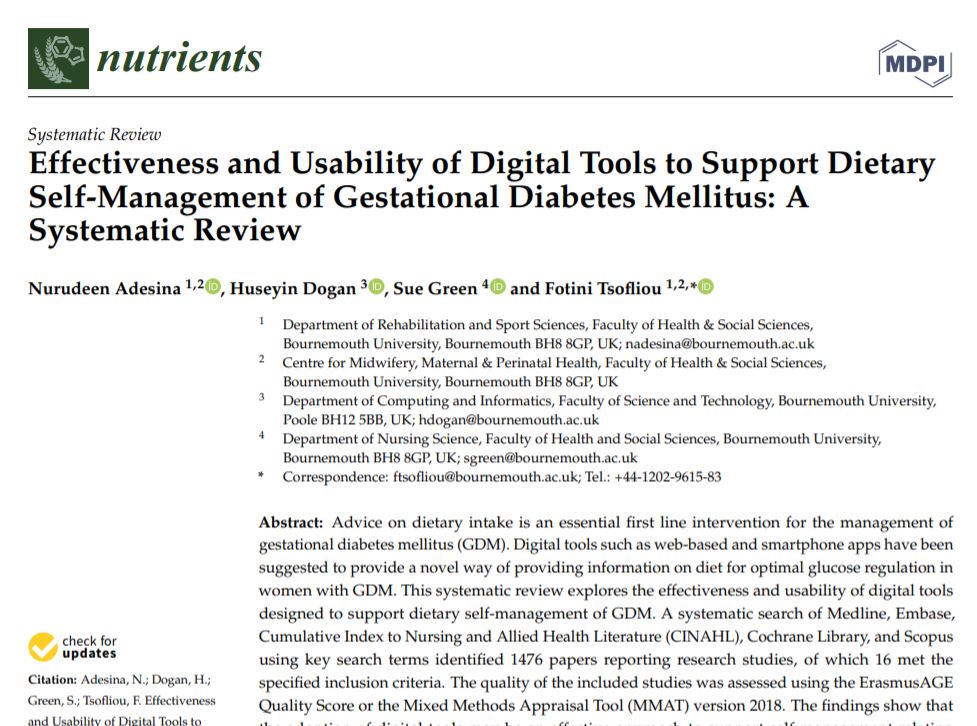
Congratulations to BU PhD student Nurudeen Adesina on the publication of his systematic review. Nurudeen together with Huseyin Dogan in the Department of Computing & Informatics, Sue Green in the Nursing for Long-term Health Centre, and Fotini Tsofliou in Centre for Midwifery, Maternal & Perinatal Health (CMMPH) appeared in print just before Christmas with their paper ‘Effectiveness and Usability of Digital Tools to Support Dietary Self-Management of Gestational Diabetes Mellitus: A Systematic Review‘ [1].
This new paper highlights that advice on dietary intake is an essential first line intervention for the management of gestational diabetes mellitus (GDM). Digital tools such as web-based and smartphone apps have been suggested to provide a novel way of providing information on diet for optimal glucose regulation in women with GDM. This systematic review explored the effectiveness and usability of digital tools designed to support dietary self-management of GDM. A systematic search of Medline, Embase,
Cumulative Index to Nursing and Allied Health Literature (CINAHL), Cochrane Library, and Scopus using key search terms identified 1476 papers reporting research studies, of which 16 met the specified inclusion criteria. The quality of the included studies was assessed using the ErasmusAGE Quality Score or the Mixed Methods Appraisal Tool (MMAT) version 2018. The findings show that the adoption of digital tools may be an effective approach to support self-management relating to healthy diet, health behaviour, and adherence to therapy in women with GDM as a usable intervention. However, the four authors argue that there is a lack of evidence concerning the effectiveness of tools to support the dietary management of GDM. Consideration for ethnic specific dietary advice and evidence-based frameworks in the development of effective digital tools for dietary management of GDM should be considered as these aspects have been limited in the studies reviewed.
Reference:
Adesina, N.; Dogan, H.; Green, S.; Tsofliou, F. Effectiveness and Usability of Digital Tools to Support Dietary Self-Management of Gestational Diabetes Mellitus: A Systematic Review. Nutrients 2022, 14, 10. https://doi.org/10.3390/nu14010010