Tagged / grant writing

BU Research blog in 2023 grows into 2026 publication

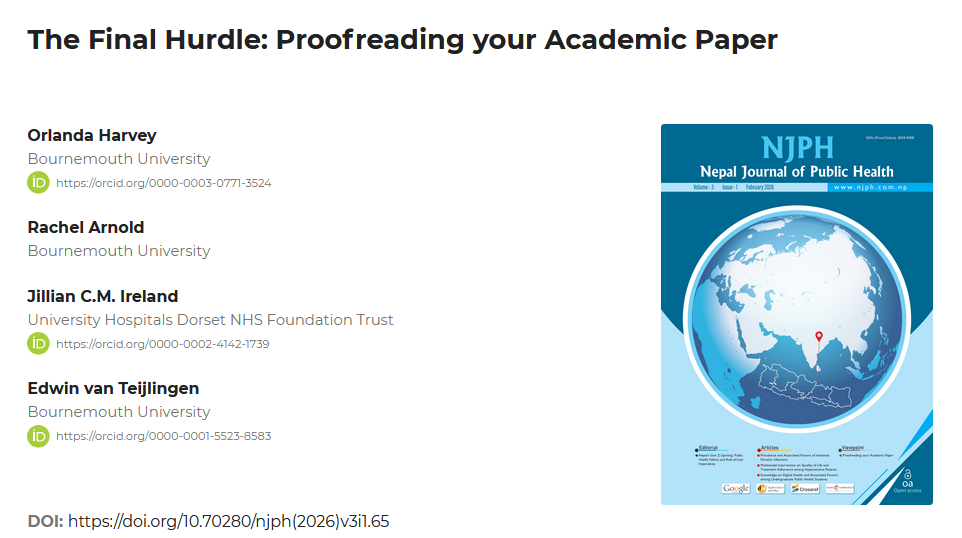
What started as a BU Research Blog in September 2023 became a properly published paper last week when the Nepal Journal of Public Health published our paper ‘The Final Hurdle: Proofreading your Academic Paper’ [1].  This paper started life as short BU Research Blog with the title ‘Proofreading your article accepted for publication’.  After sharing further experiences about proofreading mishaps the four authors decided to write a paper which is both a reminder to all academics, and piece of advice to perhaps more junior authors.

This paper is the latest in a long line of publications by the authors in the field of health and social care on different aspects of academic writing and publishing.  Earlier articles covered, for example, the writing process, the role of the editor, advice of constructing titles, plagiarism, and many more [2-40].
Prof. Edwin van Teijlingen

Centre for Midwifery & Women’s Health
 

References:

  1. Harvey, O., Arnold, R., Ireland, J., van Teijlingen, E. (2026). The Final Hurdle: Proofreading your Academic Paper. Nepal Journal of Public Health, 3(1), 58–62. https://doi.org/10.70280/njph(2026)v3i1.65
  2. van Teijlingen E (2004), Why I can’t get any academic writing done, Medical Sociology News 30(3): 62-63. britsoc.co.uk/media/26334/MSN_Nov_2004.pdf
  3. Pitchforth, E, Porter, M, van Teijlingen, ER, Forrest Keenan K. (2005) Writing up and presenting qualitative research in family planning & reproductive health care, Journal of Family Planning & Reproductive Health Care 31(2): 132-35. http://jfprhc.bmj.com/content/31/2/132.full.pdf+html
  4. van Teijlingen E. (2008) RAE pulls academics away from applied multidisciplinary health promotion research International Journal of Health Promotion & Education 46: 116.
  5. van Teijlingen E, Ryan, K., Alexander, J., Marchant, S. (2011) The Research Excellence Framework (REF): new developments to assess research in higher education institutions and its impact on society. MIDIRS 21(3): 298-301.
  6. Hartwell, H., van Teijlingen, E., Parker, J. (2013) Nutrition; Effects of the Research Excellence Framework (REF) Nutrition & Food Science 43(1): 74-77.
  7. Simkhada, P., van Teijlingen E., Hundley, V., Simkhada, BD. (2013) Writing an Abstract for a Scientific Conference, Kathmandu University Medical Journal 11(3): 262-65. http://www.kumj.com.np/issue/43/262-265.pdf
  8. van Teijlingen, E., Ireland, J., Hundley, V., Simkhada, P., Sathian, B. (2014) Finding the right title for your article: Advice for academic authors, Nepal Journal of Epidemiology 4(1): 344-347. http://www.nepjol.info/index.php/NJE/article/view/10138/8265
  9. van Teijlingen, E., Hundley, V., Bick, D. (2014) Who should be an author on your academic paper? Midwifery 30: 385-386.
  10. Hall, J., Hundley, V., van Teijlingen, E. (2015) The journal editor: friend or foe? Women & Birth 28(2): e26-e29.
  11. van Teijlingen E, Simkhada P (2016) Publishing in journals of the NepJOL family. INASP website http://blog.inasp.info/publishing-journals-nepjol-family/
  12. Pradhan, A.K., van Teijlingen, E.R. (2017) Predatory publishing: a great concern for authors, Medical Science 5(4): 43.
  13. van Teijlingen, E.R., Dhakal Adhikari, S., Regmi, P.R., van Teijlingen, A., Aryal, N., Panday, S. (2021). Publishing, identifiers & metrics: Playing the numbers game. Health Prospect, 20(1). https://doi.org/10.3126/hprospect.v20i1.37391
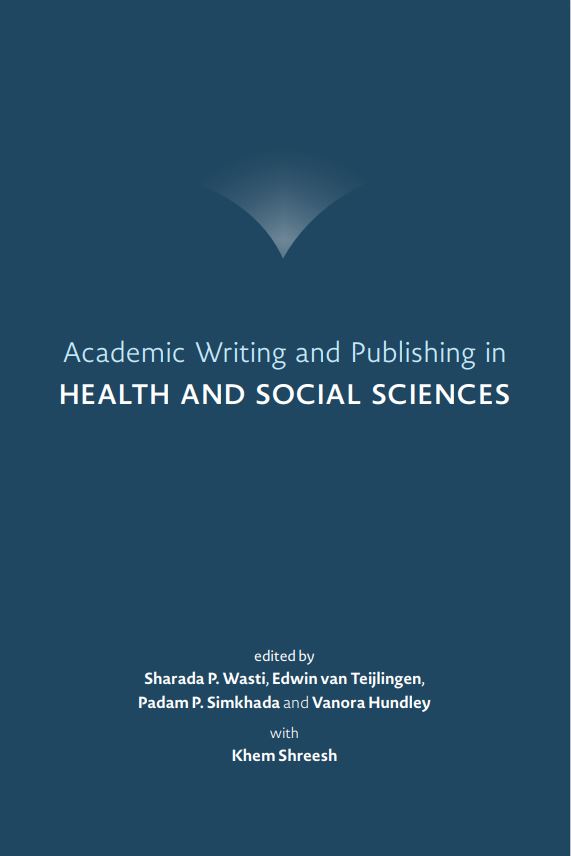
  14. Wasti, S.P., van Teijlingen, E., Simkhada, P.P., Hundley, V. with Shreesh, K. (Eds.) (2022) Academic Writing and Publishing in Health & Social Sciences, Kathmandu, Nepal: Himal Books [ISBN: 9789937117609]
  15. Arnold, R., Ireland, J., Mahato, P.,
  16. (2022) Writing and publishing a reflective paper: Three case studies, Welhams Academic Journal 1(1): 4-11. https://college.angels.edu.np/images/Academic_Jornal/Welhams_Academic_Journal_Vol-1.pdf
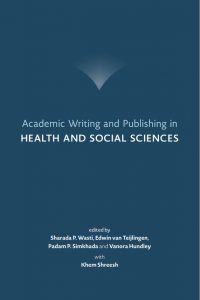
  17. van Teijlingen, E., Hundley, V., Simkhada, P.P., Wasti, S.P. (2022) Introduction, In: Wasti, S.P., et al. (Eds.) Academic Writing and Publishing in Health & Social Sciences, Kathmandu, Nepal: Himal Books: 1-4.
  18. Simkhada, P., van Teijlingen, E., Hundley, V., Swoveet, P. (2022) Writing an Academic Paper, In: Wasti, S.P., et al. (Eds.) Academic Writing and Publishing in Health & Social Sciences, Kathmandu, Nepal: Himal Books: 6-14.
  19. Hundley, V., Luce, A., Simkhada, P., van Teijlingen, E. (2022) Collaborative Writing for Publication, In: Wasti, S.P., et al. (Eds.) Academic Writing and Publishing in Health & Social Sciences, Kathmandu, Nepal: Himal Books: 15-19.
  20. van Teijlingen, E., Simkhada, P., Shanker, S. (2022) Selecting an Appropriate Journal and Submitting your Paper, In: Wasti, S.P., et al. (Eds.) Academic Writing and Publishing in Health & Social Sciences, Kathmandu, Nepal: Himal Books: 20-31.
  21. van Teijlingen, E., Thapa, D., Marahatta, S.B., Sapkota, J.L., Regmi, P. Sathian, B. (2022) Editors and Reviewers: Roles and Responsibilities, In: Wasti, S.P., et al. (Eds.) Academic Writing and Publishing in Health & Social Sciences, Kathmandu, Nepal: Himal Books: 32-37.
  22. van Teijlingen, E., Ireland, J., Hundley, V, Dhakal Rai, S., Simkhada, P., Sathian, B. (2022) Identifying an appropriate Title, In: Wasti, S.P., et al. (Eds.) Academic Writing and Publishing in Health & Social Sciences, Kathmandu, Nepal: Himal Books: 39-47.
  23. Simkhada, P., van Teijlingen, E., Hundley, V., Simkhada, B, Acharya D.R. (2022) Writing an Abstract for a Scientific Conference, In: Wasti, S.P., et al. (Eds.) Academic Writing and Publishing in Health & Social Sciences, Kathmandu, Nepal: Himal Books: 48-56.
  24. Subedi, M., van Teijlingen, E., Baniya J., Sijapati, B. (2022) Writing the Introduction and Background, In: Wasti, S.P., et al. (Eds.) Academic Writing and Publishing in Health & Social Sciences, Kathmandu, Nepal: Himal Books: 57-67.
  25. van Teijlingen, E., Pitchforth, E., Keenan Forrest, K., Mahato, P. (2022) Writing a Qualitative Paper, In: Wasti, S.P., et al. (Eds.) Academic Writing and Publishing in Health & Social Sciences, Kathmandu, Nepal: Himal Books: 88-97.
  26. Wasti, S.P, Devkota, B., Bhatta, D.N., Pitchforth, E., van Teijlingen, E. (2022) Writing the Introduction and Background, In: Wasti, S.P., et al. (Eds.) Academic Writing and Publishing in Health & Social Sciences, Kathmandu, Nepal: Himal Books: 112-120.
  27. Regmi, P., van Teijlingen, E., Simkhada, P. (2022) Writing up the Discussion, Conclusion and Recommendations, In: Wasti, S.P., et al. (Eds.) Academic Writing and Publishing in Health & Social Sciences, Kathmandu, Nepal: Himal Books: 121-129
  28. Aryal, N., Regmi, P.R., Simkhada, B., Subedi, M., van Teijlingen, E., Wasti, S.P., Hundley, V, Khatri, R. (2022) Being Ethical in Writing and Publishing, In: Wasti, S.P., et al. (Eds.) Academic Writing and Publishing in Health & Social Sciences, Kathmandu, Nepal: Himal Books: 153-161.
  29. van Teijlingen, E., Venter, K. (2022) Writing a Book Review, In: Wasti, S.P., et al. (Eds.) Academic Writing and Publishing in Health & Social Sciences, Kathmandu, Nepal: Himal Books: 162-167.
  30. Devkota, B., Simkhada, P., van Teijlingen, E., Hundley, V, Wasti, S.P. (2022) Writing a Research Proposal, In: Wasti, S.P., et al. (Eds.) Academic Writing and Publishing in Health & Social Sciences, Kathmandu, Nepal: Himal Books: 168-175.
  31. Wasti, S.P. Regmi, P.R., Simkhada, P., van Teijlingen, E., Hundley, V. (2022) Writing a PhD Proposal, In: Wasti, S.P., et al. (Eds.) Academic Writing and Publishing in Health & Social Sciences, Kathmandu, Nepal: Himal Books: 176-183.
  32. Hundley, V., Simkhada, P., van Teijlingen, E. (2022) Converting your Master’s or Doctoral Thesis into an Academic Paper for Publication, In: Wasti, S.P., et al. (Eds.) Academic Writing and Publishing in Health & Social Sciences, Kathmandu, Nepal: Himal Books: 184-189.
  33. van Teijlingen, E., Hundley, V., Simkhada, P., Acharya, J., Silwal, R.C., Wasti, S.P. (2022) Academic Writing: Final Thoughts, In: Wasti, S.P., et al. (Eds.) Academic Writing and Publishing in Health & Social Sciences, Kathmandu, Nepal: Himal Books: 201-20
  34. Harvey, O., van Teijlingen, A., Regmi, P.R., Ireland, J., Rijal, A., van Teijlingen, E.R. (2022) Co-authors, colleagues, and contributors: Complexities in collaboration and sharing lessons on academic writing, Health Prospect 21(1):1-3. https://www.nepjol.info/index.php/HPROSPECT/article/view/39320/31432
  35. van Teijlingen, E., Hundley, V., Sathian, B., Simkhada, P., Robinson, J., Banerjee, I. (2022). The Art of the Editorial. Nepal Journal of Epidemiology 12(1):1135–38. https://doi.org/10.3126/nje.v12i1.43104
  36. Harvey, O., Taylor, A., Regmi, P.R., van Teijlingen, E. (2022) Struggling to reply to reviewers: Some advice for novice researchers. Health Prospect, 21(2):19-22.
  37. Simkhada, B., van Teijlingen, A., Simkhada, P., van Teijlingen, E.R. (2024) ChatGPT: Challenges to editors and examiners. Health Prospect, 23(1): 21–24. https://doi.org/10.3126/hprospect.v23i1.60819
  38. van Teijlingen, E., Subedi, M., Parker, S., Khattri, M.B. (2024) The Use of Artificial Intelligence (AI) in Academic Writing and Publishing Papers, Dhaulagiri Journal of Sociology & Anthropology, 18(2): 1-4. https://www.nepjol.info/index.php/DSAJ/article/view/73358
  39. van Teijlingen, E., Balen, J., Regmi, P., Rushton, S., Simkhada, P., Aryal, N. (2025). Bridging Research and Policy: Practical Tips for Writing Policy Briefs. Journal of Health Promotion, 13(1): 89–96. https://doi.org/10.3126/jhp.v13i1.87170
  40. Pandey, R., Khattri, M.B., Subedi, M., Dixit, K.M., van Teijlingen, E. (2026) Navigating Plagiarism in Social Science Research: Epistemic Re-framing or Unethical Redundancy? Dhaulagiri Journal of Sociology & Anthropology, 20(1): 1-6.

 

Why Academics Don’t Apply for Funding

Anxiety

We undergo a lot of training to do research and write papers. We have very little training to write grants, and most of it is voluntary. Trainings are often an hour or two here or there, to tackle a massive process in a gargantuan institutional complex that has hidden traps and decades-long implicit biases, all of which work against us. We are Frodo putting on the One Ring and venturing into Mordor—and in many cases, we have no Samwise Gamgee or Gandalf to aid and guide us.

Even for those of us who have experience with grant proposals, anxiety is still a significant concern. For one, the landscape seems to shift every time we write a proposal as funding bodies update their systems and approaches. For another, the vast majority of grant proposals, by their very nature, FAIL. We’re academics—we’ve always been good at what we do, getting top grades, PhDs, publications. It’s daunting to take on a major task to know that it’s likely going to be a giant F.

Time

Workload models are great. They are great tools to try to balance a wide variety of staff in Fusion roles, to make sure that everyone can do the things that the university expects them to do. But these are just models.

Bournemouth’s workload model is new, and it will be a while before we know how well it works. Everyone has ways of working that might not fit a model that was created to suit the majority of people across all disciplines, faculties, and departments. Timetables can take precedence, and so an individual staff member’s 400 hours of research might be distributed in a way that makes it very hard for them to use them effectively. In these cases, they might struggle to take on new challenges while they are teaching. They likely prioritise activities that are already within their comfort zone, such as reading, publishing, reviewing, etc., especially if they don’t have a driving need to bring in money in order to do many of their research activities.

Ability

Coordinating and creating grant proposals is a significant skillset, which, as noted, we don’t actually get much training in. When you compare to the training we get for research, it’s miniscule. (We also don’t get enough training for teaching, and often thrown into the deep end of that pool, but few elements of teaching are voluntary, so we’re forced to come to terms with that!)

Need

In some disciplines, we also don’t see the need. We read, we watch, we listen, and then we analyse and write. We need a library, time, and a supportive physical and mental environment to do our research and write publications. Why should we spend that valuable time learning to write grants just for the sake of writing grants that we don’t need in order to do our work?

Personal Goals

It’s not a stipulation of an academic’s basic contract that they bring in grant funding. (We’re not in that model… yet.) Some academics have different goals from others, and don’t prioritise climbing the ladder to professoriate. I know a lot of, for example, creative writers and media production folks who see their academic roles as secondary to their professional work in their respective industries. In those cases, no one cares if you’re a professor—it’s only about how well their industry work performs. Being an academic gives security to many people in creative industries, but is not their primary career.

Return on Investment

You’ve got half a day a week (being conservative, if your 400 hours aren’t perfectly efficiently distributed) to do your research, likely the whole reason you became an academic to begin with. What would you rather focus on for the next two months’ worth of research allocation hours: a journal article that will give you REFable output, a positive point in promotion/pay progression (or even external job) applications, increase your esteem in your discipline, or a grant proposal that, statistically, will fail?

I know what I’d work on.

Reasons why we should bid for grants

Furthering partnerships, collaboration

It’s very easy to get tunnel vision as a researcher, especially if your work doesn’t naturally call for partnerships and collaborators. My own work has benefitted enormously from collaborations, both within academia and without. It has taken new directions and opened up entirely new avenues for research and my career. Not everyone wants to explore more interdisciplinary, applied, or collaborative projects, but if you are in any way burned out on your area or finding something lacking, working on grants and exploring projects with other people can really stimulate your interest in research again.

Furthering research/professional projects

There’s a catch-22 to research grants: we struggle to find time to write them because time is what we need in order to do our research. If we can eke out a wee bit of relief from other duties, however, we can get a monograph written or interviews conducted. Sometimes this little bit of time, which funding can give us, is enough to get us to the next stage of a research project, to get our track record that much further, so that we can earn promotion and maybe even another grant or two for more.

Research funding, for good or ill, is classist: if you win money, they like to keep giving you more money. It’s a lottery (sometimes metaphorically, sometimes literally), but unlike a jackpot, once you win, your odds get better the next time.

Promotion

Everything that is written down in terms of policies and procedures says that there is no requirement to bring in funding to be promoted as an academic.

Everything that is NOT written down says there is. If academia is your primary career, and you want to reach that storied Professor level, you better bring in some cash money. Universities operate on the golden rule: whoever has the gold, makes the rules.

The “Man” is pressuring us

As in, the institution, the powers that be. They give presentations about targets, and talk about how other universities or research institutions (cough—America—cough) make your job and salary contingent upon the research funding you bring in, and aren’t you lucky we’re not in that model (with the implied threat of “yet” lingering at the end of that sentence).

As noted, the biggest unspoken requirement for academic promotion is how much research funding you’ve brought in. That pressure is all the more significant for being unspoken, because you don’t ever know what, where, or how high the goalposts are. So we apply for grants, and we fail, and we get discouraged, because no one gets a shout out in uni comms or meetings for applying and failing.


Solutions exist to these problems, but none are one-size-fits-all. You can’t put a per capita quota on grant income, because it’s unrealistic and absolutely unachievable. You can’t require every academic to bid.

But there are gaps that we can close with training, mentorship, and awards structures that aren’t based solely on bids that are won, and solely for the listed PI. We also can’t Field of Dreams it, hoping that if we provide a buffet of training and grant opportunities, that the staff interest and activity will come. There are a lot of reasons we don’t bid for grants, and each individual is unique in their anxieties, abilities, and desires.

What we can do is listen to staff when they identify barriers. We can ask them why they don’t write grants or attend opportunity sessions. We can use the workload model as a support tool rather than a whip, to build in time for more experienced staff to mentor new bidders, for new bidders to shadow experienced PIs as they coordinate new proposals. We can implement a strong, supportive series of proposal workshops that consider staff needs, and strive to meet them, rather than assuming we know their training needs and imposing them. We can work to be facilitators, networking among staff and matchmaking skillsets and project groups. We can provide the structure and the support that staff need for success. And we can acknowledge the great majority of grant proposals submitted, instead of only the ones that are awarded.

Bournemouth University is a strong, supportive culture. That’s what we need to improve grant submission and capture.

NIHR Grant Applications Seminar ONLINE – 22 November 2022


Dear colleagues

– Do you have a great idea for research in health, social care or public health?
– Are you planning to submit a grant application to NIHR?

Our popular seminar continues online and will take place on Tuesday 22nd November 2022 from 10.00am – 12.30pm.

The seminar provides an overview of NIHR funding opportunities and research programme remits, requirements and application processes. We will give you top tips for your application and answer specific questions with experienced RDS South West advisers.

We will also be hearing from Jane Fearnside about the NIHR Invention for Innovation (i4i) programme. She will be giving an overview of the programme, the assessment process and what the funding panels are looking for.

We also have a limited number of 20-minute 1-to-1 appointments available after the seminar should you wish to discuss your proposed study with an RDS adviser.

Find out more and book a place.

Your local branch of the NIHR RDS (Research Design Service) is based within the BU Clinical Research Unit (BUCRU)

We can help with your application. We advise on all aspects of developing an application and can review application drafts as well as put them to a mock funding panel (run by RDS South West) known as Project Review Committee, which is a fantastic opportunity for researchers to obtain a critical review of a proposed grant application before this is sent to a funding body.

Contact us as early as possible to benefit fully from the advice

Feel free to call us on 01202 961939 or send us an email.

NIHR Grant Applications Seminar ONLINE – 7th July 2022


Dear colleagues

– Do you have a great idea for research in health, social care or public health?
– Are you planning to submit a grant application to NIHR?

Our popular seminar continues online and will take place on Thursday 7th July 2022 from 10.00am – 12.30pm.

The seminar provides an overview of NIHR funding opportunities and research programme remits, requirements and application processes. We will give you top tips for your application and answer specific questions with experienced RDS South West advisers.

We also have a limited number of 20-minute 1-to-1 appointments available after the seminar should you wish to discuss your proposed study with an RDS adviser.

Find out more and book a place.

Your local branch of the NIHR RDS (Research Design Service) is based within the BU Clinical Research Unit (BUCRU)

We can help with your application. We advise on all aspects of developing an application and can review application drafts as well as put them to a mock funding panel (run by RDS South West) known as Project Review Committee, which is a fantastic opportunity for researchers to obtain a critical review of a proposed grant application before this is sent to a funding body.

Contact us as early as possible to benefit fully from the advice

Feel free to call us on 01202 961939 or send us an email.

NIHR Grant Applications Seminar ONLINE – 31st March 2022


Dear colleagues

– Do you have a great idea for research in health, social care or public health?
– Are you planning to submit a grant application to NIHR?

Our popular seminar continues online and will take place on Thursday 31st March 2022 from 10.00am – 12.30pm.

The seminar provides an overview of NIHR funding opportunities and research programme remits, requirements and application processes. We will give you top tips for your application and answer specific questions with experienced RDS South West advisers.

We will also be joined by colleagues from the NIHR Health Technology Assessment (HTA) Programme. They will be talking about the HTA programme, the nature of the projects that it funds, tips for success and any upcoming changes.

We also have a limited number of 20-minute 1-to-1 appointments available after the seminar should you wish to discuss your proposed study with an RDS adviser.

Find out more and book a place.

Your local branch of the NIHR RDS (Research Design Service) is based within the BU Clinical Research Unit (BUCRU)

We can help with your application. We advise on all aspects of developing an application and can review application drafts as well as put them to a mock funding panel (run by RDS South West) known as Project Review Committee, which is a fantastic opportunity for researchers to obtain a critical review of a proposed grant application before this is sent to a funding body.

Contact us as early as possible to benefit fully from the advice

Feel free to call us on 01202 961939 or send us an email.

NIHR Bulletin

RDS NEWS

New RDS event: Virtual Grant Development & Writing Workshop
We’re pleased to announce that we’ve just opened registration for the new Virtual Grant Development & Writing Workshop which will take place on the 23rd and 24th November 2021.

This is a 2-day workshop that we’re hosting in partnership with the RDS North East and North Cumbria. The 2-day workshop will provide a great opportunity to help researchers to make progress in developing their NIHR research proposal into a competitive application. Find out more.

NIHR News

NIHR welcomes Government investment in health R&D

eBulletins and Newsletters

NIHR News and Research: October 2021

NHS England and NHS Improvement: In Touch

PenARC Matters – October 2021

Events

NIHR Research for Social Care (RfSC) Call Seminar: 25th November 2021, 1.30pm – 3.00pm

An event specifically for social care researchers, practitioners and users to introduce the latest call from the NIHR’s RfSC programme. Speakers include the RfSC Programme Team, the RfSC committee chair, and others including Dr Mark Wilberforce (a successful candidate), Autistica, and a public involvement expert. The remit of the call, requirements and applications processes will be covered. Find out more

Funding Opportunities

Public Health Research (PHR) Programme

21/568 Suicide prevention in high risk groups
21/569 Effectiveness of interventions aimed at preventing domestic abuse
21/570 What are the health and health inequality impacts of being outdoors for children and young people?
21/571 Digital health inclusion and inequalities
21/572 Increasing uptake of vaccinations in populations where there is low uptake


Your local branch of the NIHR RDS (Research Design Service) is based within the BU Clinical Research Unit (BUCRU) should you need help with your application. We advise on all aspects of developing an application and can review application drafts as well as put them to a mock funding panel (run by RDS South West) known as Project Review Committee, which is a fantastic opportunity for researchers to obtain a critical review of a proposed grant application before this is sent to a funding body.

Contact us as early as possible to benefit fully from the advice

Feel free to call us on 01202 961939 or send us an email.

BU articles on academic writing & publishing

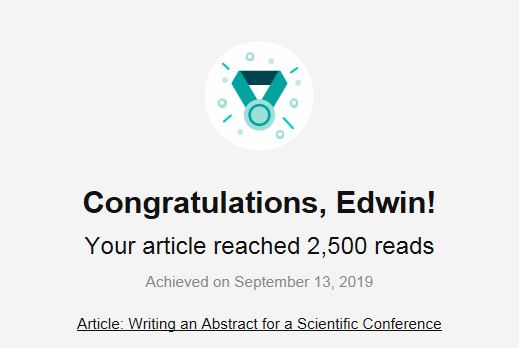
Last Friday ResearchGate informed us that ‘Writing an Abstract for a Scientific Conference’ [1] published by three Bournemouth University (BU) scholars (Prof. Vanora Hundley, Dr. Bibha Sinkhada and Prof. Edwin van Teijlingen and a BU Visiting Professor (Prof. Padam Simkhada) had reached 2,500 reads. This paper is one of a series of articles BU academics have published on several aspects of academic writing and scientific publishing.  The range of publications includes issue such as: predatory publishers, authors earning from copyright; finding the best title for your paper, and issues of authorship [2-13].  These are great resources for budding academic writers, especially as nearly are Open Access publications and hence freely available across the world.

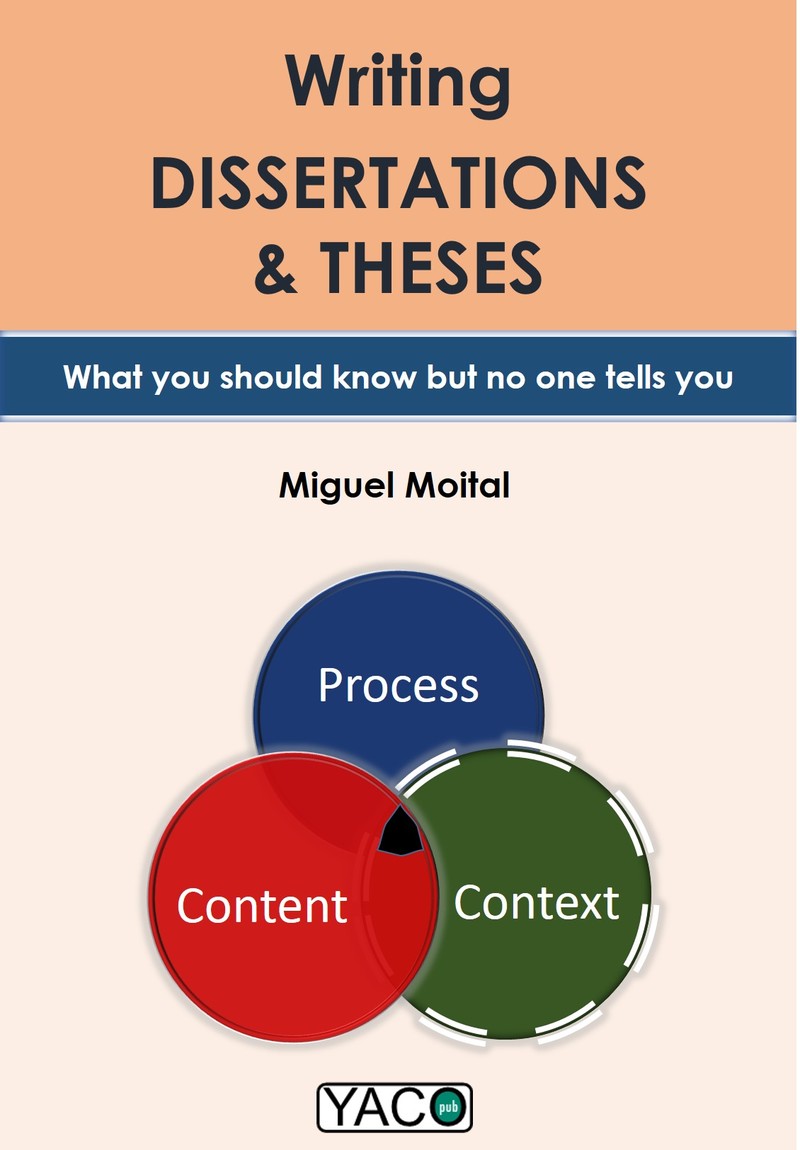
Other useful BU resources include the work by Dr. Kip Jones, such as his blogs on Organising & Writing a PhD thesis or his advice on Writing Blogs.   Another great BU resource is the online publication by Dr. Miguel Moital, who wrote the e-book Writing Dissertations & Theses: What you should know but no one tells you, where he shares valuable practical information about the process of writing academic work, notably dissertations. The book starts with explaining the six criteria, expressed in the form of 6 ‘C’s, required to produce high quality dissertations: Confined, Corroborated, Critical, Coherent, Concise and Captivating. The e-book then goes on to share a range of ‘tips and tools’ which contribute to fulfilling the 6 Cs. 

Moreover, it is also worth pointing out that there are some great web resources on writing and publishing produced by BU Library staff, for example on plagiarism;  academic writing; or how to cite references.


Prof. Edwin van Teijlingen

Centre for Midwife

References

  1. Simkhada, P., van Teijlingen E., Hundley, V., Simkhada, BD. (2013) Writing an Abstract for a Scientific Conference, Kathmandu Univ Med J 11(3): 262-65. http://www.kumj.com.np/issue/43/262-265.pdf
  2. van Teijlingen, E, Hundley, V. (2002) Getting your paper to the right journal: a case study of an academic paper, J Advanced Nurs 37(6): 506-11.
  3. Pitchforth, E, Porter M, Teijlingen van E, Keenan Forrest, K. (2005) Writing up & presenting qualitative research in family planning & reproductive health care, J Fam Plann Reprod Health Care 31(2): 132-135.
  4. Kretschmer, M., Hardwick, P. (2007) Authors’ earnings from copyright and non-copyright sources: A survey of 25,000 British and German writers, Bournemouth: Bournemouth University,  Centre for Intellectual Property Policy & Management.
  5. van Teijlingen, E, Simkhada, PP, Rizyal A (2012) Submitting a paper to an academic peer-reviewed journal, where to start? (Guest Editorial) Health Renaissance 10(1): 1-4.
  6. van Teijlingen, E, Simkhada. PP, Simkhada, B, Ireland J. (2012) The long & winding road to publication, Nepal J Epidemiol 2(4): 213-215 http://nepjol.info/index.php/NJE/article/view/7093/6388
  7. Hundley, V, van Teijlingen, E, Simkhada, P (2013) Academic authorship: who, why and in what order? Health Renaissance 11(2):98-101 www.healthrenaissance.org.np/uploads/Download/vol-11-2/Page_99_101_Editorial.pdf
  8. Simkhada P, van Teijlingen E, Hundley V. (2013) Writing an academic paper for publication, Health Renaissance 11(1):1-5. www.healthrenaissance.org.np/uploads/Pp_1_5_Guest_Editorial.pdf
  9. van Teijlingen, E., Ireland, J., Hundley, V., Simkhada, P., Sathian, B. (2014) Finding the right title for your article: Advice for academic authors, Nepal J Epidemiol 4(1): 344-347.
  10. van Teijlingen E., Hundley, V., Bick, D. (2014) Who should be an author on your academic paper? Midwifery 30: 385-386.
  11. Hall, J., Hundley, V., van Teijlingen, E. (2015) The journal editor: friend or foe? Women & Birth 28(2): e26-e29.
  12. Sathian, B., Simkhada, P., van Teijlingen, E., Roy, B, Banerjee, I. (2016) Grant writing for innovative medical research: Time to rethink. Med Sci 4(3):332-33.
  13. Pradhan, AK, van Teijlingen, ER. (2017) Predatory publishing: a great concern for authors, Med Sci 5(4): 43.

NIHR RDS Grant Applications – seminar & support event, Truro, Cornwall – 8th October 2019

Are you planning to submit a grant application to NIHR?

We are holding a one-day event at the Knowledge Spa, Truro, Cornwall on Tuesday 8 October that is aimed at helping you to improve your chances of success..

The morning seminar session is open to anyone to come and hear RDS advisers give presentations on what makes a good grant proposal. Topics covered will include:

  • what does the NIHR look for?
  • the application as a marketing document: selling the topic, selling the method, and selling the team
  • the team
  • clarity of description and explanation
  • feasibility issues
  • identifying and avoiding potential pitfalls.

The afternoon support session of one-to-one appointments is for those who would like to discuss their own proposal with an RDS adviser.

This event is FREE and refreshments and lunch will be provided. Places are limited and will be allocated on a ‘first come, first served’ basis. In order to secure your place please register using our online form by 1pm, 25 September 2019Find out more.

And don’t forget, your local branch of the NIHR RDS (Research Design Service) is based within the BU Clinical Research Unit (BUCRU) on the 5th floor of Royal London House. Feel free to pop in and see us, call us on 61939 or send us an email.

RDS Residential Research Retreat 26-28 November 2019 – Deadline Friday 16th August

Do you have a great idea for a research project?

Are you planning to apply for research funding?

Do you need a dedicated period of quality time with support to develop your research project?

Dillington House, Somerset

26 – 28 November 2019

Deadline for Applications: FRIDAY 16 AUGUST

The Residential Research Retreat provides protected time with expert coaching and support for you to develop your research proposal to the standard required to be competitive in seeking high quality research funding.

Please apply by 16th August here

And don’t forget, your local branch of the NIHR RDS (Research Design Service) is based within the BU Clinical Research Unit (BUCRU) on the 5th floor of Royal London House. Feel free to pop in and see us, call us on 61939 or send us an email.

Grant Development & Writing Retreat 10 – 12 September 2018


Do you have a great idea for research in health, social care or public health?

Would you or your team benefit from protected time and expert support to develop your idea into a competitive funding application?

Research Design Service South West (RDS SW) are offering a unique opportunity for health, social care and public health professionals across England to attend a three-day residential Grant Development & Writing Retreat – 10-12 September 2018, School of Psychology, University of Kent, Canterbury.

Applications are invited from individuals or teams of two or three people, at least one of whom must be a health, social care or public health professional working in England. Successful applicants will be offered a free place at the retreat which will include food and accommodation*.The purpose of the Retreat is to give busy professionals dedicated time to rapidly progress their research proposal.

If you think your research team would benefit from protected time and expert support, you can apply to attend the Retreat by submitting a standard form which is available from your local RDS office, hosted by BU Clinical Research Unit (BUCRU) on the 5th floor of Royal London House. Feel free to pop in and see us, call us on 61939 or send us an email.

If in doubt, please contact the coordinating centre at rds.sw@nihr.ac.uk

Delegates are encouraged to work on their projects with local RDS staff before applying to attend the Retreat. The views of the RDS will play an important part in deciding which teams will be invited to attend. It is crucial, therefore, that teams work closely with their local RDS advisers when preparing their applications. It is advisable for teams considering attending the Retreat to contact their local RDS office as early as possible.

The deadline for submission of this form is 12noon, Wednesday 6 June 2018.

 * excludes travel to/from Canterbury.

Find out more about the Retreat.

Wellcome Trust Grant Success for Dr. Anna Feigenbaum

CMC Media School Lecturer and CEMP Fellow, Dr. Anna Feigenbaum, was awarded a Wellcome Trust Small Grant in Medical Humanities for her project ‘Communicating Medical Knowledge in the History of Tear Gas’. Aiming to inform new medical knowledge about tear gas, as well as provide resources for policy-makers and key stakeholders, this research project examines changing and contested notions around the health effects of tear gases for law enforcement purposes. Using a case study approach and archival methods, the project explores how medical experts have communicated medical knowledge around tear gas, shaping policies and legislation, from the Geneva Convention to the European Union ban on trade in instruments of torture. Outputs for this project include a contracted book with Verso and an open access website of tools and resources. Dr. Feigenbaum’s work on tear gas has been quoted in the Guardian, The Financial Times, New Internationalist and Vice magazine, as well as in international publications in Brazil, the Philippines, Turkey and Italy. Dr. Feigenbaum is always interested in building new interdisciplinary collaborations. If you are interested in this area of research, be in touch! afeigenbaum@bournemouth.ac.uk

Deadline! Panic. Click Submit: Grants Academy Diary Part 3

Email flurries. Cut-and-paste frenzies. Forgetting if draft v3.1.5 is most recent despite diligent attempts to effectively dropbox. Sound familiar? Grant deadline time demands we are at our sharpest, but more often finds us high on caffeine and flung headlong into chaos. Whether one clicks submit with confidence, hesitation or blind faith, when the closing hour comes, we breathe a sigh of relief. It’s out of our hands and into the 1 in 12 success rate abyss.

Like many colleagues, I’ve been on grant teams where ‘click submit’ was done with varying shades of satisfaction. But this time, something felt different. This wasn’t any ordinary bid. This was my Grants Academy bid. A bid that had gone through three days of extensive surgery via R&KE OP’s staff development programme on bid writing run by expert consultant Dr. Martin Pickard. It benefited from Martin’s expertise, as well as the critical eyes of five interdisciplinary BU colleagues also attending the workshop. Further developed by two CI collaborators,  two external peer reviewers,  BU Quality Approver Richard Berger and the devoted attention of my research officer Pengpeng Ooi, never before had I been on a grant handled with so much personalised and professional care.  This time when I clicked submit, there wasn’t a sentence worth changing.

In two earlier diary posts I discussed the daunting task of getting started with bid writing and my (somewhat unfounded) fears of impact agendas. After the first two workshops we each went off, brains buzzing with new tips and tricks, to independently work on our bid drafts. But rather than spend hours crafting confident cases for support, those two weeks during the start of spring semester saw little time to devote to redrafting. Like the students we sometimes bemoan, most of us ended up in a last minute ‘meet the deadline’ whirlwind, turning in work we were only half proud of.

Building on session one’s tips about project formulation and session two’s insights on expressing the wider value of our research, session three provided a simulated peer review process to help us better understand how bids are evaluated and scored.  This final stage of the Grants Academy began with a discussion of review criteria, followed by a tally of the scores we gave fellow academy members, and then individual rounds of feedback on each of our six draft bid submissions. While none of us broke most research funder’s thresholds of 70% approval, few of us felt we deserved to, at least not yet.

Offering a supportive environment to watch our work get torn apart — a necessary if uncomfortable part of the bid enhancement process — day three of Grants Academy proved as beneficial as the first two. Rather than disheartening, the patterns and repetition of criticism shared across our cross-disciplinary colleagues’ reviews helped us to hone in on what desperately needed fixing. This peer review process was topped off with one-to-one feedback from Martin on where to go next with our bid’s development.

After the session a few of us stayed behind, manically typing away, not wanting to forget any of our colleagues’ sage advice. I knew my deadline was only a few weeks away and I wanted that 60 up to a 90, to fill the gap of the 1 in 12 success rate with sure-fire reasons why we deserved funding. Over the next two weeks my CIs and I racked up 57 emails, 3 hours of skype meetings and 5 budget drafts — all for just a £10,000 bid. In the words of our Grants Academy Guru, “To compete, we train.”

My biggest takeaway tip for colleagues registered in an upcoming Grants Academy session, or those thinking about enrolling, would be to come with a bid in the early to mid-stages of development. (NOT something either brand new or nearly finished.) This will allow you to get the most out of the developmental process of the workshops. Attending the sessions forces you to make time for drafting by providing structured deadlines and feedback to carry forward. I chose to develop a small Fusion Funded pilot project. 

Anna Feigenbaum is a Lecturer in CMC group at the Media School. As part of her CEMP Fellowship she created this diary of her time at the Grants Academy.  You can read her Day One Diary post here and Day Two here.  


How do I write a successful research grant?

…is a question I hear all the time. It’s really tough to know how to do this if you haven’t ever received training in it so you are not alone if you too have asked this.  If you are curious as to how you can write a winning research proposal but haven’t been able to join the Grants Academy or EU Academic Development Scheme, then we have a session  aimed at you as part of the BRAD framework.

On the morning of Wednesday November 27th an external expert bid writer will give some fantastic tips in a condensed 3 hour session on how to write a research grant. You will learn some of the tricks involved in writing a proposal for any funding body and will get an invaluable insight into what reviewers look for.

Spaces for this session are limited, so you will need to book via the Staff Development webpage.

October is EU-tastic! The four sessions which give you all the EU funding info you need!

EU funding remains a bit of an enigma for most people. I remember how overwhelming I found it when I first began to unpick the tangle of the different funding strands, rules of participation, deadlines and conditions.Thankfully you don’t need to suffer in the same way. Horizon 2020 will be released soon (the replacement for FP7 and worth tens of billions of Euros) and I am here to guide you through it. As well as a Simple Guide to Horizon 2020 funding which I will release in early 2014 to demystify the funding schemes for you, I have arranged for four sessions to be held at BU in October to give you all the resources you need for your EU journey.

1. Health in Horizon 2020 

The European Commission National Contact Point for Health – Dr Octavio Pernas madea special trip to BU on October 7th to inform anyone interested in health research (from nursing care models to medical devices) of what to look out for under Horizon 2020 and expanding on other complementary funding programmes. The session detailed how you can make the most of the National Contact Points to help with your application. Slides from this presentation are available here: I:\R&KEO\Public\RDU\European Related\Horizon 2020\Health in H2020 Presentation.  

2. All things Horizon 2020 and 1-2-1s with UKRO

Bournemouth subscribes to information services from the fabulous UK Research Office (UKRO) and for many years they have been providing us with the latest EU information on funding calls, policy and providing advice on how to make a great application.

They will be visiting on October 9th to tell you in simple terms what Horizon 2020 is, the areas which will be funded within it and how you can make the most of UKRO by help with finding partners and gathering key bits of information. The two hour session will be followed by 1-2-1 appointments where you can get advice on your specific area of expertise and ask anything you want about EU policy making or funding. You can book your place for the information session here  and for the 1-2-1s by emailing Dianne Goodman.


3. All things Marie Curie

You can’t fail to have heard me banging on about how wonderful these fellowships are and how pleased I am that they will feature in Horizon 2020. These grants are absolutely the best way to kick start your EU career and you only need one non-UK partner to apply. You can either apply to have an academic come to the university from another country or you can go to another country as part of the fellowship scheme. You can have a fellowship with an academic or with an industrial partner and you can even apply for entire departments to be involved in exchanges. I’m proud of how engaged BU colleagues are with Marie Curie and the grants we already hold from this scheme.

The session is divided into two parts with both being held on October 16th. The first is a brief intro to the schemes and the second is a more detailed session on how to approach and structure your bid. You can book your place for either session here.


 4. The tricks of writing a winning Horizon 2020 proposal

Having already had sessions providing you with an overview of the various funding opportunities within Horizon 2020, you need to know the tricks of writing a winning bid. Writing bids for the European Commission is quite a different skill to writing for UK funders and this session on October 17th will guide you through the journey. We’ve had some fantastic feedback from this session in the past and attending will help get you on the right path to create your proposal. You can book your place for the information session here.

Writing a successful proposal: live web chat and twitter feed this Friday

Universities are under increasing pressure to gain external funding and with budgets shrinking across the HE sector, this can be a difficult process.

To provide a little help, the Guardian are running a live web chat on Friday 12 April between 12-2pm for academics, whether a first-timer or old hand, to share experiences, advice and tips for writing and managing the process of a successful research grant proposal. You can also follow the live chat on Twitter using the hashtag #HElivechat

JISC offer advice on making your grant application stand out

JISC funds a wide range of infrastructure, services, innovative projects and studies.  As competition grows for funds, JISC have offered some advice on successful bidding that can help you make a strong application that stands out from the crowd.  Their advice is worth considering for all grant applications.

Sarah Porter, Director of Innovation at JISC, said:  We want to attract bids from a wide range of universities and colleges, those that know JISC well and others that might be bidding for the first time or need additional help with their application. We know bidding for funds is a time-consuming process and we are therefore aiming to give organisations the best possible chance of being successful in their applications.”

JISC advice for successful bidding includes:


  • Describe how your proposed project meets the criteria set out in the call


  • Demonstrate how your idea  is aligned with the objectives of your college or institution, including what buy-in you have from senior management


  • Carry out an initial assessment of the risks of undertaking the project – and then mention this in your bid


  • Include an initial project plan and show how the project will be managed


  • Think ahead – include information about dissemination, embedding and evaluation mechanisms


  • Show that your project is sustainable once the funding has ceased – not just financially but also in terms of the skills sets of the people involved, and any data/software preservation


  • Go green – show that you have considered the environmental impact of your project, eg. server power and data storage space you need


  • Consider the wider benefits of the project  for UK education and research to show that your project is good value for money.  You might think about generating workshops, briefing papers or web pages to help disseminate the findings of your project more widely


  • Don’t let your bid fail on the easy stuff: make sure you stick to the page limit and get your bid in on time


More information on specifically what JISC are looking for and the funding available can be found on their website.


Two fantastic training sessions for EU submissions in February at BU!

I’m delighted to announce that the brilliant Dr Martin Pickard of the company Grantcraft will be returning to Bournemouth in February. Martin has 25 years of winning EU funding and an excellent track record in helping academics write successful proposals.

EU Funding & Grant Writing:With FP7 drafts being released already, I’ve invited Martin to host a one day workshop on EU funding and grant writing, as it is very different from UK funders. I organised this session last year and the feedback we received from staff who attended was excellentI must say it’s a great workshop, which provides us a number of important points we should pay attention to while drafting our proposals.”. This will take place in K103 (Kimmeridge House, Talbot Campus) on February 15th and all refreshments and lunch will be included. Attending this session will also enable you to access Martin’s excellent reviewing skills for your submission until September, which is fantastic.

Marie Curie Fellowships:  These grants are absolutely the best way to kick start your EU career; they have a fantastic success rate for applications (40%) and you only need one other EU partner. You can either apply to have an academic come to the university from Europe or you can go to another European country as part of the fellowship scheme. BU has had success with Marie Curie grants before and Martin is an absolute expert in writing these types of grant. This session will be dedicated to selecting the right grant for you and how to write a fantastic proposal. This will take place in EB203(Exec Business Centre, Lansdowne Campus) on February 16th and all refreshments and lunch will be included. Attending this session will also enable you to access Martin’s excellent reviewing skills for your submission until the official deadline in September.


Booking for either day is compulsory as numbers are limited and each day will run 9:30-5 and will include lunch and refreshments. Please register for the event here stating which session you would like to attend (you may attend both if you wish), and stating any dietary requirements and any special arrangements you may require for attending.