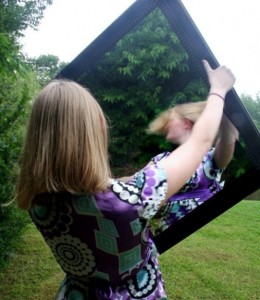
Studying yawning has the potentially benefit of identifying underlying neurological disorders. Strong evidence of a link between yawning and fatigue, and with multiple sclerosis, is known. Mechanisms involved in excessive yawning are not understood and my work has shown a definitive link between yawning and cortisol levels in normal people. However, since people with multiple sclerosis often yawn excessively, it is important to establish whether or not their cortisol levels rise as with normal people since prolonged rises in cortisol levels indicate stress and may also indicate adverse neurological symptomatology. My work has generated a new hypothesis to explain the occurrence of excessive yawning and is complementary to Dr Gallup’s theories on thermoregulation in multiple sclerosis, which is pioneering. I am meeting Dr Gallup (Princeton University) in New York to discuss further studies in order to stay ahead of research progress. This is an excellent opportunity for kudos for Bournemouth University in being the first to carry out such research.
Category / Health, Wellbeing & Society
Stop Press: BU involved in first ever national health promotion conference in Nepal
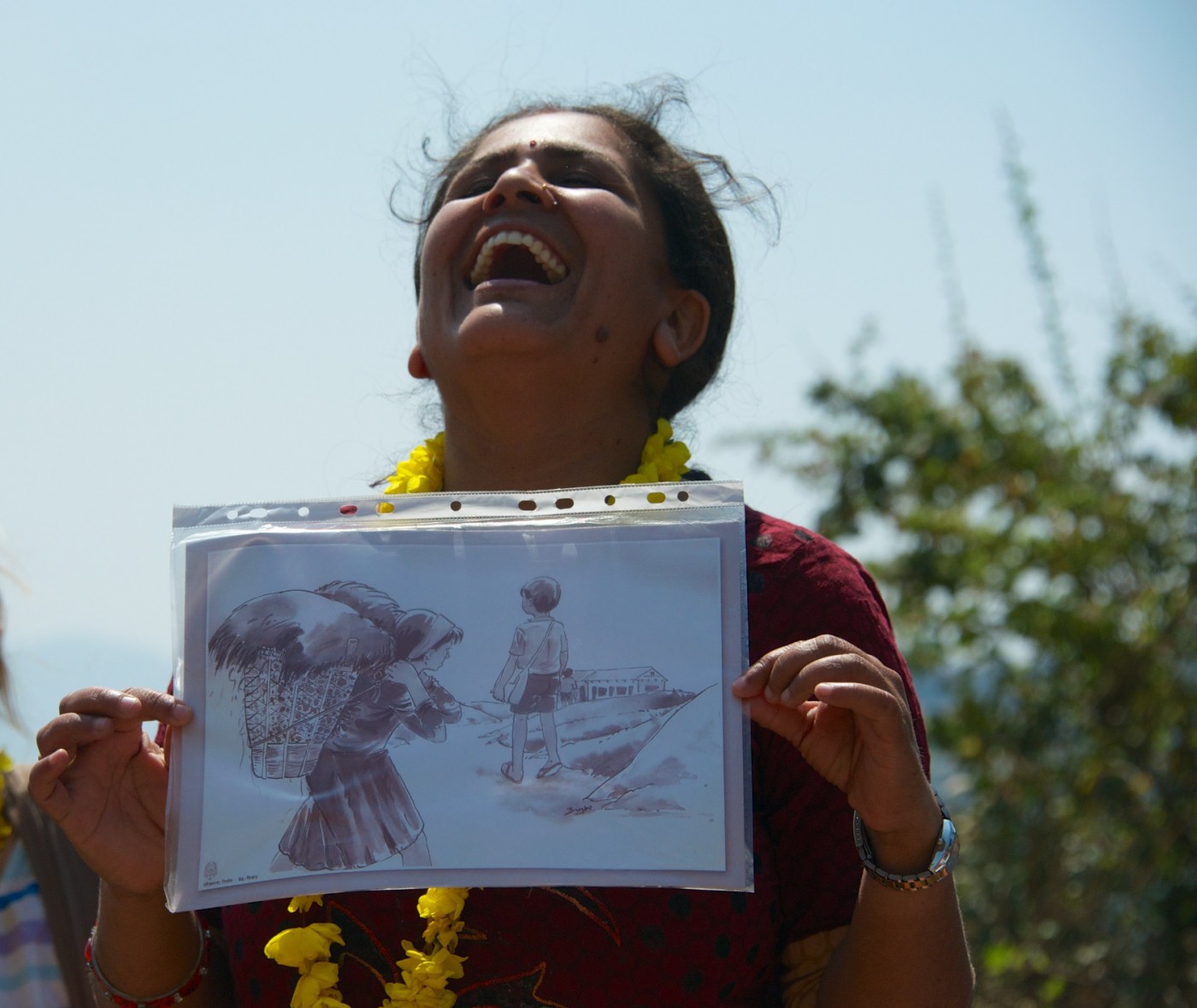
(c) Sheetale “Ishwori and women in a health promotion group laughing when asked if men would help in the housework; part of addressing women’s status @GTNHP”
BU Professor Edwin van Teijlingen is involved in organisation of the first National Health Promotion conference in Nepal. The conference is held in Kathmandu over the Easter weekend (March 30th-April 1st). This is a unique collaboration between Bournemouth University, the Government of Nepal, international organisations such as the World Health Organization, USAID, the Nepalese media, and several universities and colleges; and will highlight the importance of health promotion at all levels in Nepal.
One of the opening plenary will be given by Prof. van Teijlingen, we will outline health promotion from a global perspective. A total of 75 papers will be presented at the conference, including one by HSC BU PhD student Ms. Sheetal Sharma. She will also present findings from the long-term research project that aimed to improve the uptake of maternity services in rural Nepal. Her PhD research is supervised by HSC’s Prof. Vanora Hundley, Dr. Catherine Angell & Prof. van Teijlingen as well as Dr. Padam Simkhada from The University of Sheffield and Visiting Faculty at HSC. As part of the conference Prof. van Teijlingen and Dr. Simkhada will also run a skills-building workshop which offers training on writing up of findings health promotion research for academic journals.
There will be 250 participants from seven different countries including the USA, Canada, UK, India, Nigeria, the Netherlands and Nepal. This is the first ever conference of its kind to held in Nepal in the field of health promotion.
Prof. van Teijlingen said: “Nepal has a double burden of diseases. It experiences both the kind of infectious diseases associated with being a low-income country, and a growing burden of the kind of diseases commonly associated with lifestyles in high-income countries. Therefore, is it is encouraging to see that so many different organisations have signed up to the principles of health promotion.”
Ms. Sharma commented: “Nepal is an exciting country to conduct research in, with the diverse castes and motivated rural community volunteers; also among South Asian countries, its speed of development is considerable: the Maternal Mortality rate was halved despite a decade long civil war, Abortion is legal since 2002, same sex marriage since 2008. It is important to disseminate findings to relevant stakeholders.”
Dr. Simkhada and Prof. van Teijlingen are both Visiting Professor at two Nepalese universities. They have more than sixty of research articles publish in international journals on health-related issues in Nepal. Sheetal Sharma was funded by BU to travel to Nepal and attend the conference. Prof. van Teijlingen was interviewed for national television in Nepal regarding the Public Health conference.
The Health Promotion conference has its own web site see: http://hpconference.org.np/
Prof. van Teijlingen has been conducting research in Nepal for nearly a decade. Some of the work he is evaluating is supported by Green Tara UK, a Buddhist organization based in London.
The staff web pages for Edwin van Teijlingen: http://bit.ly/13zLRyc
Web page Sheetal Sharma: http://bit.ly/101TLuU
Twitter #GTNHP @GTNHP
Facebook Green Tara Nepal
Want a challenge? short term secondment opportunity @ the Bournemouth University Dementia Institute
The BU Dementia Institute is growing fast with staff or students involved in various ways from all BU schools. We have a short term secondment opportunity (3 months) to work with us as Project manager to help develop our profile, income streams and to work on selected existing projects. Interested? Take a look at http://www.bournemouth.ac.uk/jobs/hsc184.html and drop me an email if you would like to discuss ainnes@bournemouth.ac.uk
BU academics to look at access to maternity services in Nepal with Fellowship grant
A team from Bournemouth University will look at why women in Nepal don’t use health services when giving birth, after receiving the first International Fellowship for Midwives. The Fellowship is awarded by the charity Wellbeing of Women, in association with the Royal College of Midwives, for research into maternity services and women’s health from an international perspective. The team from BU will use the £20,000 Fellowship grant to look at the real and perceived barriers to women in Nepal giving birth within a health facility with a skilled birth attendant.
“There is evidence that access to skilled birth attendant is likely to lead to a better outcome for the mother and baby,” said Lesley Milne, senior lecturer in Midwifery at Bournemouth University, who will lead the project. “If they don’t, it is more likely to end in a maternal mortality, and we are trying to determine why women in Nepal don’t access health services.”
Lesley will be supported by Vanora Hundley, Professor in Midwifery at BU, Edwin van Teijlingen, Professor of Reproductive Health Research at BU, and Dr Padam Simkhada, from the University of Sheffield. The year-long project will start on April 1 and the money received as part of the Fellowship will enable Lesley to go to Nepal for three weeks in September to undertake the research. She said: “This would not be possible if we had not been awarded this money. It’s fantastic to have received this grant and we are really pleased about it.” She added: “There is an under-utilisation of health services in Nepal. It is about getting women to use the services available and trying to find out why many of them currently don’t. I will be going out to Nepal to observe and also undertake some interviews of health personnel of both a rural hospital and a hospital in Kathmandu, to try to see what they think is preventing women from accessing services.” Lesley added that possible reasons for women not accessing health services could include having to travel a long way, having had poor previous experiences or their cultural beliefs.
Bournemouth University has been building links with Nepal across a number of areas and academic schools, including the School of Health and Social Care, and both Lesley and fellow researcher Professor Edwin van Teijlingen have experience in the surrounding area. Lesley said that she hoped the research could be a springboard for future study. “I hope that we may have a great insight into why women aren’t accessing services and hopefully will be able to address that in the future,” she said.
Face Blindness Public Awareness Campaign Gets Underway!
Research from BU’s Centre for Face Processing Disorders was featured in a CBBC documentary today. The film was entitled ‘My life: Who are you?’ and followed the journey of Hannah, a teenager with face blindness, as she participated in one of our training programmes and discusses the difficulties of everyday life. The documentary also featured Hannah meeting another girl with face blindness for the first time, and her encounter with Duncan Bannatyne who also has the condition.
We are so pleased with the documentary, and felt the producers did an excellent job in portraying the condition with scientific accuracy, and in demonstrating the difficulties associated with face blindness. Despite Hannah’s struggles she still maintains a positive attitude to life and the film does an excellent job of presenting her as the remarkable young lady that she is, who was so keen to make the film in order to raise public awareness of the condition. Hannah’s story illustrates how life can be affected by brain injury, but her remarkable positivity shines through as the programme follows her journey.
If you missed the programme you can watch it here:
http://www.bbc.co.uk/iplayer/cbbc/episode/b01rlyc9/My_Life_Who_Are_You/
We recently launched an e-petition that aims to promote public and professional awareness of prosopagnosia by campaigning for its discussion in the House of Commons. We need to gain 100,000 signatures to make this happen, so if you were moved by the documentary, please do add your signature:
http://www.prosopagnosiaresearch.org/awareness/e-petition
Our public awareness campaign has only just taken off so watch this space for more activities!
Realities of fieldwork: Sheetal Sharma, HSC PhD student on fieldwork in rural Nepal.
Open air focus group in rural Nepal, (c) Sheetal Sharma 2013.
Roosters crowing, cows mooing, bleating goats, birds chirping, mobile phones ringing, children screaming, laughing and running around while women, breastfeeding, talk over one another excitedly in the sun as they need to leave us soon to drop the children off to school and/or head to the field to cultivate the season’s crop this spring it is wheat, last summer, rice. Women do this work as most of their husbands are away in the capital, Kathmandu or in the Arab Gulf. This is the reality of conducting focus groups in rural Nepal.
Although we, as researchers, spend considerable time to perfect the ideal ‘tool’ of the interview schedule and imagine the transcription clear and the background; a researcher must be prepared for every eventuality. Noise, din and interruptions: Today a dog nibbled on a nearby goat and a few men kept creeping to listen in why was this videshi (foreigner) recording conversations and making notes. The women shooed them away as today was a discussion on contraception; also that the discussion of the focus groups should be in ‘controlled environment’, safe, quiet; and in Nepal where women are not the main decision-maker for their reproductive health, it should mean a lieu women should be able to discuss freely these issues. In this Green Tara’s (www.greentaratrust.com) intervention area, which my PhD, supervised at HSC BU by Catherine Angell, Vanora Hundley, Edwin van Teijlingen and University of Sheffield’s Padam Simkhada, aims to evaluate both quantitatively and qualitatively, shows one the decision-making outcomes improved: increased the use of contraception in the Pharping area from 4.3% (2008) to 24.6% (2012) after 5 years of health promotion conducted by two auxiliary nurse-midwives.
40 minutes later recording (with 2 digital recorders) and once the demographic data and recording is double-checked and any last questions answered we set off walking 2 hours downhill visiting a tea-shop on the way for a cup of chai.
Edwin van Teijlingen and Emma Pitchforth, Qualitative Research: Focus group research in family planning and reproductive health care J Fam Plann Reprod Health Care 2006;32:1 30-32doi:10.1783/147118906775275299
http://jfprhc.bmj.com/content/32/1/30.citation
Engage with Dorset HealthWatch via Twitter!
Healthwatch is the new independent, consumer champion for health and social care services in England. The local Dorset HealthWatch are holding a tweetchat on Wednesday 20th March from 1-2pm.
The idea is to discuss how social media can be used to encourage volunteering and participation in Healthwatch during a lunchtime twitter session. Dorset HealthWatch tweet under @HwatchDorset, and the hashtag for the event is ‘#HwatchDorset’.
Twitter chats are discussions that take place on twitter, at a specific time around a predetermined subject. They use a hashtag (#) as a flag that binds a conversation together. Tweetchats are an excellent way to use Twitter to discuss topics with peers.
If you’re already on twitter just use the hashtag #HwatchDorset on Wednesday 20th March between 1pm and 2pm. If you’re new to twitter – register here http://www.twitter.com then search for @HwatchDorset and ‘follow’ and remember to include #HwatchDorset in your tweets.
Please use and promote #HwatchDorset – the first, 10th and 20th retweet we receive will win a £20 shopping voucher. We will also make a donation of £150 to a community group nominated by one lucky chat participant – be in it, to win it…..
This is a great opportunity to engage with a local health third sector organisation on the social media.
Interested in eHealth? Join the Psychology Research Centre for an informal forum!
On Wednesday 27th March, 2013 the Psychology Research Centre will be holding an informal forum for anyone who is currently doing, or interested in doing, research related to eHealth (e.g. research interests may include understanding how people (e.g. potential patients, patients, health professionals) use the internet for health information and/or intervention). We are informally calling this forum CHIRP which stands for Centre for eHealth Internet Research and Practice and it is open to any staff or postgraduate students at BU who would like to meet up to discuss research plans, ideas and potential collaborations.
The topic of eHealth fits well into the BU research themes of ‘Health, Wellbeing & Ageing’ and ‘Technology & Design’ and we are currently aware of members in DEC and HSC who are currently conducting research in this area.
The aim of this meeting will be to get together and understand common research interests therefore we would ask you to come prepared to talk for around 3 minutes about the current work you are doing (feel free to send a powerpoint slide with details of you interest too).
The forum will be held at 3pm in room P405 at Poole House and Tea, coffee and biscuits will be provided. Please contact Sarah Williams in Psychology by early next week if you are interesting in attending.
In Practice: Tourism and the public health agenda
The Perspectives in Public Health journal recently published an article on BU’s first Ideas Cafe: ‘Healthy Tourism: an oxymoron?’
Following on from discussion on the theme ‘Health Tourism – an oxymoron?’ at the Ideas Café hosted by Bournemouth University in December 2012, can public health be a part of the tourism agenda?
Statistics released by The World Tourism Organization (UNWTO) in 2012 estimate that the number of international tourist arrivals worldwide is expected to increase by an average of 3.3% a year from 2010 to 2030. With this growth and expansion of the tourism industry set to continue, there is a growing call from the academic world for tourism to be healthier and to become a part of the public health agenda. This is a timely change, as the return of public health to local government will allow for new levels of collaboration across areas that have not been strongly associated in the past, including public health and tourism.
In light of this, the School of Tourism at Bournemouth University hosted a Health, Wellbeing and Ageing Ideas Café in December 2012 with the theme of Health Tourism: an oxymoron? The event contained an hour of lively debate and discussion…
Click here to read the full text of this article.
SILVER – Active ageing: Open call for robotic based pre-commercial solutions
In the European Union, countries are facing tough times in the health and elderly care sector: while populations age and require more care services, countries are under pressure to make these services more cost efficient and effective. The pan-European SILVER project (Supporting Independent LiVing for the Elderly through Robotics) aims to demonstrate how public services can be rejuvenated by procuring R&D services that will develop higher quality and more sustainable elderly care solutions.
The SILVER project searches for new, innovative ways to acquire public sector health services by utilizing a Pre-Commercial Procurement (PCP) process designed for optimally matching R&D with procurers’ needs. The goal is to find new technologies to assist elderly people’s ability to continue living independently at home. By the use of robotics or other related technologies, the elderly are able to enjoy homelife even if they have physical or cognitive disabilities.
Registrations for the competition can be made via the SILVER webpage at www.silverpcp.eu/call-for-tender/registration
SILVER (Supporting Independent LiVing for the Elderly through Robotics) is a research and development project to establish and to execute a Pre-Commercial Procurement process suitable for the conditions for cross-border project implementation across several EU countries. It is funded by the European Union under the ICT cooperation part of the Seventh Framework Programme for research and technological development (FP7). The project started in January 2012 and will run for 51 months. SILVER has partners in Denmark, Finland, the Netherlands, Sweden and United Kingdom.
Status: OPEN
Open Date: 1st March 2013
Registration Close Date: 5th June 2013
Close Date: 12th June 2013
Website: www.silverpcp.eu/
e-mail: competitions@silverpcp.eu
Phone number: +44(0) 300 321 4357
Fusion Investment Fund – Decreasing spatial disorientation: towards dementia-friendly environments
Dr Jan Wiener (DEC) and myself are delighted to have been awarded Fusion funding to develop a student driven research programme to investigate navigation and orientation skills in people with dementia.
Spatial disorientation is among the earliest indicators of dementia, an increasingly common condition in our ageing society that currently costs the UK £23 billion annually. We aim to develop an inter-disciplinary eye-tracking research programme to investigate factors that affect spatial disorientation in people with dementia. Data gathered will be used to formulate design principles for dementia-friendly care homes, potentially reducing care costs, and leading to new knowledge with significance and reach.
To record gaze when solving wayfinding tasks, we will combine eye-tracking, head tracking and virtual reality (VR) technology. Participants will stand or sit in front of an array of large monitors arranged in a semi-circle that subtends their entire horizontal visual field and affords natural viewing behaviour. In order to create this unique and technically advanced research environment, students from DEC, HSC and the Media School will collaborate as researchers, increasing their skills through immersive experience on a well-designed, cutting-edge research programme.
This will give ambitious students with different backgrounds a unique opportunity to work co-operatively as part of a high-level, well-resourced multi-disciplinary team. We will share the knowledge we gain on improving dementia care home design with the academic community, practitioners, service providers, and the general public. These links will in turn enable us to form strategic local and national partnerships to ensure that the knowledge gained has an impact on professional practice.
Dr Mariela Gaete Reyes (HSC/BUDI) & Dr Jan Wiener (DEC)
PhD student at HSC? BEACON needs you
Ref: (http://www.sterlingtimes.org/kitchener.jpg)
Wondered if you had thought of writing a few lines for this years Beacon on your PhD study.
Just a short summary. It could be as little as 150 words, nothing to big. Just to raise the awareness of your work internally.
Please email <ssharma@bournemouth.ac.uk> Thanks Sheetal!
Sport and Human Rights
The Leisure and Recreation Theme starts its 2013 Seminar series with a session by Dr Andrew Adams on sport and human rights. Recently Andrew has published on topics including:
Sport and leisure ethics, rights and relationships and, Do the Olympics help in securing or removing human rights? An exploration of the Olympic Game’s role as a catalyst for political change and human rights enhancement.
This promises to be a lively and thought provoking session with refreshments!
Wednesday 30th January at 2.00pm. TAG 01
Developing a working paper at BU
I would like to make you aware of an exciting development at BU.
A multi-disciplinary group of BU academics has been meeting over the last 6 months in order to design a online journal that is capable of acting as a central focus for the dissemination of the high quality research and scholarly outputs from UG and PG dissertations, post graduate researchers, early career researchers and established academic staff. The group has designed a developmental working paper online journal that will support ‘would be’ authors and their potential publications. Although particular emphasis has been given to maximising high quality outputs of UG and PG students and early career academics, this online journal will be capable of supporting the potential of all those engaged in research and scholarship at BU.
Below are a series of Q & As:
What’s the name of the working paper?
The provisional title is eBU: Working Papers Online
How is the working paper structured?
The working paper will not be limited to any one discipline or allied to any one particular methodology, but will aim to publish articles driven by the key BU Research Themes: (Creative and Digital Economies, Culture and Society, Entrepreneurship and Economic Growth, Environmental Change and Biodiversity, Green Economy and Sustainability, Health, Wellbeing and Ageing, Leisure and Recreation, Technology and Design). Apart from the build-up to launch, the working paper will have no deadlines or specific calls for papers. Instead, the working paper will work on a rolling submission process.
A set of author guidelines and details about formats are currently being considered and written. However, the guidelines are likely to accommodate a wide range of formats.
What are the submission processes for staff and students?
It is envisaged that staff will act as gatekeepers and encourage undergraduate and master’s students to submit high quality work into a format this is publishable. Post-graduate researchers and academic members of staff will be able to submit papers on their own accord.
After a short review from the editorial board, two designated BU academics will provide an initial quality check. The paper will then be uploaded to the internal intranet working paper site. This will allow any member of staff or student to read and offer feedback. However, within a few weeks the two designed reviewers will then provide a more comprehensive and detailed critical review. All reviews will take place in a safe, secure and INTERNAL environment. After a detailed review, students will then be encouraged to make any recommended changes and submit to external publication/or make their work available to be published on external working paper website.
This working paper is set to go live in March.
Further information
If anyone is interested in becoming involved in helping to create this online journal, and/or at an editorial level please get in touch with Andrew Harding (aharding@bournemouth.ac.uk), Andrew Adams (aadams@bournemouth.ac.uk) or Fiona Knight (fknight@bournemouth.ac.uk).
New PhD at HSC!
Colleen Deane has recently joined the School of Health and Social Care to commence a BU matched funded PhD studentship investigating novel mechanisms regulating muscle mass in the elderly. Colleen has just successfully completed her Masters (with distinction) in Physical Activity, Nutrition and Health Promotion, where she investigated the effects of specific hormones (Testosterone) and polyphenols (Resveratrol) on artificially aged skeletal muscle cells, extracted from rodent mice. This PhD aims to enhance current understanding of the mechanisms regulating age-related loss of skeletal muscle mass (termed ‘sarcopenia’) and the associated reductions in mobility, general health and quality of life. Whilst exercise and nutritional interventions improve muscle size and function in young individuals, this response is attenuated in elderly muscle. Thus, using a combination of physiological and metabolic/molecular techniques these studies will investigate novel mechanisms underlying the blunted response of ageing muscle to exercise and nutritional growth stimuli. For further information contact Colleen on cdeane@bournemouth.ac.uk.
Global Women’s (GLOW) Research Conference
The first Global Women’s (GLOW) Research Conference was held in Liverpool this week. The conference brought together 150 researchers and clinicians from across the globe to discuss women’s health in both low and high resource countries. Keynote speakers included France Donnay from the Bill & Melinda Gates Foundation, and Beverly Winikoff from Gynuity Health Projects.
BU was well represented with poster presentations from Vanora Hundley, Professor of Midwifery, and Emma Pitchforth, Visiting Fellow.
Vanora’s presentation examined the Use of oral misoprostol to prevent postpartum haemorrhage in home birth settings in low resource countries; a topic that has been the subject of considerable controversy in recent weeks. Emma’s presentation looked at Evidence response mechanisms in reproductive, maternal, newborn and child health in Asia and the Pacific.
One of the unique features of this conference was the mix of presentations. Presenters came from a variety of disciplines and alongside the well known international speakers were oral presentations from undergraduate students and early career researchers. This was a great opportunity to share experiences and build collaborations, and I would recommend that both staff and students look out for next year’s call for abstracts.
Textbook translated into Greek
Just received in the post a copy of one of the textbooks for medical students I have edited, and I can’t read it. Elsevier wrote a cover letter with the book to inform us (co-editors and I) that the third edition of our successful textbook Psychology & Sociology Applied to Medicine: An Illustrated Text has been translated into Greek (see http://onlinebooks.parisianou.gr/index.php?page=shop.browse&category_id=20&option=com_virtuemart&Itemid=17&vmcchk=1&Itemid=17). A long time ago I did one year of Ancient Greek in High School in the Netherlands so I can recognise some of the Greek letters, but that’s all. The original third edition (in English) was published in late 2010 (http://www.bournemouth.ac.uk/hsc/news/2010/sep/contentonly_1_5404_5404.html). The Greek edition was apparently published late 2011. Interestingly, since the textbook’s contributors and editors have signed over the copyright of their work to Elsevier the negotiations have been without our knowledge between the publishers Elsevier and Parisianou (Athens). As we did not know this was happening we received a nice unexpected surprise.
What fascinates me is why a translation into Greek? The textbook sells well in the UK and Ireland and it appears to sell well in English-speaking countries like Australia and New Zealand and in North-West Continental Europe. Greece is some economic, political and social upheaval and the process of translation costs money and the market for a textbook in Greek is considerably smaller than for one in English. Perhaps Greek medical students find it more difficult to study in English than other Continental students?
Professor Edwin van Teijlingen
School of Health & Social Care
Prof. Hundley Associate Editor BMC Pregnancy & Childbirth
Congratulations to BU Prof. Vanora Hundley who has been invited to become Associate Editor for BMC Pregnancy and Childbirth. BMC Pregnancy & Childbirth is an international journal with Open Access and it has a good Impact Factor (currently 2.83) in its field. More details of BMC Pregnancy & Childbirth can be found at http://www.biomedcentral.com/bmcpregnancychildbirth/
Prof. Hundley joins Prof. Edwin van Teijlingen as Associate Editor, giving Bournemouth University a very good representation on the editorial team.
More about Prof. Hundley: http://uk.linkedin.com/pub/vanora-hundley/16/b40/39b


Congratulation on newly published systematic review
Equitable Partnerships in Global Health Research
New Nepal-based paper published last week
Congratulation to HEMS colleagues on their new book!
Book edited by BU academics published
Horizon Europe Cluster 3 (Civil Security for Society) 2026 Calls Now Open

MSCA Doctoral Networks 2026 Call Information Webinar

ESRC Festival of Social Science 2026: Application Deadline Extended to Thursday 25 June 2026

Reminder: Register for the ESRC Festival of Social Science 2026 Information Session

ECR Funding Open Call: Research Culture & Community Grant – Apply now

ERC Advanced Grant 2025 Webinar
Update on UKRO services
European research project exploring use of ‘virtual twins’ to better manage metabolic associated fatty liver disease