Leadership is a word often bandied about with many people claiming, assuming or being allocated ‘leadership’ roles, but what does this actually mean when trying to bring about societal improvements? Last week as part of an NHS South of England project BU and Plymouth University
hosted a 2 day workshop for strategic leaders in the NHS, Local Authorities and the voluntary sector responsible for strategic leadership in the world of dementia in Devon, Dorset and Somerset. The aim of this project is to promote improvements in the provision of dementia care at a time of fiscal challenge. Working across organisational and disciplinary boundaries, learning from others and acting rather than just talking about the policy directives and vision that contextualises dementia is key. We had several high profile speakers at the workshop, including the Chief Executive of the Alzheimer Society, Jeremy Hughes; the Clinical Lead for dementia for NHS England, Prof Alistair Burns; the immediate Past President of the Association of Directors of Adult Social Services (ADASS), Sarah Pickup; Angela Rippon a high profile ambassador for the Alzheimer Society as well as BU’s own director of the NCPQSW. Prof Keith Brown who does a lot of leadership training across the country. We also had a person living with dementia reminding us of why it is of utmost importance to ensure that people with dementia can live well with their dementia and really what the workshop was all about. Key messages I took from the 2 days that are perhaps transferable to anyone with a leadership role are first that it sometimes just important to get on and do what you need to do because it is the ‘right thing to do’ and this may be at odds with procedures, other colleagues perceptions and priorities but still worth doing! Good leaders sometimes need to buck the trend and with convention, and there were lots of dementia specific examples about how people have been innovative in challenging times. Another key leadership message related to working together and learning from others rather than reinventing the wheel. None of these are new messages but do highlight the ongoing challenges those with key strategic roles face as they work to address key societal concerns.
Category / Health, Wellbeing & Society
eBU staff drop in sessions to be held in each school
I am pleased to announce that I am holding drop in sessions in each school for the BU community to ask questions about eBU: Online Journal.
These sessions will be:
Mon 24th June – DEC 12 -2pm in P411
Mon 24th June – School of Applied Sciences 2-4pm in C122
Tues 25th June – HSC 9-11am in the Wellbeing Centre, B112 Bournemouth House
Tues 25th June – Business School 2-4pm in EB205
Thurs 27th June – School of Tourism 1.30-3.30 in P410
Fri 28th June – Media School 8-10am in CAG04
Dizzy the dog attends midwives forum

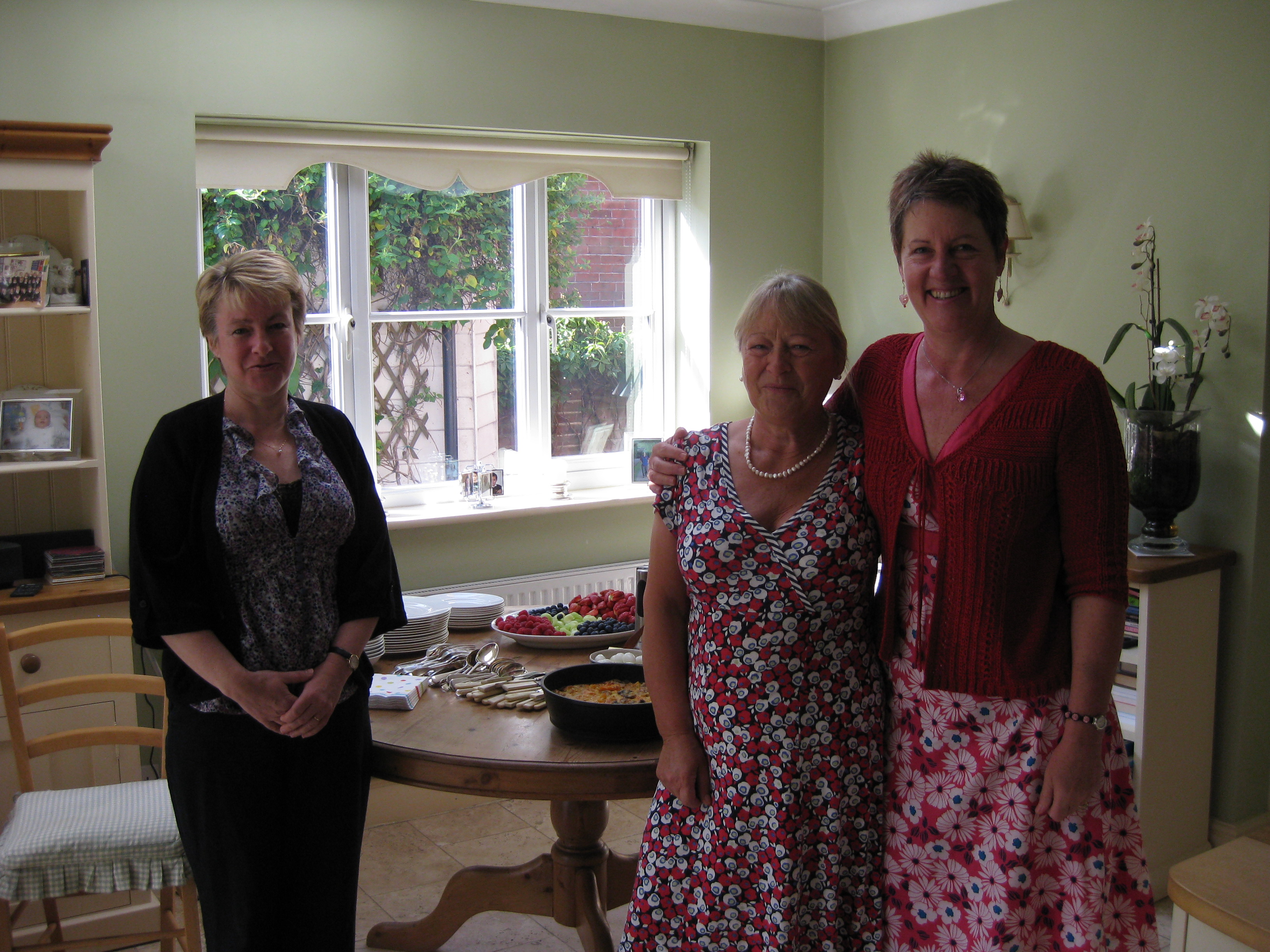
Left to Right: Mandy Williams - Community Midwife, Gay Rogers - Breakfast Host and Hospital Midwife and Luisa Cescutti-Butler, Senior Lecturer (Midwifery)
Every three months hospital and community midwives at Salisbury NHS Trust Hospital attend a forum dedicated to matters relating to Examination of the Newborn (EXON). The aims of the forum are to support healthcare professional undertaking newborn examinations, sharing of experiences/case studies, interprofessional working, maintenance of competence, formulate and review internal processes and peer support for professionals in training. Members consist of midwives, nurses, a consultant Paediatrician and Children’s physiotherapists. BU student midwives are welcome to attend when working with their community midwives and on this occasion two students were present. As unit leader for EXON at BU and one of the link lecturers at the hospital, I chair, coordinate and facilitate the forums, with venues alternating between hospital and community. This month we met for breakfast at a colleague’s home, where midwives were greeted with the smells of freshly brewed coffee and a newly prepared home cooked frittata. Further offerings included fresh strawberries, raspberries, warm croissants, cocktail sausages and quails eggs.
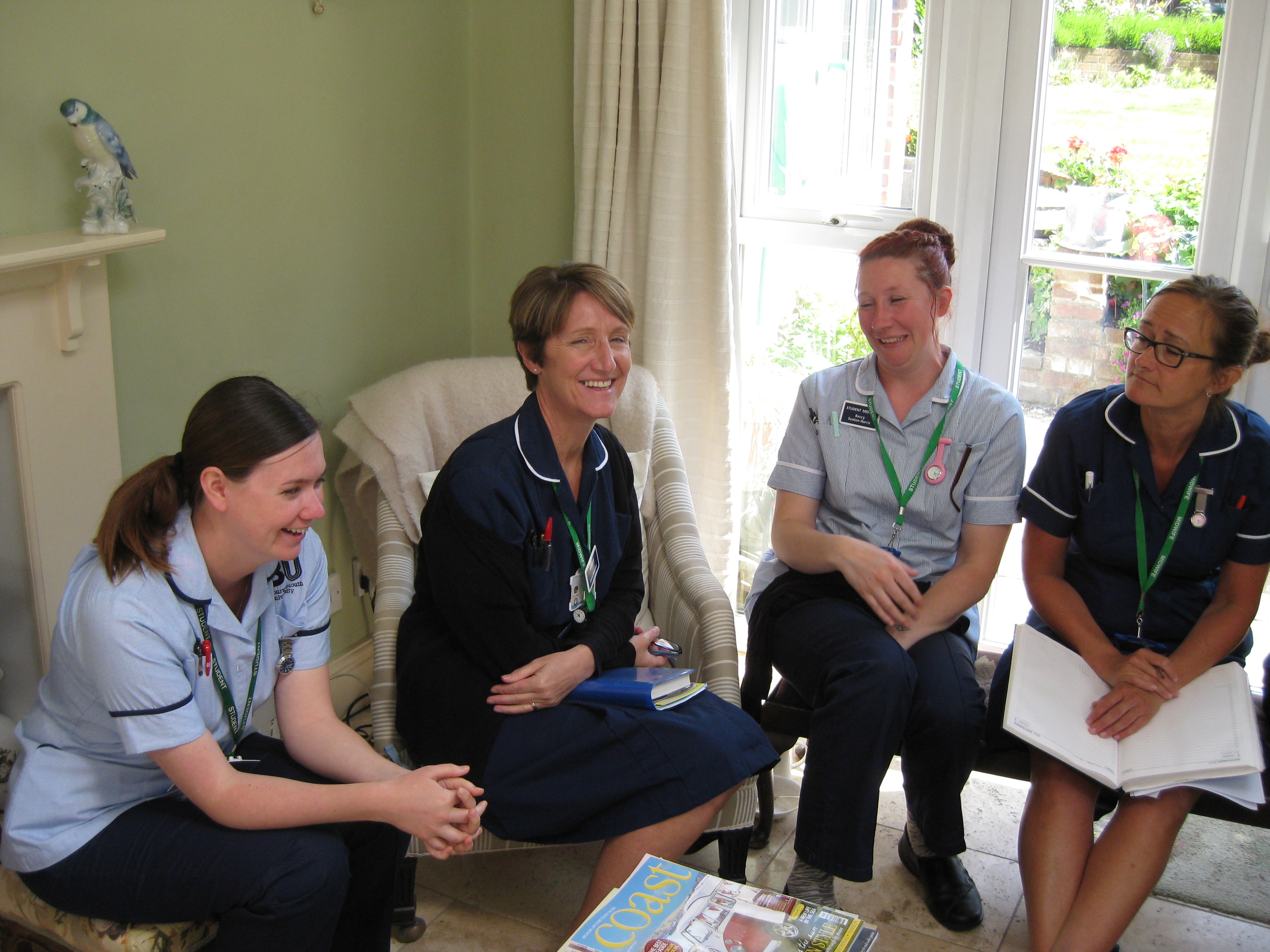
Minutes and agendas are sent out in advance. A standing item is a report from senior children’s physiotherapist Karen Robinson, whose department leads the service for Developmental Dysplasia of the Hips (DDH) in newborns. A recent case was brought to our attention, where a baby had been examined by midwives and doctors and found to have an unstable right hip. The baby was appropriately referred for an ultrasound scan which subsequently found the right hip normal, but considered the left hip abnormal. The Barlow’s and Ortolani manoeuvres used by both professions at the time of the examination had not detected any left hip abnormality. A robust discussion ensured as to the complexities of examining babies for DDH and the difficulties in detecting unstable hips when the manoeuvres used by all professionals were themselves unreliable. However Karen was able to reassure us by indicating that in the seven years of the Children’s Physiotherapy Department leading the DDH service, very few babies had been ‘missed’. Karen also emphasized the significance of caring for babies’ hips in general and the importance of educating parents around their baby’s ‘hip health’. The 3rd year midwifery students are currently taught theory around DDH with opportunities to practice manoeuvres on ‘Baby Hippy’. As facilitator for these sessions I realized that our midwifery curriculum had to include general baby hip health in the first year of the student’s programme. Rachael, a 3rd year student midwife, was in agreement: “the discussion around hip care for newborns was great to listen to. I agree that it would be really beneficial to have a lecture on hip care for students”.

Left to Right: Rachael Callan - 3rd year student midwife, Carol Bremner - Community Midwife, Beccy Seaton-Harris - 1st year student midwife and Fiona White - Community Midwife
On other matters Karen highlighted a number of babies diagnosed with Erb’s Palsy following birth had recently been treated by the department. Various options were offered as to why these babies had sustained these birth injuries, resulting in the forum unanimously agreeing that education around Erb’s Palsy and Brachial Plexus Injuries would benefit all professionals involved with childbirth. Terri Coates, an expert on Brachial Plexus Injuries and a midwife at Salisbury, agreed to arrange a study day with the national Erb’s Palsy Support Group, to be held at either Salisbury Hospital or BU for midwives and students.
There are many advantages in having a regular forum to discuss issues relating to newborn examination. Case studies are presented and debated and education around various topics are provided at regular intervals. The forum also supports midwives from other trusts who are having difficulties with undertaking the examination in their areas. Beccy, the 1st year student midwife had the following to say: “It was very informative. It was good to see community and hospital midwives coming together as a team. I am also interested in learning more about Erb’s Palsy and attending a study day. Learning about general hip care would also be beneficial. The breakfast was lovely too”.
The last bark, I mean word, goes to Dizzy. He gets terribly excited when breakfast is served and runs from one midwife to another hoping for a dropped sausage or at least a titbit from a kind soul. After not having much luck, he eventually settles down and gently snores in the corner of the room.
Festival of Learning – Testament to a Successful Morning (Dr Simon Thompson, DEC Psychology Research Centre)
‘Testamentary Capacity in Dementia’ (03 June 2013 10:00h – 13:00h) – Presentation followed by in-depth plenary session about the complexities of leaving an estate to beneficiaries following a diagnosis of dementia.
‘Dementia’ is an umbrella term used to describe many types of deteriorating diseases – the most common ones are Alzhiemer’s disease, Vascular dementia, and Lewy body dementia.
Many married couples own property as ‘joint tenants’. Upon death, ownership automatically passes to the survivor. If property is owned as ‘tenants in common’, one half of the estate belonging to the deceased is dealt with by their Will. Problems arise when there is no Will, when others make a claim, or when another Will is executed.
‘Testamentary capacity’ is a person’s legal and mental ability to make a
valid Will. There are three premises: Presumption of capacity; Requirements; Proof of testamentary capacity.
It is proposed that the law should allow testators alternative means of satisfying the testamentary capacity standard such as an option to validate a testator’s capacity during their lifetime through forensic assessment measuring cognitive elements of testamentary capacity.
It does not remove the difficulty of knowing the status of person at a specific time line. However, it goes some way to describing a person during their lifetime in terms of mental ability and capacity.
Thompson, SBN (2006). Dementia and memory: a handbook for students and professionals. Aldershot: Ashgate.
Thompson, SBN (2012). Dementia. In SBN Thompson (Ed), Psychology of trauma: clinical reviews, case histories, research (pp169-202). Portsmouth: Blackwell-Harvard-Academic.
PHENOMENOLOGY INTEREST GROUP: Sport and Well-being
You are warmly invited to the fourth meeting of the Phenomenology Interest Group which will be held on Wednesday 3 July between 12.00—1.30. Venue: R201, Royal London House
We are fortunate to have Dr Joanne Mayoh and Dr Ian Jones from the School of Tourism who will demonstrate an example of cross-disciplinary thinking and the translation of theory into practice:
Title: Using the Dwelling Mobility theory to explore how sport can make wellbeing an experiential possibility
Abstract:
The positive relationship between sport and wellbeing has been widely documented in both policy documents and the academic literature. Whilst it is widely acknowledged that this relationship exists, little is known regarding how and why sport can contribute to positive wellbeing for individuals. Subsequently, there is a need for research that takes a bottom-up approach in order to adequately explore the nature of this relationship in order to contribute to wider knowledge regarding sport and wellbeing, and effectively inform future policy and practice. In mirroring this approach our research draws upon phenomenological philosophers such as Heidegger and Merleau-Ponty to provide a view of the individual that sees them having a sense of agency and existential freedom. This philosophical standpoint will provide the human-centred emphasis for research that is required to fully understand how sport and wellbeing may be connected. Specifically, this paper draws upon the existing work of Todres & Galvin with regards to Dwelling- Mobility Theory in order to consider how lifeworld philosophy could become more central in leading sport research. In line with this theory, our work considers how sport can provide a sense of dwelling, mobility, and dwelling-mobility within each of six lifeworld dimensions: temporarily; spatiality; embodiment; inter-subjectivity; identity and mood. We conclude that sport is one of the few single activities that can provide the potential for feelings of dwelling, mobility and dwelling-mobility within these dimensions simultaneously.
Dr Joanne Mayoh is a Lecturer in Sport, Physical Activity and Health at Bournemouth University. Her main research interests include the Conceptualisation of Wellbeing, and Active Ageing. She has published journal articles on Phenomenology and research methodology.
Dr Ian Jones is the Associate Dean for Sport at Bournemouth University- His research interests include Sport and Identity, Sport Fandom, and Spectators. He is author of Research Methods for Sport Studies and Qualitative Research in Sport and Physical Activity.
BU Research Blog Exclusive: Design & Look of eBU leaked
The first screenshot of the eBU interface has been exclusively leaked to the BU Research Blog, and is expected to go viral across the BU community over the next week.
eBU will provide both an internal and external forum for the development of research papers by undergraduate to Professor around the eight BU research themes:
– Creative & Digital Economies
– Culture & Society
– Entrepreneurship & Economic Growth
– Environmental Change & Biodiversity
– Green Economy & Sustainability
– Health, Wellbeing & Ageing
– Leisure & Recreation
– Technology & Design
Submissions will be open to immediate publication (in a safe internal environment) and open peer review by 2 appropriate BU academics. Authors will be encouraged to act upon these reviews by either reworking papers for submission to an external journal or by opting for publication on the external eBU site.
For BU academics this is a great opportunity to get critical appraisal on your research papers or ideas from colleagues. For academics it also an opportunity to encourage the submission of high quality student output, and possibly to facilitate the co-creation and co-production of publishable material to an external journal or to publish externally with eBU. For students, this is a fantastic opportunity to turn high quality essays or dissertations into scholarly outputs, which will be attractive to employers across many sectors and industries.
If you have any questions or would like to become involved in this exciting venture, please get in touch with me via email aharding@bournemouth.ac.uk or by telephone 01202 963025.
PGR students & engagement. Or a day in the life of…
From different schools; 4 of us thought to write a small piece of what engagement means to us. Some of it does mean answering a quiz on Europe armed with Pizza & beer during a screening of Eurovision and talking over stages of thesis, procrastination, Facebook™ status’ and the ultimate Frisbee design. But additionally it means attending a cross-school conference and see how other students plan their work and research: are they super recognisers? Is someone pregnancy’s sleep different than someone’s who isn’t? Having to buy misoprostol in Nepal with your supervisor and listen to instructions on abortion. Or getting counselling during the PGRep meetings, teaching to undergraduates and demystifying academic jargon, pardon I mean research language! We give you their stories:
For me as a student in HSC I sum my ‘story’ here – It’s raining, cold and seems like summer won’t come to Bournemouth…but as a PGR student my definition is engagement is …”does it in the rain”! Bracing the sun and…Then the rain…while advertising Bournemouth University Festival of Learning Poole High Street. I spent two days talking about research in Nepal under the rain and it felt a bit like Waiting for the Monsoon in Poole! Using photos to make the passer-byes guess why a sickle is used during childbirth; and how health promotion improves health and wellbeing.
The day made for a good dry run for our events that will take place during the 3-14 June 2013 BU’s Festival of Learning; with a 100 events to choose from mastering social media, see if you are a super-recogniser. Also some of the ‘tough’ questions on culture and health in low-income countries helps with the reflective part of the thesis. Finally reducing that gap between the ivory tower of research and the public and in that reminded yourself why you do it…in the rain.
Come hear me at
“Waiting for the monsoon: Nepal stories & photos; Monday 3 June, 3pm-8pm,
Sheetal Sharma, Health and Social Care http://waitingforthemonsoon-eorg.eventbrite.co.uk/
Research Degrees @ BU Sheetal Sharma; Wednesday 5 June, 3pm-6pm” Location:
Talbot Campus
Never forget a face? Some people don’t, some people do after enough time has passed, while others can’t remember it in the first place. I have spent the past 8 months in the dark, lonely eye-tracking lab listening to various stories and exploring the ability that most of us take for granted – face recognition, using a small camera to record movements of peoples’ pupils.
For me, engagement is about raising awareness about how much we all differ in face recognition ability and why is it important that it should be taken into consideration in education and recruitment. Giving talks, presenting a poster, or engaging with public during forthcoming Festival of Learning all present excellent opportunities to disseminate my research, make me a better academic, and help people to understand face blindness and super-recognition. After all, unless on a lonely island, faces accompany us from the day we are born and throughout our whole life! So are you a super-recogniser?

Anna Bobak, a 1st year Psychology Research Group, DEC Student and PGR rep.
It’s 6pm, and I‘m looking forward to getting home for a cup of tea. But before my day is done, I have a young lady with long brown hair sat in front of me, and, as we’re chatting about life, I am separating parts of her hair and sticking electrodes onto her head and face – which will be analysing her brain activity during her sleep. All in a day’s work, as my research has been exploring the way in which women sleep during their pregnancy, in comparison to non-pregnant women, and whether this relates to the development of postnatal depression. For me, engagement is about reminding myself of the value and purpose of my research.
Whether, it is arranging a coffee morning to thank all of the pregnant women that kindly volunteered to take part in my demanding study; getting out of my comfort zone and presenting my research at international conferences; or helping to train health visitors on important issues surrounding my research. It is about feeling that I am contributing to the bigger picture and making a small (but significant!) difference, as well as establishing myself as a researcher.
I do feel for my study participants as it can be a different night than they are used to!
Lauren Kita, a 3rd year Psychology Research Group, DEC PhD student.
Ivana Rihova, 3rd year School of Tourism
Volunteering to deliver a talk about my PhD on value co-creation at music and arts festivals during SUBU ‘Arrivals Week’ 2012, I tried to show to an audience of first years how fun PhD research at the School of Tourism can be. Last summer I visited five festivals where I observed and undertook a large number of interviews, to find out something about the social aspect of festival experiences. So, I thought, this is engagement – talking about my fieldwork and sharing some preliminary findings with a group of people who go to festivals every year, but perhaps never quite thought about them the way I do. But the slides of me in my wellies wading through the muddy festival site triggered memories of being hugged by a couple of elderly half-naked tattooed space-rock fans, listening to poetry, relaxing with a pint of really nice ale (after all the interviews were done, of course) and most importantly, talking to people.
One person in particular stuck in my mind. I sat down next to David in a quiet corner of a beautiful rose garden at a storytelling festival and we started to chat. I told him what I was doing and was really surprised when he insisted my researched seemed very worthwhile! His enthusiasm gave me a huge confidence boost but more importantly, got me thinking about the wider social and cultural implications of my research. So for me, engagement is… about learning rather than just telling and teaching. It is about dialogue, challenging my own ideas and letting others help to shape the research.
Celebrating diversity of women: a theme day provided for Level C student midwives
Undergraduate pre-registration first year midwifery students were enthralled at a recent theme day which formed part of their Intrapartum unit. The day is designed to celebrate diversity of women’s experiences during labour where students get to listen to stories of women and midwives. This year’s gathering was no exception. First up was Rachel Arnold, a PhD student from BU. Her rich story, supported by beautiful photographs of Afghanistan, highlighted the plight of women in that country, where maternal mortality is amongst the highest in the world. Rachel in her role as a midwife has worked with Afghan people for many years and as she shared her experiences we began to see that Afghanistan is more than ‘suicide bombers and conflict’, it is about ordinary people who struggle to survive each and every day. Rachel’s talk inspired the whole audience and many students were interested to find out if they could go to Afghanistan for their elective which occurs in the 3rdyear of their training.
“It was wonderful to have a midwifery perspective from this country and the lecture was inspiring and passionate”
“Very interesting and thought provoking talk which has made me think about my own attitudes on diversity”
Jane Evans, an independent midwife, spoke about breech birth as a normal event during pregnancy. She shared a number of photographs showing how a breech birth should be facilitated with the mantra “hands off”, and students were able to see how the baby rotated , flexed and birthed itself with the help of his/her mother adopting a variety of positions. The mechanisms were reinforced through Jane using a doll and pelvis to further enhance student understanding. Many midwives are losing their skills within breech birth as women are often opting for caesarean section, but Jane was fortunate in that she was taught the craft of breech (bottom down) birth by Mary Cronk, who specialised in independent midwifery practice with a keen interest in breech presentation.
Mary is now retired but thankfully her many years of experience were passed onto Jane who shares her knowledge widely through study days and of course with the midwifery students at BU. Many of the students’ views were changed following Jane’s presentation, as the following quotation demonstrates: “It was a privilege to hear this lecture. It offered a contrast to other breech perspectives and gave me more confidence as a student midwife to educate women that breech is merely another type of normal”
Sheetal Sharma, another BU PhD student provided the students with her insight into midwifery care in Nepal. She warned us that she was not a midwife, and was observing and recording midwifery practice as part of her doctoral studies. She provided a fascinating insight into how pregnancy and childbirth are perceived in Nepal where women have no rights within their own homes and are subject to the control, whims and superstitions of their ‘mother-in-laws’.
There were also parallels with Afghanistan in relation to maternal mortality, as around 4,500 Nepalese women die in childbirth due to a paucity of adequate healthcare or even skilled birth attendants. Sheetal’s presentation included fabulous photographs of idyllic scenes in Nepal, but also of women and children where smiles were abundant and hope was evident. Nepal has made significant strides to reduce maternal mortality and is now on track to meet Millennium Development Goal (MDG)4.
The last presentation by Vanora Hundley, BU’s Professor of Midwifery, focused on the global picture of maternal and child health, where some of the key interventions that save mothers and babies lives were highlighted. Vanora reminded the audience that, for example, having a skilled attendant at birth may not always be thought of as ‘intervention’, but evidence shows that countries where women have access to midwives or an attendant with midwifery skills have significant lower maternal mortality rates. Finally, a note of caution was provided by Vanora around the challenges faced in high income countries, as the over-use of interventions by health professionals are having a damaging impact on mothers and babies.
“I have thoroughly enjoyed the theme day, it has been very informative and insightful – more so than I had anticipated”.
“Fantastic to have a (nearly!) whole day of the wider context of midwifery. Inspirational – thanks”.
“Absolutely superb day. Reignites the fire in your belly!”
“Really insightful day. Demonstrated the importance of the midwife and our roles, not just at home but around the world. It’s nice to see the bigger picture”.
HSC @ BU’s Festival of Learning
A few brave souls from HSC spent the May 18-19th weekend advertising Bournemouth University Festival of Learning Poole High Street. Bracing the sun and…Then the rain…All in the name of research and take part in the BU event and help hand out flyers and booklets. All this to engage with the public, including talking about research in Nepal, the day felt a bit like Waiting for the Monsoon in Poole! Using photos to make the passer-byes guess why a sickle is used during childbirth. The day made for a good dry run for our events that will take place during the 3-14 June 2013 BU’s Festival of Learning; with a 100 events to choose from mastering social media, see if you are a super-recogniser or join in the debate about renewable energy sources. Also some of the ‘touch’ questions on culture and health in low-income countries help with the reflective part of the thesis. Teaching, engagement and research if done hand- in-hand; help ideas get ordered and formulate answers to those questions you hadn’t previously thought about. Finally, thanks goes to RKEO, M&C and HSC’s Dr. Jen Leamon for helping me format my FoL event on Nepal!
Some of what HSC is up to in June:
- Waiting for the monsoon: Nepal stories & photos; Monday 3 June, 3pm-8pm, Sheetal Sharma
- Research Degrees @ BU Sheetal Sharma; Wednesday 5 June, 3pm-6pm
- Intervention in childbirth: What’s wrong with letting women choose? Tuesday 11 June, 10am-12.30pm, convened by Vanora Hundley and Edwin van Teijlingen
- Faith-based health promotion: Opportunities and barriers; Tuesday 4 June, 10.30am-1.30pm, convened by Edwin van Teijlingen, Liz Norton and Bill Merrington.
More FoL info: http://microsites.bournemouth.ac.uk/fol/
The new Dorset APP: Dorset Alliance to Prevent falls and Promote independence
With Osteoporosis Dorset, BU has recently set up a forum that brings together local professionals and representatives of older people with an interest in the prevention of falls. Dorset Alliance to Prevent falls and Promote independence (Dorset APP) is an initiative led by Samuel Nyman as part of his research in this area. Membership of the alliance is growing, but to date there are 24 members including representatives of all the local hospitals, Age UK Bournemouth, Age UK Dorchester, the University of the Third Age (Bournemouth branch), Bournemouth Older People’s Forum, Dorset Partnership for Older People Programme, among others. The alliance will be working together to enhance information sharing and generation of new ideas as to prevent falls and hip fractures in the Dorset region; similar to the alliance initiated by the National Osteoporosis Society and Age UK at the national level.
Dorset APP was launched at a conference in Bournemouth hosted by Osteoporosis Dorset on the 1st of May. The conference, “A positive approach to preventing falls and broken hips in care homes”, included a presentation by Bournemouth University Dementia Institute (BUDI) members Sue Barker and Samuel Nyman on the prevention of falls among older people with dementia. There was a lot of interest about the alliance on the day and in the first meeting of the alliance to be held at BU within a few weeks.
More information about Dorset APP can be found on BU’s news page: http://www.bournemouth.ac.uk/newsandevents/News/2013/may/ne04-bu-helps-launch-dorset-falls-alliance.html
Samuel Nyman
BUDI and Psychology Research Centre
eBU: Online Journal
Following on from my last post ‘Developing a Working Paper at BU’ in January of this year, we are now within sight of having an exciting new online journal at BU. eBU will provide both an internal and external forum for the development of research papers by undergraduate to Professor around the eight BU research themes:
– Creative & Digital Economies
– Culture & Society
– Entrepreneurship & Economic Growth
– Environmental Change & Biodiversity
– Green Economy & Sustainability
– Health, Wellbeing & Ageing
– Leisure & Recreation
– Technology & Design
Submissions will be open to immediate publication (in a safe internal environment) and open peer review by 2 appropriate BU academics. Authors will be encouraged to act upon these reviews by either reworking papers for submission to an external journal or by opting for publication on the external eBU site.
For BU academics this is a great opportunity to get critical appraisal on your research papers or ideas from colleagues. For academics it also an opportunity to encourage the submission of high quality student output, and possibly to facilitate the co-creation and co-production of publishable material to an external journal or to publish externally with eBU. For students, this is a fantastic opportunity to turn high quality essays or dissertations into scholarly outputs, which will be attractive to employers across many sectors and industries.
It is anticipated that author guidelines will be circulated in the coming weeks, and staff and students alike should begin to think about how they could submit to eBU.
If you have any questions or would like to become involved in this exciting venture, please get in touch with me via email aharding@bournemouth.ac.uk or by telephone 01202 963025
Bournemouth University Clinical Research Unit (BUCRU) Annual Report
At the Bournemouth University Clinical Research Unit (BUCRU) we think it is important to review our activities on a regular basis, to document our achievements and to outline our plans for the future. We have decided that the best way to do this is to prepare an Annual Report. It was completed some months ago and now we would like to share it more widely with our colleagues in the University. It can be found on our microsite at http://microsites.bournemouth.ac.uk/bucru/news/ we hope it is of interest.
The support and collaborations we offer are available to staff within the University, and to staff in the NHS. In the next year we will be particularly trying to develop new collaborations between University and health service staff that will lead to high quality grant applications.
If you would like further information please contact Louise Ward (wardl@bournemouth.ac.uk Tel: 01202 961939)
Research in Action – HSC PhD student using motion x-rays to measure the movements of the vertebrae in the cervical spine
Jonny Branney, PhD student at HSC and chiropractor at AECC using motion x-rays (quantitative fluoroscopy) to measure the movements of the vertebrae in the cervical spine. He is using this technology to investigate whether vertebral motion changes in patients receiving spinal manipulative therapy.
Yawning in France
My recent visit to Paris via the Erasmus Teaching Mobility scheme has been most useful, not only as it continues to strengthen the links I have made with like-minded researchers and clinicians, but also because it exposes you to raw student talent. This is important to help you keep up to date with current views and research with the assistance of an eager and interrogative French audience! Such visits are quite intellectually challenging, partly because my level of French is constantly under scrutiny! The collaborative research links I have made are invaluable and I hope to submit some reasrch bids in the area of Multiple Sclerosis and yawning soon.
Presentation from Paula Kersten ‘Supporting strategies for self-management of rehabilitation in the home: a feasibility study’
You are cordially invited to a lunchtime presentation being delivered by Paula Kersten the Associate Professor of Rehabilitation at Auckland University of Technology and Visiting Professor with HSC. This is an hour long presentation entitled ‘Supporting strategies for self-management of rehabilitation in the home: a feasibility study’. This talk would be of interest to health professionals working in health and rehabilitation. We very much hope you will be able to attend this informative presentation.
For Paula Kersten’s Biography, please follow link below:
http://www.aut.ac.nz/profiles/paula-kersten
Thursday 16th May 2013
‘Supporting strategies for self-management of rehabilitation in the home: a feasibility study’
Presentation by Paula Kersten, Associate Professor Rehabilitation, Auckland University of Technology
12.00-1.00pm
BG11, Bournemouth House, Lansdowne Campus, BH1 3LH
Hosted by Clinical Research Unit
ups and downs of engaging with the public
We have been attempting to engage with the public in a number of ways recently. The first was via having a stand at an Alzheimers Care Show in London, not quite the same as the Care Show at the BIC which targets those working in the care world (we had a stand there too and lots of interest, but in a business sense), the show in London was different in that it was advertised and open to anyone interested in dementia. The organisors sold hundreds of tickets in advance to those working in the field but tickets were on sale on the day for anyone worried about their memory or their family members. This was a slightly novel approach and on the second day, a Saturday, there was a lot of footfall from people directly affected by dementia rather than those working in the field (who swarmed in on the first day). It was interesting to hear this audiences views about what Universities should be doing to address their concerns, and is an area that vexes me as we are not a campaigning organisation, nor are we a service, but we clearly need to engage with and work to our key stakeholders agendas and concerns to be having genuine impact. Training professionals working in the field is an obvious one (and the key issue raised at our own local carers forum last year) as was the need for more information to sign post people along their dementia journey (and is one of the areas Claire House-Norman and her team are currently fundraising for). However one of the big issues raised was the need to challenge perceptions about dementia, the assumption that people with dementia are less able, lost, require ‘special’ treatment that results in marginalisation and stigmatisation. Now this aspect was really interesting to us in BUDI as we also have an arts and dementia project on the go at the moment where we are collecting written accounts from people with dementia and the general public about what they think dementia is/means to them and peoples’ views and experiences about dementia; this will be exhibited at the Festival of Learning in June. Standing windswept at Bournemouth beach this weekend – one of our general public venues (we, BUDI staff and volunteer BU students, have been all over in the last week with further venues this coming week, for examples in supermarkets, shopping centres, hotels, sports centres, libraries, and schools) it struck me how many people steer away, physically and mentally, from the word dementia. Our pop ups and papers blowing around in the wind at the beach attracted attention and laughter from passing members of the general public as we raced around to pick stuff up and tie it down, and did result in some people stopping to talk about and write about their experiences/thoughts. Free sweets also pulled in teens and families to stop and talk but to not necesssarily write as they didn’t know what dementia was or didn’t want to write down their experiences. Also some people stopped, read the sign and made comments about dementia and did a physically body swerve. We also got a lot of people who did stop and write about their views and experiences (and we are currently at about 400 stories in total) but there seems to be a general fear? aversion? negativity? to the word dementia which makes our arts project even more important as we are trying to get people to think about dementia and question and challenge the negative stereotypes that abound about this condition. Engaging with the public about issues perceived as ‘difficult’ in some ways isn’t easy, nor is it easy to find practical ways for our University based work to have real impact, but we have started the journey and are open to any creative ideas others might have about how else we might go about engaging!
Health, Wellbeing & Ageing workshop on 10 May – US perspective on the care of older people
On 10 May, Prof Phil Clark from the University of Rhode Island in the US will be running a workshop for our Health, Wellbeing and Ageing theme from 10-12pm (a short Bio is pasted below) in R207. Lunch will be provided. Please email Julia Hastings Taylor if you would like to attend.
Phil will offer us his perspective on the care of older people in the US and particularly the importance of interprofessional collaboration for older adults from the US perspective.
He will then work with us to explore opportunities for publishing for US audiences in this field as well as opportunities for making collaborative research and education links between BU and the University of Rhode Island and other US institutions especially in the field of interagency, interprofessional education and practice as well as Ageing.
Phil is on sabbatical with us from 6-25 May. He has offered to give guest lectures on subjects to students related to Working Together in the Care of Older Adults and Interprofessional Teamwork in the US. If this is something you would like to offer your students between these dates please contact Sarah Hean.
Dr Phillip G. Clark is Professor and Director of both the Program in Gerontology and the Rhode Island Geriatric Education Center at the University of Rhode Island in the US, where he has been on the faculty since 1981. He was awarded a Doctorate in Public Health from Harvard University in 1979. He has served as Visiting Professor at the Universities of Guelph and Toronto in Canada (1988-89), and was a Fulbright Scholar at Buskerud University College in Norway (2007). His experience includes teaching health care teamwork, developing interprofessional health care research and demonstration projects, and consulting on interprofessional educational program development and evaluation. He is co-author of Health Care Teamwork: Interdisciplinary Practice and Teaching (Auburn House/Greenwood, 2000); his work has been published in The Gerontologist, Canadian Journal on Aging, Journal of Aging and Health, Ageing and Society, Educational Gerontology, Gerontology and Geriatrics Education, and the Journal of Interprofessional Care. Dr. Clark is a Fellow of the Gerontological Society of America and the Association for Gerontology in Higher Education. He is Visiting Professor at the School of Health and Social Care, Bournemouth University and on the leadership group of the Special Interest Group IN-2-THEORY (Interprofessional scholarship, education and practice).
Finding (and defining) Friendly in New York City
‘Dementia Friendly’ is a sound bite used frequently at the moment in my field. This is in part due to the Prime Ministers 2012 Dementia Challenge which has a particular component aspiring to the creation of 20 dementia friendly towns/cities by 2015. But what does dementia friendly actually mean? and how do we know when we have an example of something that is dementia friendly? A colleague and I spent a week in New York City earlier this month and we were truly ‘wowed’ by the dementia friendly initiatives we witnessed. The first was at MOMA where they have an established programme for people with dementia that we were lucky enough to be able to join one afternoon. What made this programme dementia friendly? Three things in my view; first the educators (their term) made no attempt to ‘dumb down’ their offering to those with dementia (too often people with dementia are treated as less able without first having tested the waters to see if just because the label of ‘dementia’ applied means that the person is unable to participate in various everyday activites ‘as usual’ or if it needs modified in some way, in this case participating in an arts appreciation programme). Two it was extremely difficult to tell who might have dementia and who were the accompanying family members and finally the contributions from the group reflected the individual perspective different people have on what is ‘art’, what they like, or in the case of one man what was ‘trash’ (every piece we stopped at!). We were also invited to join a choir rehearsing in a cathedral (an extremely modern building that we walked by twice before realising this was the cathedral, another story…) for the final time before performing at MOMA the following week (we didn’t get to see the real performance as back at BU by then). This choir group, known as ‘The Unforgettables’, was amazing, the two directors created an unbelievable energy in the room, there was laughter, fun, serious points made about music/signing. Individuals who could barely walk took their turn to stand by the piano and sing heart rending solos which brought a tear to the eye, a lump to the throat. By contrast, other couples sang humourous duets. This was an inspiring group to witness. The choir directors had again made a conscious decision not to ‘dumb down’ their approach but to encourage and challenge, in the same way that they would any other choral group. The results were incredible. We were offered hospitality by the group members, the only tell tale sign that one particular man had dementia was his bringing us 5 cups of iced tea and numerous plates of fruit/cake/biscuits as he didn’t remember that he had already been up to the table and brought us over some goodies. We also visited the Metropolitan Museum, again with long established groups for people with dementia. Some involve art making, others art appreciation, others tours of different parts of the museum. Again the underpinning philosophy is one of ability to engage, to promote intellectual stimulation, social interaction and also the programmes encourage a degree of physical activity by choosing exhibits at various places throughout the building (mental, physical and social stimulation being key to reducing risk of developing dementia, but also to maintaining well-being once diagnosed).
We went to New York because we had heard about the programmes and wanted to see if possible to learn and implement back here in Dorset but also to meet with academic colleagues, present at NYU, meet with the US Alzheimer Association (which has really made us think about donations and fund raising to support our work) and these were also very productive parts of the trip and reinforced that the approach we are taking at BU Dementia Institute is one that we should continue (mainly that engagement and collaboration with the range of stakeholders that has been guiding our work should continue). But what stands out for me is the energy and enthusiasm of those running groups for people with dementia and the huge engagement and enjoyment this approach created. The US might not have a ‘dementia friendly agenda’ being driven at a national policy level, and New York might not immediately spring to mind as a place where one could live well with dementia, but the initiatives we saw clearly demonstrate the possibility to create dementia friendly environments even in places where sign posting might not be clear, transport busy and where the assumption that services ‘cost’ can be challenged (all the programmes we joined are free to those with dementia).


Congratulation on newly published systematic review
Equitable Partnerships in Global Health Research
New Nepal-based paper published last week
Congratulation to HEMS colleagues on their new book!
Book edited by BU academics published
Horizon Europe Cluster 3 (Civil Security for Society) 2026 Calls Now Open

MSCA Doctoral Networks 2026 Call Information Webinar

ESRC Festival of Social Science 2026: Application Deadline Extended to Thursday 25 June 2026

Reminder: Register for the ESRC Festival of Social Science 2026 Information Session

ECR Funding Open Call: Research Culture & Community Grant – Apply now

ERC Advanced Grant 2025 Webinar
Update on UKRO services
European research project exploring use of ‘virtual twins’ to better manage metabolic associated fatty liver disease