Category / PG research

This part of the blog features news and information for postgraduate research students and supervisors

Postgraduate Research Showcase

Join us for this showcase exhibition and explore the latest postgraduate research emerging from BU. 

This year the Doctoral College hosted its 10th Annual Postgraduate Research Conference. The popular event provides a valuable platform for postgraduate researchers from across different years and disciplines to present posters and photographs explaining their research projects in a clear, concise and creative way to a public audience.

Further information about the conference and details of this year’s winners is available on 10th Annual Postgraduate Research Conference webpage.

An exhibition of postgraduate researchers’ posters and photographs will be on display at the Atrium Gallery, Poole House, Talbot Campus, from 12 – 16 March 2018, 10am-4pm. Free to attend, all welcome.

If you have any questions, please contact pgconference@bournemouth.ac.uk

Congratulations to the following winners of the Doctoral College 10th Annual Postgraduate Research Conference

On Wednesday 7 March 2018 the Doctoral College hosted the 10th Annual Postgraduate Research Conference which was a huge success with lots of positive feedback from students and staff alike. We are happy to announce the category winners below. Well done to everyone who took part!

Oral Presentations:

1st Prize Mark Stevens (Advancing a social identity approach to understanding physical activity: preliminary evidence from parkrun, Faculty of Management)

2nd Prize Stephen Allard (The intimate masses: poetry and emerging new concepts of ‘Netiquette’ in online environments, Faculty of Media and Communication)

3rd Prize Louise Oliver (Child-parent-violence and abuse: lifting the veil of secrecy, Faculty of Health and Social Sciences)

Poster Presentations:

1st Prize Giulia Levi (Between silence and agitation – coping strategies and third-party interventions in divided societies: a comparison between post-conflict Bosnia and post-referendum UK, Faculty of Health and Social Sciences)

2nd Prize Amal Musa Almoualed (Saudi women journalists – an exploration of their roles and practices in an age of social media, Faculty of Media and Communication)

3rd Prize Ejike T. Ezeh (Shared decision-making: web-based information tool to support treatment choices of people with advanced pancreatic cancer, Faculty of Health and Social Sciences)

Photography:

Winner Nurist S. Ulfa (The paradox of Muslim girl’s freedom of experimentation in girl games: when the digital virtual consumption practices and the religious norms are predominantly discordant, Faculty of Media and Communication)


We would also like to say a special thank you to the following people for their invaluable contribution to the day.

Opening Remarks
Professor John Fletcher, Pro-Vice-Chancellor for Research & Innovation (Office of the Vice-Chancellor)

Keynote Address
Professor Lee Miles, Professor of Crisis & Disaster Management (Faculty of Management)

Guest Speakers – Deputy Deans for Research & Professional Practice
Professor Vanora Hundley (Faculty of Health and Social Sciences)
Professor Michael Silk (Faculty of Management)
Professor Iain MacRury (Faculty of Media and Communication)
Professor Tiantian Zhang (Faculty of Science and Technology)

PGR Chairs
Clare Gordon (Faculty of Health and Social Sciences)
Sara Glithro (Faculty of Health and Social Sciences)
Ella Onyinye Ejime (Faculty of Management)
Duncan Ki-Aries (Faculty of Science and Technology)

Judging Panel – Oral Presentations
Professor Alison McConnell (Faculty of Health and Social Sciences)
Dr Sue Way (Faculty of Health and Social Sciences)
Dr Vanessa Heaslip (Faculty of Health and Social Sciences)
Professor Adam Blake (Faculty of Management)
Dr Daniel Lock (Faculty of Management)
Dr Einar Thorsen (Faculty of Media and Communication)
Professor Marcin Budka (Faculty of Science and Technology)

Judging Panel – Poster and Photography Exhibition
Jane Healy (Faculty of Health and Social Sciences)
Professor George Filis (Faculty of Management)
Professor Candida Yates (Faculty of Media and Communication)
Dr Christos Gatzidis (Faculty of Science and Technology)


Doctoral College Researcher Development Programme

The Doctoral College would like to present the March monthly update.

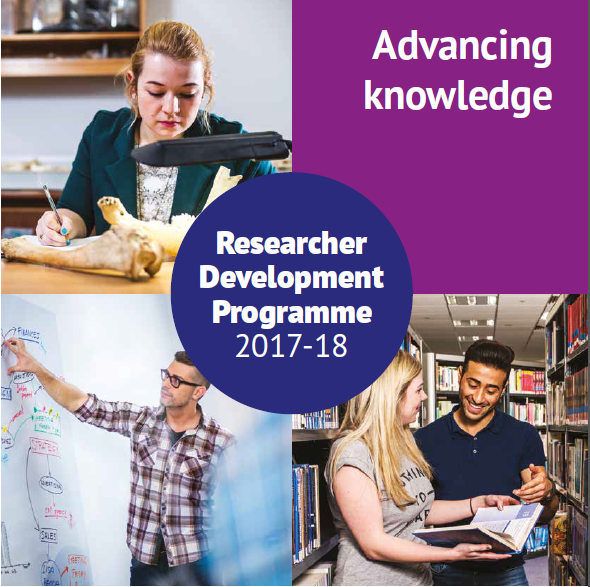
This monthly update is for PGRs and their supervisors to outline upcoming research skills and development opportunities including events, workshops and networking opportunities supported by the Doctoral College. In this update we would like to promote the 3 Minute Thesis (3MT®) event, R.E.D talks, the Researcher Development Programme for 2017-18, and the 10th Annual Postgraduate Conference.

We are very happy to announce that 10th Annual Postgraduate Research Conference is taking place today. The conference will see PGR students, academics and other colleges from across BU come together to  celebrate the diverse and exciting research being undertaken. More information about the day will be sent over the next week.

Don’t forget to check out the Doctoral College Facebook page

PGR funding with EPSRC – Connected Nation Pioneers

Connected Nation Pioneers is an exciting partnership between the Engineering and Physical Sciences Research Council (EPSRC) and key stakeholders. They have come together to recognise exceptional UK doctoral students whose research contributes towards the development of a Connected Nation.

The competition is open to all UK doctoral students in the final two years of their doctorial training. Applicants need not be funded by the EPSRC to participate.  This competition is being sponsored by DSTL, Facebook, BT, Samsung, Huawei, Thales, Amazon and NVIDIA.

This competition celebrates the transformative and pioneering research of UK-based doctoral students in contributing to up to two of the following category topics:

  • Safe and Secure Cyber Society
  • Intelligent Informatics
  • Making Digital Technology Work for People
  • Creative Computing for the Digital Economy

Applicants will be assessed per category by a panel of industrial sponsors in three stages:

  • An Expression of Interest statement (500 words)
  • A three-minute video pitch
  • An exhibition and pitch presentation

All applicants reaching the third stage of the competition will receive media and presentation training and will have an excellent opportunity to network with representatives from both academia and industry. Each of the four category winners will receive a prize of £2,000 and a NVIDIA graphics card at a VIP Awards Ceremony Dinner, to be held at the Museum of Science and Industry in Manchester. The category winners will also compete in an elevator pitch contest as part of the Awards Ceremony to select an overall winner, who will receive a further £1,000.

How to apply

Before applying for the 2018 Connected Nation Pioneers competition, please read the call document for full information regarding eligibility and assessment criteria. Please forward questions or comments to PioneersCompetition@epsrc.ac.uk.

The Expression of Interest form should be completed and submitted by the closing date of 16:00 on Thursday 26 April 2018.  This can be found here.  Key dates are also on the link.

You must contact your RKEO Funding Development Officer for your Faculty in advance of applying.  Their name will need to be given on the expression of interest and we will need to record the application on BU’s database for research and innovation.

CQR Seminar for this Wednesday cancelled

Sorry to inform you that this Wednesday’s ‘In Conversation’ CQR Seminar is cancelled due to illness.

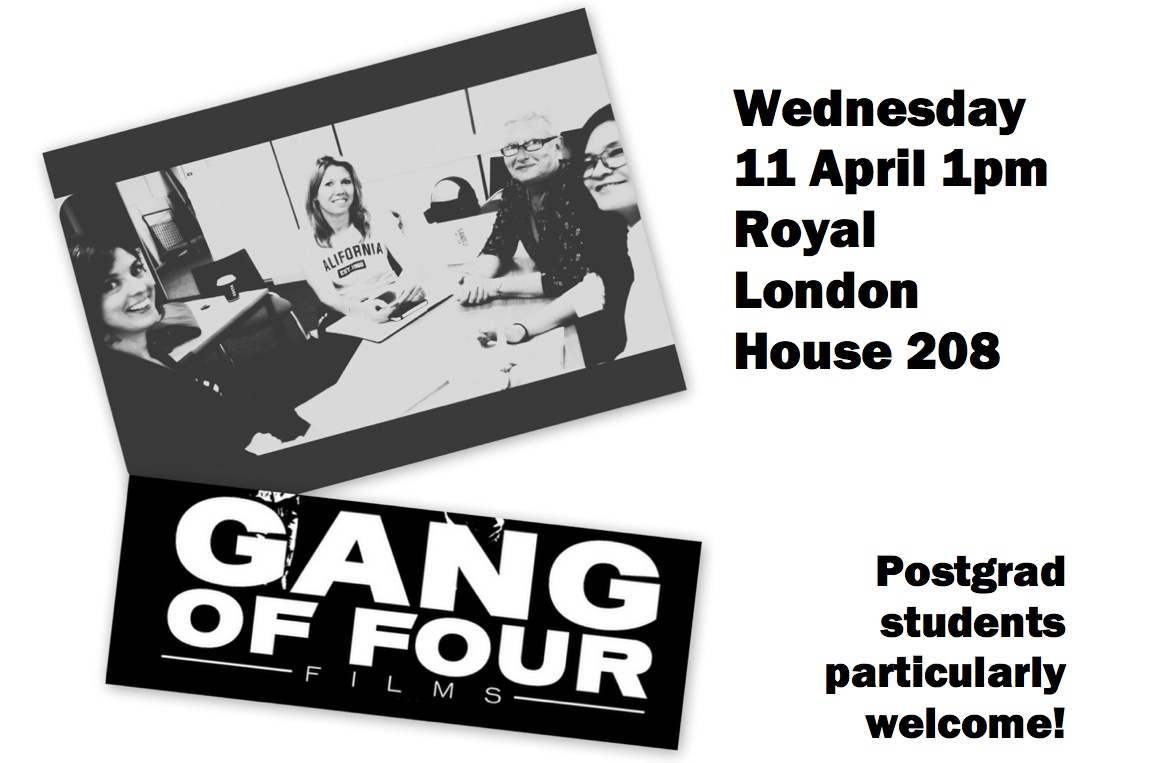
Mark you diaries now, however, for the next Seminar on Wed. 11 April at 1 pm in RLH 208 presented by the ‘Gang of Four’.

Curious?  More information will follow. Stay tuned!

Here are the Seminars for the rest of the academic year:

The 10th Annual Postgraduate Research Conference – 1 Week to Go!

The Doctoral College kindly invites you to attend the 10th Annual Postgraduate Research Conference taking place in the Fusion Building, Talbot Campus.

Click to Register

The Annual Postgraduate Research Conference is an opportunity to listen to and engage with current postgraduate research taking place at BU. Organised and hosted by the Doctoral College this cross-faculty and interdisciplinary conference supports postgraduate researchers at all stages in presenting their research to their peers and colleagues across BU.

There will be oral, poster and photography presentations taking place throughout the day with a networking opportunity at the end.

If you have any questions please email pgconference@bournemouth.ac.uk. We look forward to seeing you.

Centre for Qualitative Research Grows

BU’s Centre for Qualitative Research (CQR) website has been tidied up, including (at last!) a full list of Members, Associates, and Postgrad students! Growing steadily over the past year, it is noteworthy that members come from a range of disciplines and across faculties.

Faculty members and postgrad students are welcome to join the Centre. Membership categories include Full Member, Associate Member, and Post-grad Affiliate.

Visit CQR’s website here

Contact Kip Jones (Director) or Caroline Ellis-Hill (Deputy Director) for more information or to join.

Registration Open – 10th Annual Postgraduate Research Conference


We are delighted to announce the registration for the

10th Annual Postgraduate Research Conference 2018 is now open!

More information about registration and booking are available from our registration page.

More details about the conference can be found at the website.

We look forward to welcoming you all at the conference.

CQR ‘In Conversation’ Michele Board & Karen Cooper: “Ephemera”

CQR “In Conversation”  Seminar

This Wednesday 1 p.m. RLH 201

Michele Board and Karen Cooper present the use of ephemera to uncover life stories in qualitative research.

What is ”ephemera”?  It consists of objects of little or no monetary value that represent moments in our past.  They can include  pamphlets, railroad tickets, stamps, old letters or photographs, a food stained recipe card, a small piece of clothing, an accessory like a ribbon or a badge, sheet music, keys, post cards, used concert or theatre tickets, a self‐penned poem or a song, or a drawing. They all have a story to tell if we are willing to listen.

The CQR Seminar series consists of a 20 minute conversation between two presenters, then lots of time for discussion with the audience. Come along and join in the conversation!

Bring along some of your own ephemera if you’d like!

Systematic Review birthing centres by CMMPH PhD student Preeti Mahato

BU PhD student Mrs Preeti Mahato published her latest scientific paper ‘Determinants of quality of care and access to Basic Emergency Obstetric and Neonatal Care facilities and midwife-led facilities in low and middle-income countries: A Systematic Review’ in the Journal of Asian Midwives [1].  This paper is co-authored by Dr. Catherine Angell and Prof. Edwin van Teijlingen, who are both based in the Centre for Midwifery, Maternal & Perinatal Health (CMMPH) and Prof. Padam Simkhada, BU Visiting Professor and based at Liverpool John Moores University (LJMU).  Journal of Asian Midwives is a free Open Access journal, freely available for anybody across the globe to read online.

The authors highlight that maternal mortality is a major challenge to health systems in Low and Middle-Income Countries (LMICs) where almost 99% of maternal deaths occurred in 2015. Primary-care facilities providing Basic Emergency Obstetric and Neonatal Care (BEmONC) facilities, and facilities that are midwife-led are appropriate for normal birth in LMICs and have been proposed as the best approach to reduce maternal deaths. However, the poor quality of maternal services that leads to decreased utilisation of these facilities is among the major causes of maternal deaths worldwide. This systematic review studied factors affecting the quality of care in BEmONC and midwife-led facilities in LMICs.

Thematic analysis on included studies revealed various factors affecting quality of care including facility-level determinants and other determinants influencing access to care. Facility-level determinants included these barriers: lack of equipment and drugs at the facility, lack of trained staff, poor attitudes and behaviour of service providers, and poor communication with women. Facility-level positive determinants were: satisfaction with services, emotional support during delivery and trust in health providers. The access-to-care determinants were: socio-economic factors, physical access to the facility, maintaining privacy and confidentiality, and cultural values.  The authors include that improving quality of care of birthing facilities requires addressing both facility level and non-facility level determinants in order to increase utilization of the services available at the BEmONC and midwife-led facilities in LMICs.

This is the fifth paper co-authored by CMMPH’s current most published PhD student.  The evaluation of birth centres in rural Nepal by Preeti Mahato under joint supervision Dr. Angell and Prof. Simkhada (LJMU) and Prof. van Teijlingen.

References:

  1. Mahato, P., van Teijlingen, E., Simkhada, P., Angell, C. (2017) Determinants of quality of care & access to Basic Emergency Obstetric & Neonatal Care facilities & midwife-led facilities in low & middle-income countries: A Systematic Review, Journal of Asian Midwives 4(2):25-51.
  2. Mahato, P., van Teijlingen, E., Simkhada, P., Angell, C. (2016) Birthing centres in Nepal: Recent developments, obstacles and opportunities, Journal of Asian Midwives 3(1): 18-30. http://ecommons.aku.edu/cgi/viewcontent.cgi?article=1033&context=jam
  3. Mahato, P., van Teijlingen, E., Simkhada, P., Sheppard, Z., Silwal, R.C. (2017) Factors related to choice of place of birth in a district in Nepal. Sexual & Reproductive Healthcare 13: 91-96.
  4. Mahato, P.K., Regmi, P.R., van Teijlingen, E., Simkhada, P., Angell, C., Sathian, B. (2015) Birthing centre infrastructure in Nepal post 2015 earthquake. Nepal Journal of Epidemiology 5(4): 518-519. http://www.nepjol.info/index.php/NJE/article/view/14260/11579
  5. Regmi, P., van Teijlingen, E., Hundley, V., Simkhada, P., Sharma, S., Mahato, P. (2016) Sustainable Development Goals: relevance to maternal & child health in Nepal. Health Prospect 15(1):9-10. www.healthprospect.org/archives/15/1/3.pdf

Looking for a different way to disseminate your PhD research?

Do you want to showcase your PhD? Raise the profile of your research? Be in with the chance of winning over £500 worth in prizes?

If the answer is yes to any of the above then the 3MT® might be the opportunity for you.

The 3MT® competition cultivates students’ academic, presentation, and research communication skills.

Presenting in a 3MT® competition increases capacity to effectively explain research in three minutes, in a language appropriate to a non-specialist audience.

Eligibility: Active PhD and Professional Doctorate candidates who have successfully passed their transfer milestone (including candidates whose thesis is under submission) by the date of their first presentation are eligible to participate. If your Viva Voce will take place before the date of the University final (7 June 2018) you are not eligible to enter the competition.

Eligible applicants should submit a fully completed application form, to the Research Skills and Development Officers at PGRskillsdevelopment@bournemouth.ac.uk by midnight on Monday 5 February 2018.

We look forward to receiving your application.