Date: Thursday 10 November 2016
Time: 10am-1pm
Location: Bournemouth University, Talbot Campus, Fern Barrow, Poole, BH12 5BB
Register Here
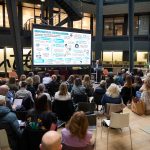
The International Centre of Tourism and Hospitality Research will be running an event as part of the ESRC Festival of Social Science. Tourism plays a major part in Bournemouth’s economy, attracting millions of visitors to the seaside town every year. In 2011 alone, the town saw 5.6 million visitors, who spent £460 million between them. BU’s Dr Giampaolo Viglia will be presenting to the audience the innovations that have been introduced to the travel and hospitality industry, via cutting edge social science research.
The workshops aim to provide some evidence on the actual behaviour of operators in the hotel and aviation industry and to ask: How much do they use dynamic pricing strategies? When is the best time to book? How should they react to the seller’s pricing strategies? What are the main drivers behind the price trend structure? What additional profit can the revenue management techniques in the hospitality industry offer? Is delegating the price decision to the consumers in restaurants appropriate?
BU’s Dr Giampaolo Viglia will be joined by Professor Claudio Piga, from Keele University and the staff from HOTS Business game to discuss dynamic pricing, the best time to book and new pricing mechanisms. This will be followed by a tea/coffee break, to recharge your batteries. We will then hear from BU researchers Dr Viachaslau Filimonau, Professor Adele Ladkin, Professor Heather Hartwell and Dr Sean Beer who will discuss innovations in food, technology and menu labeling. The event has been designed to engage professionals and consumers in discussion and to showcase the growing research agenda on the impact of innovation on the travel and hospitality industry.
Innovations are influencing the travel and hospitality industries offering more flexibility on the supply side and driving informed decisions on the consumer side. The rapid growth of online bookings has had a massive impact on the industry. The internet encourages greater price scrutiny since the relevant information is both easier to obtain and transparent, given that any party can compare the prices of several alternatives with very little effort. This is bound to have an impact on how operators set prices since they too can easily obtain this information and rapidly respond accordingly. There will also be an opportunity for debate between professionals and consumers.
The 14th annual Festival of Social Science takes place from 5-12 November 2016 with more than 250 free events nationwide. Run by the Economic and Social Research Council, the Festival provides an opportunity for anyone to meet with some of the country’s leading social scientist and discover, discuss and debate the role that research plays in everyday life. With a whole range of creative and engaging events there’s something for everyone including businesses, charities, schools and government agencies. A full programme is available at www.esrc.ac.uk/festival. You can also join the discussion on Twitter using #esrcfestival.
To find out more about the ESRC Festival of Social Science and all the events taking place please visit www.bournemouth.ac.uk/esrc-fss you can also email Joanna Pawlik or Naomi Kay to find out more.







 3C Event: Research Culture, Community & Connections – Wednesday 11 November 3-4pm
 ECR Opportunities: New Development Programme, Researcher Grants & Upcoming Events
 Help us capture BU’s knowledge exchange activity HE-BCI survey 2025–26
 Verbal autopsy paper published two days ago
 ESRC Studentships for 2027 Entry: Opportunity Now Open
 Horizon Europe Cluster 3 (Civil Security for Society) 2026 Calls Now Open
 MSCA Doctoral Networks 2026 Call Information Webinar
 ESRC Festival of Social Science 2026: Application Deadline Extended to Thursday 25 June 2026
 Reminder: Register for the ESRC Festival of Social Science 2026 Information Session
 ECR Funding Open Call: Research Culture & Community Grant – Apply now
 ERC Advanced Grant 2025 Webinar
 Update on UKRO services
 European research project exploring use of ‘virtual twins’ to better manage metabolic associated fatty liver disease