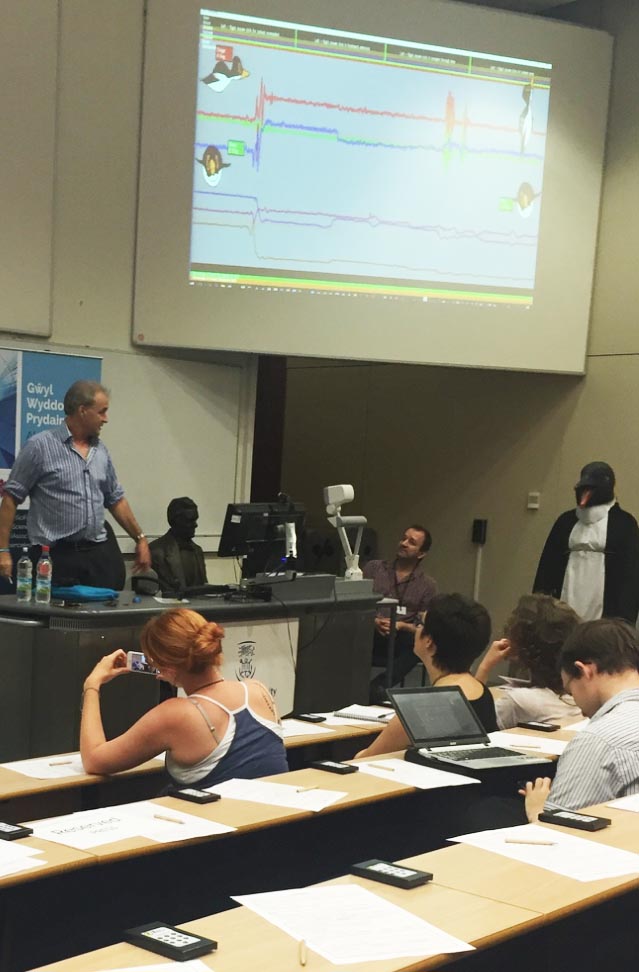
This is a reminder about the Standing up for Science media workshop at the University of Warwick on Friday 24th June. The closing date for applications is 9am on Monday 13th June and we’d love to see early career members from BU there. The workshop is open to early career researchers and scientists in all sciences, engineering and medicine (PhD students, post-docs or equivalent in first job) – please find more details in the flyer and pasted below. Do let me know if you’d like any more details, or if you’d like to join us as an observer on the day.
Also, as some of you may know, nominations are now open for the 2016 John Maddox Prize for Standing up for Science. Now in it’s fifth year, this unique international prize recognises the work of an individual who promotes sound science and evidence on a matter of public interest, facing difficulty or hostility in doing so. Please do share this with your networks (#MaddoxPrize on Twitter) — and start thinking about who you might nominate for the award. The deadline for entries is 1st August 2016. If you’d like to run an article or feature it in a newsletter- please let me know.
John Maddox was a founding trustee of Sense about Science, and an inspirational figure to many. A passionate and tireless communicator and defender of science, Maddox engaged with difficult debates, inspiring others to do the same. To nominate someone for the prize or find out more, please visit http://bit.ly/Maddox2016.
Tagged / event
Warwick media workshop – applications now open
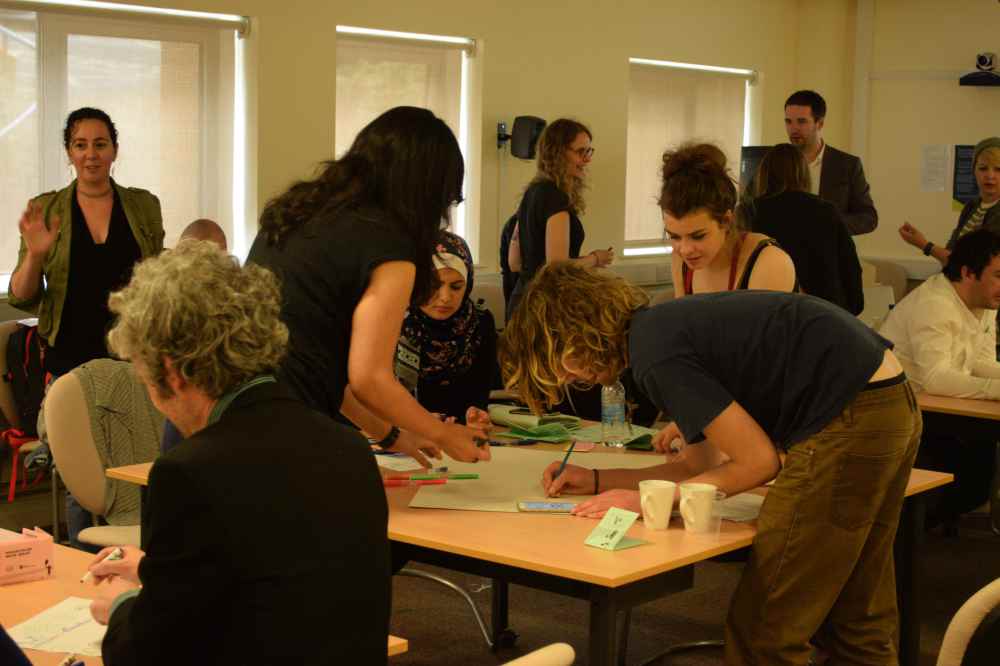
Sense About Science will be holding a Standing up for Science media workshop at the University of Warwick on Friday 24th June 2016. This full day event is free and for early career researchers and scientists in all sciences, engineering and medicine (PhD students, post-docs or equivalent in first job).
During the workshop we combine discussion about science-related controversies in media reporting with practical guidance and tips for how to deal with the media. Please find further information at http://www.senseaboutscience.org/data/files/VoYS/2016/Warwick/VOYS_workshop_Warwick_flyer_2016.pdf.
These workshops are very popular and places are limited. To apply, please fill out the online application form: http://bit.ly/1WEbcRJ. If you are a member of or are funded by any of our partner organisations (listed on the flyer), please state on the application – our partners hold five priority places for this workshop. For further information, please email Joanne jthomas@senseaboutscience.org.
Closing date for applications is 9am on Monday 13th June
What makes good evidence of research impact?

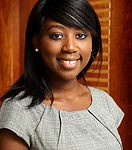
Bokani Tshidzu
Join us on Friday 27 May at 12.00 to find out how to evidence impact from research in a session by Bokani Tshidzu, Chief Operating Officer of impact consultancy Vertigo Ventures.
The session will outline the types of impact evidence that researchers can collect and online tools that can be used to gather this data. Attendees have an opportunity to consider the stakeholders involved in their research and find out how best to collect evidence of impact from different groups. There will also be a chance to find out more about the types of high-scoring evidence that was used in each panel during the last REF.
Book your place via Eventbrite
The session will take place in Kimmeridge House (KG03) Talbot campus from 12.00 – 14.00. Light refreshments will be provided but please feel free to bring your lunch along.

This session forms part of a series of research impact seminars and workshops, organised by RKEO to explore the various pathways to achieving societal and economic impact. Within the series, attendees will explore methods for effectively engaging a variety of research users throughout the research process, and develop new ways to plan, deliver and evidence impact.
View the other events in the series or email Genna West for further information.
Celebrating research impact at Bournemouth University
Join us on Friday 27 May at 14.30 for a series of lightening talks from BU academics, to find out how their research is making a difference.
The short talks will highlight some key impact case studies that were submitted to the Research Excellence Framework (REF) in 2014 and others that are currently in development. This is an excellent opportunity to hear about a wide range of inspiring research from across BU, presenting key insights into all stages of the impact pathway.
Book your place via Eventbrite
Speakers will include;
- Peter Thomas (Health and Social Sciences)
- Dinusha Mendis (Management)
- Mark Hadfield (Science & Technology)
- Ian Stephenson (Media & Communication)
- Chindu Sreedharan (Media & Communication)
- Raian Ali and Keith Phalp (Science & Technology)
- Heather Hartwell (Management)
- Richard Stillman (Science & Technology)
- Einar Thorsen (Media & Communication)
- Sarah Bate (Science & Technology)
The session will take place in Kimmeridge House (KG03) Talbot campus from 14.30 – 15.30, with networking and refreshments until 16.00.
This session forms part of a series of research impact seminars and workshops, organised by RKEO to explore the various pathways to achieving societal and economic impact. Within the series, attendees will explore methods for effectively engaging a variety of research users throughout the research process, and develop new ways to plan, deliver and evidence impact.
View the other events in the series or email Genna West for further information.
How does research influence public policy?
Informing government policy was the most commonly cited impact in REF 2014. Join us on Wednesday 25 May or Thursday 26 May to find out how government policy is developed, and explore the ways in which policy can be influenced and informed by research.
In bitesize hour-long seminars, Jane Forster (Policy Adviser to the Vice-Chancellor) and Emma Bambury-Whitton (Policy and Public Affairs Officer) will explore successful routes to impact through policy engagement. From giving evidence at Select Committee inquiries and creating policy briefing papers, to engaging in direct correspondence with MPs and Peers, this session will give practical tips and examples of how research filters into policy discussions.
The session will also outline the opportunities and resources available within BU and externally to support academic and support staff to engage decision-makers with research.
Book your place via Eventbrite:
Wednesday 25 May – Talbot
Thursday 26 May – Lansdowne
The session will take place on Wednesday 25 May in Kimmeridge House (KG03) Talbot campus from 13.30 – 14.30 and will be repeated on Thursday 26 May at 12.30 – 13.30 in the Executive Business Centre (EB708) Lansdowne campus. Please feel free to bring your lunch along to the sessions.
This session forms part of a series of research impact seminars and workshops, organised by RKEO to explore the various pathways to achieving societal and economic impact. Within the series, attendees will explore methods for effectively engaging a variety of research users throughout the research process, and develop new ways to plan, deliver and evidence impact.
View the other events in the series or email Genna West for further information.
How can working with the media help generate impact from your research?
Join us on Tuesday 24 May and Thursday 26 May to find out how researchers can reach a wider audience and effectively use the media to increase the impact of their research.
The PR Team here at BU will take you through traditional and social media channels that can be used to communicate your research findings to both the general public and more specialised audiences. You will receive tips on how to work effectively with the media and find out how BU can support this process.
Dr Sarah Bate will then talk you through her experiences of engaging with the media, presenting a key impact case study that has extensively used the media to generate and evidence impact.
Book your place via Eventbrite:
Tuesday 24 May – Lansdowne
Thursday 26 May – Talbot
The session will take place on Tuesday 24 May in the Executive Business Centre (EB306) Lansdowne campus from 12.30 – 14.00, and will be repeated on Thursday 26 May in Kimmeridge House (KG03) Talbot campus from 13.30 – 15.00.
This session forms part of a series of research impact seminars and workshops, organised by RKEO to explore the various pathways to achieving societal and economic impact. Within the series, attendees will explore methods for effectively engaging a variety of research users throughout the research process, and develop new ways to plan, deliver and evidence impact.
View the other events in the series or email Genna West for further information.
How can research impact support your career?
Join us on Monday 23rd May at 12.30pm as Dr Steve Cross discusses “What’s in it for me? Impact that makes a difference outside academia and supports your career.”

Dr Steve Cross
Dr Steve Cross has spent eight years supporting university researchers to engage with communities outside academia to help their research have impact. He was Head of Public Engagement at UCL for seven of those years, and understands that it can be difficult to balance research and teaching commitments alongside developing the skills and networks needed to support your research impact. His talk will be ripe with examples of collaboration between academics and communities which have led to benefits to the non-academic world as well as improving research careers.
Steve is a Wellcome Trust Public Engagement Fellow and a public engagement and communication consultant, trainer and strategist.
Book your place now via Eventbrite
The session will take place in the Shelley Lecture Theatre, Poole House, Talbot campus from 12.30 – 14.00. Steve will talk for around an hour, and there will be 30 minutes at the end for questions and further discussion. Please do bring your lunch along.
This session forms part of a series of research impact seminars and workshops, organised by RKEO to explore the various pathways to achieving societal and economic impact. Within the series, attendees will explore methods for effectively engaging a variety of research users throughout the research process, and develop new ways to plan, deliver and evidence impact.
View the other events in the series or email Genna West for further information.
BOOK NOW: Research impact events – 23-27 May
Join us to take a closer look at how research can have an impact beyond academia, and the ways in which this can be achieved.
From Monday 23 – Friday 27 May, we’ll be
exploring the various pathways to achieving
societal and economic impact through a
selection of seminars and workshops.
We will be joined by some fantastic external speakers such as Dr Steve Cross, a public engagement expert, and Bokani Tshidzu, a consultant specialising in impact evidence. At the end of the week, you are invited to take part in a celebration of research impact at Bournemouth University.
Come along to as many events as possible to explore how you can effectively engage with a variety of research users, and to find out more about methods for developing and evidencing impact.
These events are aimed at all academic staff members, early career researchers, postgraduate students and professional services staff who support impact across the university.
Monday 23 May
What’s in it for me? Impact that makes a difference outside academia and supports your career
Dr Steve Cross, Wellcome Trust Public Engagement Fellow & former Head of Public Engagement at UCL
12.30-14.00 | Talbot campus
Find out more and book now via Eventbrite
H2H – bringing research to life (Human2Human). A business networking event on the topic of virtual and augmented reality
Facilitated by Jayne Codling, Rachel Clarke and Charlene Steele
14.30-16.00 | Talbot campus
Find out more and book now via Eventbrite
Tuesday 24 May
Using the media to generate research impact
Nathaniel Hobby, Emma Matthews and Dr Sarah Bate
12.30-14.00 | Lansdowne campus
Find out more and book now via Eventbrite
Smart cities sandpit
Facilitated by RKEO, supported by Borough of Poole
09.30-16.30 | Lansdowne campusFind out more
Wednesday 25 May
Influencing public policy with research
Jane Forster and Emma Bambury-Whitton
13.30-14.30 | Talbot campus
Find out more and book now via Eventbrite
Thursday 26 May
Influencing public policy with research
Jane Forster and Emma Bambury-Whitton
12.30-13.30 | Lansdowne campus
Find out more and book now via Eventbrite
Using the media to generate research impact
Nathaniel Hobby, Emma Matthews and Dr Sarah Bate
13.30-15.00 | Talbot campus
Find out more and book now via Eventbrite
Friday 27 May
Collecting evidence of research impact
Bokani Tshidzu, Chief Operating Officer of impact consultancy Vertigo Ventures
12.00-14.00 | Talbot campus
Find out more and book now via Eventbrite
Celebrating research impact at Bournemouth University
Facilitated by Dr Sarah Bate and Dr Zoe Sheppard
14.30-16.00 | Talbot campus
Find out more and book now via Eventbrite
Save the Date! Interdisciplinary Research HE Sector Day – 21st June 2016
See more recent blog post for updated information.
Save the date for REKO’s forthcoming Interdisciplinary Research Sector Day!
It will take place on Tuesday, 21st June 2016 in the Executive Business Centre.
There will be speakers from BU and other organisations plus plenty of opportunity to network with academic and professional research administration colleagues from other universities. Already confirmed are speakers from HEFCE, Sussex, Brunel and BU.
The event will be advertised to colleagues in other institutions so, if you would like to help promote this event to people in your professional network, keep an eye on this blog for further information in the coming weeks. Academic and Research Support staff from the Higher Education research community are welcome to attend this free event. Please share this link with others in your professional network.
For more information before the programme and booking instructions are published, please contact Emily Cieciura in REKO.
UG Talks
The Undergraduate Talks (UG Talks) is an exciting new opportunity for members of Bournemouth University and the public to learn about the innovative research being conducted by BU’s undergraduate Population. Each talk will last 3 minutes with a chance for Q&A afterwards.
If you would like to present your research, then in order to secure your place at this exciting event, you must send a title and brief overview of your research to Oliver Cooke. There are only 10 spaces available, so you must submit your work as soon as possible!
We already have quite a few talks covering these subjects:
- Copyright law
- Social media in Politics
- Games design
- Costal management
- Sports nutrition
- Roman Britain
- And much more!
Time and Date: Thursday 5th of May, 12pm – 2pm
Location: 5th Floor, Student Centre,Bournemouth University, Talbot Campus.
If you are interested in attending this event, then you can book on here.
If you have a questions about the event or you would like to present please email Oliver Cooke for details.
RSB Science Communication Awards
The Royal Society of Biology Science Communication Awards 2016 are open for applications.
If you’re a bioscience researcher, working in any sector of UK biosciences – from universities, institutes or industry – then consider applying. Supported by the Wellcome Trust, the Awards are intended to reward outreach work carried out by both young scientists and established researchers to inform, enthuse and engage the public.
There are two categories: New Researcher Prize (£750) and Established Researcher Prize (£1500).
Please forward to any great science communicators!
More info: http://www.rsb.org.uk/scicomm
Deadline: Thursday 30 June 2016
Contact: karen.patel@rsb.org.uk
There are also a few places left on our Science Communication Workshop
18.04.16 | 09:00 – 17:00 | Charles Darwin House, London, WC1N 2JU Find out more and register: https://www.rsb.org.uk/events?event_id=1196
14:live – ‘Clone Wars’: The Rise of 3D Printing and 3D Scanning and its Implications for Intellectual Property Law
Hello!
14:live will be returning on the 9th of February 14:00-14:45 at Poole House Refectory, next to Papa Johns. This is open to all staff and students and I am pleased to welcome Dinusha Mendis.
3D Printing and 3D scanning allows for replication of physical objects – which in turn raises questions relating to intellectual property (IP) laws. For example, what are the implications of modifying someone else’s Computer Aided Design (CAD) file or scanning an existing object to create a new product, thereby replicating it? What IP rights of the creator would it infringe? How much ‘modification’ is needed to create a new and non-infringing product? For businesses, IP issues could arise when replacement parts are 3D printed, perhaps through a third-party supplier. These questions demonstrate that whilst the technology has significant potential for the future it raises some very important questions relating to IP law.
This talk will explore such issues whilst also considering new business models for the protection and exploitation of IP. The talk will be based on the research carried out for a Commissioned Project for the UK Government (UK Intellectual Property Office) which was led by the Speaker and published in April 2015.
It would be great to see you all there to listen to what’s going to be a very interesting talk with Dinusha, and just to give you that little bit more incentive to come along, there will be 30 x tokens for the first 30 audience members to be exchanged for a FREE individual Papa John’s Pizza at the end of the talk, plus lots of free tea & coffee, don’t miss out! If you have any questions about this event or would like to hear about any other upcoming student engagement with research events, contact me on ocooke@bournemouth.ac.uk
BU Events research and disaster management research at ATLAS conference
Prof. Lee Miles and Dr. Lenia Marques presented their latest research outcomes at the ATLAS (Association for Tourism and Leisure Education) annual conference, which took place in Lisbon (Portugal), between 20-23 October 2015.
In this international encounter, the topics and discussion were around the umbrella theme of “Risk in travel and tourism: Geographies, behaviours and strategies”.
Prof. Lee Miles, representing the Disaster Management Centre developed further contact and cooperation with scholars of tourism by presenting two papers at the conference. The first single authored paper was on “Integrating Crisis Management and Tourism? Key Roles for Policy Entrepreneurs and Entrepreneurial Resilience?” that represents an area of major research development at BUDMC. This was followed by an additional paper, co-authored with colleague Richard Gordon, that explored conceptualising blame wars during and after the onset of disasters affecting the tourist sector, entitled “Blame Games and Meaning Making: Influencing Decision-Making on Disasters for Tourist Destinations”.
Dr. Lenia Marques participated in an ATLAS SIG (special interest group) meeting with a focus on events, which she has been part of since its foundation in 2011. In this meeting, she presented the first results of a joint research project with Maria Podesta, researcher at the Politecnico di Milano (Italy). The paper analysed how knowledge-based events are playing a strategic role in place-making. This topic relates closely to the challenges policy-makers and the events sector are currently facing in developing relationships between urban development and social cohesion.
The papers led to fruitful discussions and the conference was also a good opportunity for networking activities.
Sparking Political Debate with Sixth Formers: BU Research at the #PSASchools Conference
On Tuesday 13 october 2015, Dr. Darren Lilleker, Dr. Dan Jackson and Dr. Anna Feigenbaum from the Faculty of Media and Communication travelled up to London to lead sessions at the Political Studies Association’s first annual PSA Schools Conference. The event brought together 150 Sixth Form students from schools around London and the South East for an afternoon of exploring Pressure Groups, Anti-politics and Representation. In packed out workshop room, Dr. Lilleker and Dr. Jackson sparked debate over the rise of digital politics, asking in their session on Social Media and Political Communication, “Does social media offer a new way to develop a more dialogical relationship between citizens and their elected representatives?” Reflecting on the workshop, Dr. Lilleker said, ““It was interesting to hear the views of young people on digital media use and get them thinking about how their behaviour links to broader social trends in political engagement.”
Dr. Anna Feigenbaum’s session drew from her research into protest camping. She engaged students in a hands-on activity, designing blueprints and political strategies for their own hypothetical protest camps. Choosing Women’s Equality as their campaign issue, following a compelling keynote by Sophie Walker, Leader of the Women’s Equality Party, the students choose their protest sites, including Parliament and the Playboy Mansion. From clever hashtags to lodging people on houseboats in the Thames to politically subversive games of pin-the-tail-on-the-bunny, students showed their creativity and tactical savvy.

Taking part in the Question and Answer Panel Session that rounded out the day, Dr. Anna Feigenbaum joined Campbell Robb, CEO of Shelter; David Bowles, Director of Public Affairs of RSPCA; Graham Smith, CEO of Republic and Maddy Ryle of the Democracy Centre in a lively discussion facilitated by Dr Andy Mycock (University of Huddersfield) that ranged from the purpose of direct action to strategic uses of the law in political campaigning. Covering questions of Britishness and the Monarchy and the ethics of lobbying, sixth formers in the audience showed they were far more than an apathetic generation of youth. Politically reflective and insightful, they spoke of media misrepresentations of the working class, the need to scrutinise profiteering bankers, growing inequality in representative politics and when engaging in civil disobedience might be justified.
Speaking
of his participation in the event, Dr. Jackson – who also convenes the PSA Media and Politics Specialist Group – said, “It is great to engage young people with some of the big political challenges of our day. Plus, this is a great way to put Bournemouth on the map, in terms of politics education at BU, as we develop our curriculum around politics, political communication and social movements.” Based on the success and positive feedback from this first event, the Political Science Association has plans to make the conference an annual affair. An exciting opportunity to share our BU Research in an interactive way with young people, we would encourage colleagues to join in future events!
With thanks to James Ludley and Helena Djurkovic of the PSA for organising this innovative event.
Innovate 2015 – 9-10 November London
The countdown has begun for Innovate 2015. From international investors, entrepreneurs, to government and academia, everyone who is anyone in innovation will be attending. Discover the full range of support available to help your business grow faster, get funding, make connections and go global. Innovate 2015 is a two day event designed to stimulate opportunities for innovation, export and investment for the UK’s most innovative companies, at all growth stages. Secure your two-day tickets now for £199 (plus VAT). One-day tickets to the event are also available for £165 (plus VAT).
UK Nepali community research dissemination event
BU and UKNFS jointly presented some of the key findings of their study into the UK’s Nepali community. The meeting (22 July) in the EBC was attended by local representatives of the NHS, the CCG and Healthwatch Dorset. BU Prof. Vanora Hundley, Deputy Dean for Research (FHSS), who herself has published several academic paper on Nepal or English-language academic journals in Nepal, welcomed the audience. She highlighted how the research fitted into the wider health and soial care research portfolio of the Faculty.
BU Prof. Edwin van Teijlingen’s presentation highlighted the issues of access the health and social services in growing Nepali community in the UK. The reports highlights health and lifestyle issues, help-seeking behaviour and the influence of culture on health-related decision making. He mentioned barriers such as language and knowledge about services (or lack thereof). The findings of this study relate to previous studies in the field of ethnic minority communities int he UK. Mr. Alan Mercel-Sanca, Chairperson of the UK Nepal Friendship Society thanked the key researchers Dr. Bibha Simkhada (BU VIsiting Faculty) and Dr. Rajeeb Kumar Sah for conducting this mixed-methods research to such a high standard. He also thanked the Big Lottery Fund for making this ground-breaking piece of work possible, and the NHS England Equality and Health Inequalities team for their interest in final report and advice on the research.
The Report offers a unique opportunity for local health crae providers and commissioners to improve their understanding of this particular ethnic minority group. In the long run the report may lead to more effectively service delivery, especially in terms of health and social services that are sensitive to the needs of the Nepali community. Moreover, the report’s findings have direct relevance to other So
uth Asian and broader Black & Minority Ethnic (BME) communities in the UK.
Finally, the audience heard how the report has been widely reported among the Nepali-language media to the Nepali community in the UK as well as in Nepal. This include coverage by the BBC World Service in Nepali, who interviewed Dr. Bibha Simkhada about the study.
The report is available online here!
Prof. Edwin van Teijlingen
CMMPH
Lightning Talks event – come and find out about the exciting research undertaken by BU staff and student researchers!
Lightning Talks: An adrenaline rush of research
Interested in finding out more about the research that takes place at BU? Then come to the Lightning Talks event on Monday 13th July. A group of BU researchers and postgraduate research students will each provide a short and snappy summary of their research and its significance. Each researcher has just five minutes to do this. The audience will vote for the best presentation at the end, followed by a drinks reception.
This is a great opportunity to network with colleagues and find out more about the excellent and exciting research that takes place at BU.
Featured speakers:
• Mastoureh Fathi
• Melanie Grey – brand co-creation: the experience effect
• Marcellus Mbah – the idea of the interconnected university
• Ana Ruiz-Navarro – predicting responses to climate warming of freshwater fish
• Carole Pound – exploring the human dimensions of stroke care
• Simon Hanney
• Michelle Heward – fire safety and dementia
• Adil Saeed – rust in steel
• Kevin Moloney – Media Wars: public relations versus journalism
Monday 13th July, 6-8pm, Talbot Campus.
Book you free place at: https://microsites.bournemouth.ac.uk/festival-of-learning/events/lightning-talks-an-adrenaline-rush-of-research/
5th International and Interdisciplinary Conference on Emotional Geographies at The University of Edinburgh attracts Global Academics including BU’s Professor of Sociology, Ann Brooks.
By Professor Ann Brooks, Professor of Sociology
The 5th International and Interdisciplinary Conference on Emotional Geographies hosted by The University of Edinburgh was set against the stunning backdrop of Arthur’s Seat and Salisbury Crags at The University of Edinburgh’s John McIntyre’s Conference Centre.
The conference attracted 250 international academics from a wide range of disciplines including sociology, geography, literature, cultural studies, art, archeology, anthropology, urban studies, gender studies, tourism and many more. Delegates came from US, Canada, Australia, Singapore, Hong Kong, Denmark, Spain, Germany, the Netherlands, Sweden, Brazil among others. The conference chair was Professor Liz Bondi from the University of Edinburgh and teh conference was supported by Elsevier publishers, who publish the conference journal Emotion, Space and Society and hosted a superb pre-conference welcome and reception.
The Conference streams reflected an international and interdisciplinary research profile combining theoretical and applied work as well as implications for policy debates at the local and national level. For example in one of the Conference Themes: Persisting Selves: the Practices and Politics of Keeping Going and Carry On (divided into I Selves; II Time and III Recovering) papers included: ‘How does “a day at a time” work? Patience, Persistence and Proaction in Everyday Sustained Alcoholic.’(Julia Mills, University of Manchester) and ‘Persistence, Insistence and Endurance in Pregnancy Loss Grief.’ (Abigail McNiven, University of Oxford).’ A Conference Theme: which showcased a wide range of doctoral, postdoc and Early Career Researchers’ work was Childhood Youth and Intergenerationality: Relational Geographies of Emotions /Affects, Childhood and Youth, papers included: ‘The Emotional Geographies of Children of Prisoners’(Helene Oldrup, The Danish National Centre for Social Research) and ‘Slovenia’s Izbrisani (‘Erased’) Youth, Transitional Spaces and Radical Ethical Acts’ (Stuart Aitken, San Diego State University). Other Conference Themes included Creative Spaces, Emotions in Fieldwork, Urban Life in Theory and Practice, Time and Space, Liminal Spaces, and Connecting across Space: Tourism.
I presented a paper in the Urban Life in Theory and Practice stream as one of three papers discussing the impact of the urban environment and landscape on emotional well-being. My paper looked at the impact of gentrification in cities in the US including San Francisco and New York City, where long term city dwellers and migrants are being forced out of their homes because of the gentrification of traditionally ethnic parts of the cities by corporate investors and wealthy foreigners. I also explore the growth of the Occupy Movement as a collective expression of anger at the increasing disparities of wealth in US cities. This work is part of the work undertaken for a forthcoming book on Emotions and Cities.
One of the high points of the conference was the presentation of one of three keynotes –Professor Lauren Berlant, George M. Pullman Distinguished Service Professor in the Department of English Language and Literature, the University of Chicago. http://english.uchicago.edu/faculty/berlant
Berlant is a foremost contributor to feminist and literary discourse in the US and it is a unique opportunity to have her appear at a UK conference. She is author of a number of outstanding books including: Cruel Optimism (2011), The Female Complaint: The Unfinished Business of Sentimentality in American Culture (2009), Desire/Love (2013), Our Monica, Ourselves: Clinton and the Affairs of State (2001), Intimacy (2000), The Queen of America Goes to Washington City: Essays on Sex and Citizenship (1997).
Berlant describes her work as follows:
My work has focused on politics, emotion and intimacy in the U.S. nineteenth and twentieth centuries – now the twenty-first in particular, in relation to citizenship, to informal and normative modes of social belonging, and to affective attachments and fantasies that take shape through ordinary practices. These scenes zone and disturb the relations between public and private, white and non-white, straight and non-straight, and /or citizen and foreigner –along with providing settings for other, inventive kinds of social bond through which people imagine and practice world- making.
Presenting her keynote address: ‘On being in Life without Wanting the World: Living in Ellipsis’, Berlant captured the imagination of delegates with an erudite and amusing presentation of concepts around emotion and affect. Berlant sought to define a range of new ‘affective’ states for addressing sex, democracy and belonging. Drawing on one of the classical social theorist Georg Simmel’s work on Metropolis and Mental Life, Berlant explored the concept of ‘disassociation’. Her ability to communicate with a wide range of academics using complex and imaginative frameworks of analysis is inspiring both on pedagogical and substantive issues.
Other keynotes included Professor Jane Speedy, University of Bristol and Associate Professor Joyce Davidson, Queens University, Canada.
This was a conference which not only provided outstanding networking opportunities and an opportunity to develop research synergies with international and national delegates but in addition it was a great opportunity for me to reflect on a chapter I have just completed on Lauren Berlant’s work for my upcoming book Genealogies of Emotion, Intimacies and Desire (Routledge, New York 2015). More food for thought from this exceptional academic.
This was a conference to inspire the intellect, engage the senses, to enrich international networking and to light the way for doctoral, postdoctoral and Early Career Researchers on the best of interdisciplinary research and to showcase this on the world stage.


New academic paper on Nepal
3C Event: Research Culture, Community & Cherry Blossom
Boost Your Research Profile: Training Sessions with The Conversation
ESRC Festival of Social Science 2026: An Opportunity to Engage New Audiences
New HIV paper by BU PhD student
BU Annual Research Conference: Poster Exhibition Call for Applications
ECR Funding Open Call: Research Culture & Community Grant – Apply now

ECR Funding Open Call: Research Culture & Community Grant – Application Deadline Friday 12 December
MSCA Postdoctoral Fellowships 2025 Call
ERC Advanced Grant 2025 Webinar
Update on UKRO services
European research project exploring use of ‘virtual twins’ to better manage metabolic associated fatty liver disease