Up to £1,000 per event available to engage the public with your research in a national prestigious festival

About the Festival of Social Science
The 23rd annual ESRC Festival of Social Science (FoSS) takes place Saturday 18 October – Saturday 8 November 2025, with the theme of ‘Our Working Lives’.
The festival is an annual UK-wide celebration of research and knowledge about people and society, organised and funded by the Economic and Social Research Council (ESRC). It provides a platform for researchers from UK universities to engage the public in a wide range of topics, from health and wellbeing to crime, equality, education, and identity, through engaging events such as exhibitions, lectures, panel debates, performances, and workshops.
The festival is free to attend, with most events open to everyone, though some may target specific groups. It offers researchers a unique opportunity to take their work beyond the university, connect with diverse audiences, and present their research in creative and accessible ways. Funding of up to £1,000 per event is available.
What are the festival aims?
- Encourage, support & create opportunities for social science researchers to engage with the public and young people
- Promote & increase awareness of the social sciences and ESRC-funded research, & the contribution social science makes to the UK
- Enable the public to engage with social science research
- Engage with teachers and young people and raise their awareness of the social sciences
Training to run a great event
The national FoSS team is coordinating public engagement training with Engagement Trainer and Consultant Jamie Gallagher in June (repeated in September). Attendance at these sessions is mandatory for all event leads to attend and further details will be shared upon successful application.
Applications will be assessed on 5 key areas
- Motivation for taking part – Show you have thought carefully about why you are applying e.g. to pilot an idea, reach a new audience, or develop public engagement skills, and what you hope to gain.
- Target audience identified – Events must be aimed at a non-academic audience. Clearly define who your audience is (e.g. a specific public group, community, or professional sector). If you are proposing an event for professionals, businesses, policymakers, or third sector organisations, please note that ESRC rules only permit up to 20% of our events to be targeted at these groups. As we often receive many proposals in this category, selecting one of these audiences may reduce your chances of taking part.
- Audience motivation – Show why your chosen audience would be interested in your activity, and how and when they might engage.
- Content & format – Demonstrate initial ideas for what the activity will involve, why the format suits the goal (e.g. in-person, online), and considerations for timing and location.
- Appropriate costing – Budget should be realistic, clear, and fit the scale and type of activity.
How to apply
We are particularly keen to receive applications from PGRs and early to mid-career researchers and encourage groups/teams to apply. If you have a supervisor, they will need to endorse your application by emailing publicengagement@bournemouth.ac.uk.
If you are considering applying, we strongly encourage you to get in touch with us directly as early as possible.
Apply to take part by completing the online application form.
Deadline for applications: 5pm FRIDAY 23 MAY 2025
You can view the slides from the Information Session here. If you weren’t able to attend, or if you would like to revisit what was covered, you can also watch the session here.
Please read before applying
Before submitting your application, please make sure you meet both the ESRC eligibility criteria and our key requirements. This is essential for your proposal to be considered. Applications that reference academic or undergraduate audiences, or propose campus-based venues, will not be eligible. This opportunity is focused on public engagement beyond academic settings.
Festival Event Leader Pack this practical guide supports researchers in planning and delivering events for the festival. It covers the festival’s aims, event criteria, useful planning tips, audience engagement, and evaluation. It also details the funding, training, and promotional support available from the ESRC, making it a key resource for aligning events with the festival’s goals.
Contact us
Please contact the Public Engagement Team to discuss your application publicengagement@bournemouth.ac.uk



 Find your faculty table



 Our new
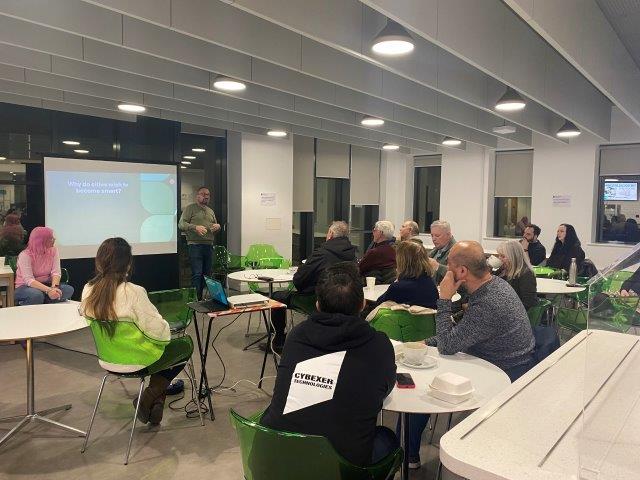
 Next up in our Research Café series







 NIHR Insight South West Central Conference 2026 at Bournemouth University
 BU PhD student presented at World Safety Conference in South Africa
 National Research Supervision Recognition: Apply Now & Join the Supporting Workshop on 16 September
 3C Event: ECR Network Café – Wednesday 16 September 2-3pm
 BU geography student’s undergraduate dissertation published in international journal
 Horizon Europe Cluster 3 (Civil Security for Society) 2026 Calls Now Open
 MSCA Doctoral Networks 2026 Call Information Webinar
 ESRC Festival of Social Science 2026: Application Deadline Extended to Thursday 25 June 2026
 Reminder: Register for the ESRC Festival of Social Science 2026 Information Session
 ECR Funding Open Call: Research Culture & Community Grant – Apply now
 ERC Advanced Grant 2025 Webinar
 Update on UKRO services
 European research project exploring use of ‘virtual twins’ to better manage metabolic associated fatty liver disease