Are you a Postgraduate Researcher at Bournemouth University? Do you want to share your research with a public audience and improve your communication skills? If so, we have an exciting opportunity for you.
We are looking for 3-4 post-graduate researchers to take part in a special edition of our Café Scientifique public event series to deliver a short talk about your research to a friendly public audience. The event will take place from 6:30-8:00pm on Tuesday 7 May 2024 at The Black Cherry in Boscombe.
Café Scientifique is a fun and informal way to engage the public with your research and get feedback from different perspectives. You will receive training and support from our experienced Café Scientifique organisers in the Public Engagement Team, who will help you prepare and deliver your talk with confidence.
Please complete a short form to let us know why you are interested in getting involved, and include a bit about your research.
If selected, we will send you guidance on how to develop and deliver an engaging talk to a public audience. We will ask you to produce and practice a ‘draft’ version of your talk.
You will be invited to attend a training session on Tuesday 9 April to deliver your talk in front of the organisers and other speakers involved with the event. We will provide you with supportive feedback and ask you to do the same to the other selected speakers.
The Public Engagement Team will organise the event and promote it to local public audiences. The team will support you every step of the way. From developing your ideas to engage with a public audience, to setting up and promoting your event. We will also be on hand on the day to help your event run smoothly
If you are interested, please complete this form. The deadline for applying is Friday 8 March, 5pm.
Please note: Completing this form does not guarantee you a space. We will be in touch with you to discuss your interest.
If you have any questions about getting involved with Café Sci, please get in touch with the Public Engagement with Research Team: publicengagement@bournemouth.ac.uk.
February’s webinar welcomes Heather Olive the Age Friendly Community Coordinator for Bournemouth, Christchurch and Poole.
In a response to the older population increasing globally The World Health Organisation (WHO) in 2010 created an initiative called ‘Age Friendly Communities.’ The aim is that Age Friendly Communities enable people to continue to stay living in their homes, living the life they want to live for as long as possible. Importantly in these communities, older residents help to shape the place that they live. Locally we have built a network of over 80 organisations working towards this common aim. Nationally we share knowledge and best practice through the support of the Centre for Ageing Better.
Community voices is a collaboration between BU PIER partnership and Centre for Seldom Heard Voices to provide a platform and a voice to local community activists.
BU is hosting an international conference, IFIP TC3 Open Conference on Computers in Education titled Digitally Transformed Education: Are We There Yet? This International Federation for Information Processing (IFIP) conference is the 4th after past conferences in Austria, India, Tanzania and Finland. BU is honoured to follow the great steps and efforts in defining technology input in education.
The OCCE 2024 will provide a forum for new research results, practical experiences, developments, ideas, and national perspectives, related to the conference focus and themes for all levels of education (preschool, primary, secondary, higher, vocational, and lifelong learning), including the professional development of educators (teachers, trainers and academic and support staff at other educational institutions) and related questions on educational management. The conference will aim to explore the impact of technology across a range of user experiences including those of students, staff and management. This will create an interesting creative tension during the conference.
The conference includes three keynotes from world renowned speakers: Julia Adamson MBE FBCS, Managing Director, Education and Public Benefit at BCS, The Chartered Institute for IT (whose mission at BCS is to give every young person the digital skills they need to succeed in life and work); Professor Deirdre Butler, a Full Professor at the Institute of Education, Dublin City University (DCU) (whose passion in life is exploring what being digital in learning can mean and what skills or competencies are needed to live and thrive in today’s complex globally connected world); and Professor Kai Rannenberg, Chair of Mobile Business & Multilateral Security, Goethe University Frankfurt, Germany (who has coordinated several leading EU research projects, e.g., the Network of Excellence “Future of Identity in the Information Society” and the Integrated Project “Attribute based Credentials for Trust” (ABC4Trust), and is coordinating CyberSec4Europe, a pilot for the European Cybersecurity Competence Network the EU is aiming for).
The conference includes two panel sessions. The first session chaired by Professor Alastair Irons titled the four nations panel includes members Dr. Parveen Samra, Dr. Fiona Mcneil, Professor Tom Crick and Dr. Michael McEnery. The panel focuses on the development of the computing and computing science curriculum in and across colleges and universities as an interesting, challenging and complex issue. It notes the situation in the UK is not uniform, with differences at school, college and university levels across England and the devolved nations (Scotland, Northern Ireland and Wales). It highlights the significant work happening in all four countries in the UK – some in collaboration, for example, degree accreditation, and some devolved, such as the school curriculum.
The second panel session chaired by Dr. Mary Webb is titled Opportunities and challenges for AI in Education: One year after ChatGPT?, and includes members Julia Adamson MBE, Dr. Caitlin Bentley and Professor Angelos Stefanidis. The sudden availability of generative AI to ChatGPT alerted everyone to AI’s rapidly developing capabilities and massive potential. While generative AI, as one type of AI application, can create and edit a range of different media very efficiently, other AI functionalities that are useful to education include: conversational AI, predictive AI, speech recognition, robotics, computer vision, learning and assessment analytics and personalised feedback. But what do all these advances mean for the education sector. The panel will consider this and other themes on this topic.
Other conference activities include 2 symposia, 6 workshops, an invited session and a doctoral consortium. The conference will be held at BU’s Executive Business Centre from 27 February 2024 to 1 March 2024. For more details, please visit the conference website: ww.bournemouth.ac.uk/occe-2024
The conference is being organised by International Programme Committee members:
• Christophe Reffay, IPC Chair, University of Franche-Comté, France
• Margaret Leahy, Editor, Dublin City University, Ireland
• Don Passey, IFIP TC3 Chair, Lancaster University, UK
• Mikko Ruohonen,Tampere University, Finland
• Javier Osorio Acosta, The University of Las Palmas de Gran Canaria, Spain
• Ivan Kalaš, Comenius University in Bratislava, Slovakia
And local Organisation Committee members from BU:
• Nan Jiang, Honorary Chair
• Melanie Coles, Honorary Chair
• Huseyin Dogan, Honorary Chair
• Nicholas Mavengere, Chair
• Lai Xu, Business partnership
• Paul De Vrieze, Finance Chair
• Deniz Cetinkaya, Student volunteers and internal promotion
• Wei Koong Chai, Publicity Chair
• Gernot Liebchen, Volunteers and internal promotion
• Avleen Malhi, Social events
• Mohammad Naiseh, Social events
• Marcin Budka, Digital Chair
Dr. Nicholas Blessing Mavengere
Local organising chair, nmavengere@bournemouth.ac.uk
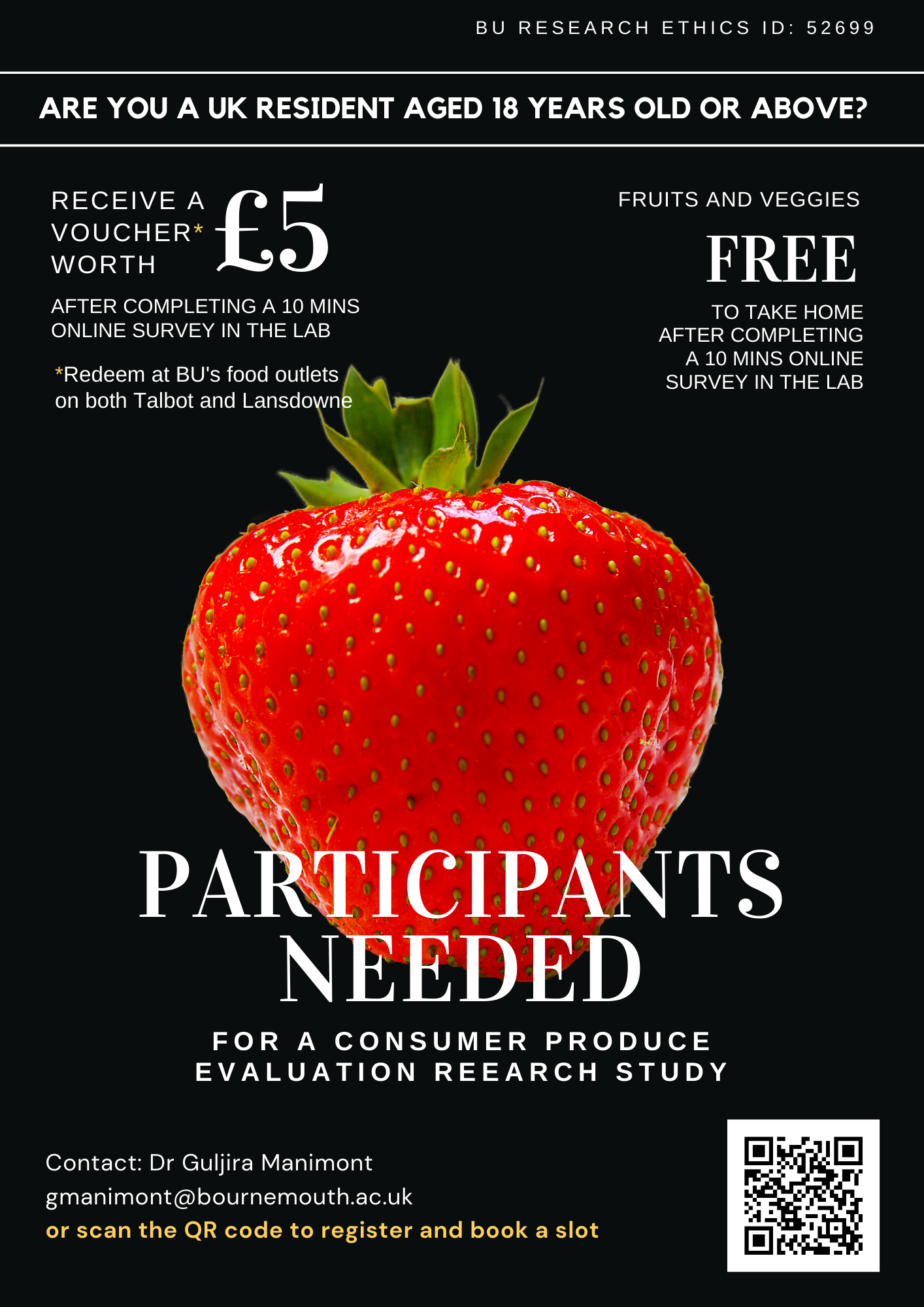
What’s the scoop for you? A £5 voucher, just for spending a quick 10 minutes on a fun online survey in our lab. And here’s the best part – you can cash in that voucher at BU’s food spots on both the Talbot and Lansdowne campuses.
Hold up, there’s more! After the 10-minute experiment session, you get to snag some free fruits and veggies to take home. It’s like a mini grocery haul, just for being a research rockstar!
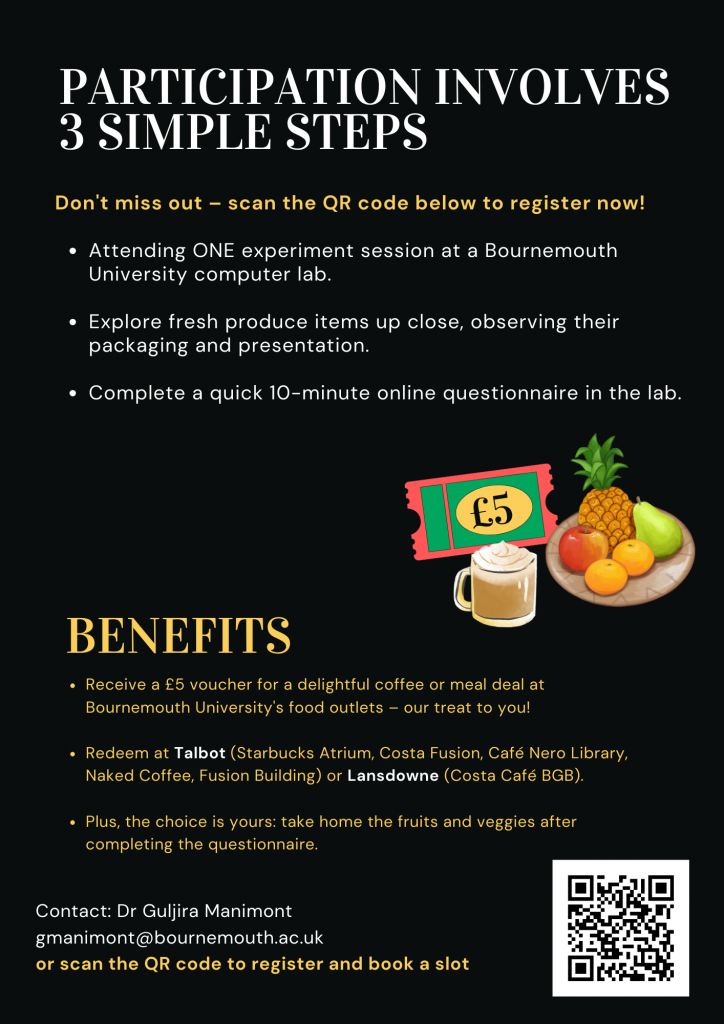
Participation is a simple three-step process:
Attend ONE experiment session at a Bournemouth University lab. Our lab is situated in the Fusion Building on the Talbot Campus. On Wednesdays, the lab is located at FG07, while on Thursdays, it relocates to F204. The lab opens from 1 pm to 3 pm, with the last session starting at 2:45 pm.
Explore fresh produce items up close, observing their presentation.
Complete a quick 10-minute online questionnaire in the lab.
Your contribution is a game-changer for us, and we can’t wait to see the impact we make together. This isn’t just research; it’s your chance to be a superhero in the battle against food waste. Your opportunity to contribute is now, and we can’t wait to have you on board!
At Café Scientifique, you can explore the latest ideas in science and technology in a relaxed setting. Enjoy listening to a short talk before engaging in debate and discussion with our guest speaker and audience
We’ll be joined by Peter Phillips on Tuesday 5 March from 6:30 – 8:00pm.
Paramedics have the worst wellbeing of all healthcare professionals, and the newly-qualified are particularly vulnerable. But it is not necessarily for the obvious reasons of dealing with traumatic events.
Join Bournemouth University’s Peter Phillips, a senior lecturer in paramedic science, to hear how his research about identity among newly qualified paramedics could help make them more resilient.
This event will be held at The Black Cherry in Boscombe, Bournemouth. Although the talks start at 6:30pm, the café will be open early so we encourage you to arrive early for a drink and a bite to eat before the talk starts.
Are you a Postgraduate Researcher at Bournemouth University? Do you want to share your research with a public audience and improve your communication skills? If so, we have an exciting opportunity for you.
We are looking for 3-4 postgraduate researchers to take part in a special edition of our Café Scientifique public event series to deliver a short talk about your research to a friendly public audience. The event will take place from 6:30-8:00pm on Tuesday 7 May 2024 at The Black Cherry in Boscombe. Find out more and apply here
The call for the next round of BA/Leverhulme Small Research Grants will be opening soon, expected 10th April.
We are welcoming your proposals for the upcoming BA/Leverhulme Small grants call.
To ensure that the pre-award team can provide all interested academics with optimal support we are inviting you to participate to RDS British Academy Guidance session
Wed 28th Feb 2024, 10:00-12:00 at Talbot campus
Join us to review the guidance and then start work on your application
Slides will be available after the session on Brightspace.
Work on your proposals, submit your ITB as soon as you are ready and work with your allocated officer on your budget. The earlier you send in your ITB, the sooner you can progress with your budget support.
To book onto this session, please complete theBooking Form under “British Academy Small Grants Guidance session – 28/02/2024” in the drop down menu.
Please find details on the process to be followed and deadlineshere.
If you have any queries, please contact Eva Papadopoulou epapadopoulou@bournemouth.ac.uk or your Funding Development Officer.
Yesterday we received the proofs of the recently accepted paper ‘Improved Water, Sanitation and Hygiene Facilities at School and their Effect on Educational Achievement in Basic Level Students in Nepal’ [1]. Luckily these are only the proof pages as my family name is misspelt, and the paper still lists the old name of our Centre for Midwifery and Women’s Health, which was, of course, the correct name at the time of submission.
The last time I published a paper on hygiene was also with colleagues in Nepal seven years ago, this time it was on menstrual hygiene [2].
Prof. Edwin van Teijlingen
Centre for Midwifery & Women’s Health
References:
Sharma, M., Adhikari, R., van Teijlingen, E., Devkota, B., Khanal, S. (2024) Improved Water, Sanitation and Hygiene Facilities at School and their Effect on Educational Achievement in Basic Level Students in Nepal, International Journal of Health Promotion & Education (accepted). https://doi.org/10.1080/14635240.2024.2314459.
Budhathoki, S.S., Bhattachan, M., Pokharel, P.K., Bhadra, M., van Teijlingen, E. (2017) Reusable sanitary towels: Promoting menstrual hygiene in post-earthquake Nepal. Journal of Family Planning & Reproductive Health Care43(2): 157-159.
Sign up for a place on these workshops, delivered by Dr Jamie Gallagher, one of the most experienced public engagement trainers in the UK. Jamie has previously provided training sessions for BU researchers in evaluation and communication, which have been extremely well-received by attendees:
‘Informative and highly relevant to research practice’
‘Insightful and useful session’
‘Benefitted from meeting and learning from other people’s experiences. Glad to have the opportunity to do this’.
Evaluation of Engagement
This workshop will highlight what you need to ask yourself, and the public, to ensure you can demonstrate the success of your intervention and capture the long term impact of it.
Successful public engagement can benefit research, researchers and the public – but how do you go about demonstrating this change? This workshop will guide you through the best evaluation processes, showing you when, why and, crucially, how to use evaluation to provide reliable, clear data. It will highlight how to demonstrate success to funders, record impact for the REF, help improve your processes, and give you a better understanding of the people you are connecting with.
To book a place on this workshop, please complete the booking form.
Advanced Evaluation
Taking an in-depth look at evaluation, participants will explore data capture, analysis and reporting. From surveys to focus groups, you will learn how to format powerful questions and report meaningful data. Discover how to develop evaluation plans for even the most complex topics. You will also learn how to write evaluation reports for funders or for the REF. This workshop requires good base knowledge of evaluation, ideally from attending the previous Evaluation of Engagement workshop.
To book a place on this workshop please complete the booking form.
NB: While we recommend you attend both sessions, you may judge the first session on its own as appropriate for your needs. However, as the advanced session will build on the knowledge and skills gained in the first session, we do advise against only attending the second.
You are warmly welcomed to our next research process seminar.
“When you’re stuck, just narrate”: 10 + 1 tips on how to boost your productivity
Description
After years of trial and error, Roman will share some thoughts and tips on how to boost your productivity, focusing on the main challenges of staying focused and motivated. He will demonstrate some of the tools and routines he uses to organise tasks, readings, notes and writing, as well as a few mental strategies on overcoming sticking points. He will also demonstrate the ‘typing pool’ method of kickstarting your writing and overcoming ‘writer’s block’. Please feel free to bring a piece of writing that you’re currently working on or need to get started/done. The aim is to leave the session with a toolkit of practical techniques that can help boost your productivity, confidence and self-esteem. Everyone is welcome but this session may be particularly appropriate for Early Career Researchers (ECRs), Postgraduate Research Students (PGRs) and staff who are juggling fragmented diaries/workloads.
Roman Gerodimos is Professor of Global Current Affairs at Bournemouth University and a faculty member at the Salzburg Academy on Media and Global Change. His research, writing, filmmaking and outreach/impact work focus on the challenges facing democracy due to globalization, digitization and extremism, the ways 21st century citizens engage with the world around them, the psychological drivers of violence, threats to global security, and the role of urban public space, art, media literacy and shame awareness in bridging divides. His latest book is Interdisciplinary Applications of Shame/Violence Theory: Breaking the Cycle (Palgrave Macmillan 2022) and he recently completed his fifth short film (Fellows Hall). https://staffprofiles.bournemouth.ac.uk/display/rgerodimos
About the research process seminar series:
The purpose of this research seminar series is different to your typical research seminar and conference presentation. Instead of presenting the results and outcomes of research, we want to share good practices around the process of doing research. This might often involve a focus on research methods but it also includes aspects of publishing, writing, time management, career management etc.
The idea here is that the speaker takes us through the anatomy of the project or approach focussing particularly on the process – the challenges, the successes, and the failures. For the audience, we walk away with a practical application of a method or approach we may not be familiar with or may not have applied in this way before. Our ambition is to make us all better researchers as a result.
All welcome
13 Feb at 3pm on Zoom
https://bournemouth-ac-uk.zoom.us/j/87405070443?pwd=NzJlUk4xWGZDZ0R4blQ4VEhqVTA0QT09
Meeting ID: 874 0507 0443
Passcode: p?6MPyDd
You can also register for the event here: https://bournemouth-ac-uk.zoom.us/meeting/register/tZMpd-yoqTsuHtcYQHIoQWkRTHCCO01Wo_mq
Being Human takes place 7-16 November this year and is marking its 10th anniversary with the theme of ‘Landmarks’. The organisers say: ‘We will be looking back on landmark events in our history, while imagining landmarks we might yet create. We invite researchers to join us in thinking about physical or metaphorical landmarks and how they shape our world.’
If you would like the chance to take part in the UK’s national festival of the humanities, there are different ways to get involved:
Funded pathway
Festival Event grants: up to £4,000 to organise a single event or multiple events (Deadline: Friday 12 April)
Unfunded pathway
Festival Event: organise a festival event that does not require funding from Being Human (Deadline: Friday 7 June)
If you are interested, you can find guidance for applicants, further details and some frequently asked questions on the Being Human Festival website.
To support the growth of our PGR community, we are delighted to announce up to 10 fully-funded PhD studentships for candidates starting in April 2024 (Funded PhD & MRes studentships | Bournemouth University). The focus of these awards will be on research excellence as we look to REF2029.
The studentships will be awarded via a competitive process to the best candidates who identify a supervisory team and develop research projects which align to one or more of the BU research themes:
Helping people to live better for longer
Helping protect and preserve a sustainable environment
Preparing for and recovery from crisis
Challenging marginalisation, misinformation and under-representation
Helping creative industries and cultural heritage to thrive
Using our expertise to be a catalyst for growth, boosting skills and advancing the region.
With this student focussed funding approach, we aim to develop the excellence of our research culture by attracting high calibre candidates with a passion for research and a strong desire to contribute to BU’s research environment. The allocative process, which is aligned to those adopted for external UKRI fully-funded opportunities, will be overseen by the Interim Associate Pro Vice-Chancellor Research and Knowledge Exchange and administered by the Doctoral College.
UKRIO has announced details of a forthcoming Free Webinar “Social Media and Ethics” on Wednesday 21st February from 10:00 – 11:00 BST.
Research using social media data presents several ethical issues that researchers must navigate to ensure the responsible and respectful use of this data. Some of the primary ethical issues in research using social media includes privacy and informed consent, anonymity and confidentiality, data ownership and terms of use, ethical use of algorithms and AI, sensitive topics and vulnerable populations, consent and minors, deception and online identity, unintended consequences, and transparency and reproducibility.
This webinar discusses these ethical concerns that require a combination of thoughtful consideration, adherence to research guidelines, and engagement with relevant stakeholders, including social media platforms and users.
Dr Nicolas Gold, Associate Professor in Computer Science will lead the webinar, which will cover:
The identification of some key ethics issues when using social media data.
An approach to constructing arguments for ethically defensible research in this space.
A brief “tour” of some platform terms and their potential impact on research.
This webinar is aimed at all researchers using social media and those involved in the ethical review process of projects.
As BU subscribes to UKRIO services, UKRIO webinars are free and open to anyone who may be interested in research integrity and ethics, good research practice and improving research culture and avoiding misconduct.
To register – please click here (takes you to external website).
A packed house joined us at the Black Cherry Café for February’s Café Scientifique event.
They heard from skyscape archaeologist and BU PhD student Pamela Armstrong who spoke about ancient Britons’ relationship with the skies and the stars.
Her research has focused on the first monuments ever built on our landscapes – mounds known as barrows. These communal places made of earth and stone were designed to house the dead, with some theories suggesting that these huge structures were deliberately oriented to the sun, the moon and the stars.
Pamela Armstrong speaking at Cafe Scientifique
Pamela talked about her exploration of barrows across the Cotswolds, mapping their position against stars in the sky that would have been visible from the horizon.
These stars could have acted as useful anchor points for Neolithic communities, with their movement providing a frame of reference for navigation purposes or different times of the year.
The talk was followed by a lively Q&A session, with a range of questions covering topics such as the construction of the barrows and their use, how our night skies have changed over time, the role of women in these ceremonial monuments, and whether similar monuments are found across Europe.
Speaking about why she wanted to take part in the Café Scientifique event, Pamela said:
“One of the things we feel quite strongly about in the skyscape community is simply talking about the work we do. Skyscape archaeology is a relatively new discipline and so we do a lot of outreach.
“It has been fantastic – I was a bit startled when I heard the event was sold out but obviously delighted because that’s what we are here for, to reach as many people as possible. So I was thrilled, and I’ve had very nice responses from people in the audience who seem to have liked it.”
She added: “I hope people will take away a deeper knowledge about skyscapes from the past but also an introduction to the fact that we are all very connected to our sky whether we realise it or not, and I hope they will start looking at the sun, and the moon, and the stars not just from the early Neolithic but for now as well.”
Bournemouth University’s Café Scientifique events take place at the Black Cherry Café in Boscombe on the first Tuesday of the month. The idea is that, over a cup of coffee or a glass of wine, people can hear about the latest developments in science and technology.
If you would like to find out more about Café Scientifique, or get involved in sharing your research with the public at future events, read our blog post and register your interest.
Congratulations to Mr. Musa Lewis Nhlabatsi whose paper ‘Clinicians’ barriers to screening and diagnosing diabetes distress in patients with type 1 and 2 Diabetes Mellitus: a systematic review’ has just been accepted by the African Journal of Health Sciences[1].This systematic review’s initial search identified 1,579 studies, but only four primary studies from three countries met the inclusion criteria. The studies reported five barriers: (1) lack of knowledge, (2) lack of time, (3) lack of accessibility to mental health services, (4) lack of motivation and (5) patients’ denial of their diabetes distress. The two most reported barriers were lack of knowledge and time. In conclusion this review identifies critical barriers to the underdiagnosis of diabetes distress by clinicians and highlights the need for policymakers and organisations to conduct pragmatic research to understand clinicians’ experiences in assessing diabetes distress in various healthcare settings to improve diabetes management.
Nhlabatsi, M.L., van Teijlingen, E., Hundley, V. (2024) Clinicians’ barriers to screening and diagnosing diabetes distress in patients with type 1 and 2 Diabetes Mellitus: a systematic review’, African Journal of Health Sciences (forthcoming)
Dr Keith Parry co-authors this article about new research which questions whether it is right for children to be involved in high impact sports that risk injury to the brain…
Children’s high-impact sports can be abuse – experts explain why
Chronic traumatic encephalopathy (CTE) is a brain disorder likely caused by repeated head injuries. It was first described as dementia pugilistica and punch drunk syndrome almost 100 years ago. CTE continues to be a serious risk associated with high impact sports, such as boxing, American football and rugby.
Although the risks of traumatic brain injuries, such as concussion, and longer-term brain degeneration from repetitive hits in impact sports have been known for decades, some sport governing bodies continue to try and cast doubt onto the relationship between impact sports and CTE. However, media attention has begun to change people’s minds.
This growing awareness is accelerated by the many lawsuits against organising bodies in relation to brain trauma. Former professional and amateur players in sports such as American football, Australian rules football and rugby say their governing bodies failed to prevent harm during their playing careers.
These are not only issues for elite players. Studies into the brains of former players have found CTE in those who only played as amateurs. CTE has also been found in the brains of players under the age of 30 and even those as young as 17.
Each additional year of playing impact sports raises the risk of CTE, by as much as 30% in American football.
The dangers of high-impact sport aren’t contentious. Academic evidence and medical professionals now agree that sport-induced brain trauma leads to degenerative brain disease.
Not suitable for under-18s
Given this context, our recent paper written with Jack Hardwicke, a senior lecturer in the sociology of sport at Nottingham Trent University, has questioned whether it is right for children to participate in sports that intentionally feature impact, particularly involving the head. We argue that allowing under-18s to take part in high impact sports should be viewed as a form of child abuse – we use the term “child brain abuse” – and that these impact sports should be legally prohibited.
We are not calling for adult versions of impact sports to be banned and our argument does not apply to sports or activities where brain trauma might occur by accident. But in sports where impact is a structured part of the game, like boxing – or sports that create rapid brain movements, as in rugby tackling – collisions are not accidents, they are an inherent part of the sport.
The risk of CTE is far higher in sports such as American football and rugby. The odds of developing degenerative brain diseases are increased in former players of impact sports than are found in sports without deliberate impacts or the general population.
But these benefits can still be gained from non-impact versions of sports, such as touch rugby, which can help teach discipline and teamwork without the harm from brain trauma.
There are no health benefits of tackling – and there are no health benefits of being struck in the head. The health benefits of impact rugby or boxing are instead gained from the body’s overall movement.
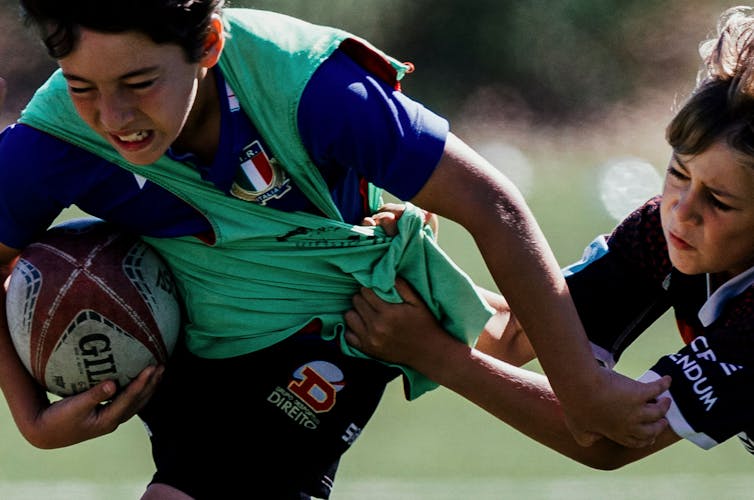
Tag rugby tends to be faster moving than the sport’s full contact version so is better for improving cardiovascular health. Research has shown that incidents of contact during children’s rugby are the cause of cause of 87% of known injuries. Tackling, in particular, is responsible for 52% of all injuries – with concussion being the most common injury type. Tagging, rather than tackling, saves children’s brains from harm.
Inability to consent
Our research shows that impact sports should be treated equally with other prohibited activities for children, such as smoking. Children are unable to make informed decisions about the long-term risks of these activities. Parental provision for these activities is also socially stigmatised or criminalised.
Our research draws on a number of legal positions that support our argument that neither children nor parents on their behalf can consent to sports that require brain trauma as a necessary component of the sport.
For example, Article 19 of the United Nations Convention on the Rights of the Child (UNCRC), to which 195 countries are signatories, covers protection from violence, abuse and neglect. It states that:
Governments must do all they can to ensure that children are protected from all forms of violence, abuse, neglect and bad treatment by their parents or anyone else who looks after them.
Some commentators have agreed that while high-impact sports are dangerous, using the term child abuse is a step too far.
However, the NSPCC, the UK’s leading children’s charity, say that physical neglect is a form of abuse that occurs if a child is not kept safe. Allowing children to participate in impact sports while being aware of the harm they can cause is, our research shows, a failure keep children safe.
There is no justifiable health reason for a child to play impact sport over non-impact versions. We are asking that ministers privilege children’s brains over corporate sporting bodies.
Last Friday (2nd Feb 2024), the Climate Creatives Challenge announced the winners of Challenge #04 (Coastal Change), with 1st place awarded to the Coasts for Kids (C4K) video series. The Climate Creatives Challenge is a biannual global initiative that promotes creative and innovative climate communication, including the positive actions that can be taken to mitigate and adapt to change. Challenge #04 (Coastal Change) received submissions from 56 countries in a wide range of formats.
The judges said:
“Wickedly informative, and utterly delightful. Precious voiceovers, and learned important information in an engaging new way. I would love to continue rooting for Coasts for Kids well after this challenge concludes!”
“Fantastic teaching aid, pitched at the generation most affected in a wholly accessible way. Explains complex issues simply and effectively.”
“This series is really wonderful and such a credit to the project team.”
C4K explains coastal processes, issues (such as sea level rise) and management in short videos narrated by 6-8-year-old children, using animation and language accessible to primary school children (age 6+). You can read more about C4k in this BU Research Blog | ‘Coasts for Kids’ – explaining coastal processes to children | Bournemouth University.
Dr Luciana Esteves (Dep. Life & Environmental Sciences, FST) was part of the team of coastal scientists, educators, practitioners and artists who worked on the writing of C4K.
We are currently recruiting for an Output Champion to help support preparation for our next REF Submission to Art and Design: History, Practice and Theory. The deadline for expressions of interest is 1 March 2024.
This role is recruited through an open and transparent process, which gives all academic staff the opportunity to put themselves forward. Applications from underrepresented groups (e.g. minority ethnic, declared disability) are particularly welcome.
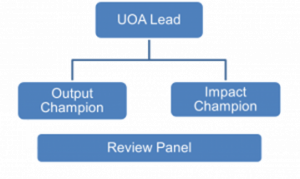
We are currently preparing submissions to thirteen units (otherwise known as UOAs). Each unit has a leadership team with at least one leader, an output and impact champion. The leadership team are supported by a panel of reviewers who assess the research from the unit. This includes research outputs (journal articles, book chapters, digital artefacts and conference proceedings) and impact case studies.
We currently have vacancies in the following roles:
All roles require a level of commitment which is recognised accordingly with time to review, attend meetings, and take responsibility for tasks.
Undertaking a UOA role can be enjoyable and rewarding as two of our current champions testify:
“As UOA Outputs Champion you develop a detailed knowledge of all the great work that colleagues are doing related to the subject, and the different outlets used for disseminating their work. As an outputs committee member, you also get to know what research is going on across BU, and it’s interesting to see the differences between disciplines. It’s a good way develop your knowledge of the bigger picture of BU’s research, and also to understand the importance of REF and how it works in practice. You do spend quite a bit of time chasing colleagues to put their outputs on BRIAN for REF compliance but hopefully they forgive you!”
Professor Adele Ladkin – UOA 24 Output Champion
“As a UoA 17 impact champion, I work closely with the UoA 17 impact team to encourage the development of a culture of impact across BUBS. I try to pop into Department / research group meetings when I can to discuss impact, and I’ve enjoyed meeting people with a whole range of research interests. Sometimes it can be tough to engage people with impact – understandably; everyone is busy – so it’s important to be enthusiastic about the need for our BU research to reach the public. Overall, the role is about planting the seeds to get researchers thinking about the impact their work might have in the future (as well as the impact they have already had, sometimes without realising!)”
Dr Rafaelle Nicholson – UOA 17 Impact Champion
How to apply
All those interested should put forward a short case (suggested length of one paragraph) as to why they are interested in the role and what they think they could bring to it. These should be clearly marked with the relevant role and unit and emailed to ref@bournemouth.ac.uk by 5pm on 1 March 2024
Further detail on the role and the process of recruitment and selection criteria can be found here:
The call for the next round of BA/Leverhulme Small Research Grants will be opening soon, expected 10th April.
We are welcoming your proposals for the upcoming BA/Leverhulme Small grants call.
The below deadlines will be in place to ensure that the pre-award team can provide all interested academics with optimal support.
28 February 2024
28th Feb – 10th April
Guidance Session
Join us to review the guidance and then start work on your application; Slides will be available after the session on Brightspace.
Work on your proposal-If you need help, speak to RDS for support and to your peers/mentors, organise your team, start a Flexi-Grant account, start an application in the system. Once ready, submit your ITB and also your draft proposal to RDS preawardenquiries@bournemouth.ac.uk
10th April 2024
Call Opens
10th April 2024
10th -24th April
Latest date to submit your ITB
Remember to advise your referee that you will be sending them your completed application on Flexi-Grant and that their expected statement to be submitted by the 24th May
Internal Peer review taking place
24th April 2024
If you are Grade 8 or below and you wish to use the support of an External Application Reviewer (EAR), you must submit your quality approved by the Faculty draft application to RDS by this date.
24th May 2024
Nominated referee supporting statement to be completed via Flexi-Grant
24th May 2024
Your final application must be submitted on Flexi-Grant by this date at the latest.
Click ‘submit’ and the form will be sent to BU’s accounts for RDS checks.
24th May – 5th June 2024
Institutional checks to take place by RDS and final submissions.
If you have any queries, please contact Eva Papadopoulou or your Funding Development Officer.
BU staff can login below:
Other services
Don’t miss a post!
Subscribe for the BU Research Digest, delivered freshly every day.
 We are looking for 3-4 post-graduate researchers to take part in a special edition of our Café Scientifique public event series to deliver a short talk about your research to a friendly public audience. The event will take place from 6:30-8:00pm on Tuesday 7 May 2024 at The Black Cherry in Boscombe.

 We’ll be joined by Peter Phillips
 The call for the next round of BA/Leverhulme Small Research Grants will be opening soon, expected 10th April.

 Being Human takes place 7-16 November this year and is marking its 10th anniversary with the theme of ‘Landmarks’. The organisers say: ‘We will be looking back on landmark events in our history, while imagining landmarks we might yet create. We invite researchers to join us in thinking about physical or metaphorical landmarks and how they shape our world.’
 UKRIO has announced details of a forthcoming Free Webinar “Social Media and Ethics” on Wednesday 21st February from 10:00 – 11:00 BST.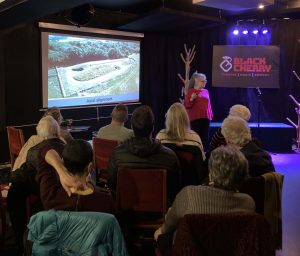








 Three CMWH presentations at Berlin conference
 New interdisciplinary paper on Nepal
 National Postdoc Appreciation Week 2026: The Changing Landscape of Postdoc Careers
 NIHR Insight South West Central Conference 2026 at Bournemouth University
 Horizon Europe Cluster 3 (Civil Security for Society) 2026 Calls Now Open
 MSCA Doctoral Networks 2026 Call Information Webinar
 ESRC Festival of Social Science 2026: Application Deadline Extended to Thursday 25 June 2026
 Reminder: Register for the ESRC Festival of Social Science 2026 Information Session
 ECR Funding Open Call: Research Culture & Community Grant – Apply now
 ERC Advanced Grant 2025 Webinar
 Update on UKRO services
 European research project exploring use of ‘virtual twins’ to better manage metabolic associated fatty liver disease